Modern generative AI has become terrifyingly realistic. With Gemini and ChatGPT making it easier than ever to create surprisingly photorealistic images and human-like prose, you can no longer spot AI content simply by counting fingers or looking for excessive em dashes.
Close examination may still reveal a few tells, such as in longer prose, but who has the time for that? Plus, you can never be completely sure.
The good news is that you don't have to guess. Most major AI platforms watermark their outputs, and camera makers have developed ways to prove an image is real and untainted.
Still, plenty of less responsible AI models skip watermarking, so one detection system isn't always enough. Sometimes you need to dig deeper.
The first stop for suspicious media
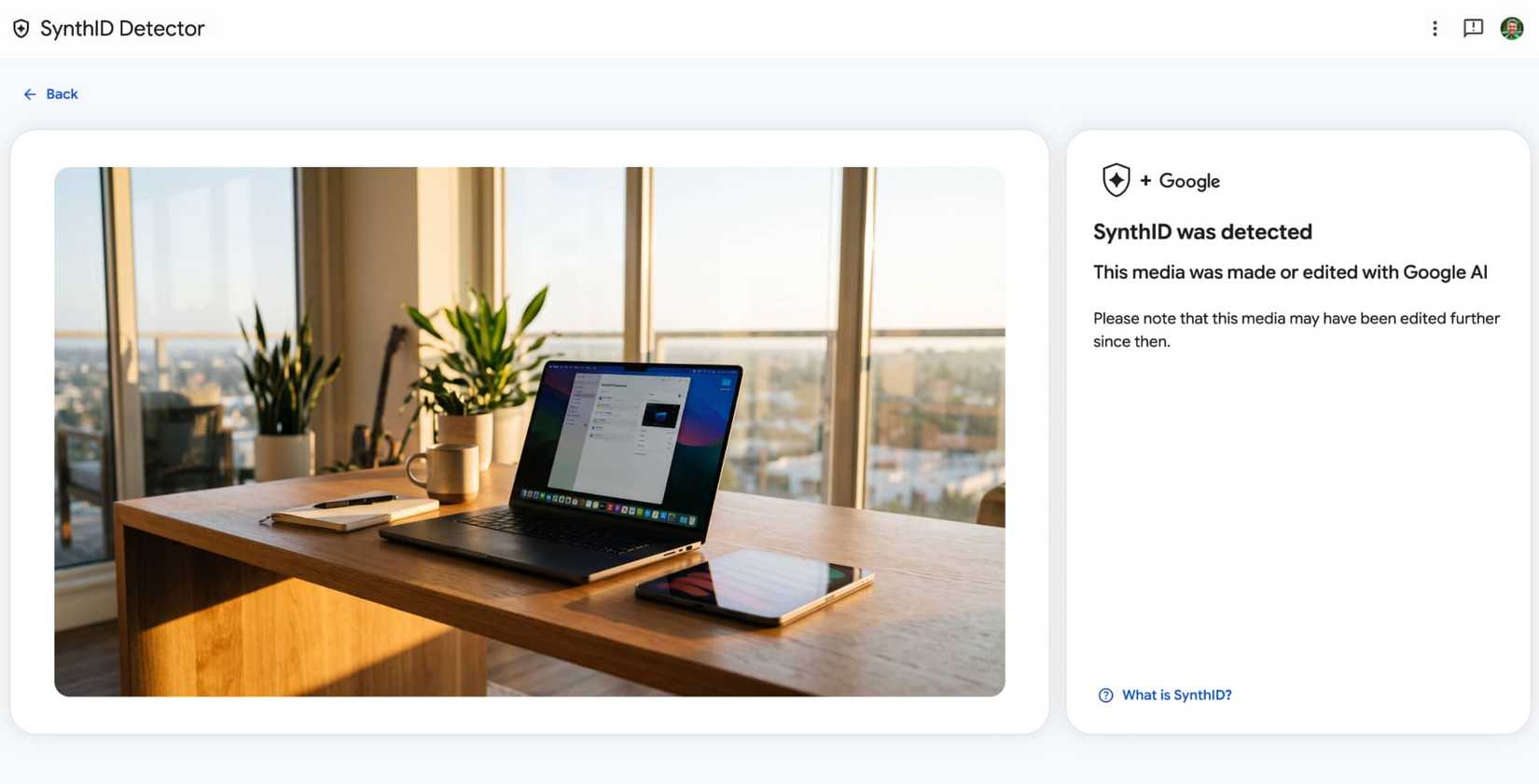
Google now lets users , which were trivial to remove anyway. Instead, Gemini bakes a real watermark into the pixels.
What Gemini creates, Gemini can detect, but until recently, you had to feed those images into a Gemini chat to check them.
Thankfully, Google has finally opened its SynthID Detector portal to everyone (it was previously restricted to journalists and other media professionals).
This not only checks media from Gemini tools like , it also looks for watermarks from ChatGPT, Nvidia, and Kakao.
A free account gets you 10 checks per day, and you can sign in with Google, Apple, or ChatGPT.
SynthID Detector supports all common image, video, and audio formats, but you'll need to upload the media to the portal rather than pasting in a URL. It also doesn't do text yet.
Since I'm usually curious about media, Gemini is where I've always started, and SynthID Detector makes that even easier.
The only catch is that this strictly looks for a SynthID watermark, so a "not detected" result doesn't prove the image wasn't generated by an AI tool — it just means it wasn't one that uses SynthID.
Checking the digital letter of provenance
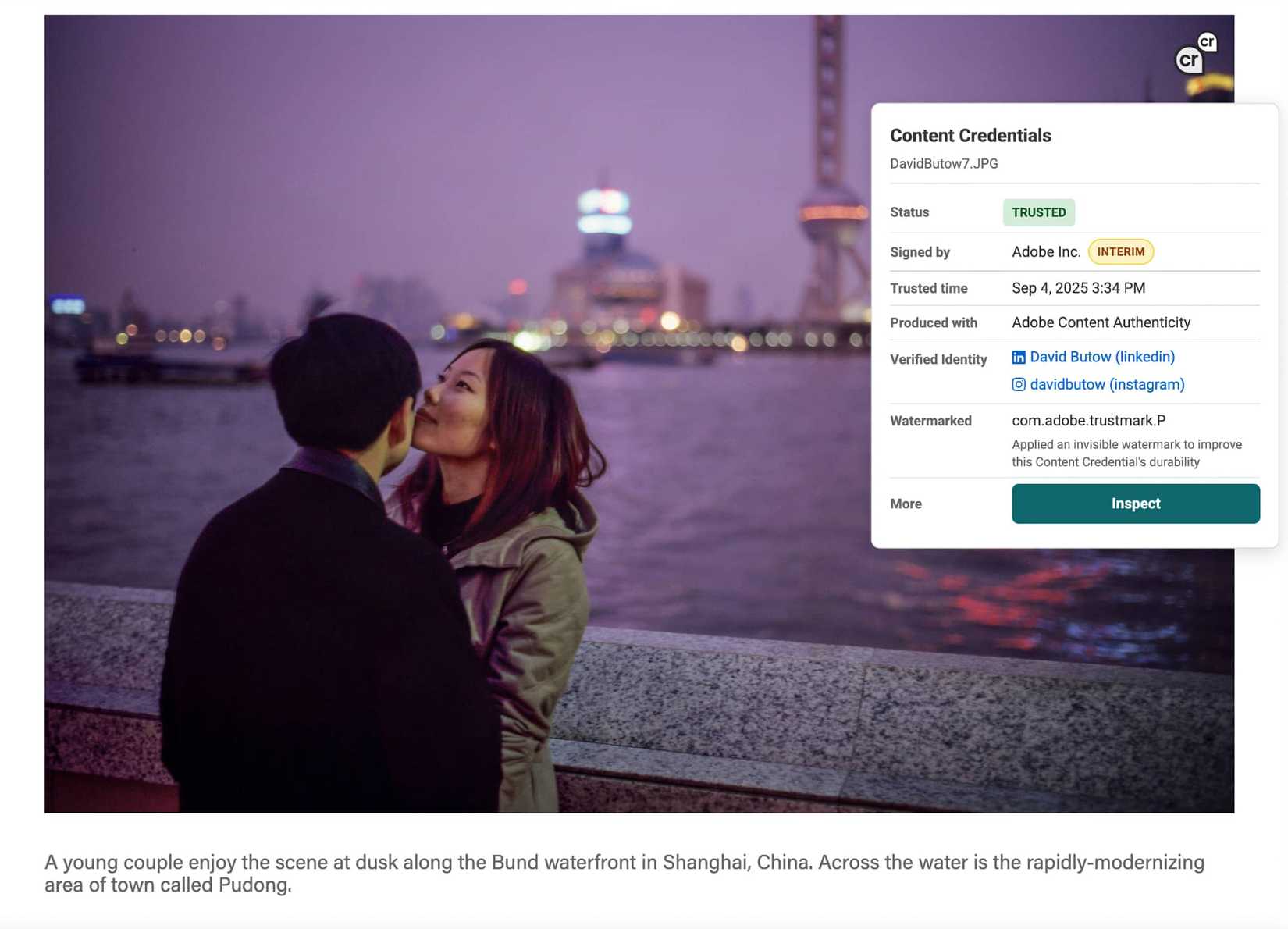
The other side of the provenance coin is C2PA metadata. This where an image came from.
Major camera makers like Canon, Nikon, and now embed C2PA metadata to prove their photos are real (Apple, as usual, is doing its own thing with the iPhone).
Meanwhile, Adobe is a founding member of C2PA, so Photoshop and Firefly can add it too, and Google embeds it in Gemini images.
That means that whether C2PA proves an image is "real" depends entirely on what it says.
The C2PA mark is cryptographically signed metadata that lives apart from the usual EXIF data and provides a history of how the image was captured or edited. It can't be faked, but it can easily be removed.
It's often stripped out by basic edits or even when you post on social media or messaging platforms. That means you'll need the original photo to check for the C2PA metadata.
I find the fastest way to check for C2PA metadata on desktop is the C2PA Content Credentials Chrome extension, which adds it to the right-click menu.
If you're not using Chrome, or prefer to use a more direct method, there's also the official Content Credentials Verify portal.
Did a human write this?
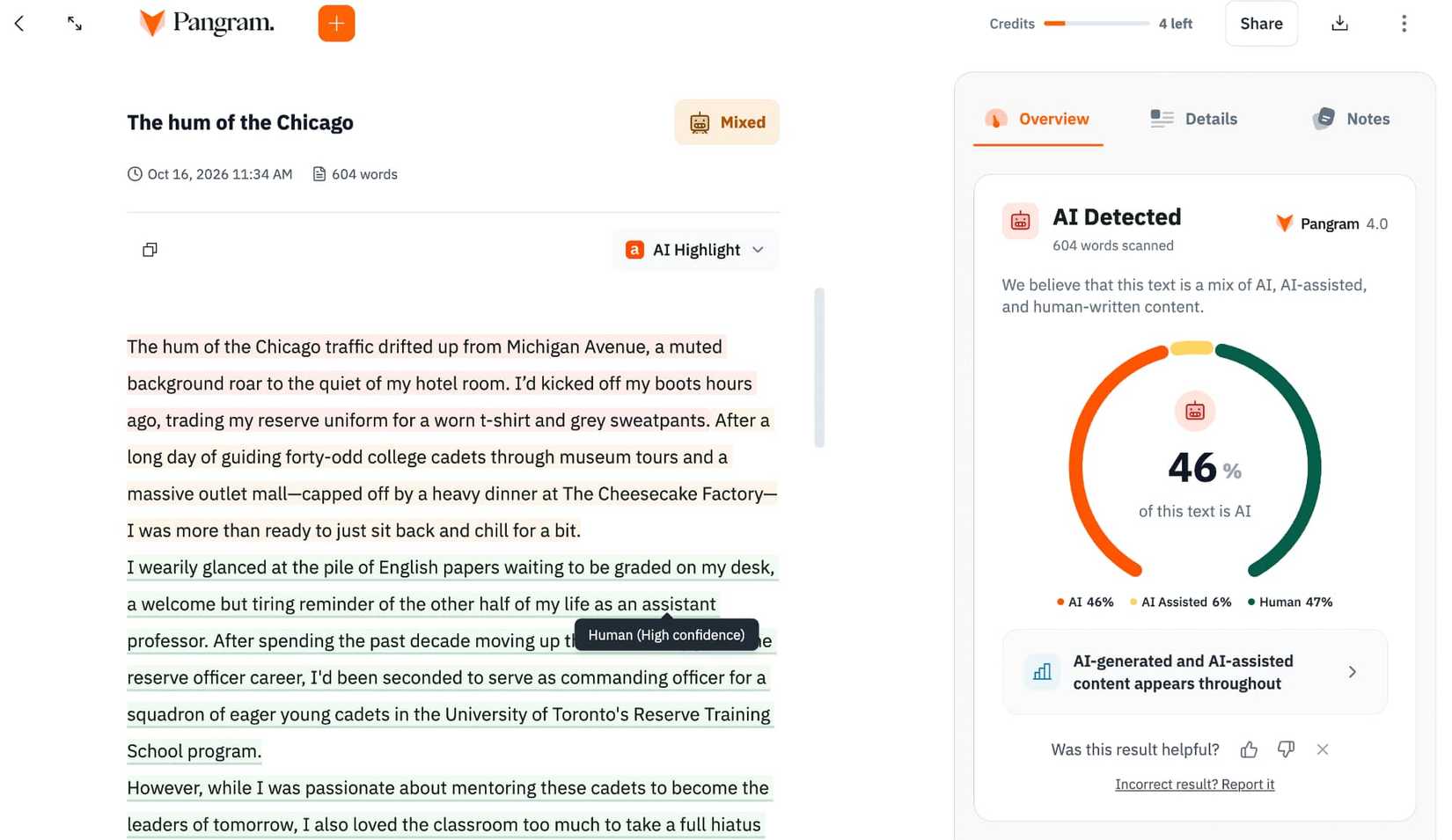
Neither SynthID Detector nor C2PA tools do anything with text. That's where Pangram comes in.
While you can ask Gemini if something is AI-written, Pangram is purpose-built for this. It doesn't just give you a yes-or-no answer — it provides a percentage and highlights AI-generated versus human-written passages.
That's thanks to July's Pangram 4 model, which replaces older-school guessing methods with a mixture-of-experts model that can differentiate between human, AI-assisted, and AI-generated writing.
To use Pangram, paste a block of text on the website. You can also install the Pangram Chrome extension, which lets you right-click selected text nearly anywhere on the web.
The extension is handy for checking posts on Reddit or X and even adds a "Scan for AI" button in Google Docs.
Pangram works on a word-based credit system. Free users get 20 non-rollover credits a day, with each credit good for 100 words. If you need more, paid plans start at $15 a month for up to 300,000 words.
Catching all the other AI images
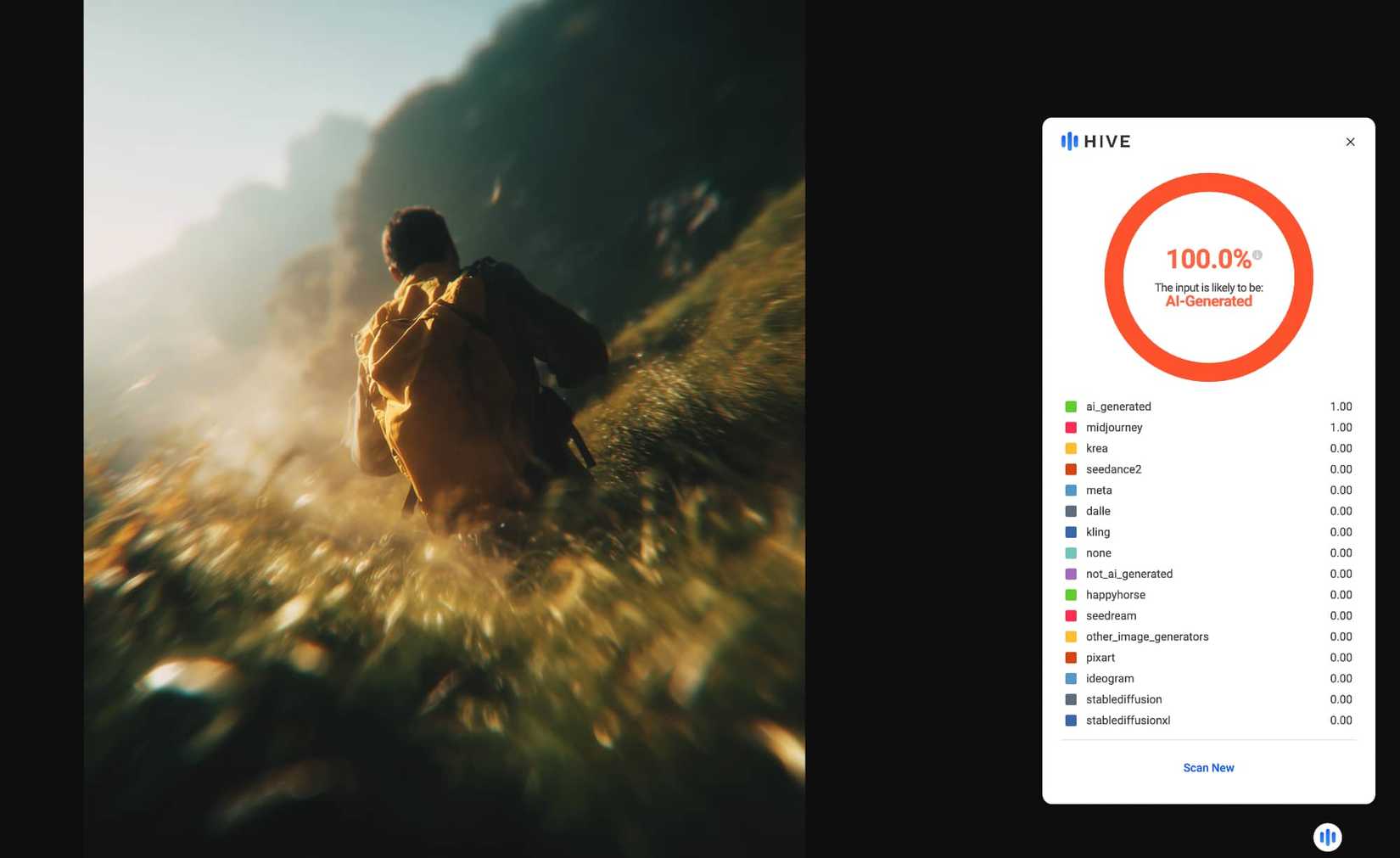
Plenty of AI generators still don't watermark their images, so when a suspicious image passes SynthID and C2PA checks, I feed it into Hive forforensic analysis.
Instead of watermarks, Hive checks for tells like pixel artifacts in photos and video frames.
The result is only an educated guess, but it's usually pretty good, and it can even tell you which models were most likely used, such as Midjourney or Flux.
Hive's website is geared toward enterprise users, so I use the official Hive AI Detector Chrome extension, which is easier and more suited to casual users.
The extension is free to use, requires no account, and offers effectively unlimited image scanning. Video files are capped at 30 seconds, and text at 1,000 words per day.
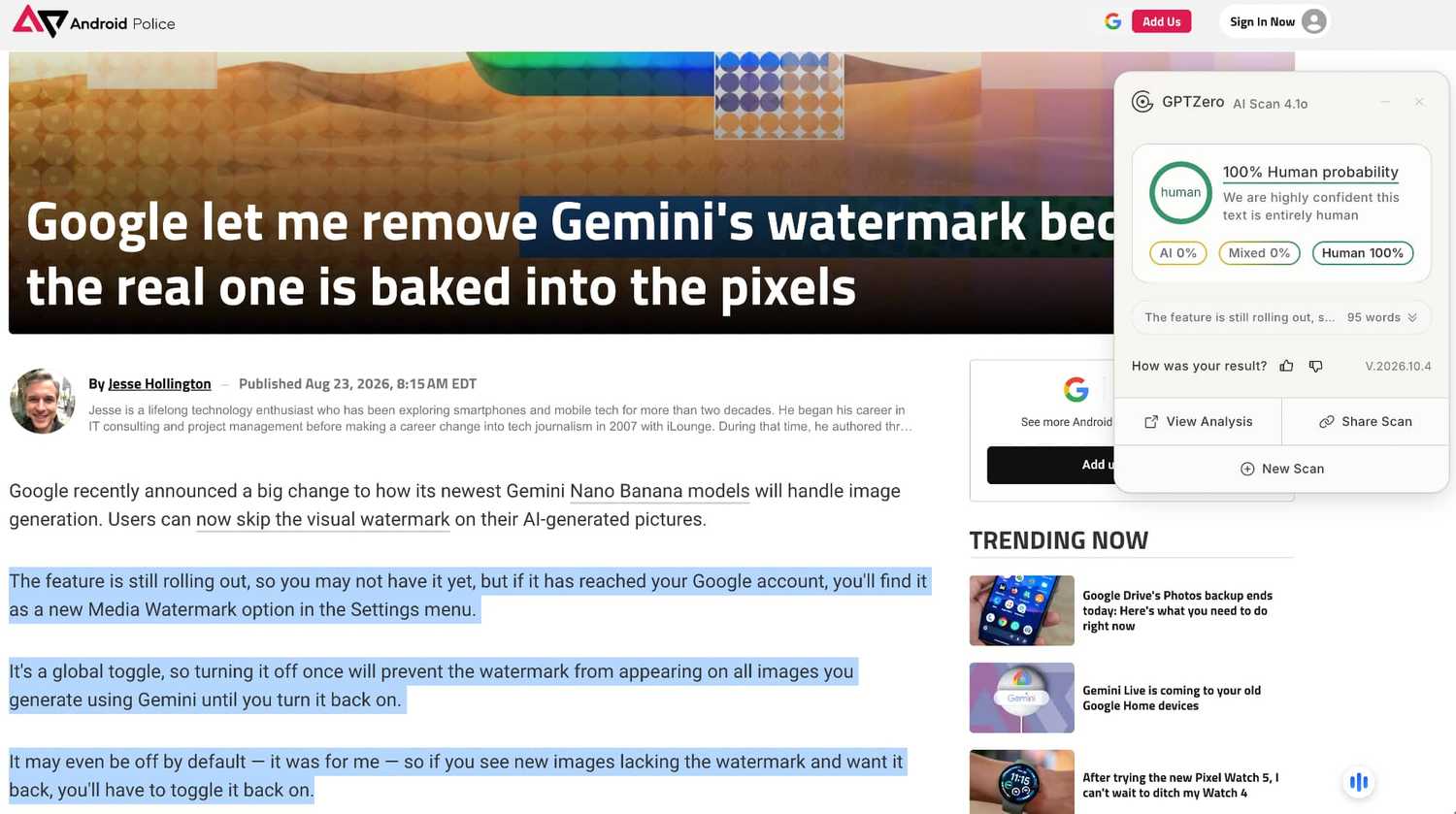
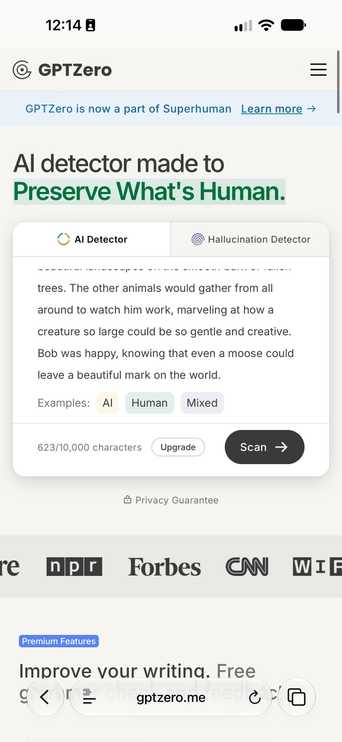
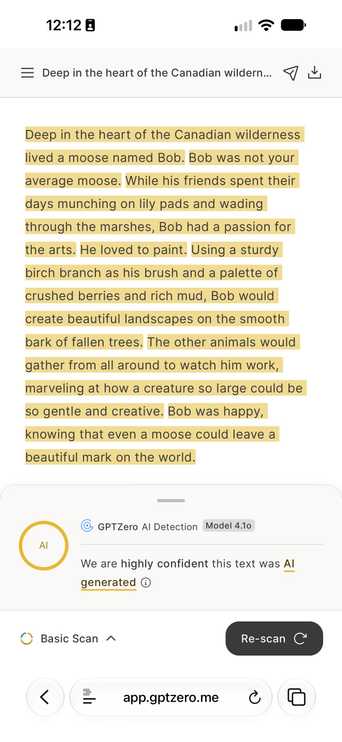
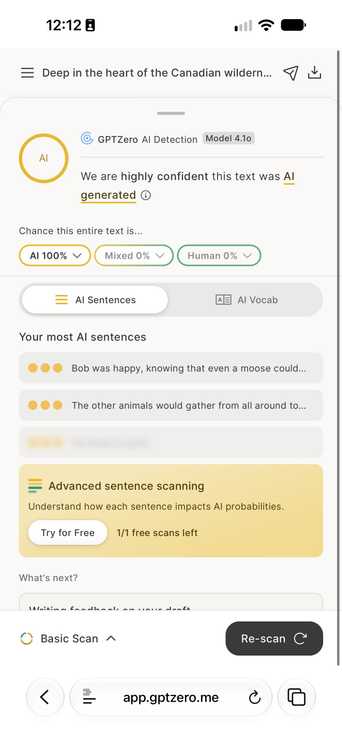
While Pangram is my go-to for serious work, GPTZero provides an excellent alternative for casual checks thanks to generous free limits and a solid mobile UI.
Like the other tools on my list, GPTZero has an official Chrome extension, but its real power is how effortless it is to use on the go.
The mobile browser version doesn't require a sign-in — you can paste in a block of text and tap scan. That makes it effectively unlimited if you don't mind dismissing a few sign-in prompts along the way.
Like Pangram, GPTZero is great for spotting mixed text, separating human-written prose from sections that were AI-generated from scratch and those that were merely polished by AI grammar tools.
Running the AI gauntlet
The variety of tools means there's still no one-size-fits-all solution for detecting whether content is AI-generated, but the good news is that you don't need to rely on a single one.
All the tools on this list have free tiers with reasonable limits for casual use, plus Chrome extensions to help you along the way.
That makes a multipronged approach surprisingly easy. I can check any image with SynthID, C2PA, and Hive in about six clicks, or run a block of text through Pangram and GPTZero in much the same way.
Can I be 100% sure these tools will catch everything? That's hard to say, but I've definitely been impressed with the results so far.