For most people, Google Drive is little more than a digital filing cabinet, where you dump PDFs, store screenshots, and keep the occasional document you might need later.
If that's all you use it for, you're missing a surprising amount of what Drive can do. Over the years, Google has turned Drive into more than cloud storage.
It now offers tools that help you automatically organize files, collaborate efficiently, quickly find documents, and automate small aspects of your workflow.
However, many of these features are tucked away in menus and settings that are easy to overlook.
After exploring a few, I realized I'd been ignoring several tools that could have saved me time.
The built-in document scanner most users ignore
From paper copy to PDF in seconds
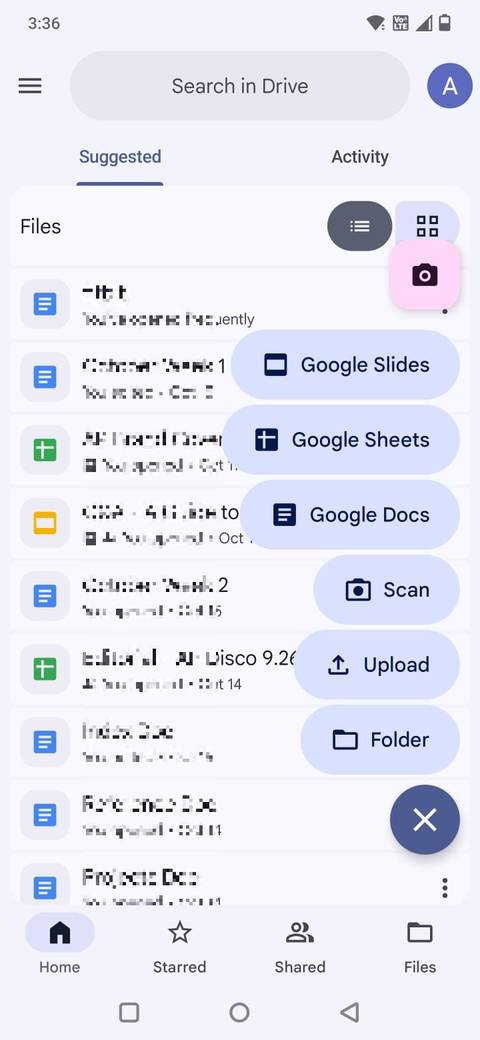
Most people install a separate app when they need to scan a document with their phone, but Google Drive includes a capable built-in scanner.
On Android, tap the in the Drive app and select to capture receipts, forms, notes, or other paperwork.
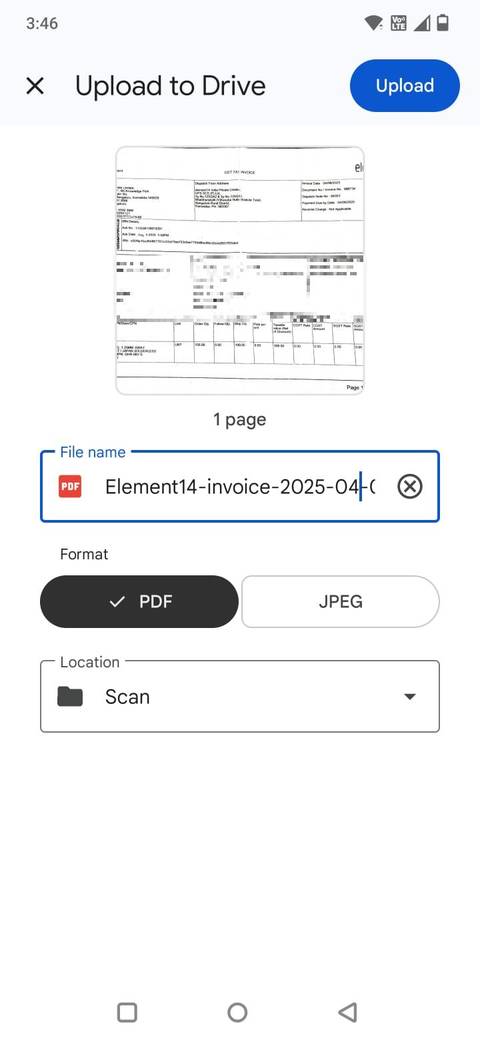
After you take the photo, Drive detects the document's edges and converts it into a PDF. You can crop, rotate, or apply simple filters to enhance its readability before saving.
It then uploads the scan to your Drive storage, making it easy to organize or share.
OCR makes your files searchable
No more stressing over the perfect file name
One of Drive's most underrated abilities is optical character recognition (OCR). It can detect text inside images and scanned PDFs, and make that text searchable within your Drive.
It means you don't need perfectly labeled file names to find what you're looking for.
When you upload a photographed document or a scanned contract, Drive indexes the text inside it. Searching for a specific phrase can surface a file you forgot about.
On the desktop, you can right-click certain PDFs and open them in Google Docs, which extracts editable text.
It's not flawless, but for typed documents, it's often surprisingly accurate.
Version history lets you recover older drafts
It's a safety net that saves your past work
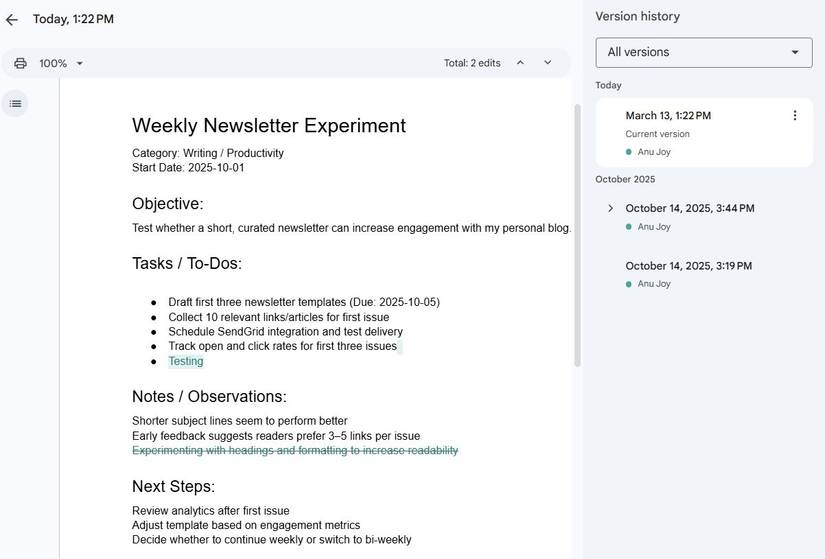
Accidentally deleting something crucial or overwriting a document can feel like a disaster, but Google Drive's version history acts as a built-in safety net.
For files created in Google Docs, Sheets, and Slides, Drive automatically keeps track of previous versions when someone makes changes.
You can access it by opening a document and clicking > Version history > See version history. A panel appears showing earlier versions of the file, along with timestamps and the names of the people who made edits.
You can open the version history to review changes and restore an older version if needed.
It is useful when collaborating with others because it lets you track edits and roll back unwanted changes.
It's a feature many users forget exists, but it can save you from losing important work or from fixing a mistake that slipped into the latest version of a document.
File descriptions add context
You'll always know what's inside
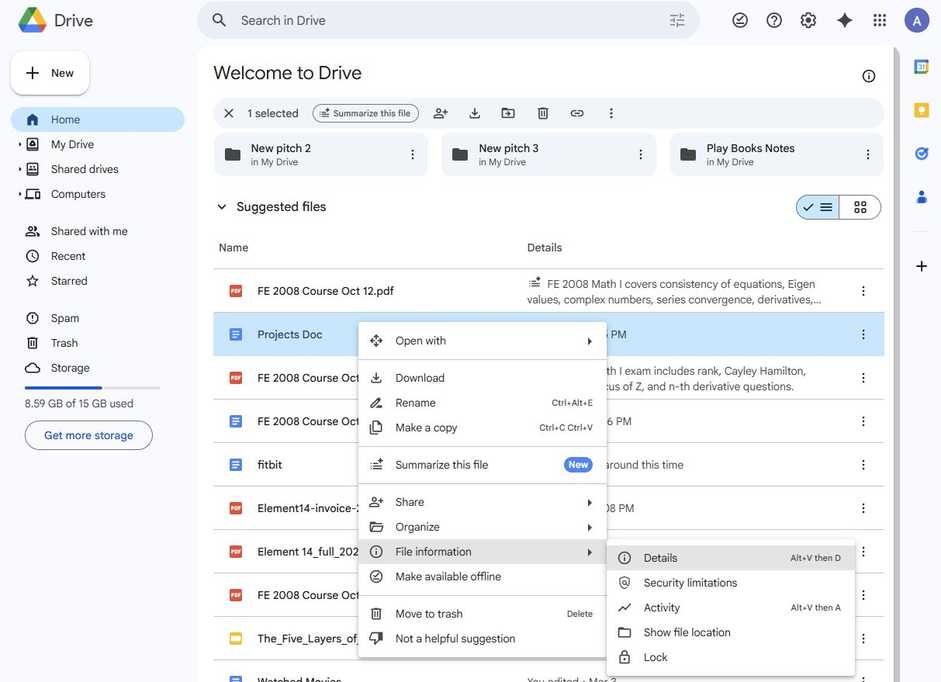
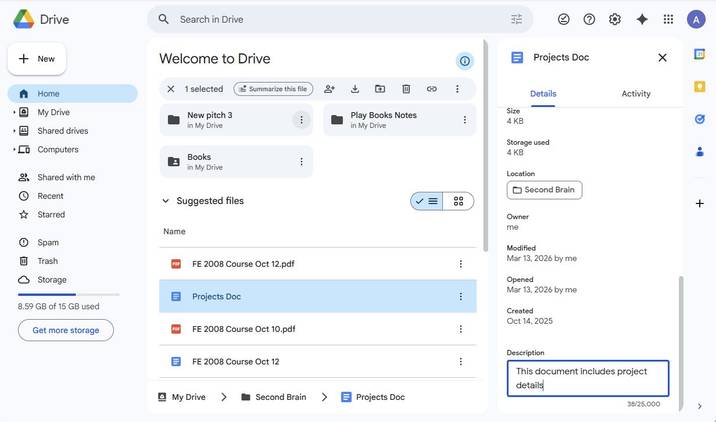
Google Drive allows you to add descriptions to files, which is a small feature that many users overlook but can be surprisingly helpful.
Instead of relying only on file names, you can include details that explain what the document contains.
To add one, right-click a file in Google Drive, select File information > , and enter the text in the field. This text is saved with the file, and anyone with access can view it.
Descriptions are useful for shared folders or collaborative projects. A short note can clarify what a file is for or whether it's the final version.
It's a simple way to add context without cluttering filenames or creating additional documents.
Offline mode turns Drive into a dependable workspace
Get work done even when the internet goes out
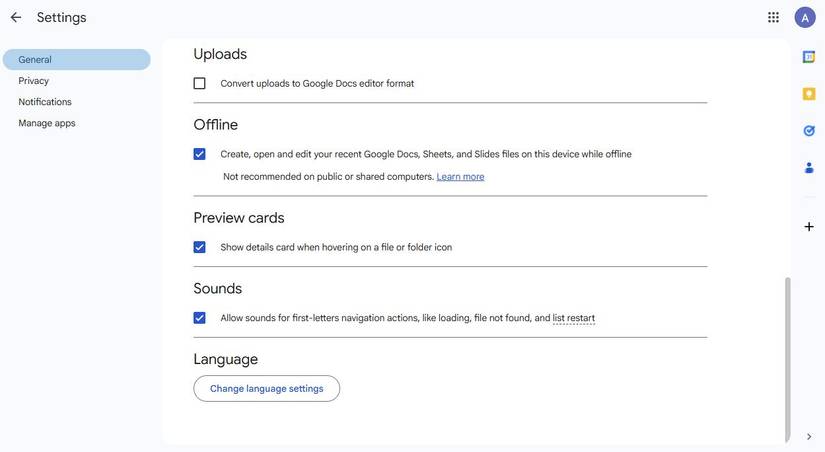
Offline mode makes Drive more reliable than it appears. When enabled, you can open and edit Google Docs, Sheets, and Slides even when there isn't an internet connection.
To use it on the desktop, open Google Drive settings and enable mode. On mobile, tap the next to a file name and select Make available offline.
The next time you lose connectivity, whether you're on a flight or dealing with unreliable Wi-Fi, you can still work on your documents as usual.
Your changes sync automatically when the connection is restored.
Advanced search filters are more powerful than they look
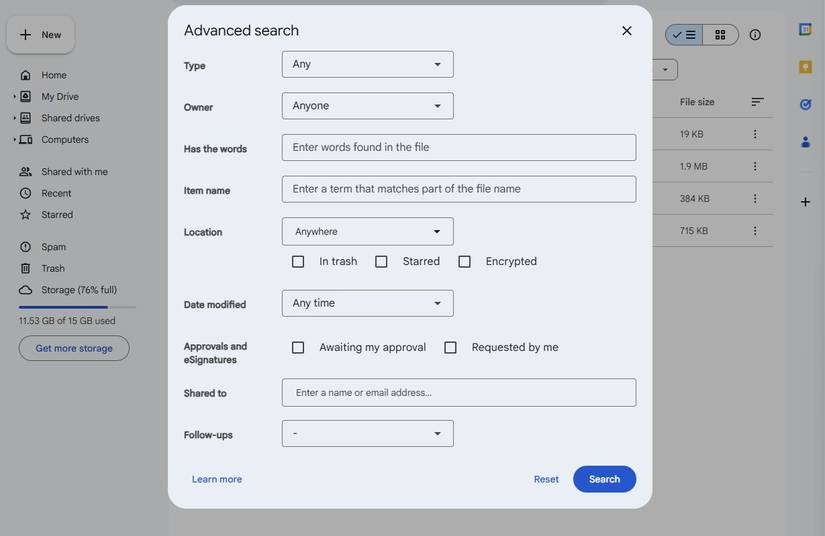
Drive's advanced search filters , especially if your storage is cluttered.
Tap the in the search bar to narrow results by file type, owner, location, modification date, and people involved in the document.
For example, you can find PDFs shared with you last month or documents edited by a specific colleague.
Instead of digging through folders or scrolling endlessly, you can pinpoint exactly what you're looking for in seconds.
These Google Drive features are seriously underrated
Google Drive goes beyond basic file storage. From built-in scanning and OCR to version history and powerful search tools, Drive includes several useful capabilities that make managing files easier.
After you start using tools like advanced search filters, offline mode, or , Drive begins to feel like a lightweight productivity hub.
If you've been using Drive the same way for years, it might be worth revisiting some of these overlooked tools.