Tesla is officially betting its future on autonomy, marking a shift in the company’s manufacturing strategy.
Central to this shift is the a dedicated autonomous robotaxi with butterfly doors and no pedals, which has become central to CEO Elon Musk’s vision for transforming global transportation.
However, this massive shift has come at the expense of the . Facing sluggish mass-market adoption, regulatory roadblocks overseas and high-profile quality setbacks, Tesla recently announced plans to wind down Cybertruck production at its Texas Gigafactory.
By halting the polarising stainless-steel pickup, Tesla is freeing up critical factory space, machinery, and engineering talent to ramp up Cybercab manufacturing to meet aggressive global scaling targets.
With Cybercab rides already expanding beyond Austin, and first customer deliveries targeted for late 2026 and 2027, Tesla is implementing several massive engineering and design upgrades. Here is a look at the main improvements coming to the Cybercab soon.
1. A downsized, highly efficient 40 kWh Battery Pack
The most significant technical update is a planned transition to a smaller 40 kWh battery pack, reduced from the current 47.6 kWh unit. Built using Tesla’s dry-cathode 4680 cells, the existing vehicle is already exceptionally efficient at over 6 miles per kWh, yielding an EPA-adjusted range of roughly 293 miles. Thanks to upcoming powertrain and software efficiency gains, Tesla can shrink the pack by roughly 16% without, it claims, sacrificing meaningful range.
2. A lighter and more cost-effective build
Reducing the physical size of the battery pack directly impacts the vehicle’s overall weight and production costs. While the , the lighter 40-kWh pack is projected to push the vehicle’s total weight below the 3,000-lb threshold.
Furthermore, recent teardowns have revealed that Tesla engineered the pack with modular spaces capable of incorporating cheaper LFP cells with individually swappable modules, heavily boosting future manufacturing profitability.
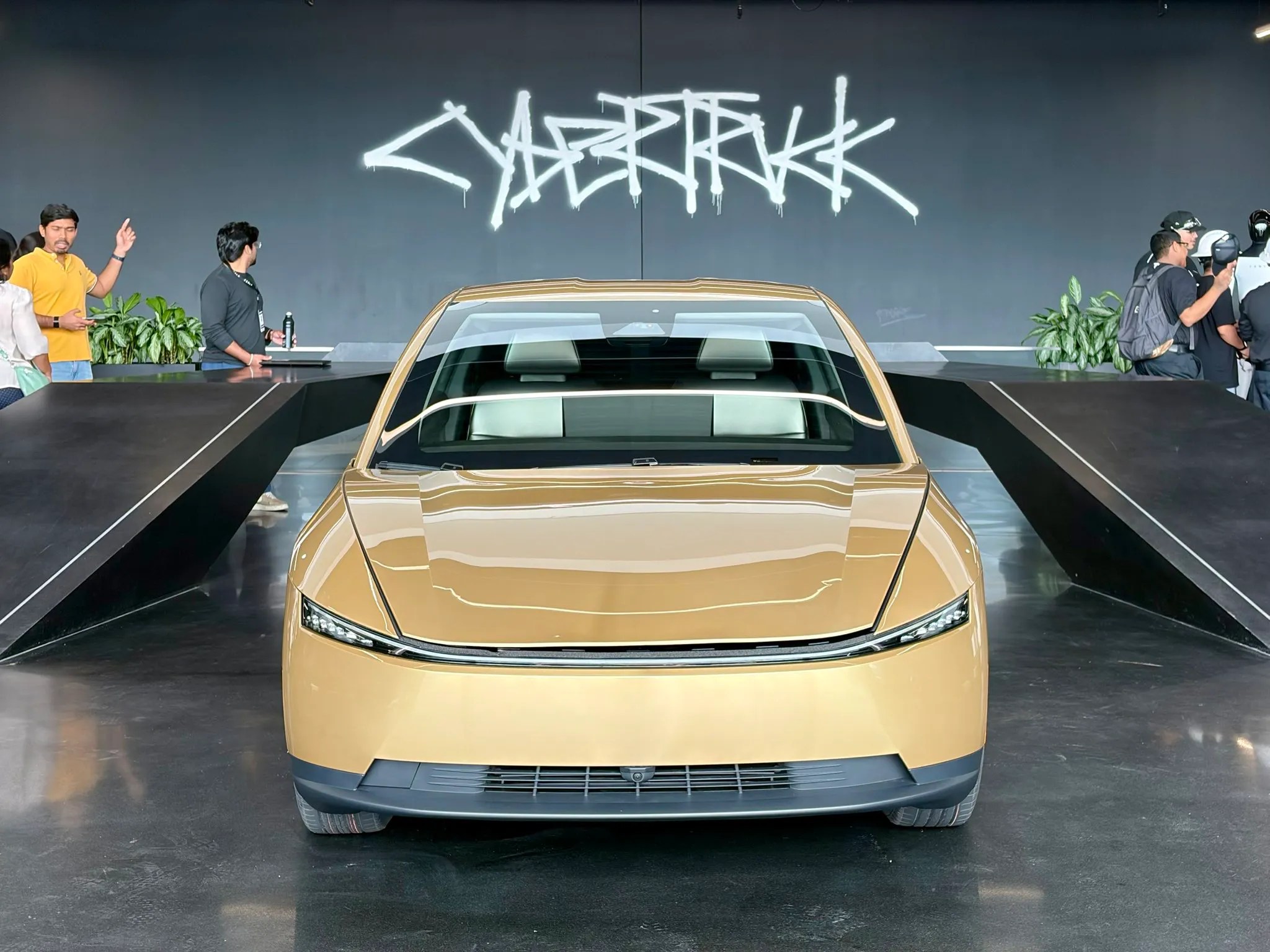
A good look at Tesla’s new Liquid Silver Cybercab, planned with a 40 kWh battery pack following new improvements
😍 https://t.co/IUYsUcCBMs
3. A new “liquid silver” colour option
Every Cybercab produced so far has featured a signature glossy gold finish created through reaction injection moulding, which mixes colour directly into the plastic panels rather than using traditional paint.
However, to combat a monotonous aesthetic across expanding robotaxi fleets, Tesla is introducing a new colour option. This addition will provide visual variety and make it much easier for passengers to identify their specific vehicle on busy streets.

4. Enhanced fleet identification with RGB lighting
In addition to the new , the Cybercab relies on exterior visual cues to help riders locate their rides. The vehicle features a prominent integrated into the nose. When paired with the option of both gold and silver body colours, passengers can easily distinguish their assigned autonomous vehicle from other units operating within the same geofenced robotaxi network.
5. Massive scale in production
Tesla is aggressively scaling manufacturing capacity to support the robotaxi rollout. is adding a dedicated night shift specifically to double production output. More importantly, the decision to wind down Cybertruck manufacturing lines will completely repurpose the Austin factory space. Musk noted that maintaining a complex, separate supply chain and engineering team for the pickup blocked the company from dedicating those vital resources to scaling the Cybercab.
6. Accelerated deployment beyond Austin
Beyond hardware refinements, the Cybercab ecosystem is also experiencing rapid operational growth. With paid robotaxi rides already live in Austin, Texas, the deployment footprint is set to expand rapidly to additional cities. With customer deliveries targeted for late 2026 and rolling out through 2027, it is hoped these engineering and infrastructure upgrades will solidify the Cybercab’s role as Tesla’s definitive path forward.
For latest tech stories go to TechDigest.tvDiscover more from Tech Digest
Subscribe to get the latest posts sent to your email.