Sen. Blanche Lincoln wrote law that let US ban sports-event contracts. She lobbies for the other side now.
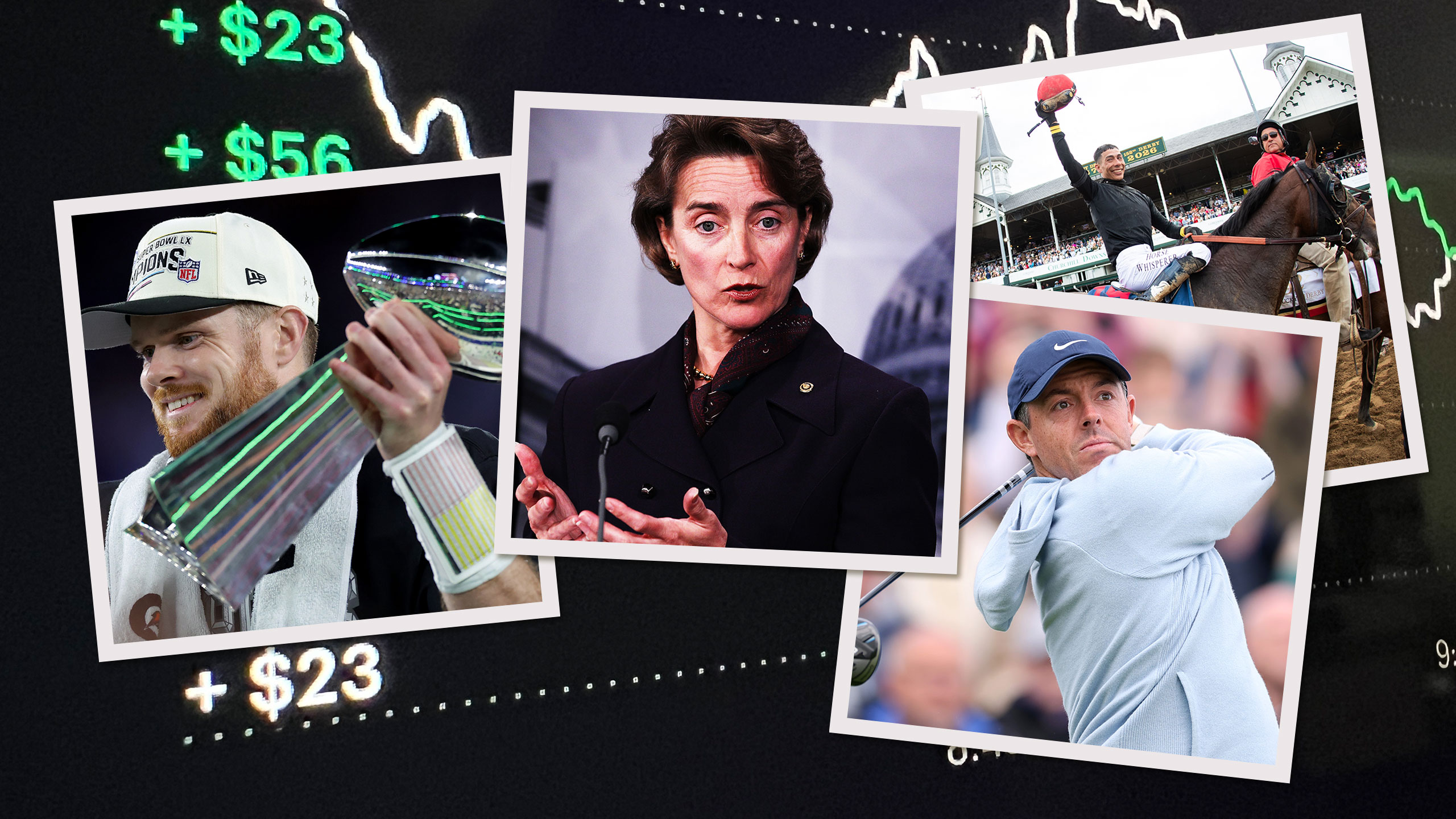
In July 2010, US Senator Blanche Lincoln (D-Ark.) predicted the rise of prediction markets and the problems they could cause. If not properly regulated, Lincoln warned during Senate proceedings on the Dodd–Frank Wall Street Reform and Consumer Protection Act, prediction markets could evade gambling laws by offering “event contracts” that let people place wagers on sports games.
“It would be quite easy to construct an event contract around sporting events such as the Super Bowl, the Kentucky Derby, and Masters golf tournament,” Lincoln, who played a key role in making the law that now regulates prediction markets, told fellow senators. “These types of contracts would not serve any real commercial purpose. Rather, they would be used solely for gambling.”
Today, Lincoln is a lobbyist for prediction market Kalshi and has urged the Commodity Futures Trading Commission (CFTC) to allow sports gambling on the markets. The firm she founded has received $480,000 from Kalshi since 2024 in exchange for lobbying Congress and the CFTC for looser regulation of event contracts.
But in 2010, Lincoln wrote a law that let the US ban sports gambling on prediction markets. Lincoln was chair of the Senate Agriculture Committee and a primary author of Title VII of the Dodd–Frank Act, which gave the CFTC regulatory authority over swaps. Lincoln made it clear that the law’s purpose was to prevent trading that would be harmful to the public and that the law defined “public interest” broadly to give the CFTC authority to ban sports bets offered in the form of event contracts.
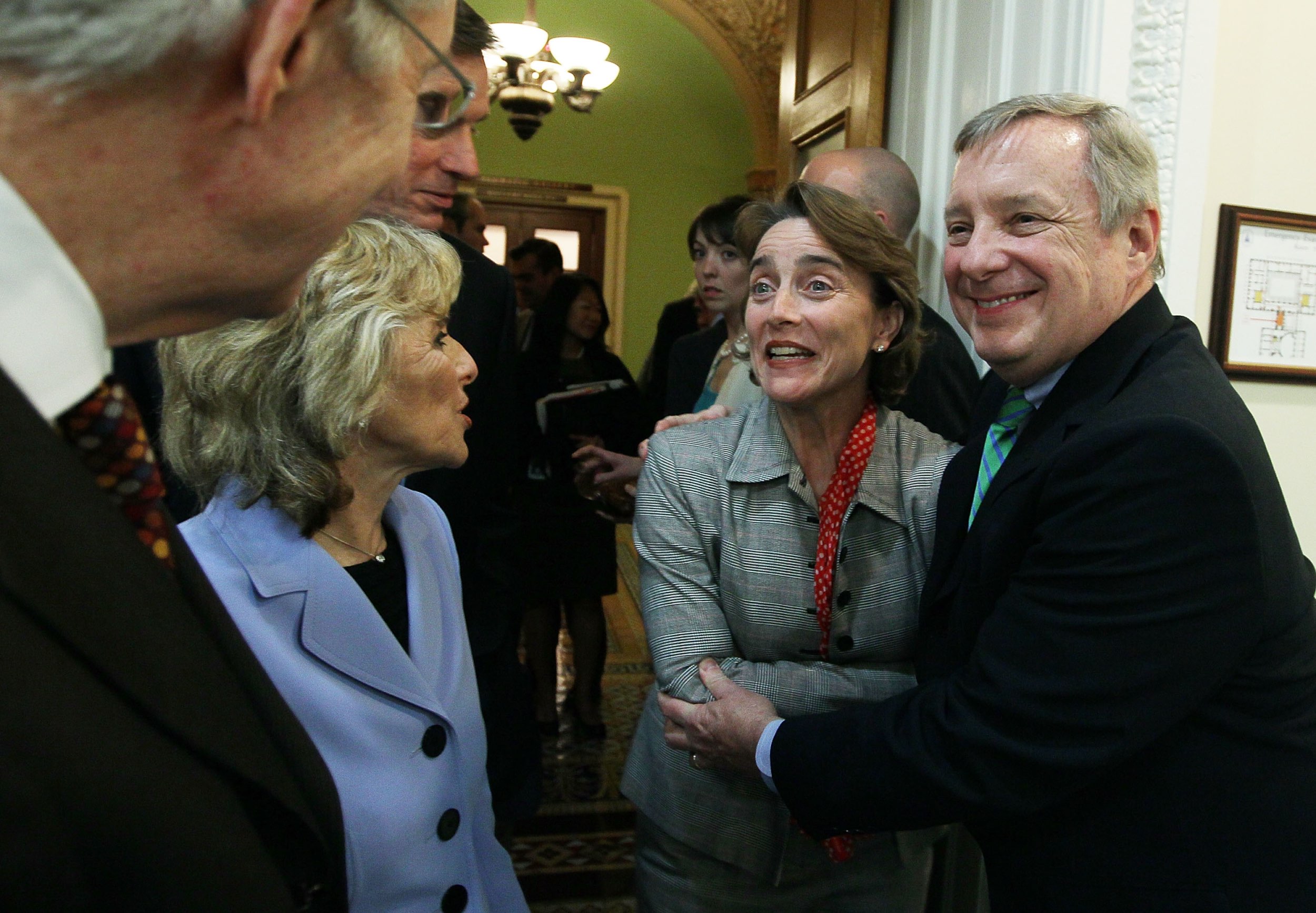
Lincoln seemed to expect this approach to result in a ban on sports bets and other kinds of gambling, saying during Senate proceedings that the CFTC needs the authority to prohibit and should prohibit event contracts that exist primarily to enable gambling. But Congress left the ultimate decision up to the executive branch instead of banning these types of event contracts directly.
While the Biden administration discouraged sports-event contracts, the Trump administration has used the authority granted by Dodd-Frank to allow them. Trump regulators also insist that states must be prevented from enforcing their own gambling laws against prediction markets. As a result, prediction-market sports betting enabled by the Trump administration is now at the center of court battles involving state governments throughout the US.
US states vs Kalshi, Polymarket, and Trump
Lawsuits in about 20 states have tasked courts with deciding whether Congress intended to let state governments restrict or ban prediction-market bets or if the grant of authority to the CFTC preempts state gambling laws. Some states have won, and others have lost, making it likely that the Supreme Court will decide whether the CFTC can preempt states from regulating.
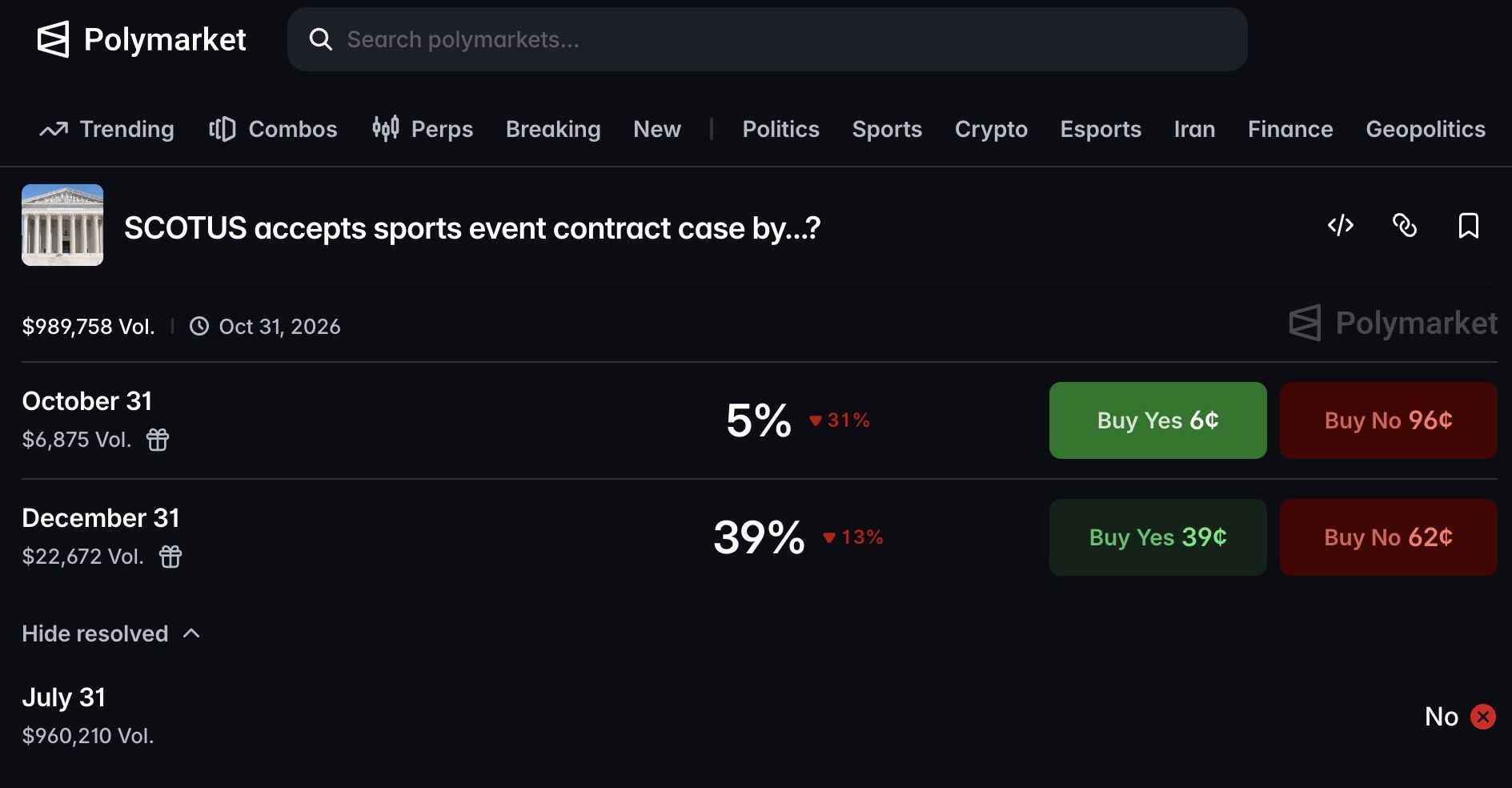
Kalshi says it does not list markets on itself, seemingly ruling out the possibility of offering wagers on its own potential Supreme Court case. On Polymarket, Kalshi’s top rival, you can place bets on whether the Supreme Court will agree to hear the case.
Although Lincoln now lobbies for Kalshi to help the prediction market industry avoid regulation, her comments as a senator 16 years ago are still frequently cited to support strict rules against sports betting and other kinds of bets on prediction markets. The 2010 comments also have relevance to court cases in which judges must analyze what Congress intended during the Dodd-Frank deliberations. One federal judge quoted Lincoln’s comments as proof that Congress sought to prohibit sports bets on the markets.
The Biden-era CFTC appeared to assume that sports bets on prediction markets were prohibited under a ban on event contracts related to gaming, which was issued during the Obama administration. The Biden CFTC proposed to expand that ban to cover additional types of wagers, such as bets on elections. After Lincoln began working for Kalshi, she wrote a letter to the Biden CFTC opposing the plan to ban more types of event contracts.
Notably, Lincoln’s August 2024 letter to the Biden administration did not support allowing sports gambling on prediction markets. Lincoln told the Biden CFTC that unlike elections and other major events, the results of sports matches do not have “significant economic consequences,” indicating that they aren’t suitable for event contracts. In this respect, Lincoln’s public position shortly after becoming a Kalshi lobbyist matched the comments she made during the Dodd-Frank discussions. But her views would soon change.
At the time of the 2024 proposal, Kalshi wasn’t yet offering sports wagers. It started offering sports bets in January 2025, at the beginning of Trump’s second term. After Kalshi started offering sports gambling, Lincoln told the CFTC it should allow the same kinds of sports-event contracts that, as a senator, she said would serve no real commercial purpose and be used only for gambling.
The Trump CFTC agrees with Lincoln’s updated views. It has allowed sports-event contracts to flourish nationwide, even in states whose laws restrict or prohibit sports gambling betting. State government leaders are not happy about this.
It’s no surprise that the Trump administration is backing the industry. Kalshi and Polymarket both have Donald Trump Jr. as an advisor. One of Polymarket’s largest investors is 1789 Capital, a venture capital firm in which Trump Jr. is a partner.
Backed by the Trump CFTC, Kalshi has been telling courts and US consumers that it doesn’t have to follow state laws. “Since Kalshi works like the stock market rather than a casino, it’s regulated by the CFTC and federal law… we’re subject to federal—not state—laws and regulations,” the company says on its website. Kalshi says much of the opposition it faces is from “the gaming cartel… spending millions lobbying Congress to protect their monopoly.”
Trump admin “radically changed” approach to sports bets
Kalshi launched sports betting on January 23, 2025, three days after Trump’s second inauguration. Kalshi announced the availability of sports bets in a post that said, “The Golden Age of markets is here.”
Ilya Beylin, a business-law professor at Seton Hall Law School who researches prediction markets and their regulation by the CFTC, wasn’t surprised that Kalshi waited until Trump’s inauguration to launch sports betting.
“The Biden-era CFTC considered event contracts on sporting events prohibited under CFTC Rule 40.11,” Beylin told Ars. “Lawyers working with Kalshi understood this… The second Trump administration radically changed its approach to sports contracts and stopped enforcing CFTC Rule 40.11. Counsel for the prediction markets appreciated this.”
Rule 40.11 was issued by the CFTC in 2011. It prohibits registered entities from listing any event contract “that involves, relates to, or references terrorism, assassination, war, gaming, or an activity that is unlawful under any State or Federal law,” though it gives the CFTC discretion to approve or deny specific contracts. The regulation was issued under authority provided by Congress in the Dodd-Frank Act.
“For more than 14½ years, the CFTC acted in a manner which addressed Senator Lincoln’s concerns… Today, the landscape has deteriorated,” Pennsylvania Gaming Control Board Executive Director Kevin O’Toole told the CFTC early this year in a letter describing changes in Rule 40.11 enforcement. “One cannot only wager upon the sporting events Senator Lincoln expressly warned [about], but also on pop-culture and political novelties such as whether a particular person will appear at the Met Gala, who will win – Season 50, and whether President Trump will utter the phrase ‘Make Iran Great Again’ during the month of April 2026 on Kalshi.”
Prediction-market sports betting has drawn widespread opposition from state governments and from tribes that offer legal gambling regulated under the US Indian Gaming Regulatory Act. Lincoln’s 2010 comments show that “Congress clearly intended the Act to prohibit—not enable—sports wagering through event contracts,” Swinomish Indian Tribal Community Chairman Steve Edwards told the CFTC.
Gaming is not specifically defined in Rule 40.11, but the CFTC’s 2011 rulemaking said the agency’s “prohibition of certain ‘gaming’ contracts is consistent with Congress’s intent to ‘prevent gambling through the futures markets’ and to ‘protect the public interest from gaming and other events contracts.’” This portion of the rulemaking has a footnote linking to Senator Lincoln’s 2010 comment that the CFTC should prohibit event contracts that exist primarily to enable gambling.
Lincoln’s 2010 comments again played a prominent role in the Biden CFTC’s June 2024 proposal for stricter rules. The proposal seemed to take it for granted that the ban on gaming contracts already covered sports games, and it argued that Lincoln’s comments could support a prohibition on election wagers.
Kalshi insists January 2025 launch not tied to Trump inauguration
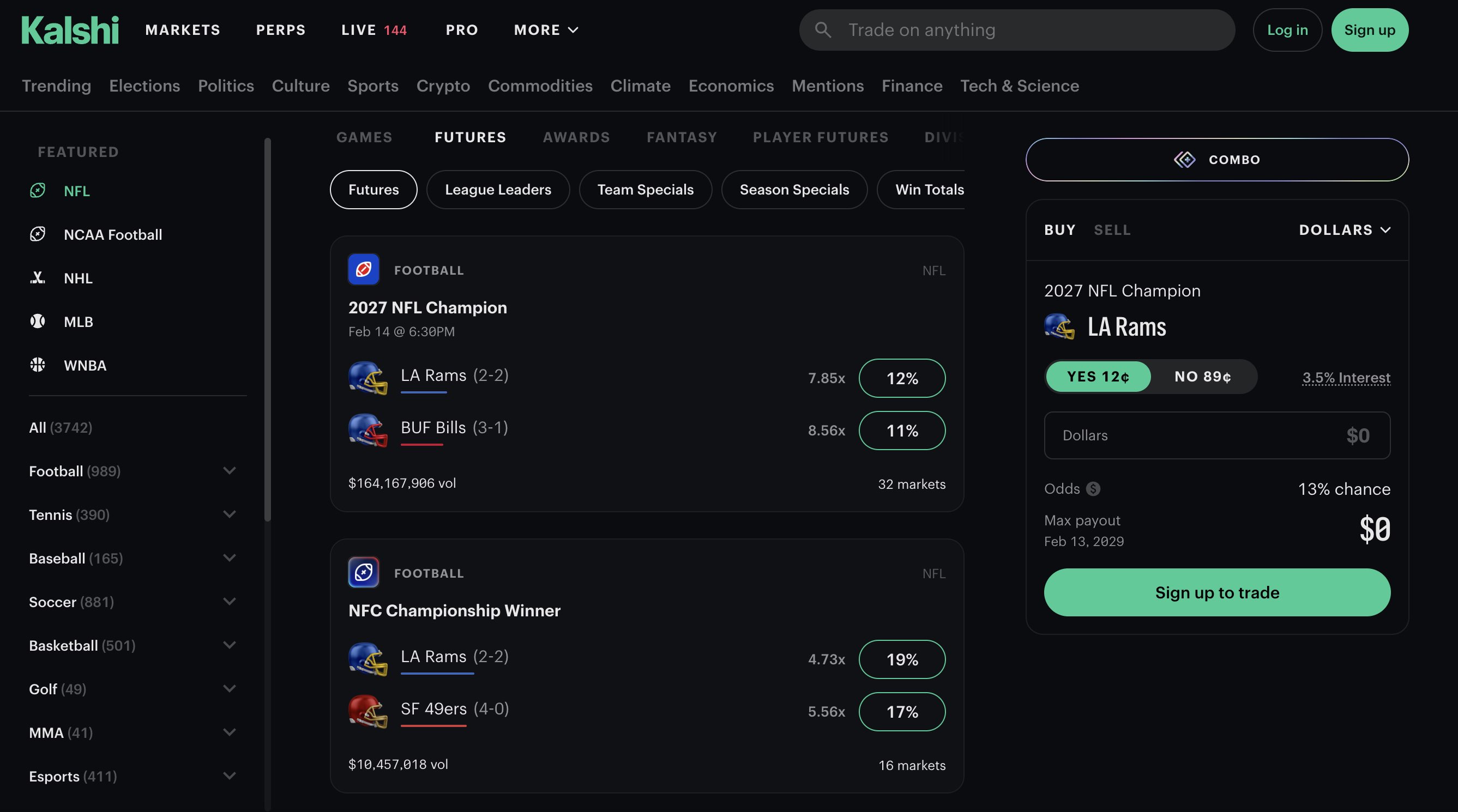
Kalshi wasn’t quite the first to offer sports-event contracts, as Crypto.com launched them on December 19, 2024. The CFTC began a review on January 14, 2025, less than a week before the end of Biden’s term. Though the CFTC didn’t stop Crypto.com, the company eventually pulled its sports betting out of states that put up regulatory resistance.
A Kalshi official who spoke to Ars on the condition that we would only paraphrase his remarks said the timing of Kalshi’s January 2025 launch was not related to the administration change. He said that before Crypto.com’s December 2024 launch, he thought the CFTC would likely find sports-event contracts to be against the public interest. He said the CFTC not blocking Crypto.com’s offering made it clear that sports contracts would be allowed.
However, there wouldn’t have been enough time for the Biden CFTC to rule on Crypto.com sports contracts before the change in administration under the 90-day review process specified in Rule 40.11. CFTC procedures let prediction markets certify contracts themselves and start offering them to the public before the CFTC decides whether to conduct a review.
The Biden CFTC was on court to reject a similar plan several years earlier. In December 2020, cryptocurrency exchange ErisX sought CFTC approval for futures contracts based on the outcomes of NFL games. ErisX withdrew its proposal in March 2021 after it became clear the CFTC would reject it.
CFTC Commissioner Dan Berkovitz, who helped draft Title VII of Dodd-Frank Act and the CFTC regulations to implement it, wrote that ErisX provided no evidence “that sports event contracts such as the NFL contracts can be used for an economic purpose other than for gaming itself.” Berkovitz, now a lecturer in law at Columbia University and a legal executive with investment firm Millennium, said in June 2026 that “the commodity markets are not for entertainment, they’re not to foster sports betting if there’s no economic purpose. They’re really for fundamental things that matter to the economy.”
Although the Trump CFTC allows sports bets on prediction markets, it has not formally repealed Rule 40.11 or finalized its plan to revise it. Beylin told Ars that “the second Trump CFTC is within its rights to allow sports events contracts,” but “it took a number of steps that violated procedures the CFTC is supposed to abide by.” Ending enforcement of the rule without a formal repeal is the most serious procedural violation, he said.
The Trump CFTC argues in its June 2026 proposal to change the rules that the commission “has consistently applied § 40.11 to operate a discretionary review framework rather than a self-executing prohibition, because the opposite interpretation would violate the statute.” But in the case of sports-event contracts, the Trump CFTC has not intervened to stop Kalshi or Polymarket listings under Rule 40.11’s prohibition of gaming contracts.
The Trump CFTC proposal to rewrite Rule 40.11 “didn’t consider and weigh the harms of sports gambling,” Beylin said, explaining that the agency “is supposed to consider these harms” in the rulemaking process. The proposal, which is still pending, would formalize the Trump administration’s deregulatory stance toward prediction markets. We contacted the CFTC about its enforcement of Rule 40.11 and its proposal to revise the rules and did not receive a response.
State officials refuse to back down
In March 2026, Trump Jr. told a crowd of Republican state attorneys general attending a closed meeting that they should back off prediction markets, according to The New York Times.
“Sitting onstage for a question-and-answer session with Montana’s attorney general, Mr. Trump suggested that state leaders were being led astray by a ‘vested interest’—gambling firms that wanted to protect their ‘monopolies’ by attacking prediction markets, four people familiar with his remarks said. In reality, he said, the markets already had robust oversight, describing them as a sophisticated financial tool overseen by federal officials, not state attorneys general,” according to the NYT account.
Despite Trump Jr.’s remarks, state attorneys general have not backed down. State leaders say prediction markets are evading their responsibility to pay taxes and flouting rules designed to minimize the negative effects of gambling, particularly for young people.
State governments such as New York are trying to restrict sports bets on prediction markets through their gambling laws. Minnesota’s legislature and Gov. Tim Walz went even further by enacting a law to ban prediction markets entirely.
The US government has sued nine states for allegedly infringing on the CFTC’s exclusive authority over prediction markets. The CFTC also declared a “market emergency” in New York to try to prevent the state from enforcing its gambling laws against Kalshi.
“New York intends to make event contract derivatives waste away under its iron curtain of state gaming laws,” CFTC Chairman Michael Selig said after New York filed a lawsuit against Kalshi. Undeterred, New York filed another lawsuit against Polymarket, alleging that it too runs an illegal gambling operation.
Ohio’s Republican attorney general, Andy Wilson, was joined by 43 other states in a July 27 letter telling the CFTC that there is “no statutory basis for the CFTC to anoint itself as the Nation’s sole gambling czar.” The letter said the rule change proposed by the CFTC “takes a sledgehammer to the States’ historic power” over gambling.
Biden admin blocked Polymarket, but now it’s back
The legal battles likely to reach the Supreme Court involve Kalshi, although New York and Kentucky have both sued Polymarket. Polymarket’s main platform technically hasn’t been available in the US since 2022, when the Biden CFTC determined it was operating an illegally unregistered exchange.
That could change, as Polymarket is reportedly seeking the CFTC’s permission to bring its main exchange back to the US. For now, US-based users can access a different, US-regulated version that Polymarket launched after acquiring a CFTC-licensed firm. The latter version is available at Polymarket.us and in a mobile app. Polymarket did not provide Ars with any comment about the potential return of its main exchange to the US or the potential Supreme Court case involving prediction markets.
New York’s lawsuit said Polymarket offers gambling despite not being licensed with the state gaming commission, fails to pay taxes like licensed casinos and mobile sports gambling platforms do, and offers betting to people aged 18 to 20 despite a New York age minimum of 21. Polymarket defended its approach to New York regulation in a statement to Ars last month.
“We didn’t run to preemptively sue the state—we chose to engage with them directly on the substance and address their concerns. They preferred the media hit [of filing a lawsuit],” Polymarket said.
Polymarket also responded in court by countersuing New York, accusing it of “an extraordinary assertion of state power squarely foreclosed by federal law.” Polymarket’s lawsuit said that “Congress vested the CFTC with sole regulatory authority over event contracts,” including ones on sports.
Polymarket promoted its platform in the US this year with a campaign that paid dozens of social media users to film themselves making fake bets on copies of the Polymarket website, The Wall Street Journal reported in June. Polymarket said after the report that it would conduct an audit of its promotional material to ensure it meets “regulatory and legal disclosure requirements.”
Sen. Lincoln’s lasting influence
As Congress was finishing its July 2010 deliberations on the Dodd-Frank Act, which would be signed by President Obama less than a week later, Sen. Dianne Feinstein (D-Calif.) asked Lincoln a question. Feinstein wanted to get it on the record that the CFTC would be able to ban event contracts that aren’t useful for legitimate purposes such as hedging, a strategy that protects against financial risk. Hedging is used, for example, in futures contracts that protect energy traders from sudden price changes and in contracts that establish the future prices and quantities of electricity.
“Will CFTC have the power to determine that a contract is a gaming contract if the predominant use of the contract is speculative as opposed to a hedging or economic use?” Feinstein asked, according to the Congressional Record.
“That is our intent,” Lincoln answered. “The commission needs the power to, and should, prevent derivatives contracts that are contrary to the public interest because they exist predominantly to enable gambling through supposed ‘event contracts.’”
Lincoln then gave the examples mentioned earlier in this article of betting on the Super Bowl, Kentucky Derby, and Masters. Lincoln’s 2010 comments featured prominently in a July 2026 court ruling that rejected Kalshi’s request to prevent enforcement of New York state gambling laws. The ruling by US District Judge Analisa Torres in the Southern District of New York said it is clear from Lincoln’s comments that “Congress sought to prohibit the exact types of event contracts that Kalshi seeks to offer.”
Torres quoted Lincoln’s comments about sports gambling and another Lincoln statement in which she discussed CFTC authority to prevent trading that violates the public interest. Lincoln said in 2010 that “Chairman Dodd and I maintained this provision in the conference report to assure that the commission has the power to prevent the creation of futures and swaps markets that would allow citizens to profit from devastating events and also prevent gambling through futures markets.”
Though it didn’t directly prohibit sports-event contracts, the 2010 Congress banned futures contracts on motion picture box office receipts in response to lobbying by the Motion Picture Association of America. Onion futures were banned in the 1958 Onion Futures Act passed in response to market manipulation.
While Lincoln argued that sports-event contracts served no commercial purpose and would be used solely for gambling, she noted that terrorist attacks, war, and hijackings “pose a real commercial risk to many businesses in America.” Event contracts on these events should be banned too because “a futures contract that allowed people to hedge that risk would also involve betting on the likelihood of events that threaten our national security. That would be contrary to the public interest,” she said.
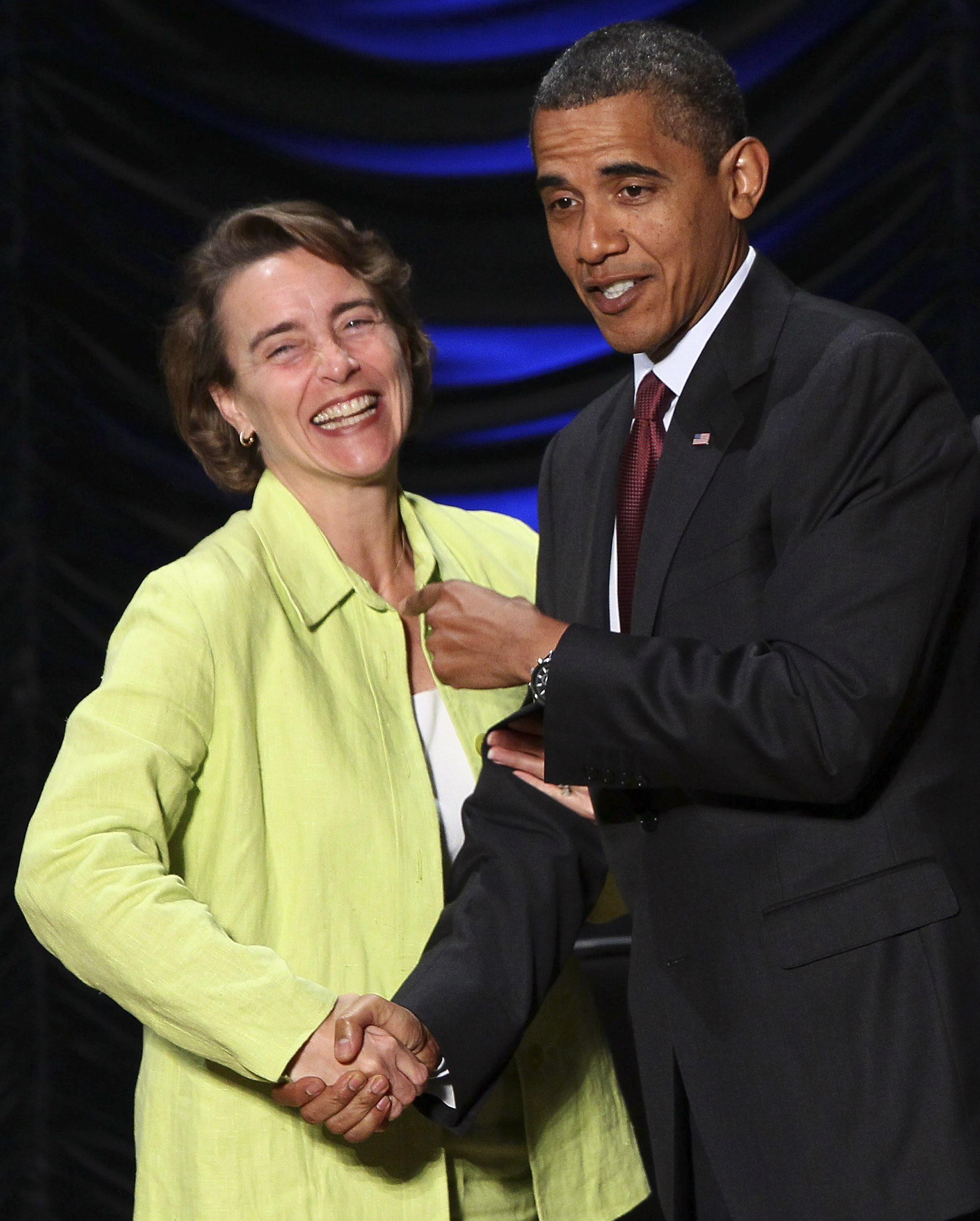
Lincoln tells US to let the markets decide
Lincoln’s 12-year tenure in the Senate ended in January 2011 after a landslide election loss to Republican John Boozman. She went on to found the Lincoln Policy Group, whose lobbying disclosure reports show it has received $480,000 from Kalshi since 2024.
“So far in 2026, Kalshi, its competitor Polymarket, and the Coalition for Prediction Markets have spent at least $3 million on lobbying and campaign contributions across the federal and state levels,” according to OpenSecrets, which notes that “Lincoln is now arguing directly against stances she took as” a Senate committee chair.
As a Kalshi lobbyist, Lincoln argues that event contracts on sports games like the Super Bowl serve a legitimate purpose beyond mere gambling. She urged the CFTC this year to let “markets determine what contracts have value and those that do not,” and argued that sports events “have strong commercial value because they have major impacts on advertising, apparel sales and the hospitality industry to name a few.”
The lobbying disclosure reports say Lincoln and her firm have lobbied the Senate, House of Representatives, and the CFTC on Kalshi’s behalf, on “issues related to event contracts regulation.” Lincoln has also lobbied for telecom companies, including Comcast, on different regulatory issues.
We contacted Lincoln, requesting an interview about her statements in 2010 and her lobbying work with Kalshi. We received this statement from her lobbying firm:
Blanche Lincoln and her firm, Lincoln Policy Group, advise Kalshi on public policy and regulatory matters, including engagement with Congress and the CFTC on the appropriate federal framework for prediction markets. The firm’s current work reflects her view that properly regulated prediction markets can serve legitimate financial purposes, including contracts on sporting event outcomes, which are increasingly economically significant to a variety of stakeholders. Unlike offshore, unregulated prediction markets, US-based, CFTC-registered Kalshi provides more protections and oversight for its traders. Her firm advocates for strong federal CFTC oversight of prediction markets because it is essential to establish guardrails, prevent market abuse, and protect consumers.
Kalshi declined to comment on Lincoln’s changing views or her work for the company, though the Kalshi official who spoke to Ars said it’s no surprise that someone would change their opinion on prediction-market betting. The official said the ability to list a sports-event contract has always been subject under US law to a public interest determination and that people’s interpretation of public interest changes over time. The fact that many states legalized sports gambling in recent years proves there has been a shift in what is considered to be in the public interest, the Kalshi official said.
Lincoln urged Trump admin to block state laws
Beylin said that while “one senator’s opinion is only weak evidence of how the statutory language should be read,” Lincoln’s stance in 2010 “does bear on what Congressional expectations for the CFTC were and it is in tension with decisions the CFTC under the second Trump administration has made.” As for why Lincoln changed her views on sports-event contracts, Beylin speculated that “it may be that she has reconsidered how derivatives can contribute to the sports industry. Or it may be that she says what she is paid to say.”
In July 2025, Lincoln filed comments with the CFTC urging the Trump administration to take a hard stand against state regulation of prediction markets. States seeking to regulate prediction markets are trying to restrict or prohibit the same kinds of sports-related event contracts that Sen. Lincoln said the CFTC should ban.
“I have great concern this system is under threat by some recent states’ efforts to block prediction markets—federally regulated futures contracts that traders use to predict the outcomes of closely watched events,” Lincoln told the CFTC last year. She said if the states succeed, “it could establish a damaging precedent where states feel empowered to block all sorts of contracts, including contracts that have long-established and unquestioned economic utility… This is why it is crucial that the CFTC make clear that all prediction markets fall entirely under its domain with no interference by states. If a formal rule is necessary to achieve this goal, then the agency should not hesitate to act.”
Lincoln’s stand against state regulation doesn’t necessarily contradict her 2010 remarks about empowering the CFTC, a federal agency, to regulate those markets. But as a Kalshi lobbyist, Lincoln also urged the CFTC to allow sports-related contracts in federal rules, despite saying during Senate deliberations that the CFTC should ban them.
“Not surprisingly, the CFTC faces a lot of pressure right now to ban prediction markets, especially contracts tied to political elections or sporting events,” she told the CFTC in the 2025 comments. “This would be a grave mistake for a number of reasons, and it would fly in the face of the agency’s long-standing policy of letting the markets decide.”
Lincoln still supports some restrictions on prediction markets. In an April 2026 filing with the CFTC, she wrote that “some contracts genuinely should be prohibited—direct references to specific acts of terrorism, named-individual assassinations, military operations.” But aside from a few exemptions, she said the CFTC should “protect futures contracts that have unquestioned economic utility in an ever-evolving financial landscape.”
States defend authority over gambling
The CFTC has tried to block state regulation in court by filing lawsuits against Arizona, Connecticut, Illinois, Kentucky, Minnesota, New Mexico, New York, Rhode Island, and Wisconsin. It has also filed briefs supporting Kalshi in appeals court cases.
State attorneys general and governors throughout the country say they view sports bets on prediction markets as nothing more than gambling that should be firmly under the states’ regulatory control. “No matter what they call themselves, prediction markets like Kalshi are gambling platforms, plain and simple,” New York Attorney General Letitia James, a Democrat, said in July. “By ignoring our laws, Kalshi is running an illegal operation and harming New Yorkers in the process.”
In states where sports betting is legal, state governments collect tax revenue on licensed sports gambling. Nevada Governor Joe Lombardo, a Republican, said in August that “prediction markets offering sports-event contracts constitute gambling and must comply with Nevada’s gaming laws and regulatory framework.”
State leaders also say they want to use their regulatory authority to protect minors and those with low incomes from compulsive gambling. Some states allow sports betting in general but restrict wagers on college teams.
States have sent cease-and-desist letters to Kalshi, saying it offers an unlicensed gambling operation. Kalshi responded by suing states and asking judges to rule that it doesn’t have to follow state laws because it falls under the CFTC’s exclusive jurisdiction.
Minnesota has taken the strongest stand against prediction markets, banning them entirely. A judge blocked the Minnesota law for being too expansive, but said Minnesota may be able to ban other wagers, such as bets on the outcome of reality TV shows or on what TV announcers say during sports broadcasts.
Besides sports gambling, there are many other concerns about specific types of prediction-market wagers that may be contrary to the public interest. Prediction-market bets on clinical trials, flight cancellations, and wildfires have been the subject of protest. While Polymarket faced scrutiny for allowing bets on wildfires, a spokesperson for Kalshi told Ars recently it has never offered markets on wildfires “because they create perverse incentives” and has never offered markets on war, death, or terrorism.
Political candidates have been caught betting on their own races. A Trump teleprompter aide reportedly made $100,000 on Kalshi by betting on what Trump would say in prepared remarks, taking advantage of so-called “mention markets.”
Kalshi and Polymarket both prohibit insider trading. Kalshi banned former Republican congressman George Santos for life after determining he broke the rule. Polymarket claims it is “the enforcement leader,” offering as proof that “the only insider trading arrest in prediction-market history happened because we caught it—a military insider allegedly trading on confidential information in a prediction market.” In that case, a US Army soldier was arrested and charged with using confidential information to make $410,000 in Polymarket bets on the timing of the military’s capture of Venezuelan President Nicolás Maduro.
The CFTC reports that total trading volume on CFTC-registered prediction markets was over $25 billion in 2025, which it called “a small share” of the overall futures market that “had a notional value of around $31 trillion in 2025.” Prediction markets’ share is growing fast, aided by the CFTC’s decision to let sports gambling flourish without restrictions.
“In one of the largest prediction markets, the daily average number of event contracts listed for trading increased from approximately 1,600 in April 2025 to 162,000 in April 2026,” the CFTC said in its rules proposal this year. The document said that since 2021 “the number and diversity of event contracts listed for trading have increased dramatically—from roughly five per year historically to more than 220 in 2021, with over 8,000 contracts trading in May 2026.”
The CFTC said the huge rise includes contracts related to international events, natural disasters in specific US cities, public-health data such as COVID cases and restrictions, discoveries of exoplanets, video-game release dates, Academy Award results, confirmations of federal officials, Supreme Court case outcomes, NFL television ratings, and NASA moon-landing milestones.
Defining sports bets as “swaps”
The outcomes of court cases involving Kalshi hinge largely on whether a sports bet on a prediction market meets the definition of a “swap.” The Dodd-Frank Act amended the Commodity Exchange Act (CEA) to give the CFTC jurisdiction over swaps, and defined swap as “any agreement, contract, or transaction… that provides for any purchase, sale, payment, or delivery… that is dependent on the occurrence, nonoccurrence, or the extent of the occurrence of an event or contingency associated with a potential financial, economic, or commercial consequence.”
Courts have reached conflicting decisions about whether sports games qualify as the significant “events” described in the definition of swap. Three decisions in particular make it likely that the Supreme Court will decide whether sports-event contracts are swaps and, if they are swaps, whether the CFTC authority entirely preempts state gambling regulation.
On April 6, the US Court of Appeals for the Third Circuit ruled that New Jersey cannot regulate sports bets on prediction markets. On August 28, the Ninth Circuit appeals court found that Nevada can stop Kalshi from allowing sports bets under the traditional authority of states to regulate gambling.
A month later, the Sixth Circuit handed Kalshi a second major loss in a ruling that said Ohio and Tennessee can enforce their gambling laws against prediction markets. A Fourth Circuit case involving Maryland is still pending.
New Jersey petitioned the Supreme Court to resolve the circuit split and is waiting to learn whether the court will hear the case. New Jersey Attorney General Jennifer Davenport noted that similar litigation “has erupted across at least 20 states, with dozens of active suits pending and the gambling laws of several states currently enjoined by the federal courts.” This week, 39 states and the District of Columbia filed a brief urging the Supreme Court to take up the case and uphold states’ rights to regulate gambling.
Trump-appointed judges ruled against Kalshi
The Supreme Court’s conservative majority may give the CFTC and Kalshi an advantage, but it’s not a guarantee of victory. In the Ninth Circuit, a panel of three Trump-appointed judges unanimously ruled against Kalshi.
Ninth Circuit judges pointed out that Rule 40.11 still prohibits gaming contracts on prediction markets, though in practice the Trump administration has allowed sports betting.
“Kalshi’s self-certification and listing of these contracts is unlawful under this Special Rule, and its associated regulation, 17 C.F.R. § 40.11,” the Ninth Circuit wrote. The “Special Rule” is the provision in Dodd-Frank that gave the CFTC power to prohibit swaps involving “activity that is unlawful under any Federal or State law, terrorism, assassination, war, gaming, or other similar activity.”
Kalshi told the Ninth Circuit that the Special Rule “is unequivocal textual proof that Congress understood contracts involving ‘gaming’ would be regulated by the CFTC, not 50 different states.” Kalshi added that “the CFTC has not treated Section 40.11 as a blanket ban” and that the regulation “preserves CFTC discretion to permit such contracts case-by-case.”
Ninth Circuit judges unanimously held that prediction-market wagers on sports events don’t meet the legal definition of a swap. Trump-appointed Judge Ryan Nelson wrote for the court that “placing sports bets, even when called by another name, is still gambling.” Judge Kenneth Lee wrote in a concurring opinion that few people would describe the New York Mets’ latest loss as a significant “event” as defined in the legal definition of a swap, though he allowed that “a Mets’ loss could have marginal economic impact as some fans guzzle more beer to drown away their sorrows.”
In the Third Circuit, the case was considered by a panel of three judges appointed by Republican presidents. The majority found that the definition of swap in US law is broad enough to encompass contracts on sports results and that “Congress gave the CFTC exclusive jurisdiction” over the trades. Third Circuit Judge Jane Roth, a George H.W. Bush appointee, said in a dissent that Kalshi “offerings are virtually indistinguishable from the betting products available on online sportsbooks, such as DraftKings and FanDuel.”
Kalshi: “Sports events have financial consequences”
The Sixth Circuit panel of judges unanimously held that for an “event” to be a swap, it “must be intrinsically associated with a financial consequence such that we can reasonably understand why hedging financial risk or ascertaining pricing information for the occurrence of that event would be desired and beneficial (e.g., a change in interest rates).”
Kalshi’s sports-event contracts do not qualify as swaps under this reading, the court said. “Unlike contracts based on financial values or instruments (e.g., interest rates or stock prices), Kalshi’s sports-event contracts have only downstream economic consequences, assuming they have the potential to cause economic consequences at all,” the court said in a ruling written by Judge Julia Smith Gibbons, a George W. Bush appointee.
Kalshi told the Sixth Circuit that sports bets are used for hedging. “An insurance company ‘expects to hedge about $30 million annually through‘ Kalshi to help teams and sponsors ‘manage the financial risks of performance incentives in athletes’ and coaches’ contracts.’ Businesses use Kalshi ‘to hedge‘ on promotions tied to whether particular teams win and by how much,” Kalshi said.
Sports games have financial consequences “for sponsors that pay substantial performance bonuses, advertisers with a financial stake in who performs well, television networks that benefit from exciting games, local businesses that profit from team wins—the list goes on,” Kalshi’s filing said. The Kalshi official who spoke to Ars said hotels and bars make or lose money based on how well a team is doing, and that player decisions like LeBron James’ move to the Philadelphia 76ers have major effects on ticket resale prices.
Kalshi provided a statement to Ars arguing that its sports-event contracts provide a better option than insurance. “Organizations face business exposure to sporting events every day—from apparel companies and advertisers to bars and hotels,” Kalshi’s statement said. “Traditional insurance is too expensive and slow for this kind of operational exposure, and lacks the benefits and protections of a two-sided market. Kalshi offers liquid, transparent markets where any organization can hedge the risks that hit its bottom line—a fundamental shift in how businesses large and small protect themselves.”
Kalshi argues that if its event contracts are swaps, they are not subject to state laws because “the CEA preempts the application of state laws to instruments subject to CFTC jurisdiction.” The Sixth Circuit disagreed, ruling that states could regulate Kalshi even if its wagers met the definition of swaps.
Federal law has historically deferred to states on gambling, and Congress did not expressly preempt state gambling laws in the statute that gave the CFTC jurisdiction over swaps, Sixth Circuit judges decided. The judges determined that Congress preempted state laws that directly target the licensing and operation of designated contract markets (DCMs) but not gambling laws whose effects “are felt only because DCMs like Kalshi have decided to offer event contracts that ‘are virtually indistinguishable from’ sports bets.”
Biden admin sought stricter regulation
Under US rules, DCMs can “self-certify” to the CFTC that any new contract complies with the agency’s rules and start offering the new contract the next business day. The CFTC can review each self-certified contract and disallow it later.
Before Trump won a second term, the Biden administration was moving toward stricter regulation that would expand the types of banned “gaming” contracts to include more than just sports. The Biden CFTC issued a 2023 order rejecting Kalshi’s self-certification of “Congressional Control Contracts” that settle based on which party wins control of the House or Senate, determining that these contracts involve gaming.
Kalshi sued the CFTC over its Congressional Control Contracts decision, and it won the case, but the Biden CFTC wasn’t done trying to expand regulation of prediction markets. In June 2024, the agency proposed to define gaming to include not just wagers on sporting events and games of chance but also betting on elections, the outcomes of entertainment awards like the Emmys and Oscars, sports awards like the Heisman Trophy, and other awards like the Nobel Prize or the Pulitzer Prize.
Betting on elections “would raise unique additional public interest concerns relating to election integrity and the perception of election integrity,” such as “monetary incentives to vote for particular candidates” or the spreading of misinformation and inaccurate polling, the CFTC said at the time.
The 2024 proposal included numerous citations to the 2010 colloquy between Senators Feinstein and Lincoln to support a broad definition of gaming. The proposal noted that Lincoln agreed with Feinstein’s statement that the CFTC should “have the power to determine that a contract is a gaming contract if the predominant use of the contract is speculative as opposed to a hedging or economic use.”
Rostin Behnam, the chairman of the CFTC at the time, said he was seeking to ban election contracts that would “ultimately commoditize and degrade the integrity of the uniquely American experience of participating in the democratic electoral process.”
Lincoln urged Biden admin to stand down
Lincoln wasn’t pleased with the Biden administration plan. She wrote to the CFTC in August 2024, urging it to abandon its attempt to prohibit “broad categories of contracts.”
Lincoln told the agency that its plan “relies heavily on a 2010 Senate colloquy between me and the late Senator Feinstein for support,” but went far beyond what they intended. Lincoln’s 2024 letter maintained her 2010 view that sports results do not have significant economic consequences:
The law was meant to capture recreational gambling on sporting events and casino-type activities, not the Nobel Prize in Physics or the outcome of major elections. These events are nothing like the Super Bowl, the Kentucky Derby, or the Masters Tournament. If we had intended to include these events, we would have done so explicitly. We did not, because those events—unlike the result of a sports match—have real and significant economic consequences.
Lincoln’s 2024 letter confirmed that Congress intended to let the CFTC prohibit prediction market bets on sporting events, saying the CFTC authority over sports bets is the same as its authority over betting on war and terrorism:
Of course, there are instruments that should not be traded on any financial market. Instruments about war, terrorism, and assassination might be inappropriate for the markets. This is precisely why we included rules in the CEA that give the government authority to prohibit contracts about war, terrorism, and assassination. We also believed that our futures markets are not meant for gambling, and so we also gave the government the authority to prohibit gambling contracts about games like the Super Bowl, the Kentucky Derby, and the Masters Tournament. But outside these narrow categories, the law is clear that the CFTC has the responsibility to regulate contracts, not ban them.
The Biden CFTC ultimately did not ban election contracts. “I am disappointed that during my time at the commission, we were not able to successfully advance a final rule that addressed the introduction of political event contracts,” CFTC Commissioner Kristin Johnson, a Democrat, said in her 2025 farewell speech. “Activity in markets in most recent months underscores my concerns and the concerns of others about prediction markets. As of today, we have too few guardrails and too little visibility into the prediction market landscape.”
The Trump CFTC’s June 2026 proposal to overhaul prediction market rules said that Lincoln’s 2010 comments show that Congress chose not to prohibit sports-event contracts.
“The Commission preliminarily believes that the colloquy between Senators Feinstein and Lincoln establishes that Congress was aware that event contracts based on ‘sporting events such as the Super Bowl, the Kentucky Derby, and Masters Golf Tournament’ could potentially be submitted under CEA section 5c(c), but Congress chose not to prohibit event contracts involving those sorts of events,” it said.
The Trump CFTC’s proposed definition of gaming clearly includes sports events, as it covers “measurable occurrences or outcomes that depend on the participants’ luck, skill, or athletic ability during the activity.” But the proposal concludes that the law “does not authorize the Commission to impose a prohibition on the listing of such event contracts independent of a public interest determination,” which can only happen after a company starts offering event contracts.
The version of Rule 40.11 that has been in place since 2011 describes what the CFTC must do if it determines an event contract is related to terrorism, assassination, war, gaming, or activities that are illegal under any state or federal law. The CFTC is to notify the registered entity of a potential violation, begin a 90-day review, and “shall request that a registered entity suspend the listing or trading” of the event contract during the review.
But the Trump CFTC said that under its interpretation of the Dodd-Frank Act, prediction markets do not have to suspend trading of event contracts while they are under review. This means “that some event contracts that are contrary to the public interest may be traded during the period of time required for the Commission’s review,” the CFTC proposal said.
CFTC approves bets on scores, stats, and records
The Trump administration proposal makes it clear that most sports event contracts based on scores and statistics would be allowed even if they undergo a formal review. Those based on “final scores, statistics, and season records, are generally considered not to be contrary to the public interest,” the CFTC said.
The Trump CFTC indicated it may block certain types of sports-related wagers. The agency preliminarily concluded that contracts referencing player injuries, referee decisions, physical altercations, and pre-collegiate sports “are likely contrary to the public interest as these types of event contracts present significant risks of manipulation, offer opportunities for insider access, and may create perverse incentives for harmful behavior.”
Beylin told the CFTC in March 2026 comments that the agency’s regulations and US law were not developed to protect the types of sports wagers the agency is allowing. The Commodity Exchange Act text defines the law’s purpose to include promoting “responsible innovation and fair competition” in trade.
Beylin told the CFTC that overriding state gambling laws is not responsible innovation:
Opening up sports betting to residents of states like Texas and California where the democratic process within the states supports a ban on sports gambling is not “responsible” innovation. Allowing eighteen-year-olds to gamble on sports whereas their state would not permit it until they reach twenty-one is not “responsible” innovation. The exchanges pushing to offer gambling products under the CEA are engaging in regulatory arbitrage rather than responsible innovation. Moreover, they are attempting to use the CEA to engage in unfair competition through avoiding the licensing fees and state taxes generally paid by gambling platforms.
Beylin also told the CFTC that “there is no reason to believe the definition of swap was intended to apply to these wagering contracts.” Beylin said the Dodd-Frank Act was written to address the risks that led to the financial crisis of 2007-08, and that “gambling did not contribute to the financial crisis and was already subject to separate regulatory regimes outside of the CEA.” Many event contracts offered on prediction markets have no hedging utility and are used merely for entertainment, Beylin wrote.
Trump official: Prediction markets have “integrity,” aren’t like casinos
Selig has insisted that prediction markets offer a different product than traditional gambling businesses. “They’re different models. The conventional sportsbooks and casinos are entertainment, and they have a lot of authority to be able to kick people out when they keep winning,” Selig told Axios. On prediction markets, people can “keep winning” and “take your earnings,” he said.
“What you’re seeing is markets versus entertainment,” Selig said. “For those that want the discipline and integrity of a market, it’s a better model. For those that want entertainment, the casinos might be the model for them.”
Stop Predatory Gambling, an advocacy group focused on harms caused by commercialized gambling, isn’t buying the CFTC’s claim that betting on prediction markets is fundamentally different from bets placed on other platforms. The CFTC “proposal opens by calling prediction markets ‘a source of reliable information’ and ‘a source of responsible financial innovation,’” the group told the CFTC. “Most Americans would call that description absurd when applied to a market on whether the NFL’s Buffalo Bills beat the New England Patriots.”
US law requires the CFTC “to weigh costs and benefits” of its proposal, Stop Predatory Gambling said. The CFTC measured compliance costs for the industry but didn’t quantify the harms to consumers, the group said. It urged the CFTC to scrap the proposal and “adopt one that treats consumer harm as seriously as it treats compliance cost.”
Many commenters urged the CFTC to heed the statements made by Lincoln in 2010. The Mille Lacs Band of Ojibwe tribe’s CEO, Virgil Wind, told the CFTC that “Congress’s legislative intent is as clear to us today as it was to Sen. Lincoln in 2010: event contracts that simulate sports betting and other forms of gambling, such as those that involve wagering on events like the Super Bowl, the Kentucky Derby, and Masters Golf Tournament, are contrary to the public interest and have no place being listed or traded on DCMs.”