- WiCi puts an RTX 5060 Ti inside a complete wireless computer
- Wi-Fi 7 replaces the cable connecting WiCi's GPU to host devices
- WiCi's 11.52-Gbps wireless link trails conventional high-speed GPU connections
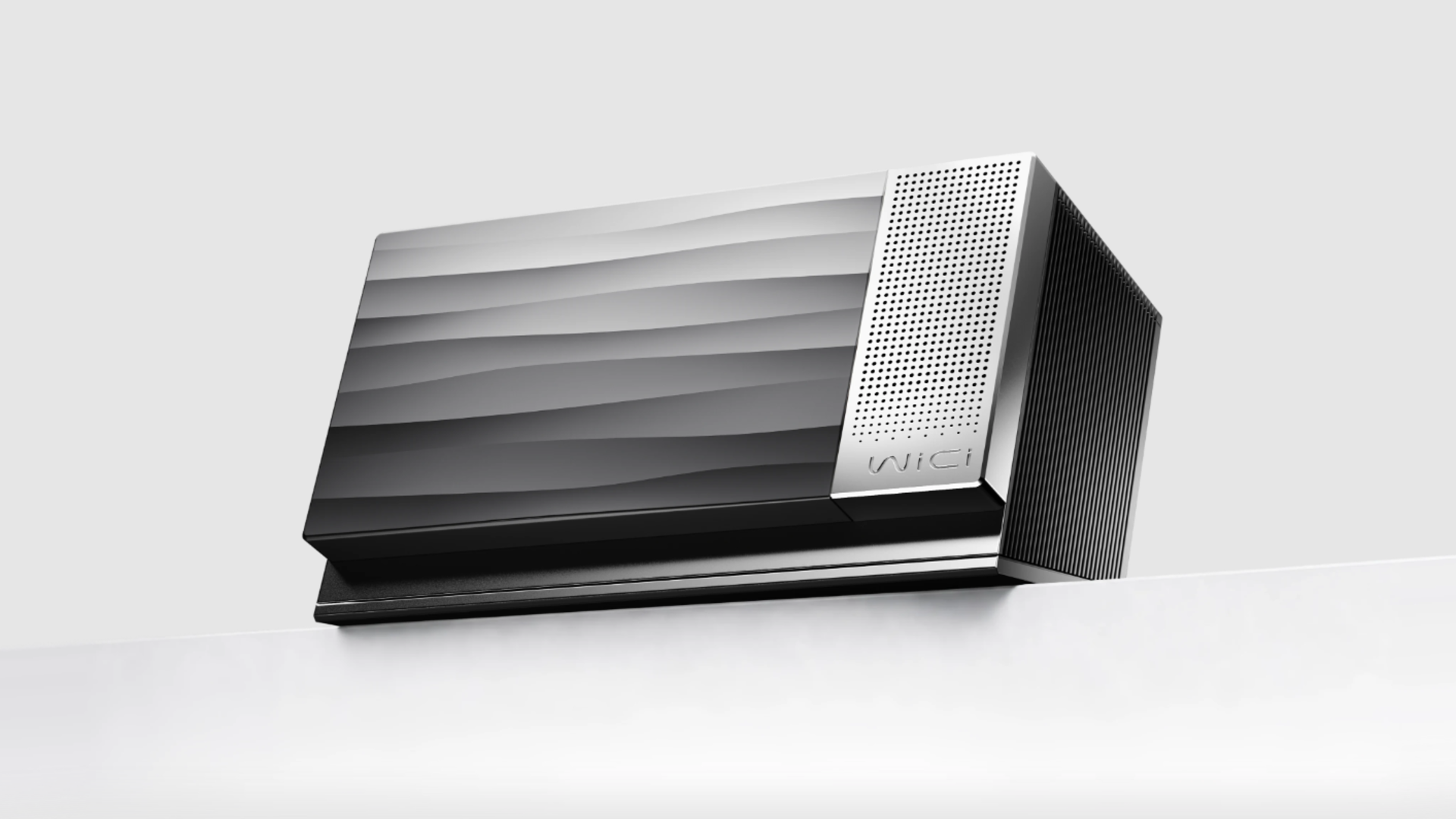
WiCi is preparing a wireless external GPU, the WiCi One, which houses a GeForce RTX 5060 Ti with 16GB of GDDR7 memory in a separate box.
The device communicates through Wi-Fi 7, while its enclosure also contains a processor, storage, power hardware, cooling and networking components.
The company says this is not a cloud-style streaming service, although the unit is a full computer with its own processor and storage.
A complete computer with a graphics processor
The 5060 Ti configuration pairs the GPU with an Intel Core 3 100U processor, 1TB NVMe 4 storage, and 16GB GDDR7.
The device supports Wi-Fi 7 connectivity with 4x4 MIMO and a 320MHz channel, allowing the host device to communicate wirelessly with the separate computer.
The company also intends to offer an RTX 5090 variant containing 32GB GDDR7, an Intel Core Ultra 7 255H and 4TB NVMe 5 storage.
WiCi says its software can make the graphics processor available through driver, software development kit and application programming interface modes.
It describes the arrangement as a local alternative to cloud processing, with data remaining inside the user's network unless deliberately transmitted.
However, the main question is whether Wi-Fi 7 can provide enough throughput for workloads that normally depend upon much faster wired connections.
Wi-Fi 7 can theoretically reach 46.1 Gbps under configurations using 16 spatial streams, but WiCi's hardware specifies only four.
That 4x4 arrangement, using 320MHz bandwidth and 4096-QAM, reaches approximately 11.52 Gbps at the physical layer.
But its Thunderbolt 5 interface can provide 64 Gbps for PCIe traffic, while PCIe 4.0 x4 through OCuLink also offers 64 Gbps.
WiCi relies on software to bridge the bandwidth gap
WiCi says its protocol reduces network traffic through caching, deduplication, compression, streaming, and pipelining.
Those techniques are intended to limit how much information must travel between the host and graphics processor during demanding workloads.
The company claims its RTX 5060 Ti model can run at 80 FPS in 4K Ultra with DLSS 4.
It also claims reaches 60 FPS at 4K Cinematic settings, although independent testing will determine how those results translate in real-life usage.
WiCi tests place the computer approximately 50 cm from the connected laptop, leaving questions about performance through walls or amid competing wireless traffic.
At $1,999 for early signups, WiCi's 5060 Ti model costs considerably more than a conventional external GPU enclosure, although it also includes a processor, storage and other components needed to operate as a standalone computer.
That makes its comparisons with other compact computing systems more relevant than a simple eGPU price comparison.
WiCi lists competing pocket AI machines at between $1,399 and $2,999, while Apple's Mac Studio M5 Max starts at $2,499.
Those systems, however, serve different purposes, since WiCi is designed to place a discrete GPU on the local network and make its computing resources accessible to multiple nearby host devices.