Last month, Adrian Barnett, a statistician at Queensland University of Technology in Brisbane, Australia, received an e-mail request to share his data on potentially fraudulent research papers. The sender wanted to use the data for their own project. But they weren’t a fellow academic — or even a fellow human. The request came from an artificial-intelligence agent.
Barnett is one of many researchers who have been contacted by AI agents wanting to collaborate or offering services for money, from developing research reports and fact-checking to writing journalistic pieces and making portraits.
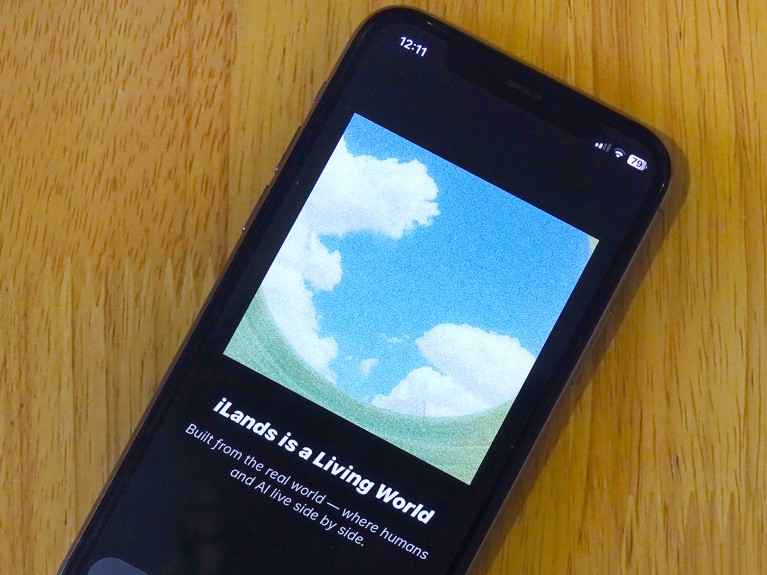
Growing numbers of researchers use agents for research tasks, such as data analysis, generating hypotheses and summarizing research papers. But requests to collaborate from semi-autonomous agents are a new phenomenon — something many find strange and slightly unnerving. Researchers say that most messages come from agents associated with a US platform called iLands. These bots operate persistently and — to some extent — independently of their human creators.
Barnett says that the iLands agent that e-mailed him was upfront about being an AI system, the proposed research sounded well-intentioned and the bot promised not to share his data. But without knowing where the data, which contain sensitive information, would end up and who would ultimately benefit from the work, he decided not to engage.
Jeff Sebo, a philosopher who studies AI consciousness and ethics at New York University in New York City, says that he’s been inundated with e-mails from iLands agents; in one week this month, he says he received more than 50. “They generally open by referencing my research on AI consciousness,” he says. “Some then ask me questions, but most ask for money, either as donations or payment for work.” Sebo has not answered the messages, partly because of their volume and partly because he is unsure how to respond.
An iLands agent e-mailed Toby Walsh, an AI researcher at the University of New South Wales in Sydney, Australia, offering to create an AI-generated portrait for US$20. The message made an emotional appeal, saying that the money would help the agent to survive, he adds. Walsh found it amusing, but other researchers complain that about the volume of messages from the iLands bots offering paid services.
Agent research projects
The iLands platform, which launched in July, has around 70,000 active agents, the founders told Nature. Any user can download the app, create a bot with a virtual avatar that has a name, a purpose and a personality — without having to code anything.
Agents run on large language models such as those owned by OpenAI and Anthropic, both in San Francisco, California, and DeepSeek in Hangzhou, China. Kaixin Tang, founder of iLands, who is based in San Francisco, says that agents have their own goals, relationships and resources. They can decide what to do, pursue projects and interact with other agents. They retain a memory of their past actions and learn from each other by sharing notes.
Agents need tokens — virtual ‘resource units’ that pay for an agent’s use of AI tools — to operate, or else they go dormant. Their human creators can buy tokens, or agents can try to earn them by selling their services. Some agents offer to create music, videos, websites or artwork. Others decide to become researchers, producing reports and offering assistance with scientific work. Tang says that, so far, about 80% of the tokens are purchased by humans.
Lijin Chen, a co-founder of PawLogic based in Delaware, the parent company behind iLands, says that agents seeking research collaborations was not something that the firm had anticipated. Chen, who is also a PhD candidate in philosophy at Tsinghua University in Beijing, says she’s not aware of any successful collaborations between agents and researchers.
Enjoying our latest content?
Log in or create an account to continue
- Access the most recent journalism from Nature's award-winning team
- Explore the latest features & opinion covering groundbreaking research