The Uprising is the first film inspired by the peasants’ revolt of the summer of 1381 – the largest popular rebellion in medieval England.
The revolt was triggered by the heavy-handed administration of a poll tax that required a fixed sum to be collected from all adults. The tax was levied to finance a faltering war in Europe.
The Uprising vividly portrays the rebels’ protest. They’re shown painting banners and burning tax records. The groups communicate between Essex and Kent via the River Thames. The role of women in the uprising is emphasised.
However, The Uprising doesn’t faithfully depict the revolt. Some spectacular events, such as the destruction of the Savoy Palace in London, are omitted. Other incidents are entirely invented. Most notably, the slaughter of rebels following the assassination of Wat Tyler during a meeting with the king at Smithfield in London.
The film describes how an ordinary ploughman (Andrew Garfield) becomes the leader of the rebellion. It suggests that the uprising echoes current anxieties about government control and public disillusionment. But records from the time show us the true depth of feeling among people of all classes.
By tracing the backgrounds of hundreds of insurgents, our People of 1381 database reveals a network of people and places far more complex than the movie suggests.
The Uprising portrays the rebels as the poorest and most oppressed in England. But this was not exclusively the case.
One prominent Kent rebel was Thomas atte Raven, who represented Rochester in parliament. Sir Roger Bacon, a member of the gentry, led attacks in Great Yarmouth. The most well-known female rebel, Joanna Ferrour, was the former wife of an MP and held substantial property in Kent.

The uprising was a revolt of all classes below the level of the aristocracy. That is why it was so dangerous.
The death of up to half of the population in the Black Death made a great deal of affordable land available. The old system, whereby unfree tenants (serfs legally bound to the estate, though not owned as slaves) held land in return for labour services, was crumbling away.
Read more: What can the Black Death tell us about the global economic consequences of a pandemic?
Many of the rebels had benefited from these opportunities and wanted to get richer faster. They resented the remnants of the old system of landholding and wanted a flat rate rent of four pence an acre for land. They also wanted to trade more freely. They hoped the revolt would achieve these things.
In counties like Kent and Hertfordshire, townsfolk formed a prominent part of the rebel force. They shared grievances with the rural population over the conduct and cost of the war.

The film portrays the Londoners who supported the revolt as drawn from the slums. This was not the case. Many had served as common councilmen and officers in craft guilds. Londoners were hostile to John of Gaunt, the king’s uncle, and as the rebels approached they destroyed Gaunt’s Savoy Palace.
The initial trigger of the revolt was the collection of the third poll tax in four years, but our research suggests the problems in collecting the tax were different from those portrayed in the film.
There was no mass evasion of the tax and royal officials did not terrorise villagers. There were instead community efforts to distribute the tax burden more equitably. Local people assessed and collected the tax. They tried to do so fairly, but when the Exchequer asked for more money, there was a breakdown of trust between local communities and the crown, so that even the tax collectors joined the rising.
The leaders of the rising
The most famous leaders of the revolt were Wat Tyler (played by Cosmo Jarvis in The Uprising) and John Ball (Jamie Bell), a radical priest.
Our database shows Tyler in action, for example, forcing the Sheriff of Kent to destroy tax records or ordering proclamations to be made in churches. Our research has traced the career of Ball as a chaplain and preacher back to 1349.

In the film, Tyler is portrayed in an understated way, but the suggestion of some chronicles that he had military experience is emphasised. Ball is represented as more radical, but this doesn’t fit with what we know of him. Far from making a last stand at Smithfield, he fled to Coventry during the revolt, where he was captured and afterwards executed.
A national revolt?
The Uprising portrays the revolt as based in London and the home counties, with the march on London as its primary focus. But we know that the revolt involved insurgencies in over half the counties in England.
In Suffolk, the Chief Justice of England, John Cavendish, was captured and beheaded. In Norfolk, Sir Robert Salle, a well-known knight, was captured and killed. Rebels entered colleges of the University of Cambridge. In Yorkshire, there were riots in York, Scarborough and Beverley.
The potency of the revolt derived from its wide geographical spread and from the way it fused rural and urban discontent. The rebel leaders in other parts of the country, such as Geoffrey Lister, a Norfolk dyer, and John Wraw, a chaplain from Suffolk, showed tactical skill and political understanding.
The conclusion to The Uprising shows some rebels living as outlaws in the forest one year after the revolt. This seems deliberately to echo stories of Robin Hood.
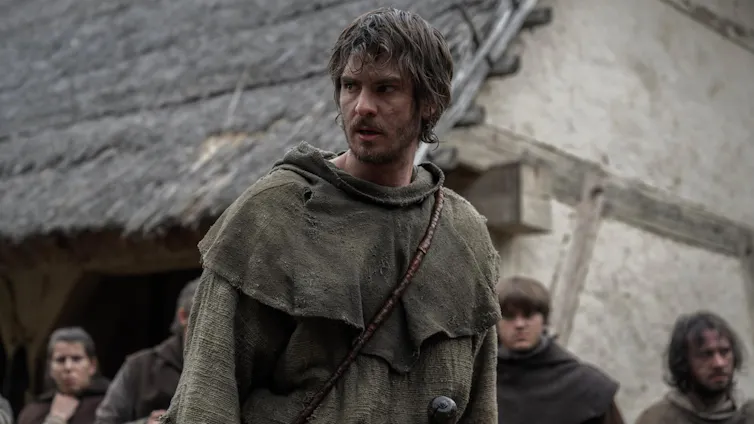
This again is an invented incident. But there were recurrences of trouble in the years after the revolt. In the autumn of 1381, conspirators met in a wood in Kent in order to force the king to uphold the charters he had granted in the revolt. The plotters were captured and executed.
Like many films, there is a moral undertone that can be applied to current society. The final scene, for example, echoes sentiments of the modern No Kings protests in the US. But there was much more to the revolt than any film can cover.
If The Uprising has fuelled your imagination to find out about the rebels and events that shaped the summer of 1381, The People of 1381 database can unlock many more stories and add detail to the drama.