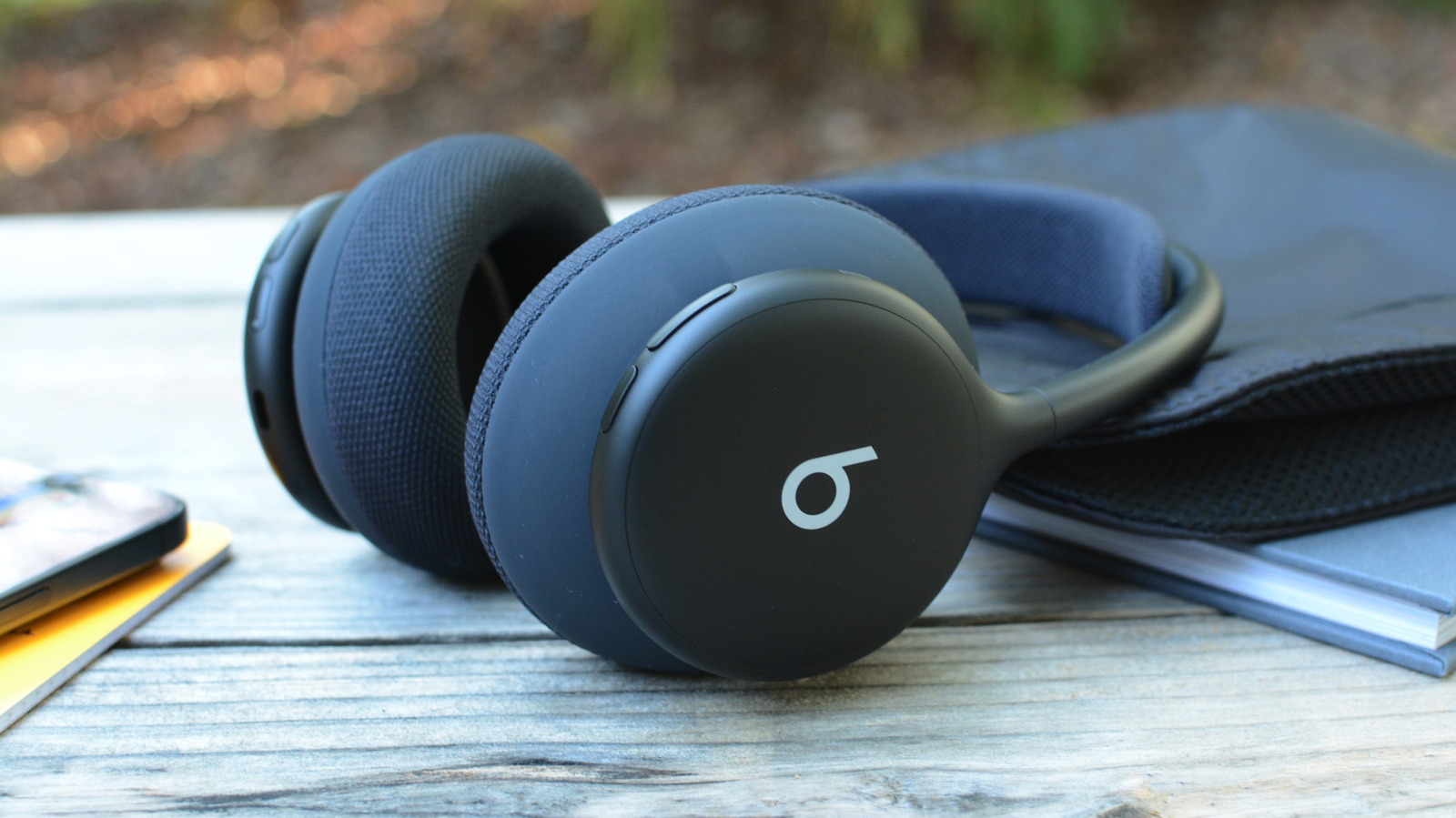
Beats explains that the goal of its new dual-magnet transducer design was to "deliver powerful bass, wide dynamic range, precise detail and low distortion" across the entire frequency range. In the process, the company was able to coax an additional 12dB of power out of the driver compared to the components inside the Studio Pro. When it comes to those aspirations for sound quality, I'd say Beats mostly succeeded.
There's definitely powerful bass here; this wouldn't be a Beats product if there wasn't a ton of low-end tone. It's almost too much for me, but the company continues its more recent propensity for restraint here. Subtle details, like the texture of distorted guitars and synths on Sylvan Esso's "Hot Slob," add layers to tracks other headphones might compress away. I didn't notice any distortion at full volume (which I don't recommend for extended periods) and the overall dynamic range was wide open. Hayley Williams' "Ice In My OJ" is a great example of that latter aspect.
When you turn both ANC and Transparency off, the Beats 360 has an Adaptive EQ function to automatically analyze and adjust the tuning as needed. The feature responds to changes in fit to ensure consistent overall performance. It's not something you turn on, it's just there by default in the "Off" listening mode. Like previous Beats headphones and earbuds, the 360 is also equipped with Apple's Personalized Spatial Audio. As a refresher, this feature uses your iPhone camera to detect and account for the shape of your ears in order to adjust spatial listening to you. Dynamic head tracking is part of this equation as well, and you can opt for "fixed" spatial listening if you prefer. I kept Spatial Audio off on the Beats 360 most of the time as I felt like the bass was overpowering with it enabled.
Beats says the 360 offers 1.75x more "total noise cancellation" than the Studio Pro, which makes this the company's most powerful ANC setup ever. Using the combo of a nine-microphone array and a higher-powered processor, the noise-canceling system is able to monitor both environment and fit, adapting accordingly without you even knowing. (Speaking of processors, the Beats 360 runs on the company's own fourth-gen platform rather than one of Apple's audio chips.) These headphones do a good job with constant noise sources like white noise machines, but like most of the competition, they don't offer much relief from human voices. You'll have to rely on pure volume to drown them out.
To improve call quality, Beats says it employs a new SoC platform, AI-trained algorithms, specifically tailored audio processors and almost twice the processing power as its previous voice setup. According to the company, all of that comes together for "more sophisticated speech enhancement and environmental noise suppression."
In practice, calls on the Beats 360 benefit from the headphones' natural-sounding Transparency mode, which allows you to hear your voice so you don't feel like you have to shout. On the other end, you'll sound clear enough to your caller, and background noise will be nearly silenced, but all of the audio processing impacts overall quality. It's not pristine, but is perfectly usable in most cases; your colleagues won't question if you're dialing in from under water.