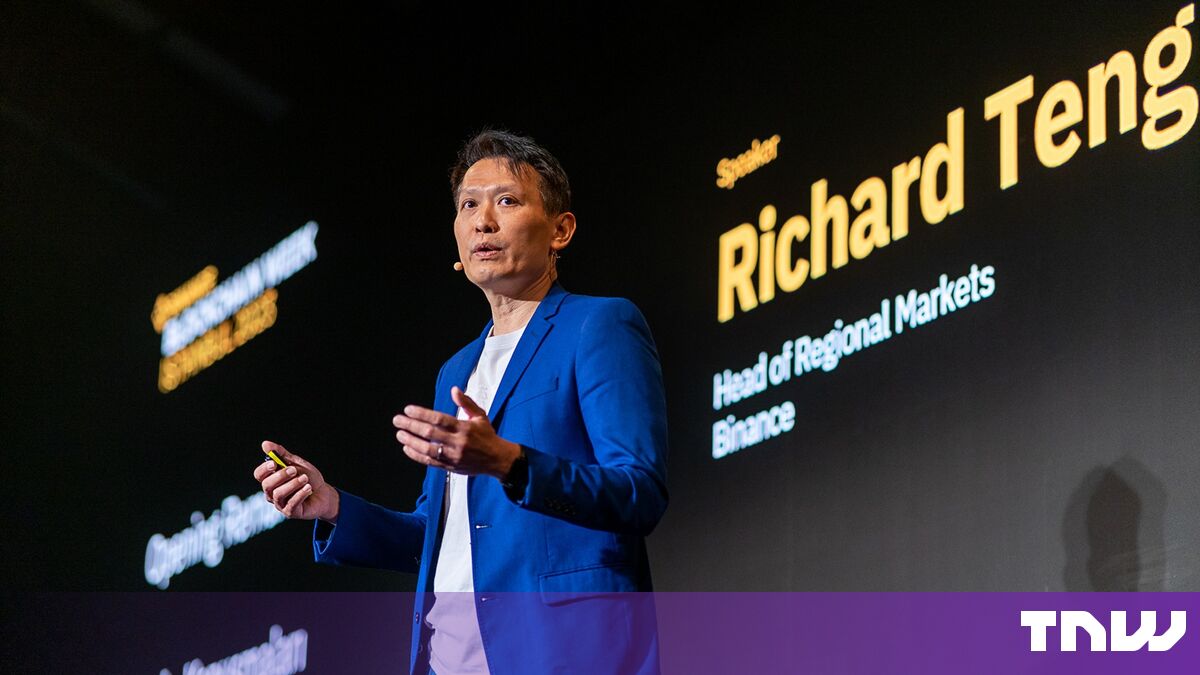
Binance has replenished 95% of the crypto stolen in last week’s record hack, co-CEO Richard Teng said at Hong Kong Fintech Week on Tuesday, Reuters reports.
The exchange remains in “very strong financial health,” Teng said.
Hackers drained about $6.3 billion from Binance wallets on Thursday evening, the biggest crypto heist on record.
Blockchain analysis firm TRM Labs says most of the theft unfolded in roughly 20 minutes, with funds moved out across 10 blockchains. Binance suspended withdrawals, then resumed them in phases on Sunday.
Teng said the losses were covered by Binance’s emergency insurance fund, known as SAFU, plus other company money.
SAFU is a $1 billion bitcoin reserve the exchange set up in 2018. The remaining 5% of affected tokens are less liquid, he said, and are being replaced through over-the-counter providers.
“It’s a painful lesson. We take responsibility for it,” Teng said, promising a full post-mortem of the breach.
Customers still headed for the exit. They withdrew a net $4.72 billion by Monday, Teng said, around 3% of the platform’s assets. Most of the money left in Tether’s USDT stablecoin.
Hourly flows in and out of the exchange have largely returned to normal, he added. Binance says it serves more than 335 million users and handles around $95 billion in daily trading volume.
The FBI on Saturday blamed the theft on TraderTraitor, a North Korean state unit linked to the Lazarus Group. The same unit was behind the $1.5 billion Bybit hack in February 2025, the previous record.
The bureau said the attackers were converting the stolen assets into ether and would likely launder them through DeFi and instant swap services. Stablecoin issuers Tether and Circle, along with Ripple, Arbitrum and Optimism, have frozen around $2.85 billion of the funds on-chain.
North Korea denies any involvement. Kim Yo Jong, the sister of leader Kim Jong Un, dismissed the FBI’s findings on Tuesday as a political provocation.
“The US assertion is absurd rhetoric and nothing new,” she said in a statement carried by state media.
Binance itself has not pinned the attack on anyone. The company first pointed to a compromised engineer’s laptop, but later said it had found additional points of breach, and that no wallet private keys appear to have leaked.
The heist has also reignited a debate over crypto storage and whether users should keep assets on exchanges at all.