Whether learning a new piano piece or adapting your tennis serve, acquiring physical skills depends on your brain’s ability to strengthen and refine neural connections. Researchers are exploring whether this process can be accelerated with technology.
Scientists are particularly interested in the potential of non-invasive brain stimulation – a group of techniques that can alter brain activity without surgery.
Some deliver weak electrical currents to the brain through electrodes placed on the scalp. Others use magnetic fields or focused ultrasound waves. Although they work in different ways, they all aim to temporarily change the activity of neural circuits.
If these techniques can successfully enhance neuroplasticity – the brain’s ability to reorganise and form new connections during learning – then they could be of use anywhere where performance depends on learning complex movements, from sport and music to surgery and beyond. Researchers are also seeing if these technologies could help with learning non-physical skills, such as picking up a foreign language.

Technology that boosts people’s physical and mental abilities is no longer the preserve of science fiction. In this new series, we explore cutting-edge ways that human capabilities could be augmented both now and in the near future – and the ethics of these innovations.
Elite sport, professional gaming and high-performance workplaces could all become targets for these enhancements if they prove effective. Brain stimulation could also have a big role to play in medicine, helping patients recover physical skills lost through injury or disease, such as stroke.
Studies suggest there’s a lot of potential here. But translating this potential into useful tech that reliably boosts learning physical skills remains a big challenge.
Stimulating findings
Research into enhancing motor learning with electric or magnetic stimulation has been gaining momentum since the turn of the millennium, with early studies garnering considerable excitement.
In a typical experiment, participants might learn a sequence of finger movements similar to practising scales on a piano while receiving stimulation over brain regions involved in movement. Other studies have examined how stimulation could be used for balance training or teaching sports-related skills or surgical techniques.

Some of these experiments produced eye-catching results – finding that participants learned certain movement tasks faster or retained skills for longer if they underwent brain stimulation. But other studies failed to find benefits. And in some cases, researchers struggled to replicate the success of earlier promising experiments when repeating them.
One reason for these mixed findings is that there’s no such thing as a universal “learning network” in our brains. Different skills rely on different combinations of areas near the surface of the brain as well as those deep within it.
Additionally, people can respond very differently to the same stimulation. Factors such as age, anatomy, genetics and even baseline skill level may influence whether stimulation is beneficial. Add to that the infinite number of ways to apply stimulation, the picture becomes murkier.
Despite these challenges, the field continues to evolve in its quest to enhance motor learning. For instance, rather than broadly stimulating the brain, researchers are increasingly targeting specific neural circuits involved in learning.
This is partly thanks to advances in neuroimaging and computational modelling, which has allowed scientists to predict how electrical currents travel through a person’s brain. Newer brain stimulation technologies – such as focused ultrasound – can also now reach deep structures involved in skill acquisition.
The goal is to use these technologies not simply to increase brain activity, but to influence the right neural circuit at the right time during learning. This idea builds on a fundamental principle of neuroscience, often summarised as “neurons that fire together, wire together”. When brain cells are repeatedly activated at the same time, the connections between them become stronger.
By carefully timing stimulation to coincide with the movements made during practise, researchers hope to reinforce the neural pathways involved in learning a new skill. In principle, this could make stimulation more reliable and more effective than current approaches – but researchers are still fine tuning exactly how this would work.
Motoring ahead
Important questions remain. Who would have access? Should stimulation be regulated in competitive environments such as sport? And how much evidence should be required before consumer devices are marketed to healthy users?
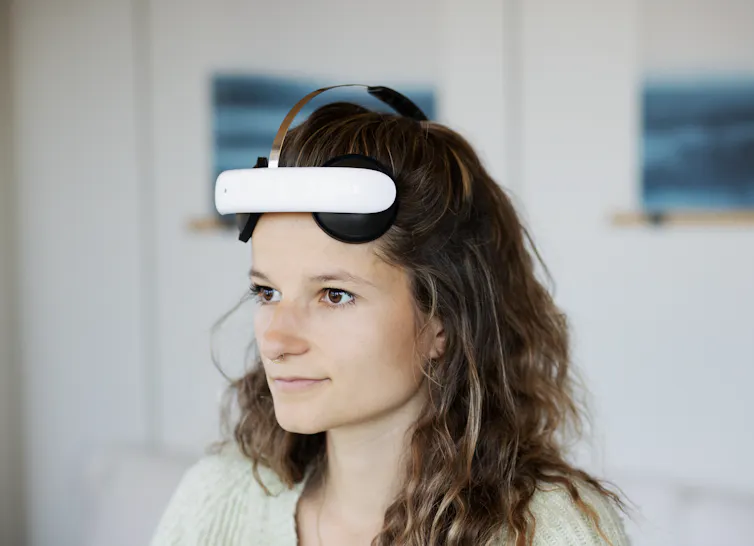
These questions are becoming increasingly relevant as brain stimulation moves beyond the laboratory and clinic. A number of at-home devices are now available for people to buy. Some have received regulatory approval, as they’re indicated for treating medical conditions such as depression. But there’s also a growing market for devices for cognitive and performance enhancement. For these uses, no regulatory approval is needed.
The technology is advancing rapidly, but evidence to support it and regulations governing it are still trying to catch up. Proper frameworks for its adoption may simply be bypassed by the ready possibility of “DIY” brain stimulation.
For now, brain stimulation is unlikely to transform anyone into an overnight virtuoso or elite athlete. But as researchers develop increasingly precise ways of targeting the neural circuits that underpin learning, the prospect of enhancing human performance is shifting from science fiction towards scientific possibility.
The challenge today is not simply learning how to influence the brain, but deciding where, when and why we should.