Charles Cecil wants to make one thing clear: “I'm not anti-AI.”
The veteran British developer behind the legendary 1996 point-and-click game Broken Sword: The Shadow of the Templars speaks to TechRadar about AI's divisive role in modern game development - and, in particular, how it was used in the upcoming remake of the sequel, Broken Sword - The Smoking Mirror: Reforged, due out in 2027.
“I think AI has its place,” Cecil says. “It's just not relevant in our games because we want human animation, human characterization and human expression, and that's much better done by humans.”
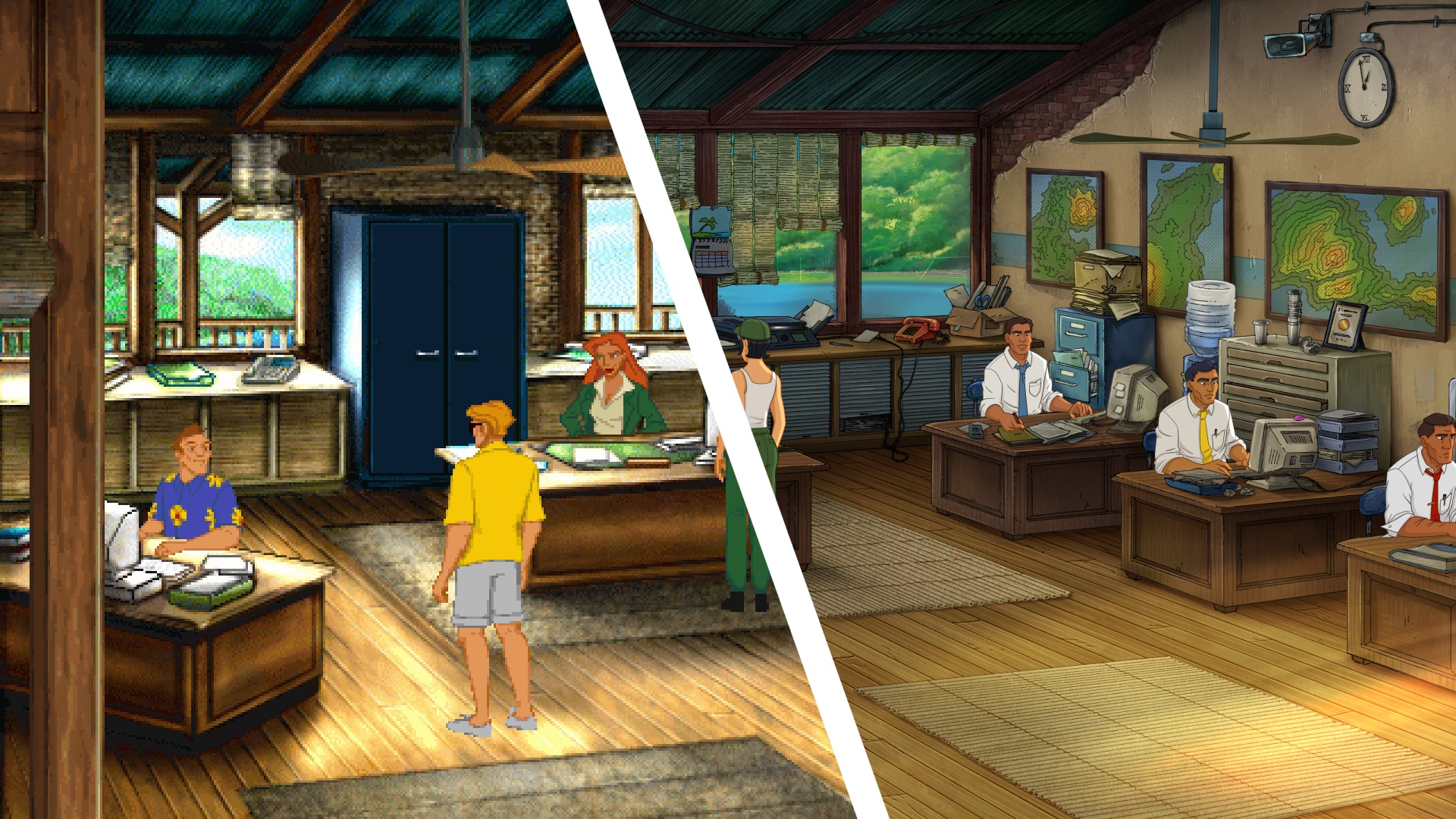
A perfect example of that lies in the game's hand-drawn art, all of it redone for Broken Sword - The Smoking Mirror: Reforged.
This hugely labor-intensive process encompassed roughly 55,000 frames of animation, more than the 30,000 of Broken Sword: The Shadow of the Templars’ 2024 remake.
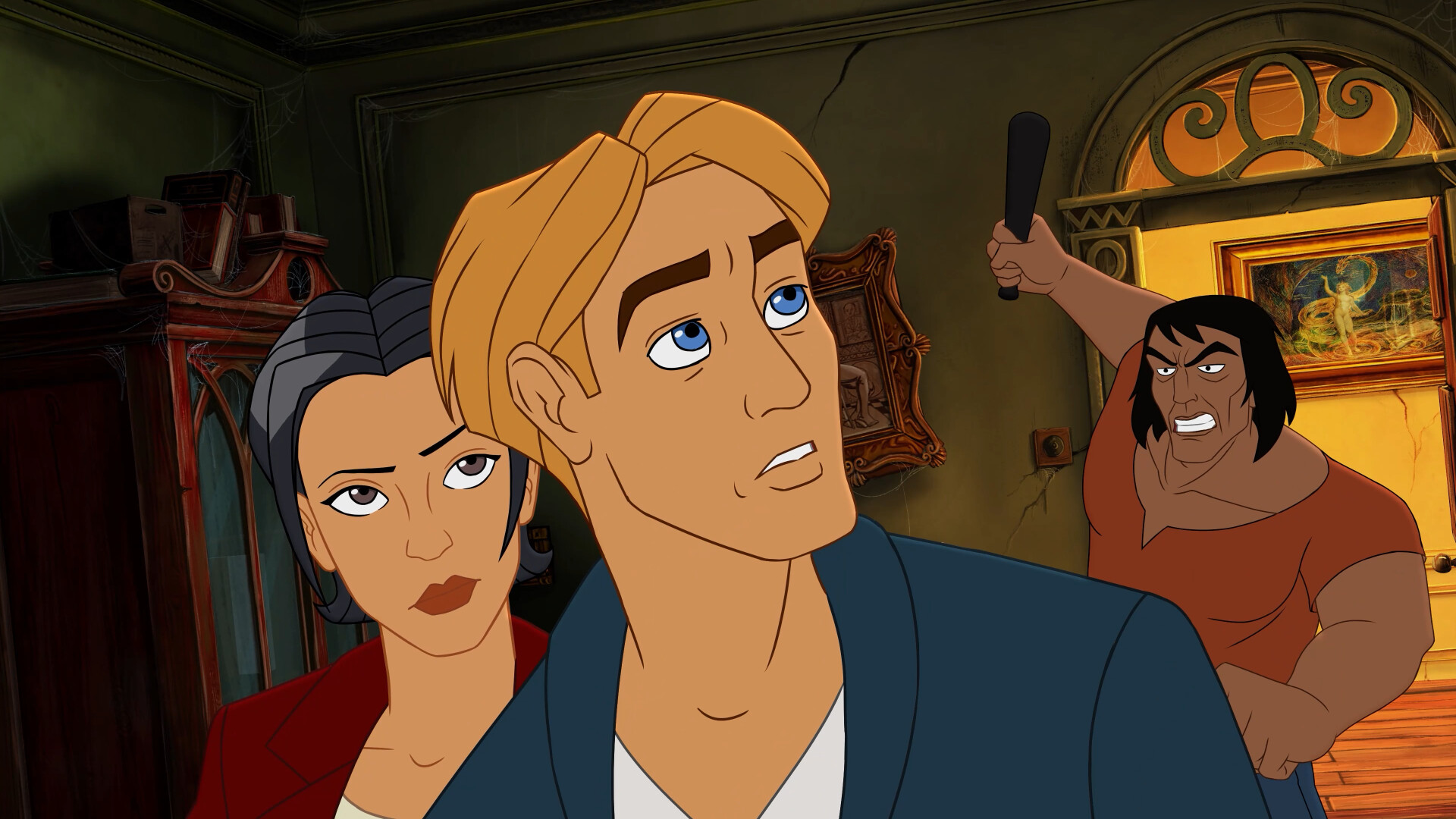
“George opens the newspaper and kind of just glances at the screen,” says Cecil, referring to the actions of the game's protagonist in an early scene. “He's looking at the viewer, and that's what human beings do. That is not something that AI can do.”
In low-res, eyes were just dots on a face. In high-res, eyes are windows to the soul and therefore have to be animated with precision and intent. Where applicable, artists were free to add flourishes, using their own interpretation to fill in the gaps.
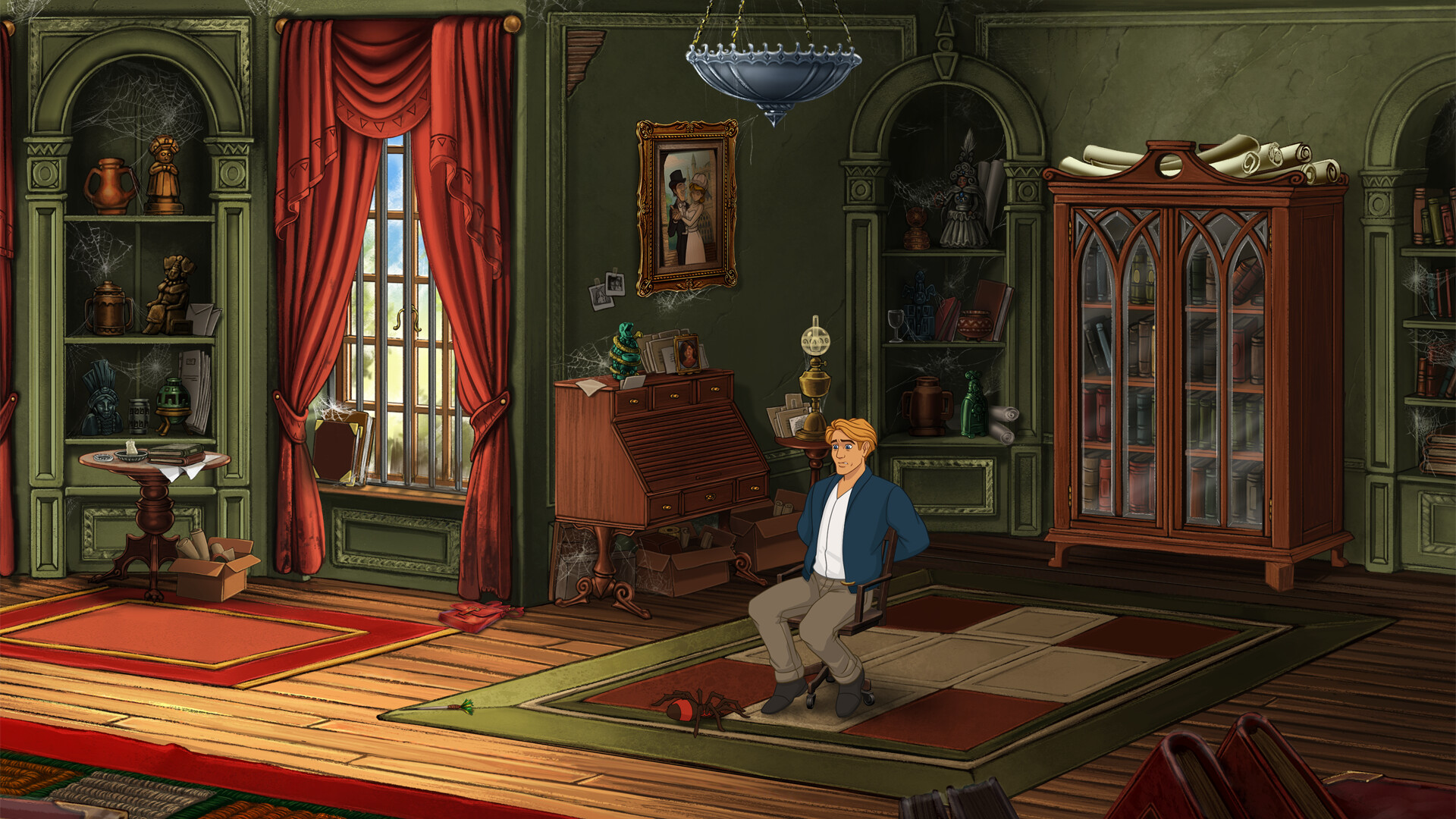
For instance, the painting of Professor Oubier hanging on the wall in the rapidly burning study was always too pixelated to see clearly. Now, however, you can make out exactly what he looks like in 4K, at 36 times the original resolution, all while a visibly uncomfortable George jostles his rope bindings.
Developer Revolution Software didn't stop there. The team redrew scores of items that never really made much sense. Take the poison dart, which now looks less like a playing dart and more like something shot out of a blowpipe.
Human revolution
Despite the decision to abstain from AI use for the most part, it wasn't entirely absent. AI was used for the initial round of upscaling before artists added detail by hand, with backgrounds scanned as black-and-white layouts for them to build on using the originals as references. AI was more of a tool than a creative device.
“We experimented with AI for the first one, and we used AI to upscale and then redraw the characters. And as I say, it can upscale, but it can't put any character in.”
That's largely thanks to the luxury of time. The first game needed to be made in a year or risk cancellation. Revolution Software sprinted to the finish line, but made a few shortcuts along the way.
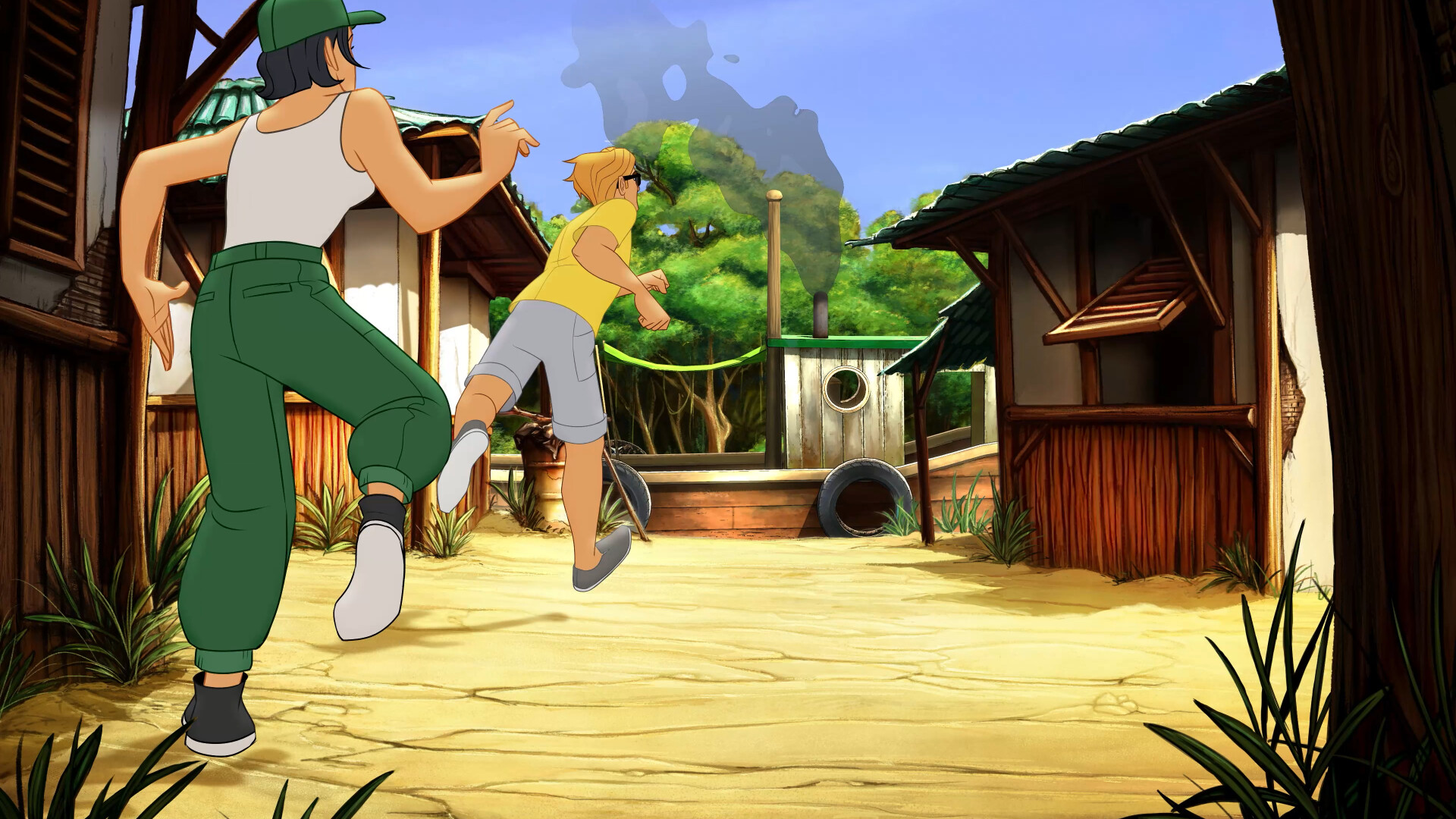
One oversight was 40 voice lines that were recorded and packaged in the game's files but never used. Now, in Broken Sword - The Smoking Mirror: Reforged, fans can finally hear them (one line involves George asking the Parisian waiter about the tequila worm in his pocket).
Another infamous example occurs in the Game Boy Advance version. “You have a choice to go to Spain or Syria,” says Cecil. “If you do one, you can finish the game, and it's fine. If you do the other, it takes you there, but you can't then finish. There's a bug that doesn't allow you to finish…It's an awful, awful bug. I mean, it's absolutely shocking.”
An AI might have spotted such mistakes, but then again, you could argue mistakes are what give art humanity. If nothing else, they make for a great story.
But the remake is far from a bug-fixing exercise. Instead, it's an opportunity to make the game better. Where most remasters seek to preserve the subject, Broken Sword - The Smoking Mirror: Reforged is almost an act of excavation.
“All of these things we now have the time to do,” says Cecil. “Because what Revolution has done for the last 15 years is we've self-published all our games. And I can decide when we’re going to spend a little bit more time getting this, right? Is it worth it?”
The devs found time to add features, too, like a new three-tier hint system that actively monitors your progress and feeds you steadily more obvious tips so you're not stuck for too long. The final tip tells you outright what to do. Thankfully, purists can turn it off.
Meanwhile, Nintendo Switch 2 players get four different control schemes: touchscreen, gamepad, one Joy-Con 2 detached and used as a mouse, or a versatile combination of everything.
Plus, there’s something Cecil has personally wanted to add for 30 years: a beautiful, detailed map of Paris. This is used to aid player navigation instead of having them rely on clunky icons. With everything in the game, these feel like choices made by humans, not AI.
“We've really gone out of our way to produce something that, in my view, is completely future-proof, because people were playing the first one 30 years ago, and millions and millions of people have played that game. And my ambition is that in 20 years' time, a fourth generation will be playing again.”
“Going forward,” he continues, “people are going to seek out human-crafted art. You know, there's going to be that sense, because obviously we all have a human connection with each other.”