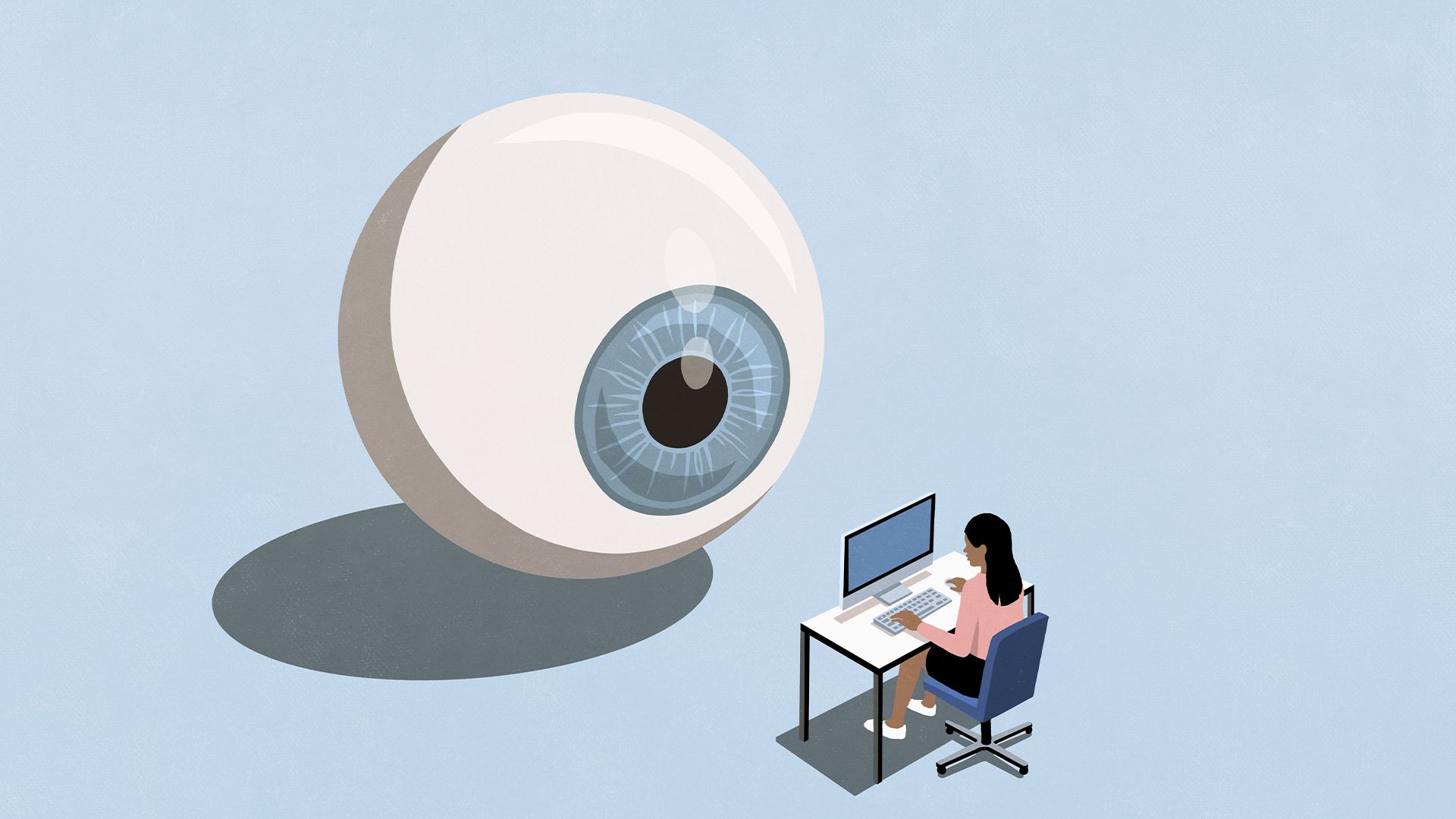
More than half (59%) of UK employees say they are closely monitored at work, new research shows, and experts told that business leaders need to be wary of impacting morale with such technologies.
Findings from Owl Labs’ 2026 State of Hybrid Work Report show enterprises are tracking everything from login times and mouse and keyboard activity to even the number of meetings attended.
The use of workplace monitoring tech has been a recurring flashpoint for enterprises over the last six years. The rise of remote and hybrid working prompted a slew of organizations to introduce measures to track employee activities – often under the auspices of maintaining productivity levels.
Brazilian bank Itau reportedly laid off hundreds of employees after quietly tracking devices and discovering they did fewer tasks than those in the office.
Critics argue that these tools can negatively impact workforce morale and cause stress among employees, however. A 2025 survey by the Chartered Management Institute (CMI) found that ‘bossware’ was having a significant impact on morale, as reported at the time.
A delicate balance
For business leaders, this creates a tricky balancing act, according to Mark Banfield, CRO at TeamViewer. Employers are keen on gaining a deeper insight into worker activities, but at the same time want to avoid souring relations.
Banfield told there are common misconceptions surrounding workplace monitoring tools. While many are used to track basic activities, they also play a key role in helping monitor the performance of applications and broader IT estates.
Sign up today and you will receive a free copy of our Future Focus 2026 report - the leading resource for IT decision-maker insight on priorities and investment areas in AI, security and more.
“Workplace monitoring tools get a bad rap. The most useful kind, though, shows businesses what’s getting in employees’ way. Someone can be logged in all day and still lose a lot of time to slow applications, unreliable devices, and technical problems that keep coming back,” he said.
Banfield argued that digital employee experience (DEX) monitoring can help “spot and fix problems before anyone has to raise a support ticket” - and that could prove vital for businesses with distributed workforces.
“That’s what responsible use of this kind of software looks like. It’s there to fix what’s slowing people down, so it shouldn’t be used to keep tabs on their productivity or where they are,” he told .
Mixed opinion
Regardless, the aforementioned research from the CMI uncovered divided opinion on the use of monitoring tools. More than half (53%) of managers support monitoring employees, while 42% oppose it.
The study did highlight valid reasons for using these tools, including safeguarding against inappropriate behavior (60%) and detecting system/time misuse (56%).
Among those who opposed monitoring, however, the message was clear: more than three-quarters (79%) said it undermines trust while 58% said it damages morale.
Notably, 59% said that more appropriate alternatives exist, such as clear KPIs.
Compliance in the spotlight
For enterprises using workplace monitoring software, there are privacy and data protection considerations at play, according to Becky White, senior data protection & privacy solicitor at Harper James.
With this in mind, business leaders should be wary of introducing new technologies on a whim, she told .
“Workplace monitoring raises a whole range of privacy and data protection issues, so business leaders need to look beyond what the technology can do before switching it on,” White said.
“Under UK GDPR, employers need a lawful basis, a clear purpose, and a proportionate approach, including considering whether a less intrusive option would work.”
White added that data minimization is a legal requirement, and therefore employers should collect “only the information they actually need for that purpose, rather than leaving every tracking feature switched on by default.”
“Just because software can capture every click doesn’t mean that it should,” she said.
How to engage with staff
So how can leaders effectively engage with staff on this front? First and foremost, clear communication is critical, according to Bradley Beighton, senior technical architect at Ricoh’s Digital Experience Centre,
Beighton said that proactive engagement is key to ensure staff are both informed and comfortable with the use of any monitoring tools.
“When it comes to raising it with staff, tell people before you switch anything on. Explain what is collected, what isn't, who can see it and how long it's kept. People clearly want to know and if you'd be uncomfortable explaining a measure to your team, that's a good sign it shouldn't be measured,” Beighton told .
“Ultimately businesses that get the best from their people will be the ones creating workplaces where they feel comfortable, supported and able to do their best work, not the ones tracking their every move.”
Making a clear business case is equally important, according to White, especially given transparency requirements outlined in Article 13 of UK GDPR.
White said leaders should explain to staff what’s being collected, why it’s being collected, and how it will be used. Outlining these details through a staff privacy notice should be the first step for enterprises, she noted.
“But telling people about it doesn’t, on its own, make it lawful,” White said. “Where monitoring is likely to result in a high risk to workers’ rights and freedoms, Article 35 of the UK GDPR requires a data protection impact assessment before it begins.
“This is particularly relevant to intrusive or continuous monitoring and extensive profiling. The assessment means considering whether the monitoring is necessary and proportionate, what could go wrong for staff and how those risks can be reduced.”