“I was hearing from people in the campaign world that there’s this new strategy of paying political influencers to post content,” said Marc Berman, the California assemblyman. “Some were good about disclosure and others were a bit fast and loose.”
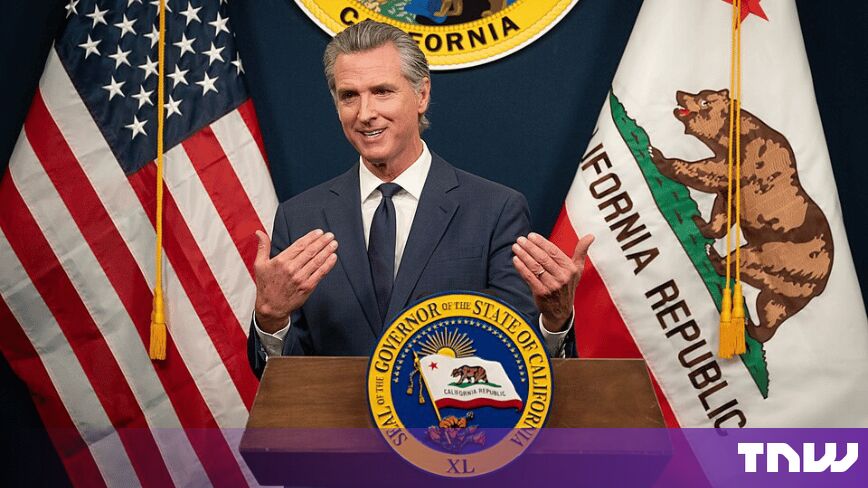
His bill is now law. Gavin Newsom signed AB 1130 on Saturday. In California, paid political posts that hide the payment now carry a $5,000 fine each.
The state has required those disclosures since 2023. Until now it could not punish anyone for skipping them. AB 1130 changes that. It hands the Fair Political Practices Commission the power to impose administrative, civil or criminal penalties. The commission can also refer a violation to law enforcement as a potential misdemeanour.
Ken Bensinger reported the law for the New York Times. He wrote on X that a wilful violation could carry up to a year in prison.
What the law actually covers
The scope is narrower than “influencers must disclose”. The Governor’s office describes AB 1130 as covering a person paid by a campaign committee to post online political content. The content must support or oppose a candidate or a measure. The penalty applies when that person leaves out the required disclaimer saying they were paid. Payment from a campaign committee is the trigger. An unpaid creator posting their own opinions sits outside it.
That distinction matters because of how the money now moves. Politicians and advocacy groups are paying creators to reach younger audiences, the Times reported. No federal rule requires anyone to disclose those payments.
The campaign that prompted it
Berman introduced the bill after the Times reported in May on money reaching influencers during California’s contested primary for governor. Politicians were funnelling it quietly, the paper found.
Tom Steyer, the billionaire Democrat, paid dozens of creators to post favourably about his campaign, Bensinger reported. Those posts ran on TikTok, YouTube, Instagram and Reddit. Many carried no written disclosure at first.
Multiple complaints followed to the Fair Political Practices Commission against the Steyer campaign. Somebody also filed at least one against Xavier Becerra, his main rival, who went on to win the primary.
The commission opened an investigation into Steyer’s campaign in May and closed it this week. Steyer had properly notified the influencers of their obligations, it found, and “then reminded the influencers when posts were discovered without the disclaimer”. A second investigation into the campaign is still open.
Becerra faces Steve Hilton, a Republican, in November.
One of thirteen
AB 1130 arrived inside a package of 13 bills on elections and social media. Newsom signed them at the Democracy Center in Los Angeles, and framed the package as a defence against federal interference.
“Donald Trump won’t stop until he can exert dictatorial control over your free vote and disenfranchise millions of people this November,” he said in a statement. “California will stop him at every opportunity.”
Two other bills in the package matter for anyone building or hosting synthetic media.
AB 686, also Berman’s, extends the sunset on California’s deepfake rule. The old date was 1 January 2027, and the new one is 1 January 2031. That rule bars distributing materially deceptive audio or visual media with actual malice, where the intent is to injure a candidate’s reputation or deceive a voter. Media carrying a disclosure that it has been manipulated is exempt. The rule was due to lapse before the 2028 presidential cycle. It now runs past it.
AB 502 amends the rules on knowingly distributing election communications that contain materially deceptive content.
A third, AB 2281, requires the Secretary of State to assess whether California needs to replace election cybersecurity resources the federal government previously supplied.
The rest of the package is ballot security rather than platform policy. Several bills create felonies for seizing ballots, election records or certified voting technology before results are certified.
California keeps legislating at the platform layer
The state has built a stack of these rules over several years, and the enforcement body is usually the same one.
Eleven days before this package, he signed a separate set of child safety bills covering algorithmic feeds for under-16s.
The disclosure question is not confined to campaigns either. A watchdog reported last month that Meta had used paid influencers to push back on teen social media bans. YouTube has separately been carrying AI slop channels that produce political misinformation.
Who else is doing this
Texas already mandates disclosure of paid political content online. Lawmakers in Congress and in other states, including New York, are considering similar rules, according to the Times.
Elsewhere the pattern runs further along. Brazil’s electoral court set rules on AI in elections last year. Meta’s own Oversight Board has been ruling on election deepfakes in Europe.
California’s version lands six weeks before Americans vote. The Fair Political Practices Commission now has a penalty it can apply, and the primary that produced the complaints has already been decided.