In July 2025 a literary scandal erupted when The Observer journalist Chloe Hadjimatheou claimed that Raynor Winn, author of the award-winning memoir The Salt Path, had omitted significant facts and invented key parts of her story. This much-loved account of Winn’s transformative and healing coastal walk with her terminally ill husband after they lost their home, had recently been made into a film.
In her article Hadjimatheou maintained that the details of how Winn and her husband lost their home and the nature of his illness were fabricated. Winn responded with a 2,300-word statement on her website defending her memoir and castigated the claims as “grotesquely unfair” and “highly misleading”.
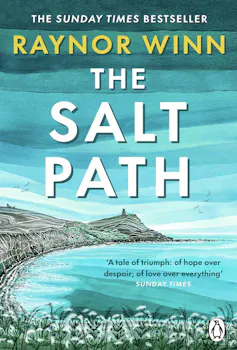
The scandal stunned the publishing world and readers alike, with commentators arguing that audiences expect a level of truth from works labelled as autobiography or memoir. Though sometimes used interchangeably, there are some key differences between each genre.
Autobiography usually denotes a work which details the whole life or work of a public figure narrated from their point of view. Memoir instead recounts certain specific experiences or interactions from the author’s life, allowing writers to explore and communicate their emotions, experiences and beliefs. Its name is literally derived from the French word , meaning “memory”.
The problem of truth in this genre is almost constantly in the spotlight. While some memoir controversies have centred on what are alleged to be outright lies – such as the Salt Path – others may reflect the tension between a reader’s expectation of objective “truth” in a work of non-fiction, and how authors themselves actually recall and understand their memories.
Swan Song, Charles Spencer’s memoir of life with his sister Princess Diana, which has been accused of getting key details wrong, is a case in point.
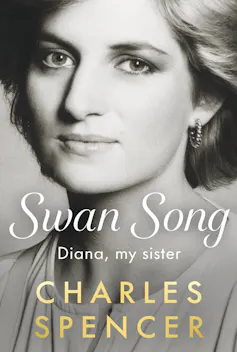
Buckingham Palace responded to Spencer’s claims against the royal family, saying: “His Majesty is mindful that the pain of fraternal grief can cloud reason, affect judgement and colour memory in ways others do not recognise.” Our memories are subjective reconstructions of events from our point of view, which means that they may always be open to dispute. Memory retrieval can never be linear, and neither can it ever be objective – all of which affects how memoirs are written and how they’re received.
As we are finding in our ongoing research on life-writing, the relationship between truth and fiction in this kind of writing is more often fraught than not.
Fact, fiction and everything in between
All life-writing depends on memory, yet the process of how memories are recalled rarely features in these debates. Our research is concerned with the relationship between memory and life-writing by Scottish authors, many of whom have experience of the care system. We want to know if there are any typical patterns that these writers follow, and to what extent we can test the active memory retrieval of writers today.
Neuroscientists have shown that memories change with time and frequency of use. Memories are also adaptive, part of a highly reconstructive process where we access the most useful information first, and piece in other details around this.
At the core of our research is a series of workshops in which care-experienced adults get to know the workings of memory and are then invited to try life-writing for themselves. We expect fact, fiction – and everything in between.
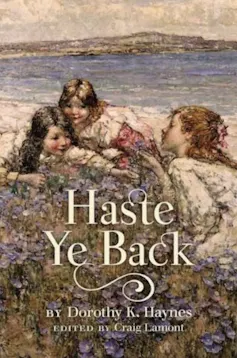
We see these issues play out in memoirs by the Scottish authors our study centres around. Dorothy K. Haynes wrote a memoir titled Haste Ye Back, detailing her upbringing at Aberlour Orphanage in the northeast of Scotland from 1929-1933.
While Haynes’ memories of Aberlour are largely happy, a 2019 report for the Scottish Child Abuse Inquiry uncovered reports of physical, psychological and sexual abuse from former residents from later periods between between 1930 and 1990. Our memories can be coloured by information learned after the fact. Or, like Haynes, we may have completely different personal experiences from the established narrative – does any of that make one person’s account less true than another?
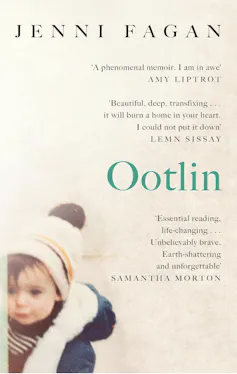
For other authors, personal experiences form the basis of their fictional works, and this can further blur the boundaries between truth and fiction. Jenni Fagan’s novel, The Panopticon, follows a teenager abused but not broken by the Scottish care system. Ootlin, the memoir she published ten years later, demonstrates just how much of that narrative had been based on her real-life experiences.
In circumstances like these, readers can contrast the novel and the memoir for themselves, but elsewhere this isn’t possible. Jessie Kesson’s novel The White Bird Passes details the protagonist Janie’s poverty-stricken upbringing and experience of being sent to an orphanage in Skene, Aberdeenshire, closely mirroring Kesson’s own childhood.
Kesson herself noted in later interviews that although a work of fiction, the work was “mostly autobiographical”, and that she didn’t want to bore people by covering the same ground in a memoir. Can we read Kesson’s novel as a work of life-writing, even when it’s shelved in the fiction section?
At the opposite end of the spectrum, some authors have experimented with the very form of memoir itself. Janice Galloway has written two works she labels “anti-memoirs” – titled This Is Not About Me, and All Made Up respectively.
The works detail an Ayrshire upbringing and family life which mirror Galloway’s own, but with incisive writing that recalls her command of character and detail from her other works of fiction. As her titles attest, the reader can never rest too comfortably in the knowledge that what they are reading is the unembellished truth.
The genius of Galloway’s work isn’t that she pioneers a blend between memoir and fiction for the first time, but that she lays bare the complex relationship between truth and fiction which is present in all life-writing.
Though it may be going too far to call all memoirs fictional, ultimately, what readers take to be “truth” from a memoir, as for any work of literature, is down to them. We can never truly know how another person experienced or remembers events – and that desire for truths and perspectives other than our own is exactly why the genre of the memoir endures.