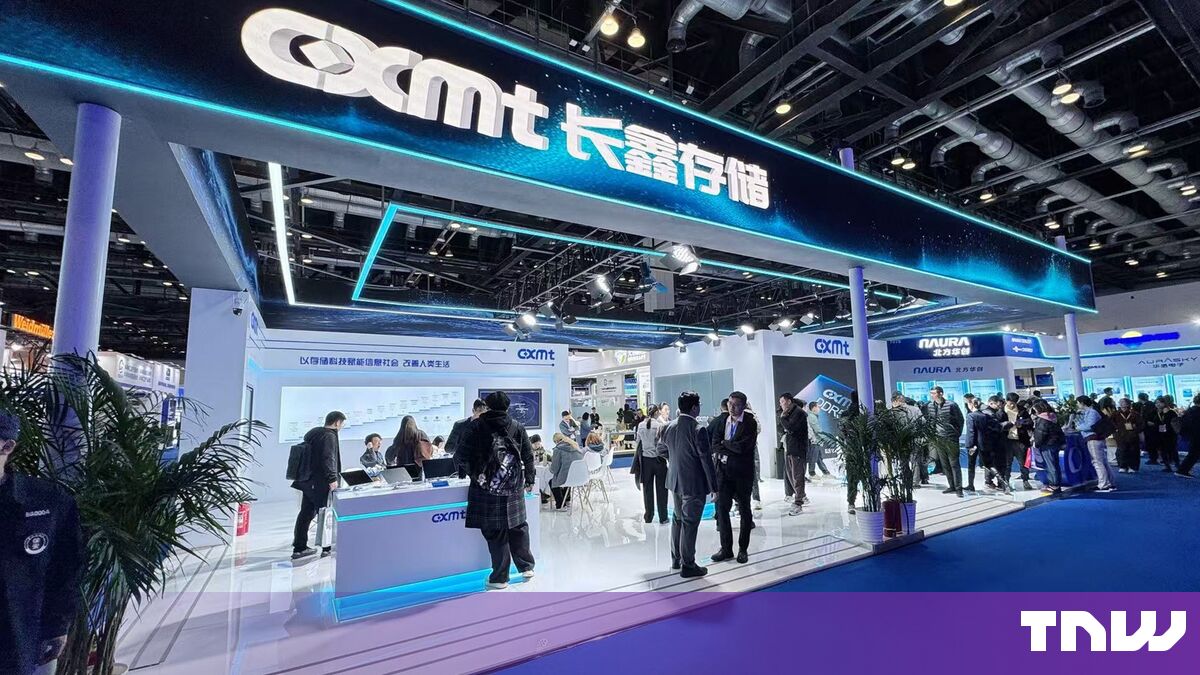
China’s biggest memory chipmaker, CXMT, plans to start making HBM3E, an advanced memory used in AI chips, even though only 20% to 30% of the chips it makes are usable. Two people familiar with the matter told Reuters, which reported the details on Wednesday, 28 October. TNW has not independently verified the report.
CXMT has sent HBM3E samples to several Chinese AI chip designers, the people said. It expects to begin limited production within the next two months, one of them said. The Information first reported CXMT’s HBM3E plans; the yield figures and timeline are new from Reuters.
A yield of 20% to 30%
High-bandwidth memory (HBM) stacks memory chips on top of each other so they can pass data quickly to AI processors. It is a key part of the chips that train and run large language models.
Yield is the share of chips from a production line that meet specifications. CXMT’s is about 20% to 30%, the people told Reuters. SK Hynix, the market leader, gets around 70%. Low yields make production expensive, because the company must throw away or rework many chips.
In testing, CXMT’s HBM3E performed closer to SK Hynix’s older HBM3 than to its HBM3E, one of the people said. CXMT has sent customers two versions: a standard design and an update meant to improve yields. Its chip will likely cost more than comparable foreign products, one of the people said.
Why China is pressing ahead
Chinese AI chipmakers cannot get enough advanced memory to raise output, the people said. The US tightened export controls on some advanced HBM products bound for China in December 2024. Chinese firms have since sought the memory through unofficial channels, where it can cost several times more, according to the people.
Last month, Huawei, Cambricon, MetaX and Iluvatar CoreX raised prices for their AI chips by 20% to 50% as memory costs rose, Reuters reported earlier. Cambricon’s latest sales missed expectations as chip supply tightened.
At least a generation behind
SK Hynix held 50% of global HBM revenue in the second quarter, according to Counterpoint Research. Samsung had 33% and Micron 18%. CXMT held 10% of global DRAM revenue, making it the fourth-largest supplier of conventional memory, Counterpoint said.
CXMT said in September that it had caught up with Samsung and Micron in conventional memory. It also swung to a profit of nearly $20bn this year as memory prices soared.
In HBM, its rivals have moved on. SK Hynix said on Wednesday that HBM4 had beaten its target yield and would pass HBM3E in shipments and revenue in the fourth quarter. It posted record profit in the same results. Samsung said in July that it had expanded HBM4 sales and shipped HBM4E samples.