Last month, a climate scientist working in the University of California system received an unsettling message from her institution. University officials asked her to submit all correspondence related to a study she had published linking emissions from fossil fuels to environmental harms caused by climate change. The university had received a public-records request from a law firm representing the Patriots Foundation in Des Moines, Iowa, which describes itself on its website as a government watchdog.
It was the fifth such request connected to the organization that the scientist, who requested anonymity to avoid further demands, had received this year.
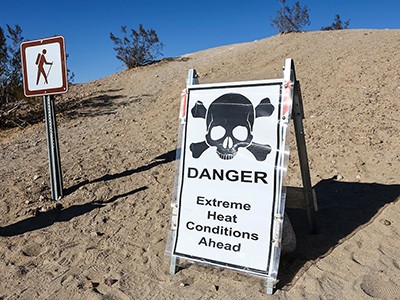
Heatwaves linked to carbon emissions from specific companies
The requests seem to be part of an expanding effort by groups with ties to the energy industry to discredit findings in the burgeoning field of climate attribution science, which estimates the extent to which extreme weather events, such as floods and heatwaves, are due to climate change. The demands come at a time when attribution science’s role in lawsuits against major industrial emitters is growing.
An investigation by Nature has identified at least 30 requests for correspondence relating to climate attribution science that researchers in the United States say they have received since 2024. These requests, involving the Patriots Foundation and other groups, have gone to 13 public universities and involved the correspondence of dozens of climate scientists, legal scholars and attorneys. Last month, the news outlet Politico reported that it had identified more than 100 open-records requests made to researchers since 2021, related more broadly to lawsuits about damages caused by climate change, rather than just to climate attribution research. It’s unclear how many of these requests overlap.
Neither the Patriots Foundation nor the law firm representing it responded to Nature’s queries about the reason for the requests, or about researchers’ concerns over them. Another organization that has submitted requests — called Government Accountability and Oversight, based in Sheridan, Wyoming — directed Nature to blog posts saying that attribution researchers are activists opposing the fossil-fuel industry and that, if they have the right to do “this sort of lobbying”, “the rest of us have a right to see the receipts under state transparency laws”.
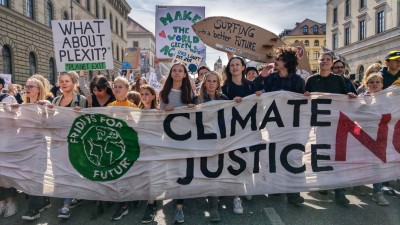
Climate science is supporting lawsuits that could help save the world
Recipients say that the timing of the requests and the information they ask for suggest that their purpose is to fish for conflicts of interest that could be used to discredit the scientists’ findings. A hypothetical example of such a conflict might be attorneys paying a climate scientist to conduct a particular study. The researchers think the requests might also be attempts to collect information about collaborators and contacts who are not subject to public-records laws, such as scientists and attorneys at private institutions.
Requests of this kind are legal. And Nature spoke to several recipients who say they have nothing to hide. They emphasize that communicating with attorneys involved in climate litigation does not bias their work or represent a conflict of interest.
But some say that the volume of requests seems intended to dissuade work on climate attribution, and wastes time and public money. They also say that if scientists know that any e-mail discussion with a colleague might become the subject of an investigation or taken out of context, that could suppress open scientific debate. “It’s annoying. It’s harassment,” says the University of California climate scientist.
Climate in the court
Studies linking climate change in general to certain weather events have been conducted since 20041. But only in the past several years have researchers begun to use their climate models to estimate how much the emissions from particular companies contributed to specific ‘damages’, such as deaths caused by a heat wave.
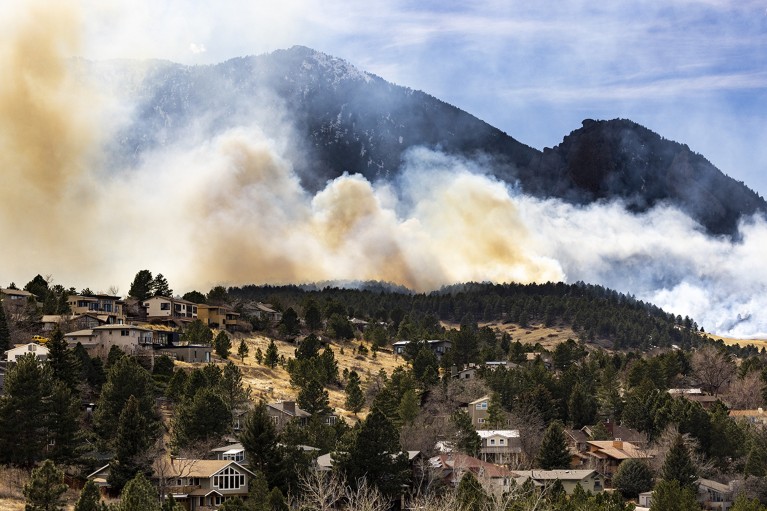
Dozens of climate-related lawsuits that are now working their way through the US courts could hinge on whether judges or juries agree that such ‘source attribution’ research is rigorous. That includes a case involving the US energy company Suncor and representatives of Boulder County in Colorado, heard by the US Supreme Court this month. The outcome could determine whether similar lawsuits proceed in state courts.
Researchers say that the legal relevance of attribution science has made the field a political target. For instance, a Republican-led committee of the US Congress has investigated a chapter in a reference manual for federal judges that explains attribution science, alleging it represents an improper attempt by climate activists to influence judges. US President Donald Trump, a Republican who is friendly towards the fossil-fuel industry and has called climate change a hoax, weighed in, declaring the chapter “fraudulent, biased, and misleading” on social media.
“Climate attribution is under attack,” says Christopher Callahan, a climate scientist at Indiana University Bloomington. In May, he received a public-records request from Government Accountability and Oversight to review his correspondence with eight individuals involved in climate litigation.
The volume of requests for climate researchers has noticeably increased this year, says Lauren Kurtz at the Climate Science Legal Defense Fund in New York City, an organization that helps scientists to address legal issues in this field. “It’s totally a surge,” she adds.
Do climate lawsuits lead to action? Researchers assess their impact
Enjoying our latest content?
Log in or create an account to continue
- Access the most recent journalism from Nature's award-winning team
- Explore the latest features & opinion covering groundbreaking research