Hello Nature readers, would you like to get this Briefing in your inbox free every day? Sign up here.
Lutetium clock is the best timekeeper ever
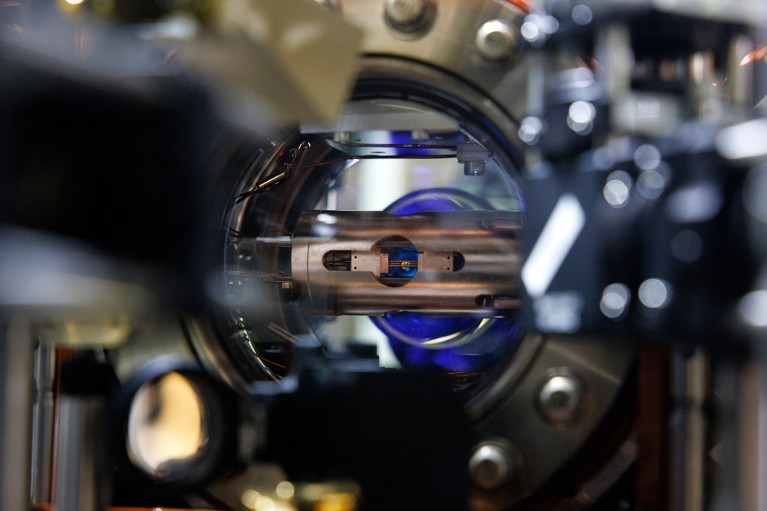
Physicists have unveiled the world’s most accurate clock — a timepiece so reliable that it would take more than 260 billion years to lose a second. The device is an ‘optical’ atomic clock, which derives time using the visible-range frequency of light at which an element — in this case, the rare-earth metal lutetium — absorbs radiation. The researchers behind the clock say that it is robust enough that they hope to be able to miniaturize it and eventually take it out of the lab.
Brain map reveals gene activity in detail
Researchers have produced the largest map to date of gene activity in the human prefrontal cortex, a brain area that supports planning, decision-making and behavioural and emotional regulation. The atlas draws on donated samples from almost 1,500 people — from infants to centenarians — and the recorded gene activity in more than 6.3 million individual brain cells. The scale of the map will enable the study of neurodegenerative and psychiatric diseases that affect the prefrontal cortex in unprecedented detail.
Reference: PsychAD Consortium paper collection
New phase of boron is no bore
A new phase of the element boron can be stretched, and has an electrical conductivity over a million times that of typical boron materials. The structure, called Imma-B60, is the first new unusual form of boron discovered since 2009. Researchers made it by coaxing boron to react with sodium under high pressure, then removing sodium impurities from the mixture. These properties suggest that the material could one day be used in solar panels, or to replace existing boron compounds in body armour.
More than 200 papers — in 9 months?
The SSRN preprint server has removed 257 papers authored or co-authored by a US statistician after others raised concerns about his unusual productivity. “It’s not only the volume, but the diversity of topics and how they differ from his past work,” says management professor Auyon Siddiq. The author, Nicholas Polson, told The Washington Post that he used AI tools to help produce the work. “Clearly AI makes a productive researcher far more productive,” he said.
The Washington Post | 9 min read
Earth’s core forces alter length of days
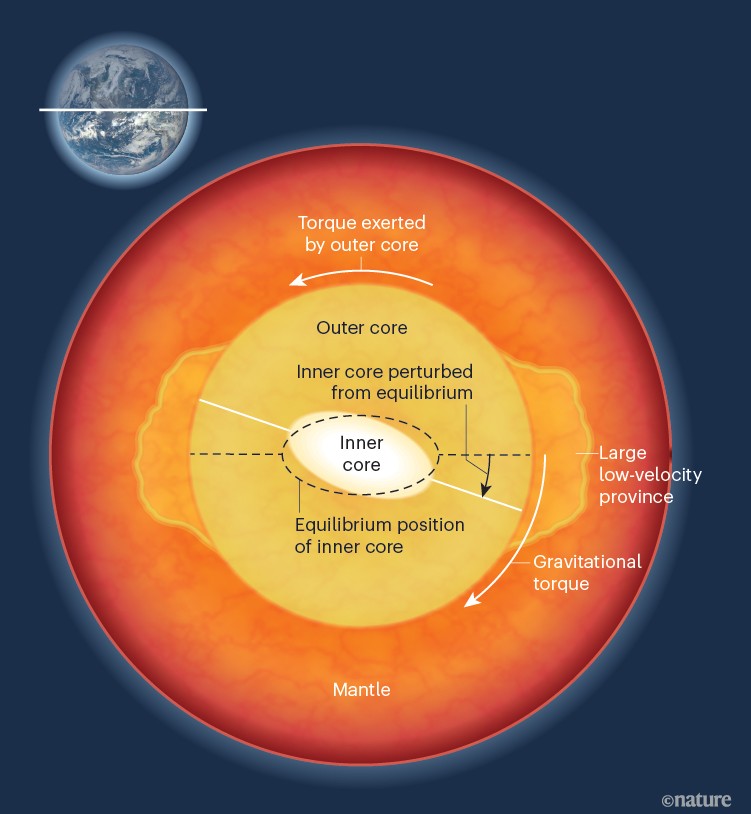
Gravitational and other forces generated by the movement of Earth’s metallic core can explain millisecond-length fluctuations in the length of the 24-hour day over decades. Researchers modelled the impact of various possible internal forces arising from interactions among Earth’s inner and outer cores, and its rocky mantle, which can subtly affect the rate of the planet’s rotation. They found that one scenario, in which a gravitational twisting force generated by the inner core was dominant, best matched the historical record of changes in the length of Earth’s days.
Will AI kill us all?
Researchers and leaders at some of the world’s foremost AI companies have raised concerns that artificial intelligence might kill us all. A hypothetical example that captures these worries is the ‘paperclip problem’ — a powerful AI system with a single-minded goal (such as making paperclips) could sacrifice everything else to achieve it. But others point to the more quotidian damage that is already happening, such as from disinformation, or concerns that fallible AI is being used in critical safety systems, such as in nuclear power plants. And some big-tech critics say that bigging up the dangers of AI could be an attempt to justify a slower pace of development to shareholders, or consolidate power among a handful of leading firms.
Damage from above: the science of hail
Hail is already one of the costliest weather hazards, and climate change is expected to make it worse. That’s why researchers in one of the most hail-prone places in the United States, Colorado, are learning everything there is to know about their foul-weather foe. It’s “the first time where we’ve been able to do a real comprehensive look at hail on the ground, hail aloft, the storm itself, the environment around the storm — just everything all at once”, says Becky Adams-Selin, the lead investigator of ICECHIP — the In-situ Collaborative Experiment for the Collection of Hail In the Plains.
High Country News | 9 min read
Quote of the day
“If regenerative medicine is to deliver truly personalized therapies, it must first understand the diverse biology it seeks to heal.”
The underrepresentation of women and non-binary people in regenerative medicine trials and research leadership is a fundamental limitation that compromises the safety and translational potential of emerging therapies, argues regenerative-medicine specialist Doris Taylor. (Nature Index | 6 min read)
This article is part of Nature Index 2026 Regenerative medicine, an editorially independent supplement.