The New Dark Ages: The End of Reading and the Dawn of a Post-Literate Society James Marriott Bodley Head (2026)
The thriller novelist Dan Brown writes books that some critics complain are for people who don’t read books. The journalist and former rare-book seller James Marriott has now written a book for people who read books about people who don’t. That must have been an interesting sales pitch. What’s next — a 3.5-hour-long radio documentary about declining attention spans?
How to stay smart in the age of AI: the science of critical thinking
People who read books should read this one. The New Dark Ages will make you feel both alarmed and a little smug. In Marriott’s telling, book readers are better-informed, happier people who contribute more to a rational rules- and evidence-based society and help to safeguard the rights and principles of liberal democracy. Even those who read Dan Brown’s books? Absolutely.
Reading, even airport thrillers, forces people to engage with the world and other people in ways that other forms of media simply do not require. Despite the rise of technology, reading remains the best way to experience being a person other than ourselves, Marriott says. “Cinema, video games, television: for all their virtues, these art forms are hopelessly trapped in the exterior world of surfaces.”
This short, spirited work is a love letter to the written word, penned with the heartfelt and passionate language of a jilted spouse. “Not everything that is important or true can be said simply,” says Marriott, but he seems to have managed just fine.
Race for attention
Indeed, for a work that exalts literacy because it enables the reliable communication of complex ideas, The New Dark Ages presents a straightforward premise. Reading built the modern world, and helped to create science, democracy and reason.
Are the Internet and AI affecting our memory? What the science says
But books are now dying, and as reading declines, so does the ability to think rationally. As a consequence, reasoned debate is on the slide in politics and much of public life.
If books are dying, then nobody told the people who write them, who between them are publishing more volumes year-on-year. The problem, Marriott says, is that books that sell, and are presumably read, are mostly the ‘wrong’ types — self-help, romance, detective stories and young-adult fiction, whereas sales of books about economics, current affairs and politics have fallen sharply.
There is better news for popular-science authors. In May, the Royal Society declared the past two decades a golden age for the genre, with sales soaring from 1.2 million books a year in 2000 to a peak of more than 5 million in 2019. By 2024, the total figure had dropped to 2.9 million but it was spread across an impressive 20,000 titles — about quadruple the number reported for 2000.
Books are getting simpler, Marriott says, with shorter sentences that make them easier to read. That means people don’t have to concentrate as much as he did as a teenager when he picked “uncomprehendingly” through the pages of Fyodor Dostoevsky — an exercise that taught him a valuable lesson.
“To discover the things that really enrich us we have to pay attention. We have to patiently endure our initial sensations of bafflement and annoyance ... until what seemed off-puttingly weird and wrong reveals itself to us as life-enrichingly true and profound.”

Generations of readers have struggled with Dostoevsky. So, what is different now? What is driving what Marriott labels as the Great Simplification, which leaves today’s teenagers and adults unwilling or unable to put in the required effort and levels of concentration? Why do teachers complain that their students can no longer make sense of the opening paragraphs of Charles Dickens’s Bleak House and other curriculum classics? The answer is in your pocket, your bag or, more likely, in your hand.
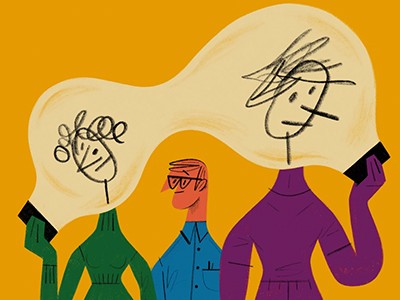
The smartphone, he writes, took the lure of television as a diversion from the written word and spread it across 24 hours, offering constant, instant and unfiltered access to content that is “pathetically ill-equipped to speak to the deeper human need for curiosity, learning, narrative, close attention and artistic fulfilment”.
Dense sentences, and the concentration and time required to decode and appreciate them, simply cannot compete with the addictive ever-present series of notifications and instant ‘reward’ of messages, hot takes and videos that are presented as entertainment but serve mostly as distraction.
Dickens could write hundreds of pages of sprawling digressive clauses, playful linguistic excursions and hyperactive minor characters, Marriott reflects, only because there was nothing more interesting for nineteenth-century readers to do. “Dickens wrote in the reasonable belief that Little Dorrit or Bleak House or Great Expectations might be the most absorbing entertainment in your house,” he says. “No modern author can write with that confidence.”
Threat to literacy
Those who shun reading because of its complexity and the amount of cognitive load it requires have nothing to fear from The New Dark Ages. I fell through its 170 pages in a couple of enjoyable hours. Marriott, now a newspaper columnist, likes pithy phrases and has the enviable knack of predicting and answering the questions that arise in the reader’s mind, without being asked. (Although I did need to look up the word periphrastic and, on learning what it meant, wondered if I was missing a joke — it means ‘wordy’.)
And a note to those shaking their heads and saying that they read on their smartphone, including maybe even this article, or his book: Marriott sees you.
Enjoying our latest content?
Log in or create an account to continue
- Access the most recent journalism from Nature's award-winning team
- Explore the latest features & opinion covering groundbreaking research