Congratulations to Emily Robinson, historian and professor at the University of Sussex, who is our 2026 winner of The Conversation Prize for writers for her entry on Ravenser Odd, the sunken medieval island that continues to inspire and obsess.
Now in its second year, the prize invites academics to submit a 2,000-word article and book pitch. The competition is run in partnership with Faber and Curtis Brown, with the winner receiving mentorship from both organisations and £1,000.
A huge thank you to everyone who entered this year. The standard was very high and it was very difficult to pick just one winner and one runner up.
We are particularly grateful to our judges: Catherine Clarke, professor and director of the Centre for the History of People, Place and Community at the Institute of Historical Research; Tim Minshall, the inaugural Dr John C. Taylor professor of innovation at the University of Cambridge; and Steven Vass, senior editor for Science Insights at The Conversation. Also to Fiona Crosby, senior commissioning editor for non-fiction at Faber, and Elliot Prior, associate agent at Curtis Brown.
The judges said: “After much deliberation, the judges have unanimously selected Emily’s article on Ravenser Odd as the winner of the competition. It tells the hugely intriguing story of a mysterious island in the Humber in the 13th century that then disappeared beneath the waves.
Her story does a lovely job of taking the reader on the writer’s journey to this remote corner of England, as well as exploring the fascination with the folklore of the island. The judges thought it would make a beautiful book with broad appeal that feels particularly timely in light of the threat of climate change.”
Emily said: “Entering the Conversation Prize helped me to really focus on why this story fascinates me. I’m now looking forward to working with the mentors and working out how to make it equally fascinating to other people.”
Emily is a historian of political ideas, identities and cultures in modern Britain, with a particular interest in the way that both time and feeling are conceived within different ideological traditions. Her current research focuses on popular understandings of history, and changing cultures of history-telling through the example of Ravenser Odd.
You can read her winning story here.
Runner up in the competition is Alison Garden, senior lecturer and UKRI Future Leaders Fellow at Queen’s University Belfast, for her story on mixed marriages during the troubles in Ireland and what they reveal about the more intimate side of conflict in Ireland.
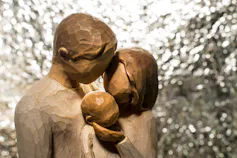
The judges said: “Alison’s entry focuses on a much overlooked part of Ireland’s story: all the marriages that straddled the religious divide and how they affected the lives of these people and their families.”
The judges “commended the quality of the writing in Alison’s story, and the case studies that told of everything from houses being burned to mothers sidelined in their children’s baptisms. This has the potential to become a fascinating and important book.”
Alison said: “This is such a vital part of the Irish story, and it just doesn’t get the attention it deserves. It is a real privilege and joy to be able to share these histories. Through this project, I’ve talked to huge numbers of people, in Ireland and beyond, about mixed marriages and mixed families. I wanted to see whether there was a broader readership for this work and I’m absolutely delighted that taking that chance has brought this neglected intimate history to a wider audience.‘