Equity. Racial discrimination. Climate change. Gender. These are just a few of the 200 or so terms being used to flag federal grants that are under review to determine whether they align with the research priorities set by the administration of US President Donald Trump. The administration initially terminated US$3 billion in grants in 2025, and despite many reversals, roughly $1.4 billion in funding from the US National Institutes of Health (NIH) and the US National Science Foundation (NSF) remained frozen or cancelled earlier this year. In addition, roughly $25 billion for international aid and development — including for research on global health, infectious-disease surveillance and environmental conservation — was lost when the US Agency for International Development (USAID) was closed down last year.
During the first two years of Trump’s second term, amid funding cuts, agency and programme closures and lawsuits (see ‘Lost funding and shut-down science’), some researchers had to get creative to keep their research moving in a productive direction. Many have turned to private donations or crowdfunding; others tweaked their focus or explored interdisciplinary collaborations. Some have even been wildly successful at spinning their research animals into viral Internet eye candy to raise awareness and funds (see Nature https://doi.org/rsk4; 2026).
Selected major developments and policies from US President Donald Trump’s administration that have led to a loss of resources and funding.
20 January 2025: Executive Order 14169 initiates stop-work orders amid a government-wide 90-day review of all foreign development assistance, effectively halting grants for global-health projects funded by the US Agency for International Development (USAID) and the US Fish and Wildlife Service’s International Affairs grants for conservation research.
21 January 2025: Executive Order 14173 directs the dismantling of diversity, equity and inclusion policies, programmes, preferences and activities across the federal government.
January to March 2025: USAID funds are frozen; its website and most programmes are shut down, with the termination of 5,200 contracts and grants.
14 February 2025: The US Office of Personnel Management begins a mass reduction in the federal workforce; nearly 25,000 probationary federal workers were affected in the early stages.
28 February 2025: The National Institutes of Health (NIH) starts to terminate research grants.
18 April 2025: The National Science Foundation starts to terminate research grants.
April and May 2025: Individual researchers, the American Public Health Association, Health Professionals Advancing LGBTQ+ Equality and other organizations file lawsuits against the NIH over grant terminations.
June 2025: The Climate.gov website disappears.
1 August 2025: A US district court rules in the GLMA: Health Professionals Advancing LGBTQ+ Equality v. NIH case that the NIH cannot terminate grants related to research on the health of people from sexual and gender minorities and orders funding to be reinstated.
Nature’s careers team spoke to six researchers about how they kept their work going strong and their teams resilient despite the government scrutiny. Although some funders — the NIH, USAID, the National Oceanic and Atmospheric Administration (NOAA) and the US Department of the Interior (DOI) — did not respond to Nature’s requests for responses to these accounts of lost funding, the NSF stated that the Trump administration’s current budget priorities and goals “reduce administrative burden on researchers, broaden access to funding opportunities, and better match the structure of awards to the character of the research being supported”. In addition, a White House spokesperson said in a statement to Nature: “The Trump administration remains committed to ensuring that taxpayer dollars fund research that actually can benefit everyday Americans and is not ideologically grounded.”
JOSH PLOTNIK: Cultivate interdisciplinary collaborations
Elephant-cognition researcher at Hunter College, the City University of New York, New York.
My laboratory group studies Asian elephants (Elephas maximus) in Thailand. We research both the evolution of intelligence, to understand how different animals adapt to a rapidly changing world, and interventions to reduce human–elephant conflict. Two of my group’s grants were frozen when the US Fish and Wildlife Service’s International Affairs grants were suspended in February 2025. The cumulative impact on global wildlife conservation efforts was substantial.
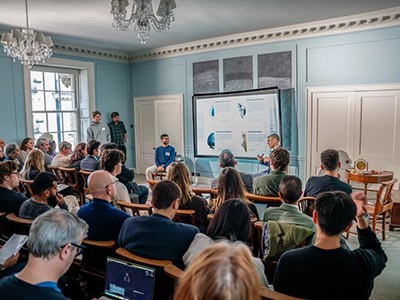
Meeting the moment: how scientific philanthropies are expanding their reach
We, like many researchers, turned to philanthropy and fundraisers. Hunter College in New York City held a fundraiser to support several research and education programmes. I also received a grant from the Templeton World Charity Foundation in Nassau, the Bahamas, and support for my staff in Thailand comes, in part, from the Golden Triangle Asian Elephant Foundation in Chiang Rai. But many researchers are chasing the same pots of philanthropic funding.
To secure US federal support, I’m currently exploring interdisciplinary research projects to study how cognition changes across an elephant’s lifetime and how those changes might compare with what occurs in humans. Elephants might offer a particularly valuable comparative model because of their long lifespans, complex social lives and sophisticated problem-solving abilities. I think ambitious multidisciplinary teams are key to the type of groundbreaking research that will secure NSF or NIH funding. Collaboration has always been important, but it’s even more so now. Why compete, if instead, you can collaborate and push the boundaries of science?
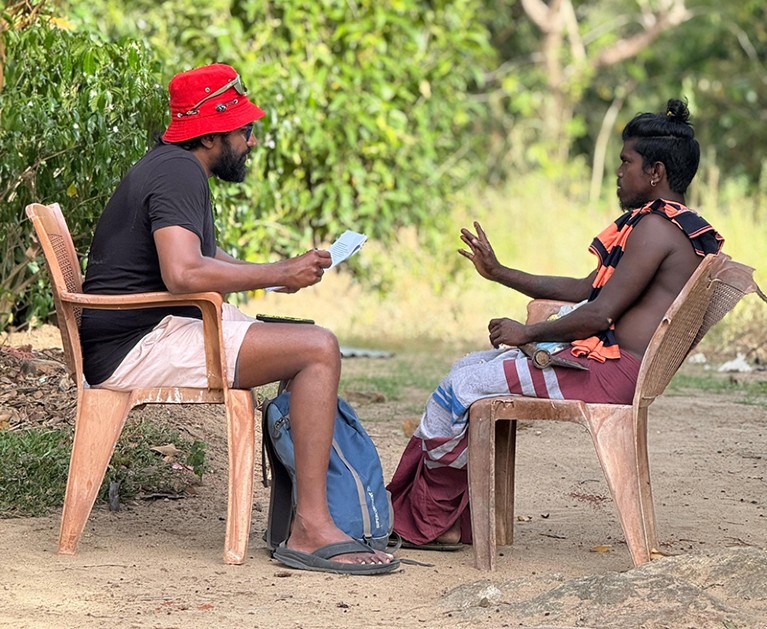
ERANGA GALAPPATHTHI: Establish a track record of US-focused research
Climate-adaptation researcher at Virginia Tech in Blacksburg.
My research team has spent the past decade building relationships with Indigenous peoples’ networks to co-produce research about how climate change is affecting, for example, hunting and gathering activities in the Canadian Arctic and Sri Lanka. Our original goal was to do a large-scale comparative analysis of fisheries systems and how they’ve been affected by climate change in the two regions. In April 2025, we lost more than $400,000 in NSF funds.
US science after a year of Trump: what has been lost and what remains
We had another pending grant from the Belmont Forum, an international partnership of funders focused on environmental sustainability. That funding helped us to maintain research relationships with our Indigenous community partners. In community-engaged Indigenous research, trust is built by showing up consistently, following through on commitments, returning results to communities and developing the research together rather than simply arriving to collect data and then leaving. When funding suddenly disappears, activities that communities were expecting might be delayed, reduced or cancelled — and community members might not realize the distinction between a research team changing its plans and a funding agency terminating support. So far, our partners have remained supportive and interested in continuing the collaborations. But maintaining those relationships becomes much more difficult without stable funding.
Now that the NSF has shifted its priorities away from knowledge-co-production with Indigenous communities, I’m reworking research proposals. The current NSF strategic plan emphasizes topics such as artificial intelligence and machine learning, biotechnology innovation and quantum-information science. And because funding for international research has dwindled, I need to establish a track record of US-focused research.
To that end, I’m doing some original analyses on food-system vulnerabilities and health outcomes using existing publicly available data sets. These data are related to climate, food systems, health, demographics and socio-economic conditions. We are also developing systematic-review and meta-analysis projects to identify broader patterns, effect sizes and sources of variation that might not be visible from individual studies. These approaches help my team to ask original research questions and produce scientific knowledge with fewer resources than would be required for field-based data collection. These approaches are adaptations to the current funding environment, not substitutes for community-engaged research. But I’ll also be doing the slow work of building collaborations with Alaska-based communities.
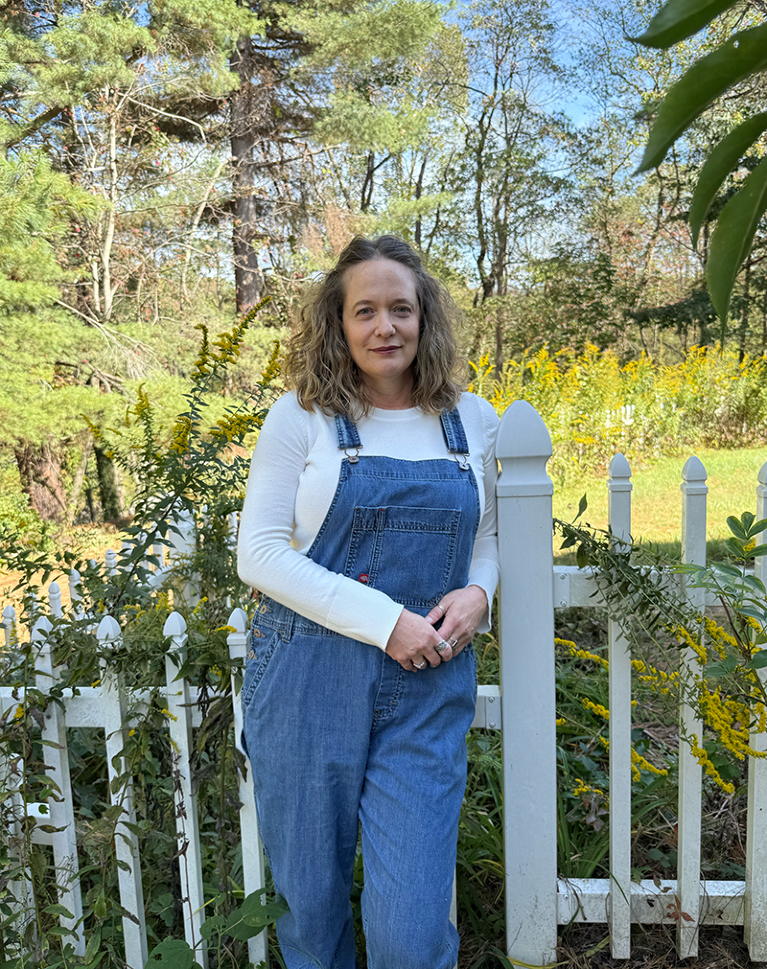
REBECCA LINDSEY: Crowdsource to preserve reliable data
Project director for Climate.us, a public climate-information website affiliated with the non-profit organization Multiplier, based in San Francisco, California.
More than one million people were visiting the Climate.gov website every month until, after nearly 15 years, it disappeared in June 2025. At the time, the account had more than 500,000 followers on social-media platforms. It was run by NOAA and I thought of it as a climate-literacy warehouse in which users could view a dashboard of global climate-change and climate-variability data, see maps showing projected changes in US temperatures in coming decades and get scientist-vetted answers to questions about the causes and impacts of human-caused global warming.
Inside the new political screening that’s stalling NIH grants
In January 2025, I and other NOAA employees were told by the Trump administration to review Climate.gov and remove content deemed to be in violation of administration policies. For example, the climate-literacy guide used by educators had to be removed because it covered equity. In late February 2025, I was fired by the Department of Government Efficiency, four months before the website was removed. Users are now redirected to a NOAA climate landing page, which doesn’t include the comprehensive dashboards and offers a limited view of what science can tell us about the state of the climate.
In August 2025, I and two other former Climate.gov employees turned to crowdfunding to recreate the effort as the website Climate.us. The non-profit organization Multiplier hosted us, because starting our own non-profit organization would have taken valuable time. Relying mostly on word of mouth, we raised more than $630,000 from various funding platforms.
We also knew that launching a website would create demand for fresh content. We are updating articles, maps and graphics and adding new ones. On top of that, we are restoring the climate-literacy guide, which offered an educational tool to explain core concepts such as greenhouse gases, fossil fuels and ecosystem threats. But I no longer have the expertise of NOAA’s pool of scientists, who used to provide this as part of their jobs. We have about 80 volunteers — academics, non-profit researchers and retired federal scientists — but we certainly don’t have enough depth of expertise in subfields of climate research. We might have to consider paying researchers for that expertise. Going forwards, it would be ideal to host the site on a platform that could partner flexibly with the government at all levels — federal, state and tribal — and that would remain protected from political decisions.
SHARON HILLIER: Find donors to help salvage samples
Expert in reproductive infectious diseases at the University of Pittsburgh in Pennsylvania.
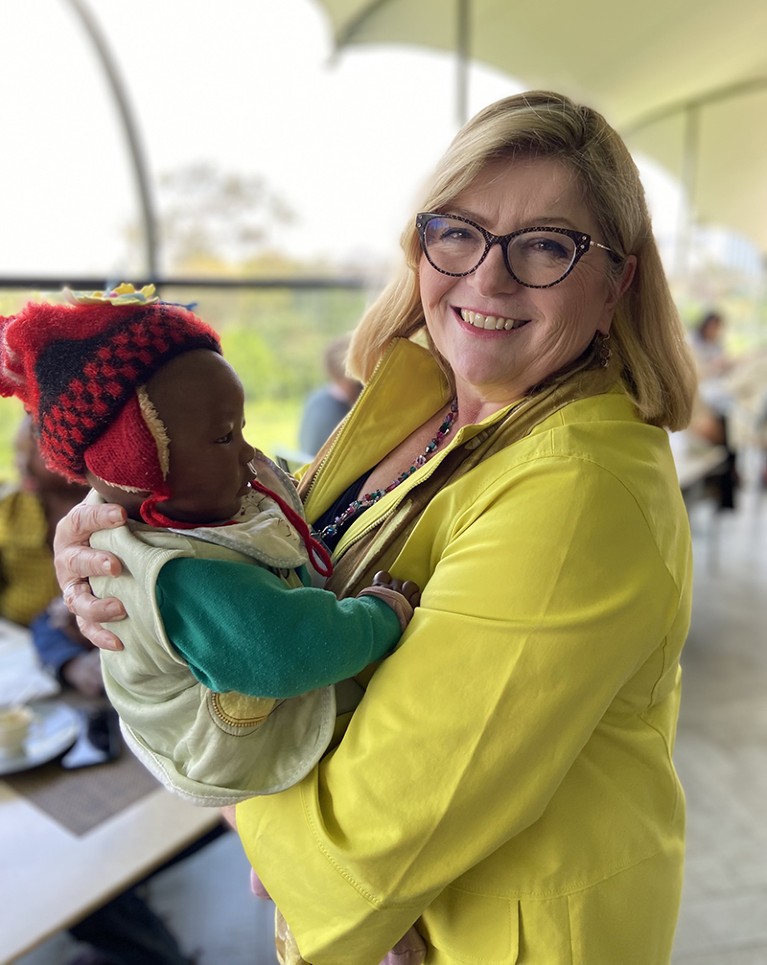
My work focuses on how best to prevent sexually transmitted diseases. Over the past three years, my colleagues and I have been working on drug-based products to prevent HIV infection, focusing on three African countries. The nine-year project had a total cost of $205 million, and was funded by USAID in 2024. But on 27 February 2025, we received a termination letter that stated that our research award “is not aligned with Agency priorities”. As a result, we lost $138 million. At the time, I had hundreds of samples from three clinical-trial sites in Zimbabwe, Kenya and South Africa where we were testing combinations of antivirals and contraceptives. We had no way to cover our collaborators’ costs for either long-term storage of the samples or shipping them to the United States for analysis. I asked USAID for $20,000 to ship the samples to my lab. During a call, USAID staff asked me whether it would be cheaper to burn or to ship the samples; I responded “to burn them”.
‘Shattered’: US scientists speak out about how Trump policies disrupted their careers
Without those samples, we were on the verge of losing the results from the three clinical trials. I thought about calling it quits and retiring, but scientists are fiercely stubborn and driven to do good research. So, I started looking for ways to keep this research alive.
Enjoying our latest content?
Log in or create an account to continue
- Access the most recent journalism from Nature's award-winning team
- Explore the latest features & opinion covering groundbreaking research