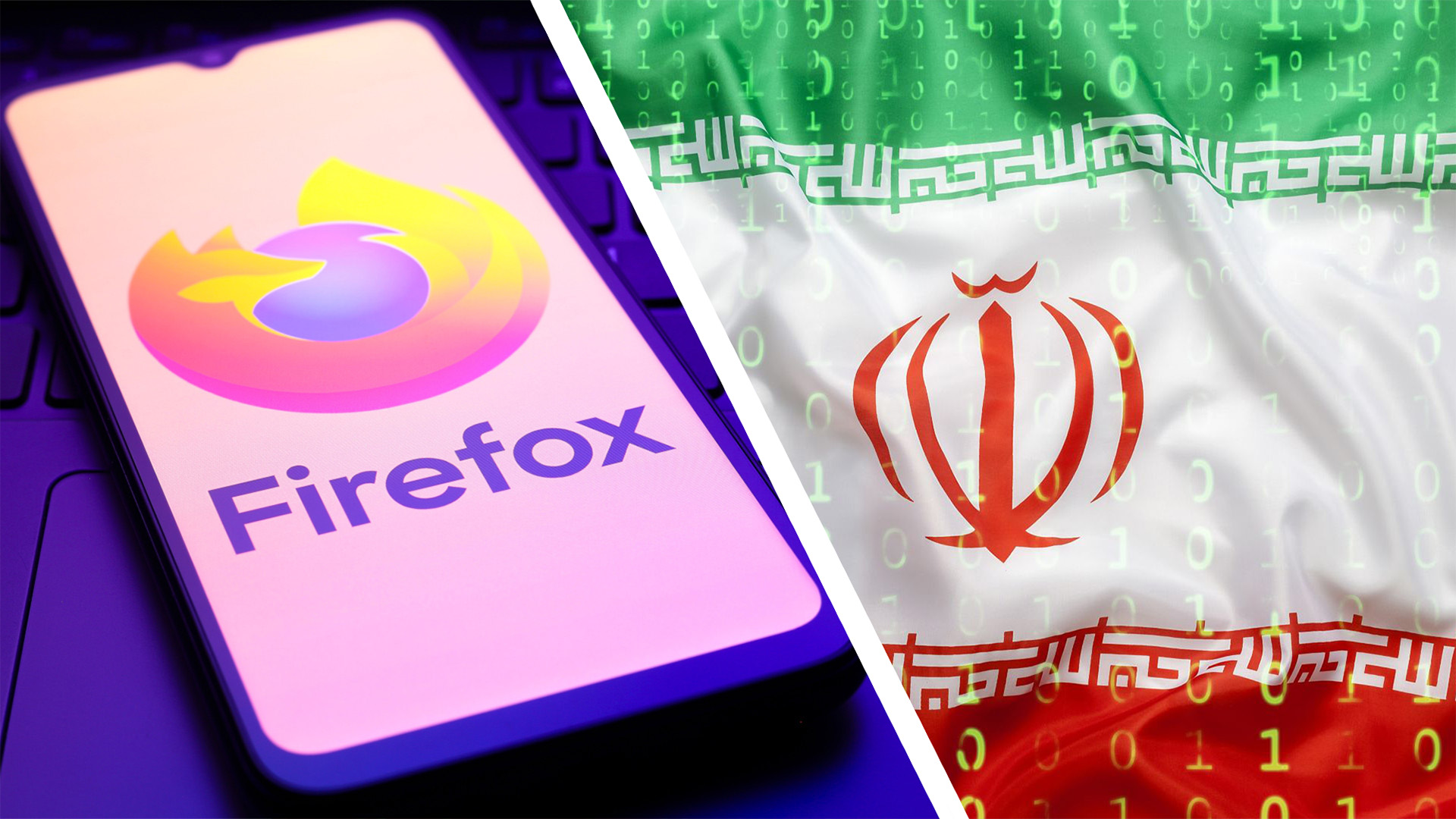
- Firefox's free built-in VPN temporarily went dark for users in Iran
- Mozilla cited suspected third-party app abuse for the temporary disruption
- The service has now reportedly been restored
Firefox’s free, built-in VPN went offline for some users in Iran, and Mozilla says the cause was a temporary disruption to investigate suspected abuse of the service by unauthorized third-party apps.
The outage prompted complaints on social media platforms and online forums. Users in Iran said the VPN — free and one of the best VPN options in Iran because it needed no extra software — first stopped connecting and then disappeared from the browser entirely.
"It appears that over the past 24 hours, Mozilla has disabled its internal VPN service for users in Iran," one X user wrote on Tuesday, a sentiment echoed across several other posts in Persian and English.
VPNs are by no means a niche tool in Iran — by some estimates, roughly nine in ten Iranian internet users rely on one to bypass state filtering. So, even a brief outage of a popular, free option was quickly felt.

: — A weekly newsletter on digital privacy and online surveillance.
Leave No Trace investigates the companies and governments putting our digital freedom at risk — and the people fighting back.
📩 Subscribe now to get every edition delivered to your inbox every Friday, launching this September.
Iran's Firefox VPN outage: what we know
The reports circulated first on X and Reddit, where Iranian users described losing access, before being pulled together in a Hacker News post titled "Tell HN: Firefox’s built-in VPN stopped working for some users in Iran.”
According to the post, Firefox users in Iran had used the free VPN for months, even though Iran was never part of the feature’s official rollout. For many users in Iran, it offers a convenient way to reach blocked sites from a browser they already have.
The free tier, introduced into Firefox in 2026, normally comes with a monthly data allowance in exchange for signing in with a Mozilla account — and is separate from Mozilla’s paid, standalone VPN service. As it happens, Mozilla has just lifted that cap, announcing on November 10 that the built-in VPN would offer unlimited data through January 31, 2027.
At first, nobody could say why the outage happened. Some users suspected the Iranian government had blocked Mozilla’s service at the network level, as it has done with other VPN providers. Others blamed Mozilla itself, suggesting it had quietly disabled access for Iranian IP addresses in order to comply with US sanctions.
The eventual answer was neither.
A Mozilla spokesperson confirmed: "We recently discovered potential abuse of Firefox’s free built-in VPN by unauthorized third-party apps and temporarily disrupted access to investigate", before going on to confirm that service has since been restored.
Discovering the outage was a temporary anti-abuse measure rather than a policy change targeting Iran has eventually come as a relief for affected users.
What it means for people in Iran
For now, the episode is a reminder of how tenuous access to the open internet can be.
Using an "unauthorized" VPN has been illegal in Iran since February 2024, and users have reportedly received text messages threatening prosecution for bypassing restrictions.
Iranian users do have alternatives. Proton VPN Free is a long-standing favorite, with obfuscation features built for hostile networks. Indeed, its signups from Iran have repeatedly surged during previous blackouts. There’s also Windscribe Free, which supports censorship-resistant protocols.
With Iran's internet as unpredictable as ever, the last thing its users need is another trusted tool vanishing overnight.
Mark is a Tech Security Writer for TechRadar and has been published on Comparitech and IGN. He graduated with a degree in English and Journalism from the University of Lincoln and spent several years teaching English as a foreign language in Spain. The Facebook-Cambridge Analytica data scandal sparked Mark’s interest in online privacy, leading him to write hundreds of articles on VPNs, antivirus software, password managers, and other cybersecurity topics. He recently completed the Google Cybersecurity Certificate, and when he's not studying for the CompTIA Security+ exam, Mark can be found agonizing over his fantasy football team selections, watching the Detroit Lions, and battling bugs and bots in Helldivers 2.