“Beijing’s intended strategy is to dominate the high ground of the twenty-first century.”
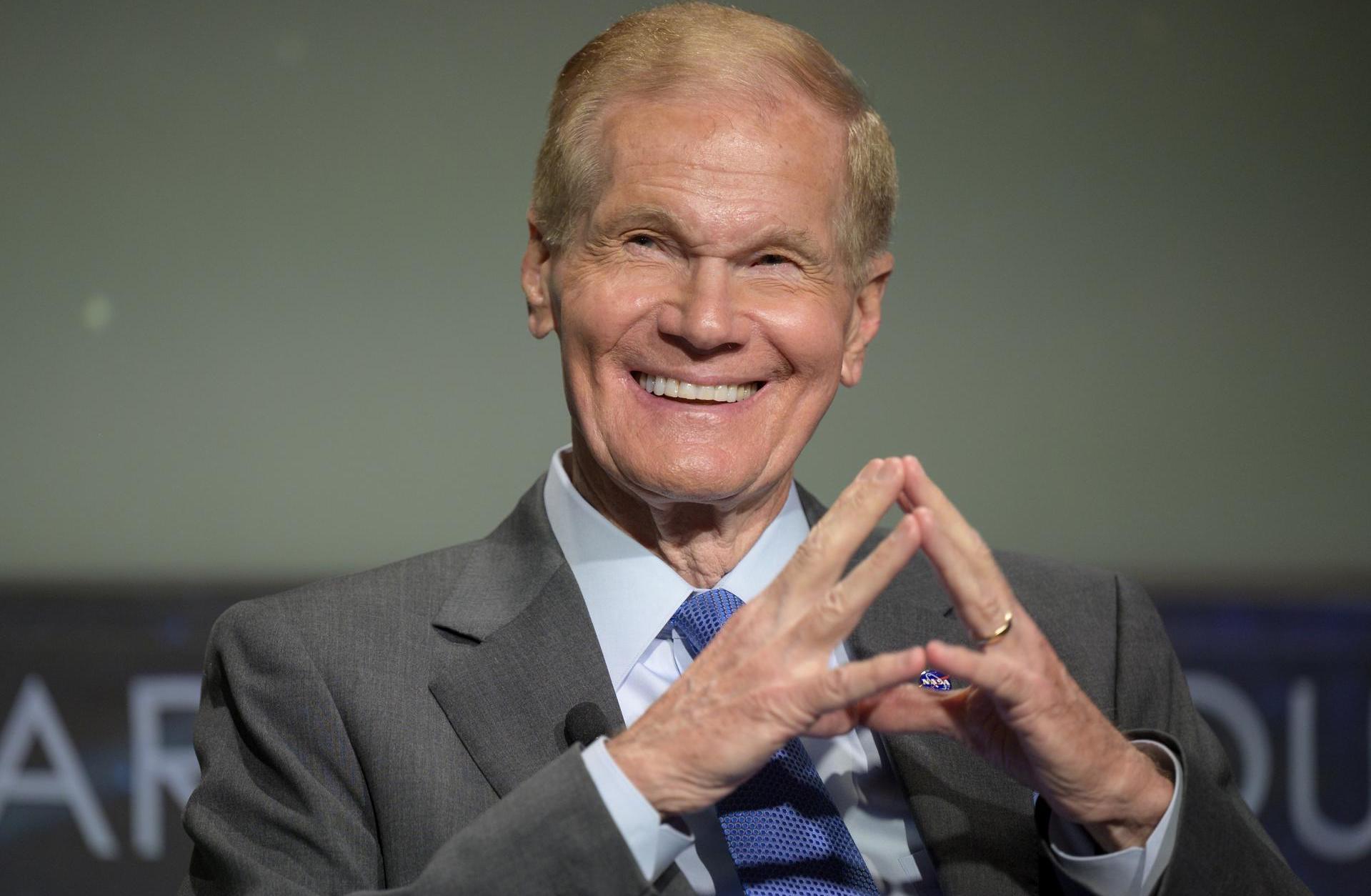
In a forthcoming memoir, former US politician and NASA Administrator Bill Nelson offers a blistering assessment of China, saying the United States must do all it can to retain its leadership in space exploration.
“Beijing’s intended strategy is to dominate the high ground of the twenty-first century,” writes Nelson in , a book to be published by Harper Horizon in January 2027.
A former Congressman and Senator from Florida, Nelson served as a mission specialist on a space shuttle flight in 1986 and later as NASA administrator from May 2021 to January 2025 under President Biden. The book largely focuses on his space policy work in Congress and his tenure as NASA’s leader.
Eye-opening balloon saga
Nelson recounts how in early 2023, NASA assisted the US military when a Chinese spy balloon began traversing the United States. With its experience in using balloons to map the stratosphere and model atmospheric currents, NASA provided information on how to shoot the balloon down without endangering anyone on the ground.
He argues that the balloon saga offered further affirmation that the United States was enmeshed in a high-stakes competition with China for the high ground.
“What many Americans first registered as a balloon violating our airspace was really a warning that the next great rivalry will not be fought on land or sea but the skies above us and even beyond our atmosphere,” he writes. “The episode was also a window into the new space race that is swiftly approaching its most urgent phase, with the stakes even higher than the Cold War contest.”
Nelson has long been wary of China as a threat to the United States, noting his concerns about technology theft from the West. Unlike his predecessor under a Democratic president—former astronaut Charlie Bolden, who served as NASA leader under President Obama—Nelson supported the Wolf Amendment, which strictly limits cooperation between NASA and China’s space program.
The reason, Nelson says, is that China’s space program is militarized and highly secretive.
“China is not a partner to be trusted,” he writes. “Partnership requires trust, and trust is founded on transparency. With China, despite repeated efforts to build verifiable, rules-based cooperation and set commonsense guard rails for engagement, there has never been much of either.”
An urgent competition for the Moon
The flashpoint of the near future is the Moon, where both NASA and China are in a contest to not just land humans but also establish a long-term settlement. As for how this competition is going, Nelson writes, “America is not the obvious favorite.”
Although he’s no fan of the Trump administration, Nelson does seem to agree with NASA’s current administrator, Jared Isaacman, that this competition is urgent and requires the agency to pursue more than a flags-and-footprints approach. In his 10 months as administrator, Isaacman’s signature initiative has been to launch an effort across NASA and its commercial space ecosystem to build a Moon Base at the lunar South Pole.
China, Nelson writes, is planning “infrastructure for lunar permanence,” seeking to occupy the limited area at the South Pole of the Moon where the most resources are. “They are not sprinting against us to plant another flag; they are settling in for a marathon, an endurance race that will take us deeper into space than humankind has ever dared to venture before,” Nelson writes.
Last week, speaking at a space conference in Washington DC, Isaacman said NASA was reevaluating its partnerships with some countries to make sure it was putting itself and its allies in the best possible position to reach the lunar surface and establish a presence there before China.
“When you realize there are only limited parking spots that get us access to that training environment, it creates an urgency, and we must [go fast] because the Chinese are going to the exact same locations,” Isaacman said. “They are partnered with the Russians. They are going to put a nuclear reactor there, and they could potentially deny this training environment that is a necessity for America’s space ambitions.”
NASA must go to stay
Under Isaacman, NASA is eyeing a 2028 launch date for the Artemis IV mission to land humans on the Moon. Critics have suggested that the agency is motivated primarily by politics due to the influence of the Trump administration, which will exit the White House at the end of 2028. The reality, however, appears to be that Isaacman does not want to cede any more time in this race and is thus pushing for as many cargo and crew missions as possible to the Moon as soon as possible.
At the outset of the Biden administration in January 2021, NASA was still targeting a 2024 lunar landing, even though this was widely seen as unreasonable. Over the next four years, the target date for a landing slipped almost year for year. If the date slips significantly further, China will land humans on the Moon before NASA can return there.
Being first, and being there for the long haul, matters, Nelson says. And he tells his readers to not be fooled by talk of exploration, especially when it comes to China’s space program. This is a competition for the high ground of the 21st century.
“What looks like exploration on the surface is, in truth, also a raging struggle for space supremacy,” he writes. “This race will determine who sets the rules for a new era of human expansion beyond Earth. For Beijing, this race is not about exploration but about domination, securing the infrastructure of orbit in much the same way empires once seized trade routes and aggressively defended sea lanes.”
Should the United States lose this competition, Nelson writes, “we’ll watch the next frontier slip from our grasp.”