Tech companies continue to shoehorn AI into their product and services, whether it’s justified or not. Within fitness and health tech, we have more AI coaches and advisors than we can juggle — from Google’s Health Coach to Strava’s Athlete Intelligence — and AI interpretations of our stats, that often look suspiciously like the technology we had years ago, just with an LLM flair.
But the shareholders love it and it works to upsell customers, so the game continues. Garmin, however, has been pretty careful about how it has employed the term, and how it has actually used the tech to ‘enhance’ its best Garmin watches and its Garmin Connect+ platform. From a dig into the Garmin website, you’ll mostly only see the term AI attached to one feature: Connect+’s Active Intelligence, which it describes as 'AI-powered'.
Active Intelligence is designed to offer LLM-style feedback and advice within the Connect app on your phone. The pitch is that as the app gets to know you, the insights will become ‘tailored to you and your goals’, according to Garmin.
Garmin is a fairly careful, perhaps conservative, company among its peers. And I imagine there may have been a feeling it couldn’t jump on this AI bandwagon, given wider industry trends. I asked Garmin COO Brad Trenkle how he sees AI’s role within the company.
“I think because Garmin is a very engineering-focused company, we tend to be very pragmatic in all of our decision making,” says Trenkle. “That has led us to be very thoughtful and discerning about our use of AI.
“One of the key tenets of how we've implemented AI across the company, not just in product but even internally in our own processes, is that any application of AI needs to keep a very keen sense of authenticity.”
It’s an interesting take, when AI front-ends within health and fitness platforms often purport or appear to want to give apps a relatable or human edge — and seem faker or sycophantic as a result.
TrainingPeaks in the distance

Garmin remains keen to emphasize it’s a human-first company, as proved by the company’s most recent major acquisition, TrainingPeaks, in July.
TrainingPeaks does use some AI-based technologies in its platform but, fundamentally, it’s about matching an athlete (or schlub aspiring to be one) with the knowledge and expertise of a real, actual expert person. This is a platform made for coaches as much as athletes, a business model completely at odds with the current trend of simply getting ChatGPT or Claude to work up a training plan for you.
“We also have taken approaches that we think will give customers choice,” says Trenkle on the buy-out.
“Our recent acquisition of TrainingPeaks is an opportunity for us to make sure consumers who want to be able to engage with a human coach can do so through the TrainingPeaks platform. So we want to make sure that we meet customers where they are.”
Garmin is dabbling on both sides. Connect+’s controversial-at-launch Active Intelligence is a take on the flavor-of-the-month application of AI, using LLM tech to spit out easily intelligible summaries so folks don’t have to spend any mental energy on learning how to interpret their own data. And TrainingPeaks, for now, diligently swims against the AI sludge current. Long may it continue.
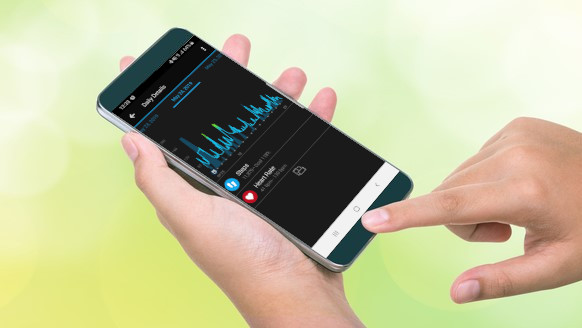
It’s also worth noting Connect+, despite receiving a mixed reception at launch due to Athlete Intelligence, is not all about AI. It also offers more classic Garmin-style bonuses like expert coach videos, Livetrack location sharing and offline Trails. Whether it’s worth the $6.99 monthly fee for you is something we’ll leave for another time.
“Some will want simple, basic answers to questions about their data that AI can help provide and create those insights. Others will embrace the idea of a human coach for motivation, accountability, and some of the things that maybe are a little more difficult to get through an AI bot or agent,” Trenkle explains.
He’s also bold on how much he believes Garmin understands its user base, versus the ever-growing competition.
“I think Garmin has shown through our history that we know our customers and we tend to know our customers better than our competition can know our customers, and part of the reason that we're able to do that is because we are vertically integrated, right? We're talking to our customers. We are customers of our own products ourselves,” says Trenkle.
I imagine some folks in the “engineering focused” Garmin eyeroll as much as I do at the attempts elsewhere to make AI a tightly integrated part of its fitness tech. But what the future holds for Garmin and AI? It’s still in the works.
Are you looking for a Garmin watch, but not sure what to get? Take our quiz below to find your perfect smartwatch.

Matt is TechRadar's expert on all things fitness, wellness and wearable tech.
A former staffer at Men's Health, he holds a Master's Degree in journalism from Cardiff and has written for brands like Runner's World, Women's Health, Men's Fitness, LiveScience and Fit&Well on everything fitness tech, exercise, nutrition and mental wellbeing.
He is the author of the upcoming book , set to be published by Bloomsbury in 2027. When he’s not training or writing about health and fitness, he can be found reading doorstop-thick fantasy books with lots of fictional maps in them.