The outage may have severe knock-on effects for some businesses, showing the need for effective backup systems.
“When a cloud outage leaves people unable to make payments or access everyday services, it exposes how much we depend on infrastructure we never see," Marijus Briedis, Chief Technology Officer at NordVPN, tells us.
“As Google is one of the world’s biggest technology companies, disruption to its cloud services can also affect businesses whose customers may have no idea they depend on Google at all.
“For everyday Google users, this dependence can mean several services they rely on suddenly being unavailable at the same time. Someone unable to pay through one banking app may find their alternative is affected too. Keeping a second payment option can help, although using a different bank does not guarantee it relies on different technology.
“Banks, retailers and delivery companies may look like separate businesses, but behind the scenes many rely on the same handful of technology providers. A problem at one supplier can quickly spread beyond its own customers.
“For businesses, the lesson is not that the cloud is unreliable, but that using a major provider does not remove the responsibility to prepare for disruption. Critical services need tested arrangements to switch to another system when something goes wrong.
“A backup is only useful if it can operate independently of whatever has failed. Businesses need to check whether their main service and their fallback rely on the same underlying systems, and test how quickly they can switch between them. Having copies of your data does not, on its own, mean customers can carry on making payments or accessing their accounts.”
It's too early to debate what might have caused the outage, but the limited reach of the damage (across European regions) could mean any number of things.
It's unlikely to have been a cyberattack, as user outage numbers are too low, so it could be an internal software or hardware issue, or even a power surge across the network.
Google Cloud is still set to give us an update soon, so we'll stay tuned for what they say.
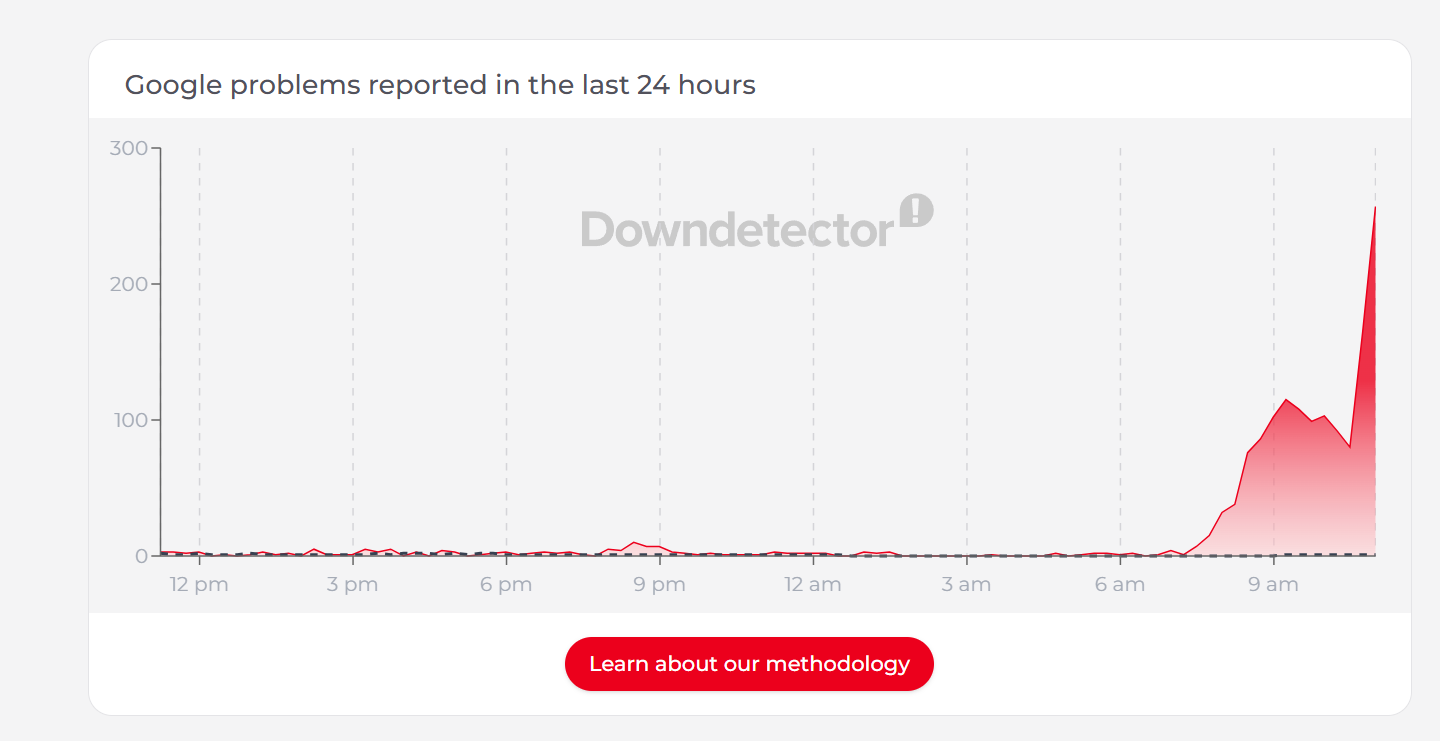
Here's that spike - bad news for Google Cloud customers, but hopefully we should be getting an update soon.
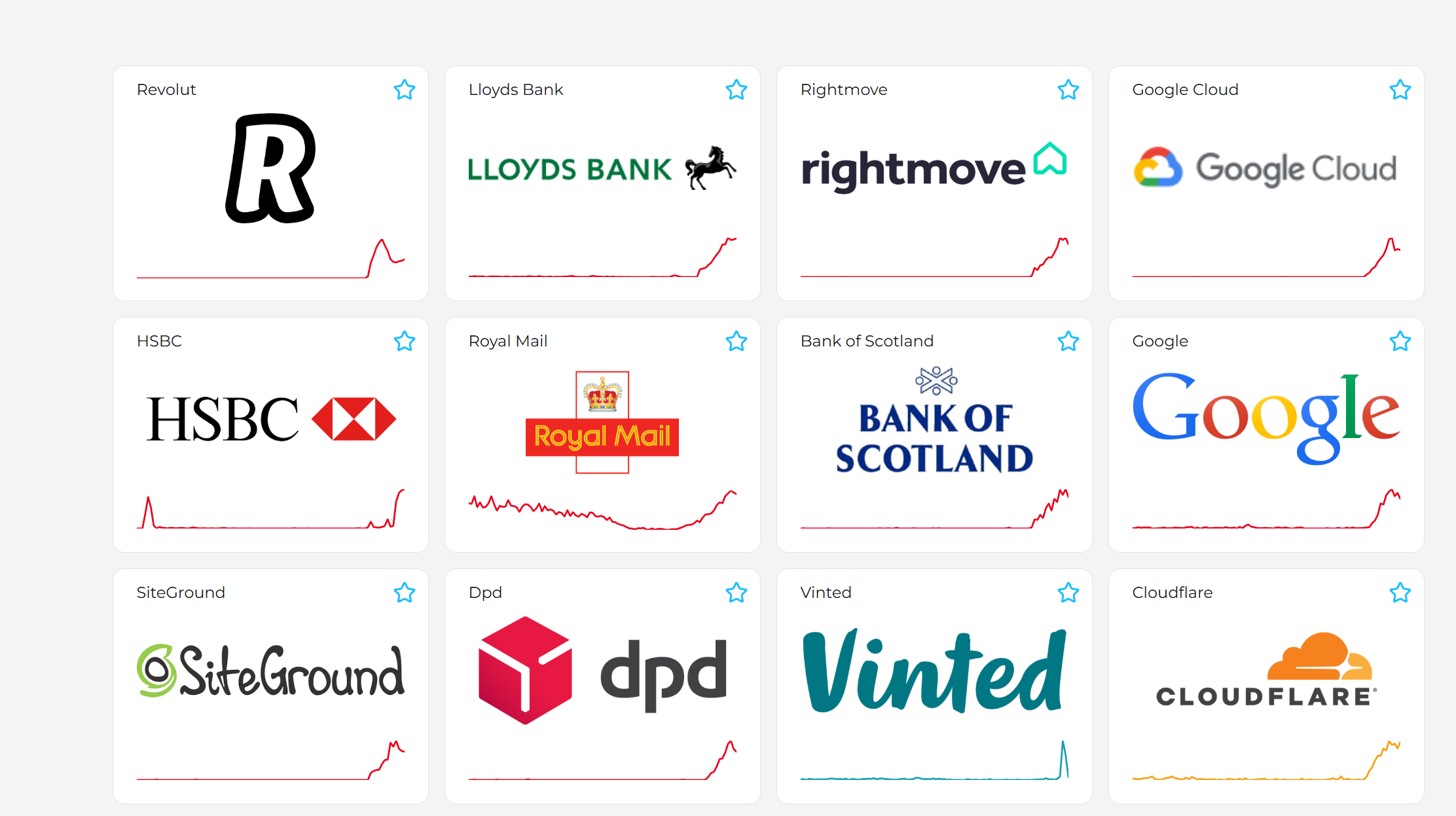
Looking at DownDetector, it seems some of the initial surges at other companies seems to be dying down, with Revolut, Lloyds, Rightmove and DpD all recovering.
After a slight fall in DownDetector reports, things have surged up slightly again.
On its status page, Google Cloud has promised an update soon, noting:
"We are experiencing an issue with multiple services in europe-west2 beginning on Monday, 2026-10-19 23:08 PDT.
Our engineering team continues to investigate the issue.
We will provide an update by Tuesday, 2026-10-20 04:00 PDT with current details.
We apologize to all who are affected by the disruption."
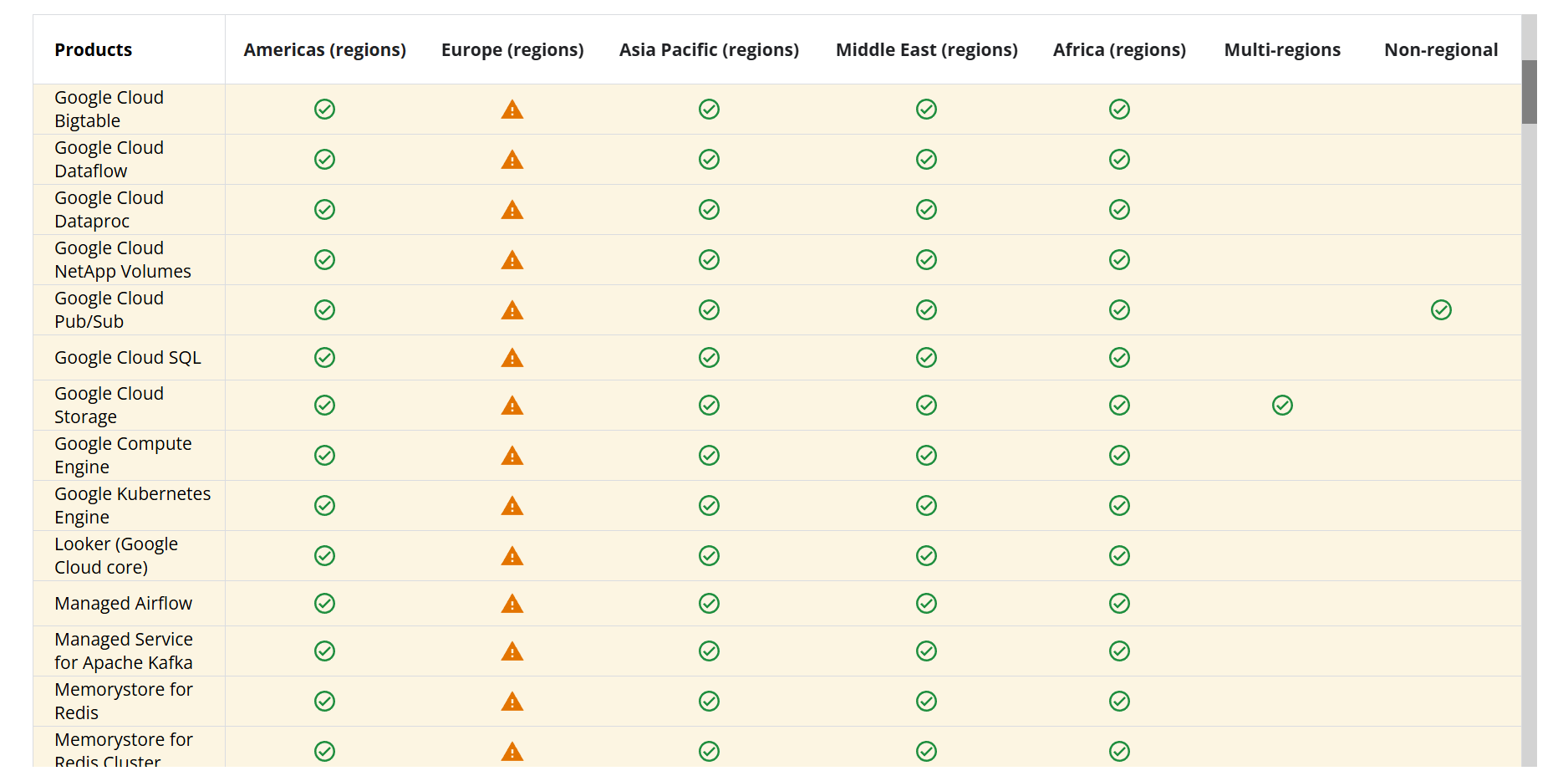
Google Cloud's own status page doesn't make for pretty viewing either, with lots of orange alerts showing that multiple systems are down, and many regions across Europe affected.
The affected services include hugely important business tools such as BigQuery, App Engine, Looker, SQL and many many more...
As the technological backbone for many other companies, the Google Cloud issue may well be affecting a range of customers.
DownDetector is showing a few spikes for other companies that seem to mirror its own pattern - with several major banking apps including the likes of Revolut and Lloyds Bank in the UK apparently affected.
You can follow TechRadar's coverage of that outage in our seperate live blog here.
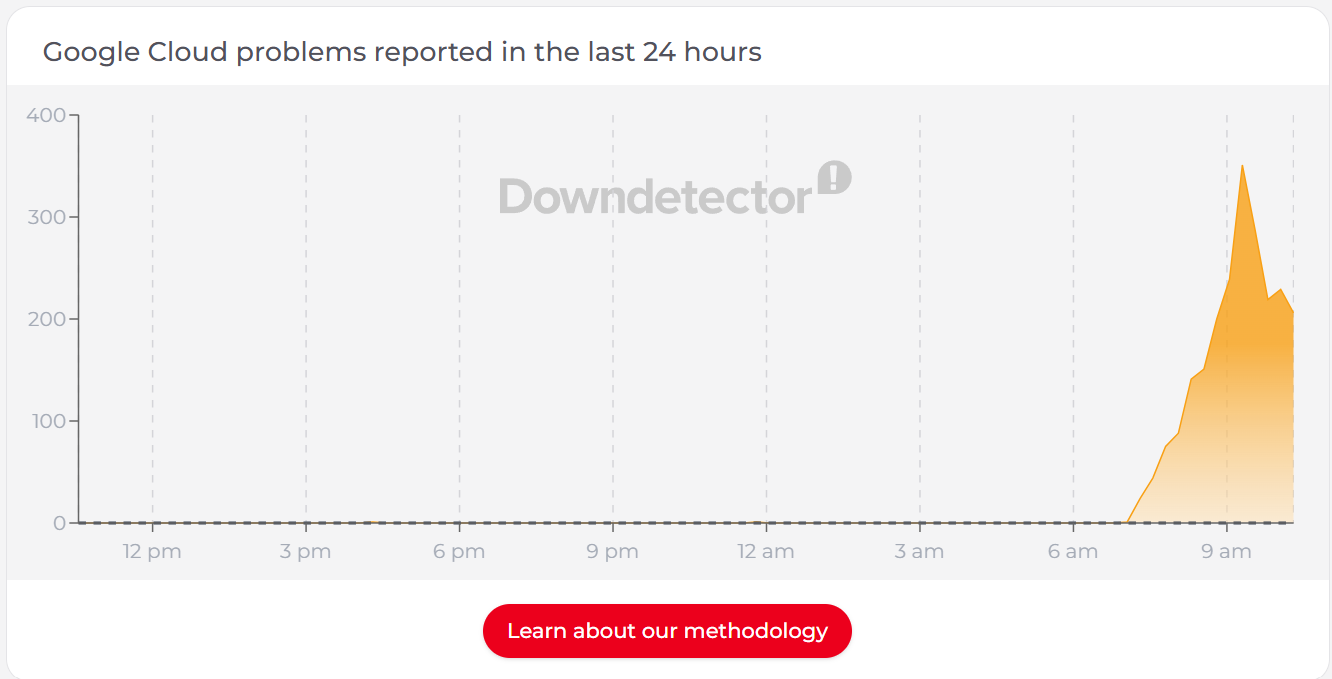
DownDetector is showing a big spike in user reports that something is not well at Google Cloud, although numbers do appear to have fallen slightly.
Good morning - well, maybe not so good for Google Cloud, which has confirmed it is suffering issues across Europe.
On its status page, the company confirmed it was seeing that "Multiple services are experiencing issues in the europe-west2 region."
The problems were confirmed at 10.24am BST/02.24am PST, so it could be a busy day for Google workers...