Investigators explain how highway thieves stole $100M in data center equipment.
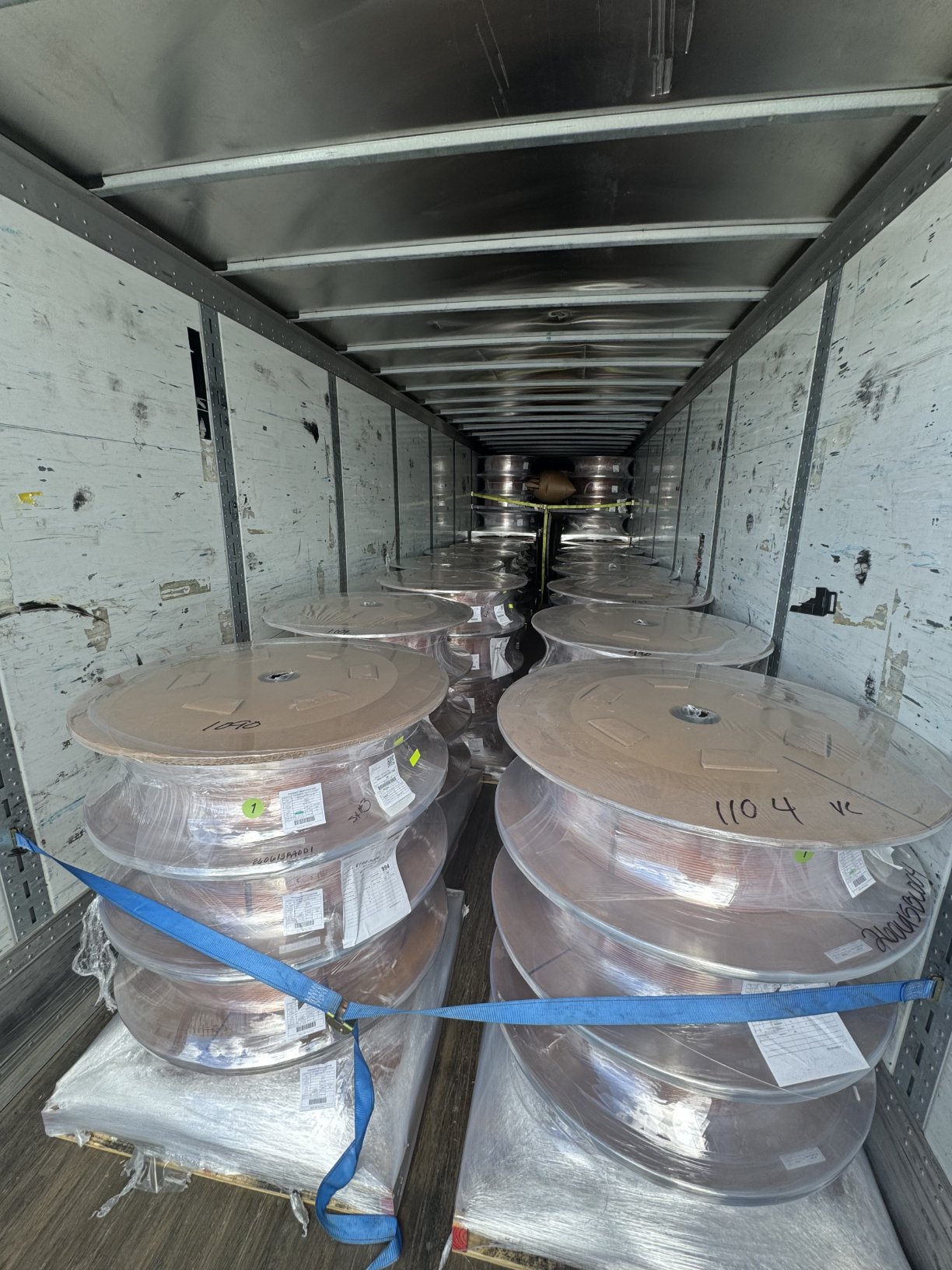
Highway thieves are using sophisticated digital tactics that investigators worry make it easy to rob trucks carrying millions in expensive data center equipment.
NBC News spoke to “several industry leaders, consultants, and investigators advising law enforcement” offices probing the biggest thefts yet and reported that since June, thieves have “made away with more than $100 million in data center freight.”
Here’s how they said thieves get away with it: First, thieves hack freight brokers’ accounts on shipment-listing websites and post fake shipments to lure real bids, then send a malicious link to any trucking companies that respond. Once victims click, thieves install software to take control of their accounts and start bidding on real shipments. Sometimes, a real delivery driver is hired to collect the cargo, unaware of the scam, and other times fake driver’s licenses are used to get accomplices hired. Either way, the goods are eventually transferred to a driver working with the thieves to resell the gear, and, in one of the largest thefts, tracking coordinates were spoofed to prevent digital monitoring.
Equipment commonly targeted includes “servers, fiber-optic cables, computer memory chips, copper wires, and bitcoin mining machines,” NBC News reported.
Some trailers hit seem to be carrying only data center equipment, like two stolen freights found in Illinois. The Cook County Sheriff’s Office estimated those contained $300,000 worth of copper wire spools and about $1 million in “custom-made data center modular power solutions equipment,” NBC News reported. Other trucks impacted were carrying additional freight, like a Los Angeles County Sheriff’s Department case where “data center cooling equipment” bound for Deepcool AI was recovered among nicotine pouches, televisions, shoes, printers, speakers, and skin care cosmetics. Experts worry that means Americans may be broadly harmed by the thefts, not just the AI industry.
Taking out off-duty cop escorts
While some stolen goods have been recovered, in two of the largest thefts that NBC News found, none of the equipment was found, and off-duty cops hired to escort the shipments were targeted in hit-and-runs.
A trailer carrying “several hundred pounds” of “computer server equipment” worth $13 million was destined to land in Fayetteville, Georgia, “home to one of the largest data center developments in the country.” Two off-duty cops hired as escorts lost sight of the trailer after an unmarked sedan struck their car and forced the cops to stop as the trailer drove on. Gerardo Pachuca, a private investigator and former LASD cop investigating cargo theft, told NBC News that “the accident was not an accident. The bad guys wanted that load, so they intentionally took out the escorts.”
The same thing happened with another shipment out of California, headed to Texas, NBC News reported. Carrying “server rack components estimated to be worth around $10 million,” that trailer also sped off after the security escorts’ vehicle was struck by an SUV. And troublingly, in that case, it didn’t matter that the “cargo was also being monitored by an application tracking its location,” because “the tracking coordinates had apparently been spoofed.”
In that second case, the spoofing shows one of many ways that highway thieves have begun leveraging digital tactics to target data center shipments more precisely, experts warned.
Broadly, cargo thieves are infiltrating email accounts to find lucrative shipments, misdirecting shipments, disrupting GPS tracking, and using AI to create fake driver’s licenses to get accomplices hired as delivery drivers. LASD’s Sgt. David Pantoja told NBC News “that’s how most of it is being done,” which is a big shift from the past when highway thefts were largely opportunistic.
Ramping up security
As NBC News explained, these extreme examples where escorts were violently attacked are isolated events, but they’re part of a growing trend in high-end technology cargo thefts. Since 2025, there have been “nearly two dozen cargo theft incidents” in “states including California, Texas, and Utah,” and the “issue is only expected to grow” as AI firms continue to invest billions into data center infrastructure. Keith Lewis—head of operations at risk-assessment firm Verisk CargoNet, which tracks cargo thefts—told NBC News that “it’s like stealing pure gold bars,” and “it’s so much easier to steal this than to rob a bank.”
Unlike other kinds of cargo theft, data center equipment doesn’t often get sold in online marketplaces, experts told NBC News. Instead, stolen shipments can be broken down into parts and sold on gray markets to tech firms that rely on questionably sourced equipment to keep costs low. In many cases, an overseas buyer is already lined up before the theft occurs, investigators said, particularly in regions where access to high-end technology from the US may be restricted, like China.
For the AI industry and their freight industry partners, strengthening security is a critical step, and to do it right, they seemingly can’t rely too much on AI. In the past, vetting drivers and knowing clients was a key part of protecting shipments and ensuring they weren’t intercepted by bad actors bent on messing with the logistics.
Scott Cornell is chair of the Transported Asset Protection Association, Americas, or TAPA Americas, which is “the largest global nonprofit organization dedicated to supply chain security standards.” He told NBC News that although overseas crime rings currently tapping highway thieves are “playing chess in the supply chain,” there seems to be an easy path to checkmate if freight companies would slow down to run background checks on drivers.
“The only way this works is if the drivers are not properly vetted,” Cornell said.
Lawmakers are pushing to find solutions, too, including talking to people in industries hardest hit and proposing paths to strengthen federal response to overseas thefts. In the meantime, states coping with large thefts have formed specialized task forces to trace stolen shipments, and companies continue to look to escorts to solve the problem, despite the instances of violence.
Mike Duffy is the co-founder and CEO of Solutions Group International, which NBC News noted is “a security escort company based in Southern California, where much of the high-value goods are being manufactured.” He confirmed that “we’re escorting hundreds of loads per month” and “much of it” is “associated with data centers.”