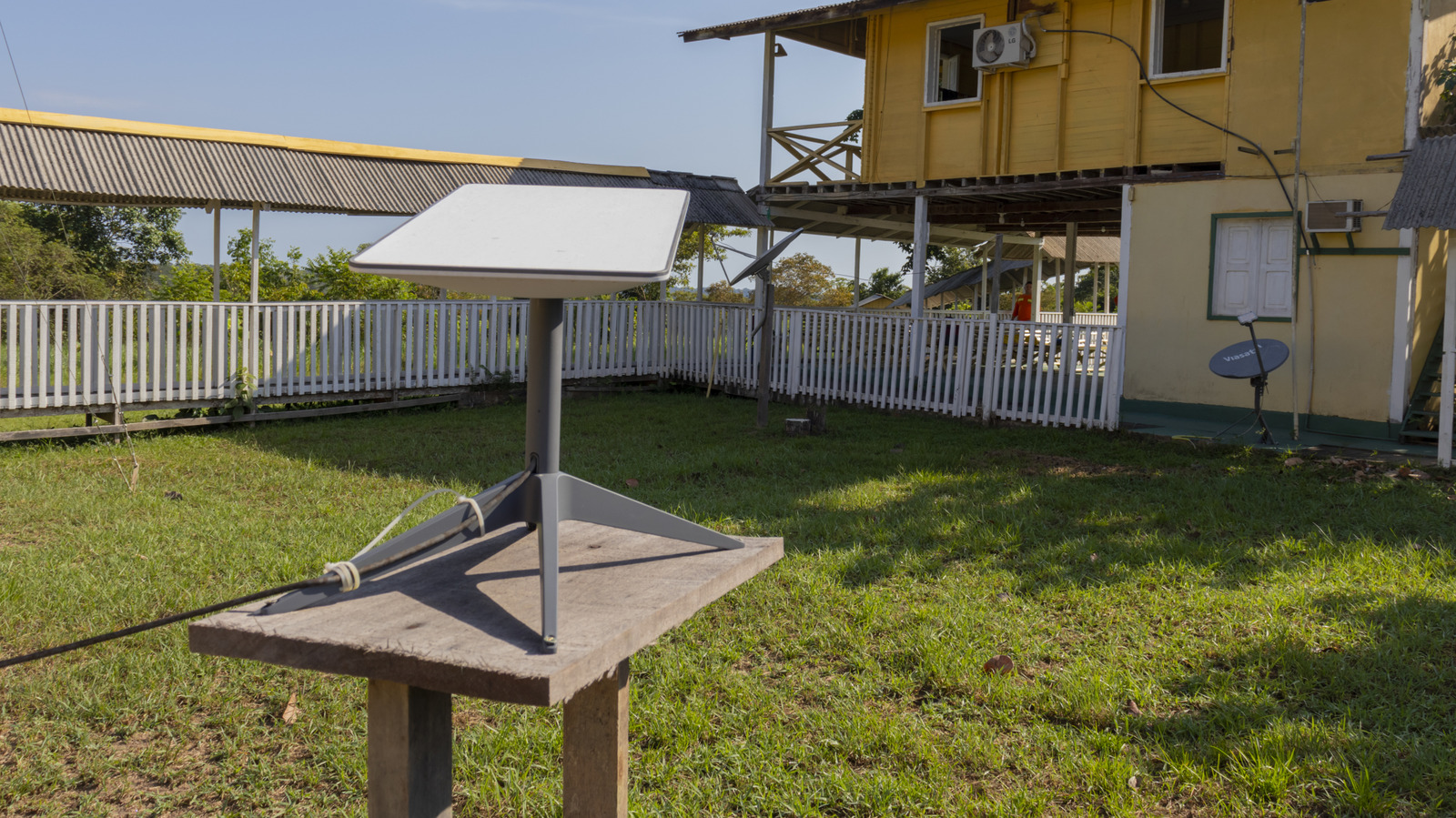
There isn't a single speed that'll give you a benchmark for either service. Starlink, for instance, offers US residential options that include plans capped at 100 Mbps and 200 Mbps, along with Residential Max, which gives download speeds of 400 Mbps or more. Compare and contrast with a provider like T-Mobile, which lists typical download speeds of 170 Mbps – 498 Mbps for some of its 5G Home Internet plans.
These figures do overlap, but they're averages. You can't really trust them as a benchmark for what you'll get in your local area, and neither Starlink nor a 5G provider like T-Mobile will hard promise speeds. There are some real-world tests that put those claims to the test, though.
For instance, 2026 Starlink testing in rural Idaho saw daily download averages on a Residential Max plan of between 145 and 170 Mbps. However, testing from 2025 showed a wider range, from 20 Mbps to as high as 250 Mbps. That said, location, equipment, and even the time of day can affect achievable speeds.
As for 5G, your network provider will have the biggest impact, as it'll determine which cell towers and spectrum/frequencies you can access. For instance, Opensignal saw average downloads of 249 Mbps on T-Mobile, with AT&T hitting 184.3 Mbps. Ookla's own 2026 report, meanwhile, saw speeds of 314.38 Mbps for T-Mobile, with Verizon hitting 218.96 Mbps. These stress tests give you an idea of real-world speeds, rather than the network provider's marketing claims.
Those download speeds are important, too, but they aren't the whole picture. You'll need a good upload speed to send large files and low latency to avoid connection delays. T-Mobile reckons typical home internet uploads will see speeds of between 12 and 55 Mbps, with latency of between 16 to 28ms. Starlink, meanwhile, reports US median peak-hour latency at 25.7ms. Surprisingly, connecting through satellites doesn't automatically mean an enormous delay.