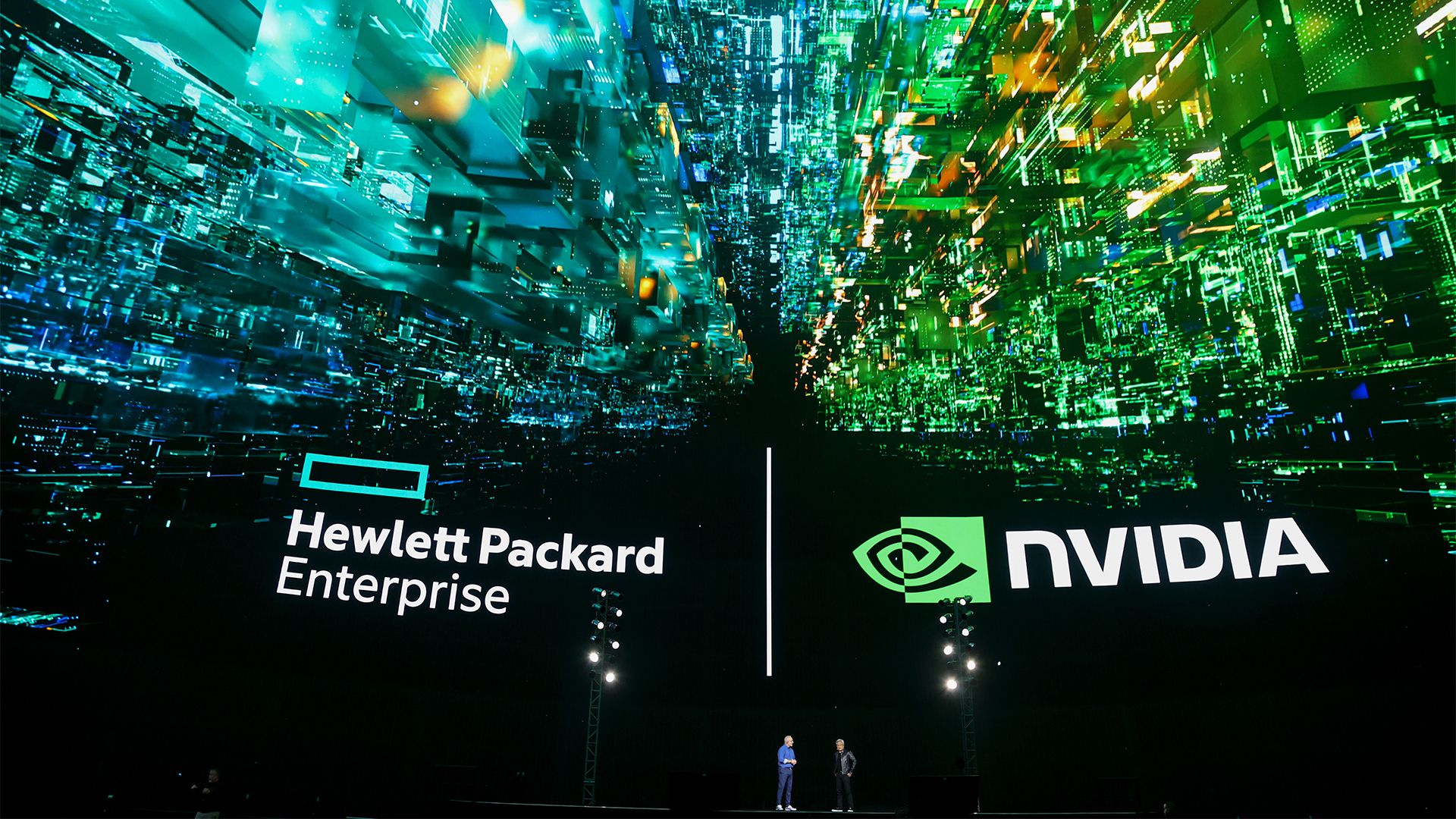
HPE cut the ribbon on new features for its HPE Private Cloud AI service at Nvidia GTC in Berlin this week as the firm continues building out the HPE AI Factory portfolio.
According to HPE, the move aims to further support enterprises developing and scaling AI applications, with new capabilities designed to improve ease-of-use for developers and independent software vendors (ISVs).
This includes new governed APIs enabling developers and ISVs to ramp up inference and model refinement capabilities. With OpenAPI-based development, HPE said this will serve as a “single source of truth” for developers working on various interfaces.
This approach will help automatically generate documentation and software development kits for users, for example, as well as code samples that “help partners build integrations faster”.
Elsewhere, new AI pipelines designed to integrate HPE Private Cloud AI within applications and industry solutions will also streamline processes for customers.
Cheri Williams, SVP & GM for private cloud & flex solutions at HPE, said the capabilities come in direct response to growing agentic AI adoption among enterprises.
Indeed, agents are now becoming an “essential part of how enterprises operate”, meaning IT teams require more robust and flexible infrastructure capabilities.
Sign up today and you will receive a free copy of our Future Focus 2026 report - the leading resource for IT decision-maker insight on priorities and investment areas in AI, security and more.
“As organizations deploy AI across industries and increasingly sensitive environments, they need infrastructure that gives them greater control over security, sovereignty, and how enterprise data is accessed and used,” Williams commented.
“We’re helping customers scale AI across hybrid environments while maintaining the governance and operational control required to move from experimentation to production.”
Governance and identity security capabilities are a key focus for HPE with the new feature roll-out. New MCP servers, for example, will now be versioned and governed based on roles, tenants, and projects.
New auditing capabilities also allow multiple agents to interact with enterprise systems while maintaining “organizational governance”.
Notably, role-based access controls alongside machine identity monitoring capabilities are designed to help IT and security teams manage human and autonomous access to services in a more efficient manner.
Tackling boisterous workloads
HPE revealed it will also expand GPU flexibility within its Private Cloud AI service to help organizations support a more “diverse” array of AI workloads.
With this, enterprises operating under the private cloud service can now combine Nvidia H200 GPUs and Nvidia RTX Pro 600 Blackwell Server Edition GPUs within the same cluster.
According to HPE, this will help support a “broader mix of AI workloads through a common, governed operating environment.”
“Nvidia’s open source KAI Scheduler provides quota- and priority-based scheduling to improve GPU utilization and workload placement across projects,” the company explained.