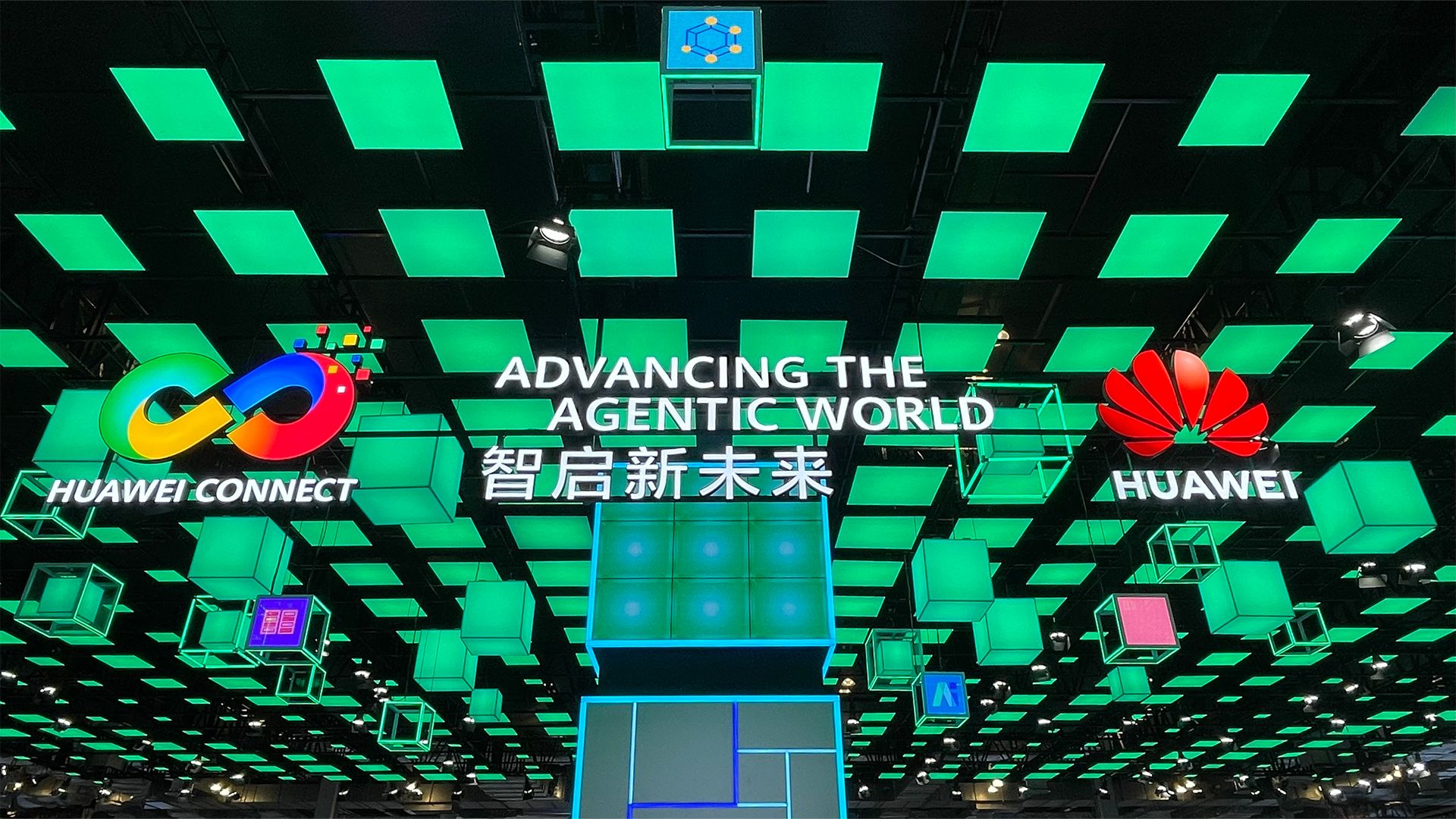
Huawei has become the latest enterprise hardware vendor to show off its open source credentials – a trend that’s manifested repeatedly across 2026.
“At Huawei Connect last year, I talked about one of our core strategies: growing open source and open system being Huawei’s clear ecosystem strategy,” said David Wang, Huawei’s current rotating chairman, during his opening keynote at this year’s Connect conference in Shanghai.
“We will focus on open source and open systems talent development, global collaboration and strategic investment.”
A key part of this is CANN. CANN is the company’s chip software, similar to Nvidia CUDA and AMD Rocm. Like the two US chip makers, Huawei is using this to attract open source developers to its Ascend chips.
At the 2025 launch of the program key named partners included PyTorch, Triton, and vLLM. While these have remained, the total number of partners and developers has grown significantly.
“Over the past year, two of our business units have been working with partners and developers to build out our CANN and Ascend industry ecosystems,” Wang said.
“To date, the platform ecosystem has attracted over 4.16 developers and more than 7,200 ecosystem partners all over the world. The community supports over 560 open source projects worldwide [and] over all has seen over 20 million installations securing the largest share in China’s server OS market.”
Sign up today and you will receive a free copy of our Future Focus 2026 report - the leading resource for IT decision-maker insight on priorities and investment areas in AI, security and more.
Linux CEO drives home the message
Following Wang’s statement, one of the most significant players in open source took to the stage: Linux Foundation CEO Jim Zemlin.
Zemlin laid out the evidence for the power of open source in AI, saying: “At every single layer of the agentic AI stack, there's an open source project powering that technology.”
“At the infrastructure layer, Linux and Kubernetes,” he said. “At the training layer, PyTorch is used to train both open and proprietary models. At the inference layer, VLOM [and] Ray are used to serve up those models and even at the agentic layer, we're seeing protocols like MCP, A2A, and other technologies emerge – all open source – that are powering this boom.”
“Even at the model layer, we're seeing an explosion of open weight models. It's an amazing investment. Simply put, the entire AI stack is built on open source,” he added.
When it comes to contributing to open source projects, Zemlin described it as a “non-zero sum game” – that “nobody’s gain requires anyone else’s loss”.
Citing a Harvard Business School paper, Zemlin highlighted what this means from a financial perspective: for every $1 invested in shared code, $2,000 of shared value is returned to those who build on it, he said.
In closing, Zemlin praised Huawei, reflecting that his statement from 2016’s Connect conference that Huawei is “doing the hard work [and] betting on managing shared R&D” holds true.
“Huawei has continued to contribute in the age of agentic AI, and I expect them to continue to do that far into the future,” he said.