Data readiness is by no means a new talking point within the tech industry. Travel back a decade and IT leaders were grappling with how to capitalize on the data goldmines (or oil wells) hidden within their infrastructure.
AI, naturally, has thrust this topic back into the spotlight. Data is the lifeblood that feeds your various chatbots, assistants, and – now – agents. As the saying goes, ‘garbage in, garbage out’, and IT leaders are very much aware of this.
Despite the fact it’s nearly four years since the advent of generative AI, vendors, providers, and consultants are trying to drill home the importance of data quality and preparation.
NetApp ranks among the countless companies that appear to be screaming into the void and data readiness was a key talking point during my time at NetApp Insight 2026 this week.
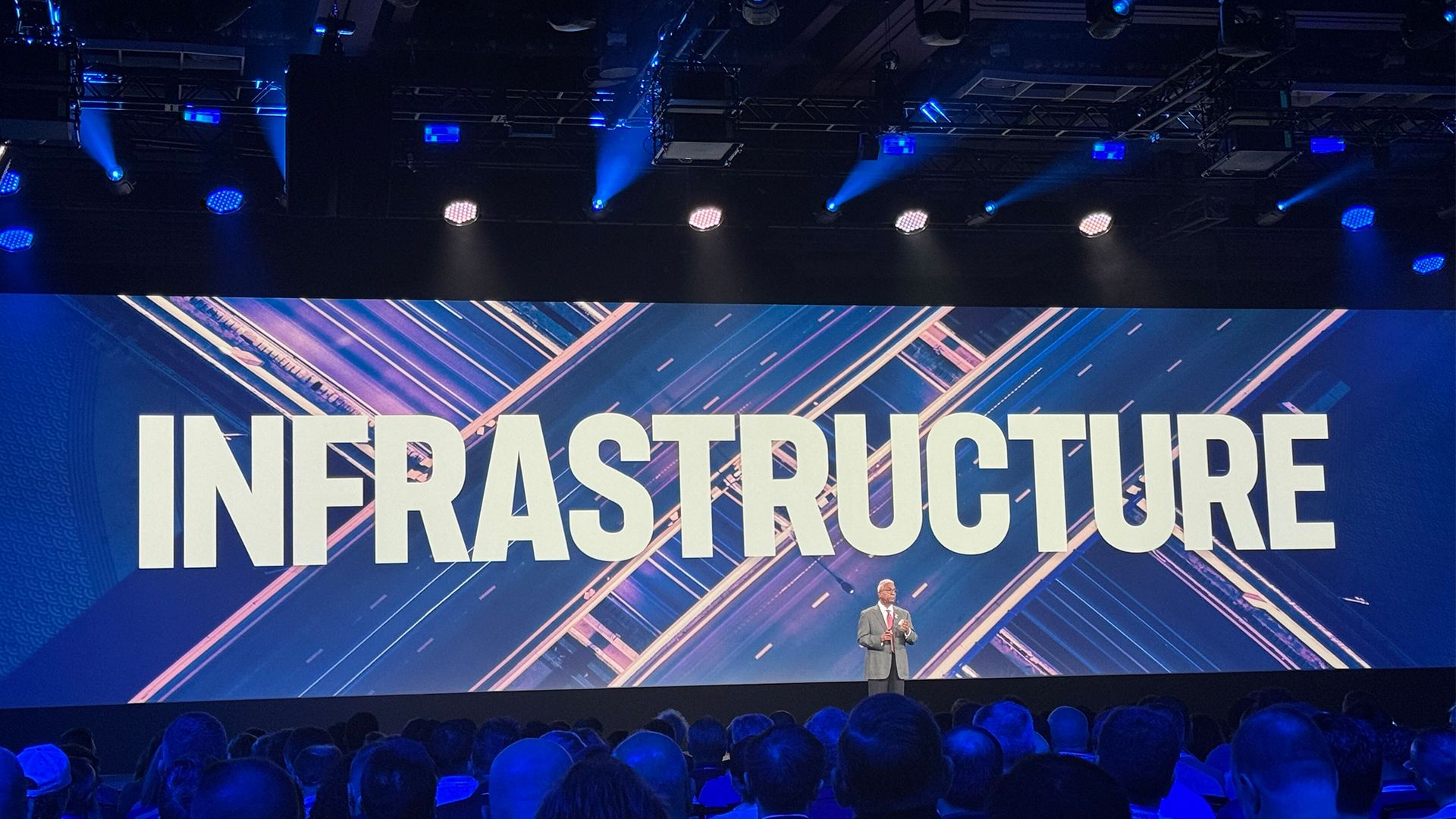
During the opening keynote, CEO George Kurian emphasized the importance of data readiness for AI. Naturally he also took the opportunity to highlight how the company and its products can help, but it wouldn’t be much of a company conference without that.
As I noted in June this year, Everpure has undergone a transformation over the last two years. The all-flash provider is focusing heavily on data management capabilities for customers, launching its Data Intelligence platform.
That system aims to help enterprises maximize the use of AI-ready data and break down the pesky silos hampering AI adoption.
Sign up today and you will receive a free copy of our Future Focus 2026 report - the leading resource for IT decision-maker insight on priorities and investment areas in AI, security and more.
NetApp is no different in this regard – indeed, it’s been somewhat ahead of the curve. Over the years, the company has banged the drum for its ‘intelligent data infrastructure’ and unified storage capabilities.
Its Ontap storage operating system is chock full of data management features and tools, while the NetApp Console has also received a sprucing up of late. The management interface now comes equipped with a range of AI features, as I reported from the conference this week.
One can’t fault NetApp or its counterparts in the industry for pushing heavily on this front. It’s the way the market’s going and vendors can no longer remain as pure play hardware shops.
The fact that they’re still repeatedly highlighting the importance of these tools suggests that the messaging still hasn’t quite hit home, though.
Speaking to at Insight ‘26, Kurian noted that AI adoption is still fundamentally a business and leadership transformation program - and he’s not wrong. No amount of shiny new tools and promises will whip enterprises into shape unless they realize there’s now an urgency with AI adoption.
Failure to keep pace with competitors and an inability to deliver successful adoption programs will ultimately impact their bottom line. But it’s not like they’re unaware of this.
A slew of studies over the last three years have highlighted the challenges of pushing AI projects from pilot to production. The situation is exacerbated in the agentic AI space, as we’ve reported several times at . At this point, it’s almost boring seeing yet another piece of research on this topic.
Analysis from IDC shows that data quality is a key factor in this regard, with more than half (52%) of companies identifying this as the “most important factor” when achieving success with AI.
NetApp, to its credit, has equipped enterprises with the tools and infrastructure needed to help overcome this challenge, as have competitors in the broader cloud storage market.
They’re ultimately still beholden to the apparently sluggish progress many enterprises are making though and I suspect there may be a lingering sense of frustration over this.
Tackling the bottleneck
Enterprise data quality is just one part of the equation here, though. As we learned at Insight ‘26, traditional storage architectures are cracking under the pressure of AI.
Storage infrastructure simply can’t contend with increasingly eye-watering AI-related compute and networking performance requirements.
AI factories are growing in size, scale, and intensity, and no longer house several thousand GPUs. Indeed, sprawling gigafactories are targeting clusters of around 50,000 GPUs, even 100,000 in the coming years, according to NetApp.
Put simply, these factories will grind to a near halt unless the storage systems underpinning them can provide a continuous stream of data used in AI training or inference.
The resulting bottleneck is a huge problem that means AI projects can falter and collapse. Worse still, it means organizations are effectively torching large sums of cash while GPUs sit idle.
During the day-two keynote, NetApp’s chief platform and technology officer, Arindam Banerjee, noted that a stalled cluster of 100,000 GPUs could cost “tens of millions of dollars every day”.
NetApp’s answer to this lies in Novus, a new storage architecture designed specifically for large-scale AI factories and GPU clusters. Kurian described this as one of the most exciting announcements ever made by the storage firm, and I must say it’s not hard to see why.
This zettabyte-scale system is capable of delivering up to 100Tbps of throughput. In one fell swoop, NetApp could have solved those recurring AI bottlenecks hampering AI innovation.
Throughout the event, I noticed a palpable sense of excitement around Novus, and for NetApp this could be a huge draw in the coming months and years. The company is actively targeting neoclouds, an emerging area into which huge sums of money is flowing.
It’s a highly lucrative market, and if NetApp can nail the execution then there’s a real chance for it to differentiate itself in an increasingly homogenous industry.
While this is a huge source of excitement for NetApp, it’s worth noting that this addresses problems at the upper end of the scale. For your average business, running clusters of several thousand GPUs is a mere pipe dream.
IT leaders will still be grappling with basic data preparation and quality issues. Pilots will continue failing, and I suspect in a year’s time NetApp will still be talking about the importance of AI-ready data.
I, once again, will likely be left wondering why we’re still talking about it.