Ever spot random symbols in a chatbot's answer and wonder what they were doing there? Those symbols are Markdown, a text format that has been around since 2004.
Google Docs could already import it, but only now can it open and edit a .md file without converting it into something else. Better late than never.
But why would one of the biggest productivity tools on the planet bother rewiring itself for a bare-bones text syntax from the early 2000s? Two words. .
Now that Google Docs speaks it, I can pull my AI files out of Obsidian and put them back with the rest of my files.
What Markdown is, and why it refuses to die
John Gruber published the original Markdown spec on his blog Daring Fireball in 2004.
He wanted to format text for the web without typing HTML tags. Markdown uses keyboard symbols for structure.
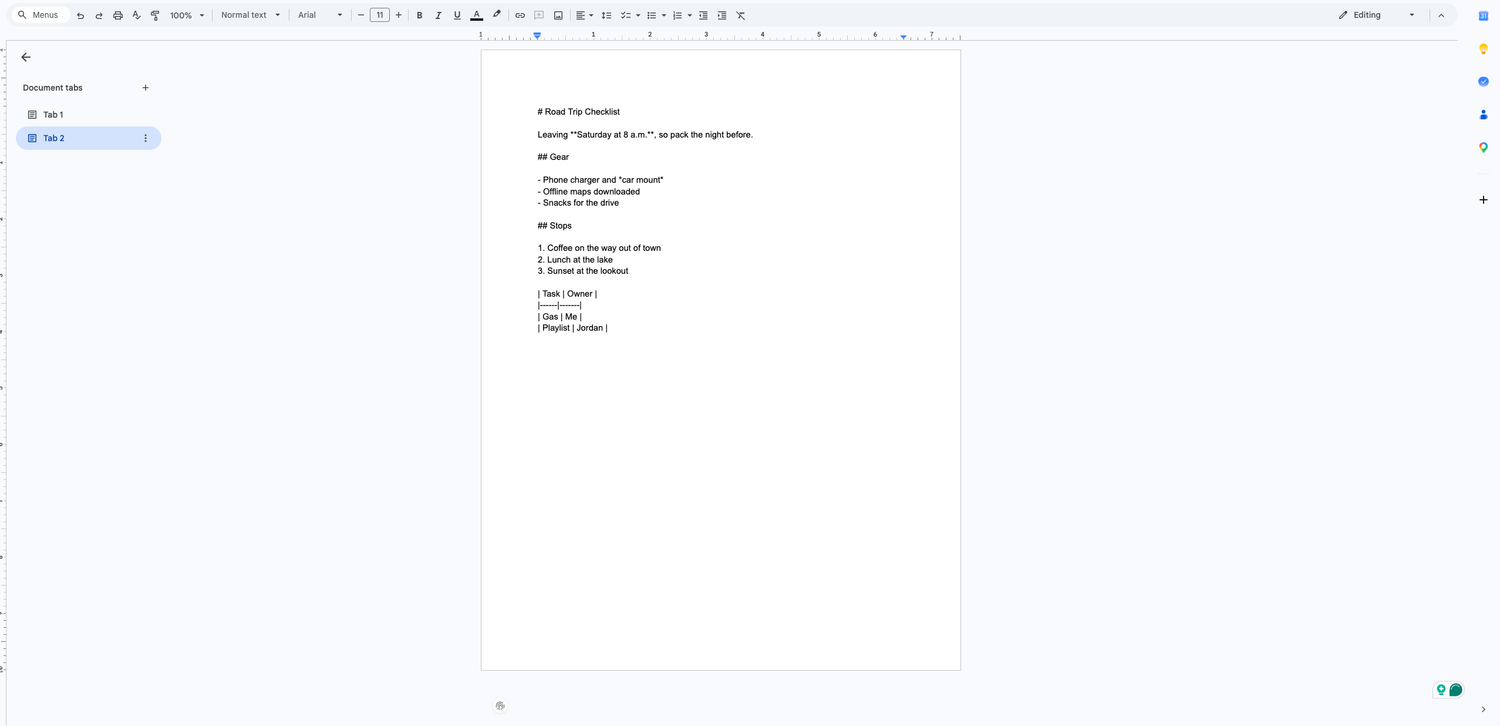
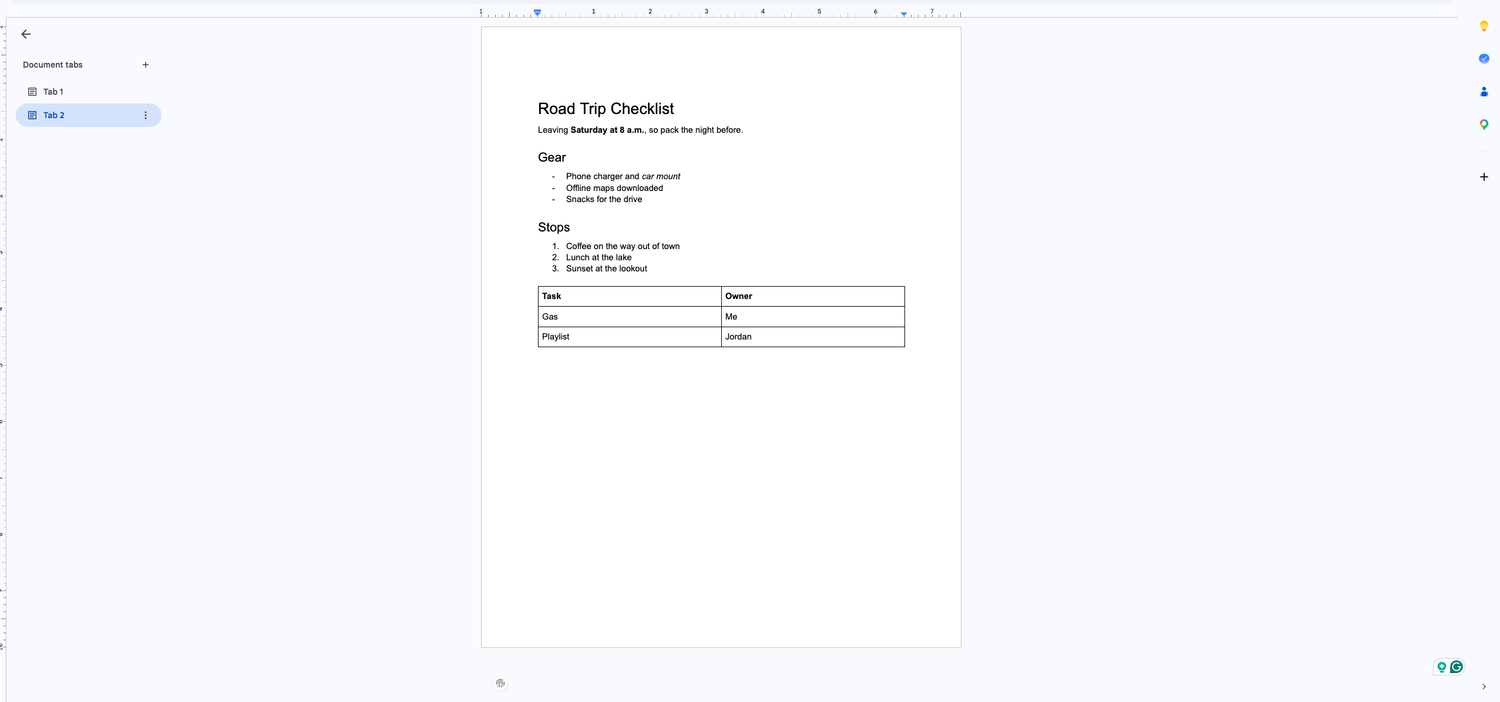
For example, a pound sign at the start of a line makes a heading, and two asterisks on each side of a word make it bold.
The file ends in .md and holds no proprietary code. You can open it on a 20-year-old laptop in a basic text editor and still read it fine, because the formatting is in the characters.
Bloggers adopted it right away. Developers followed a few years later, after GitHub built its own flavor of Markdown into the site, and today nearly every code repository there has at least one Markdown file.
Because Markdown looks like normal writing before it's rendered, people can read it at a glance, and AI models trained on that same writing can too.
Chatbots speak Markdown because every token costs money
Same context with less clutter

Language models work in tokens, and every token eats money and processing time. Markdown is leaner than the alternatives.
I think the reading side benefits even more. When an AI pulls in data from outside sources, raw HTML clutters its memory with presentation tags it doesn't need.
Markdown, however, gives it a hierarchy of headers and lists, helping it see how sections relate to each other.
For a model, a few well-placed punctuation marks are one of the cheapest ways to carry the structure in and out.
Obsidian just lost its main job in my setup
One folder to rule them all
Almost everything I write is in my Google Drive. My AI files were the only exception.
When a chatbot hands me a research summary or an outline, it usually comes as a .md file, and if it doesn't, I ask for one.
Why? Because a .md file is made for tinkering. I can render it, edit it, render it again, and keep iterating until it's right.
And when it's finally done, it becomes a Docs file, a Word file, a PDF, or a web page with the formatting already baked in.
Before this update, a .md file in Drive wasn't really a document as far as Google Docs was concerned. I could view it as raw text, littered with pound signs and asterisks, or convert it to a Google Docs document.
Converting mostly worked, but it left me with two copies of the same file, and when I edited one, the other was out of date.
So my AI files ended up in Obsidian, a note-taking app built entirely around Markdown. For that one job, it was perfect.
My main issue was that it split my work down the middle. My articles and notes were in Drive, while my AI files were in an Obsidian vault.
Now those .md files go into Drive. I can edit them, share them, and keep them in the same folders as everything else, and they stay .md files the whole way through.
Markdown keeps the structure but drops the decoration
Keeping a file in native .md means giving up some of the proprietary features. Docs-only elements don't survive either.
Smart chips turn into plain text or links, and web formatting gets flattened. Most office users will notice the loss of visual styling, because font colors, highlighting, and text alignment are stripped out.
I'm fine with that trade. Complaining that Markdown can't do font colors is like complaining that a hammer can't paint the wall.