Google Drive is more than just a digital filing cabinet. Its greatest superpowers are its sophisticated web app and tight integration with other Google services.
That comes with a price, though: Google Drive has more than the usual number of knobs and buttons in its UI, making it easy to get lost in a sea of clicking and tapping.
Thankfully, you'll find plenty of shortcuts — and some of them are productivity game-changers.
Skip the 'New' button
Create a Google Docs document in 9 keystrokes
Google Drive has a nice big rectangular button in the upper-left corner of the web UI, but I can't remember the last time I clicked it.
It may be the most obvious way to create a new Google Docs document or Sheets spreadsheet, but it's far from the quickest.
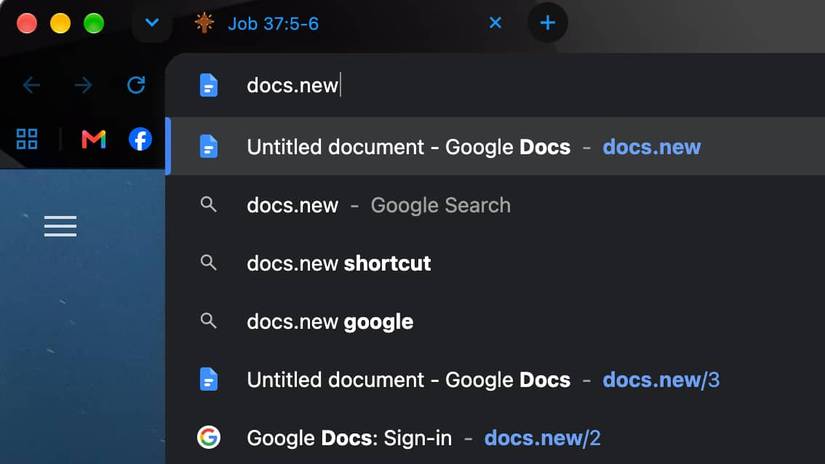
You don't need to visit Google Drive. Instead, click in the address bar in any browser and type what you want to create, such as "docs.new" for a Google Docs document.
Google cleverly registered the ".new" top-level domain a few years ago, and it works with several Google services:
- docs.new creates a new Google Docs file.
- sheets.new creates a new Google Sheets file.
- slides.new creates a new Google Slides file.
- vids.new takes you to the Google Vids creation screen.
- pics.new takes you to the Google Pics creation screen.
- forms.new creates a new Google Form.
- cal.new creates a new Google Calendar event.
- keep.new creates a new Google Keep note.
You can save any of these as bookmarks if you create new Docs, Sheets, or Slides files often enough. I'm content to use the keyboard, and those keystrokes have become embedded in my muscle memory.
These also work across multiple Google accounts. Tacking a slash and a number onto the end creates the file in another account (for example, docs.new/2 for a new Docs file in your secondary account).
There are also shortcuts for uploading files and folders, but I find it much faster to drag and drop them into the browser window.
Keeping a file in multiple folders
Don't make copies — create shortcuts
Sometimes I need to keep a file in more than one folder, like shared budget overviews or project briefs for teams I'm collaborating with.
Making a copy risks things getting out of sync, so in most cases, it's better to create a shortcut.
This points back to the original file or folder, so you're always working with the original no matter where you open it from.
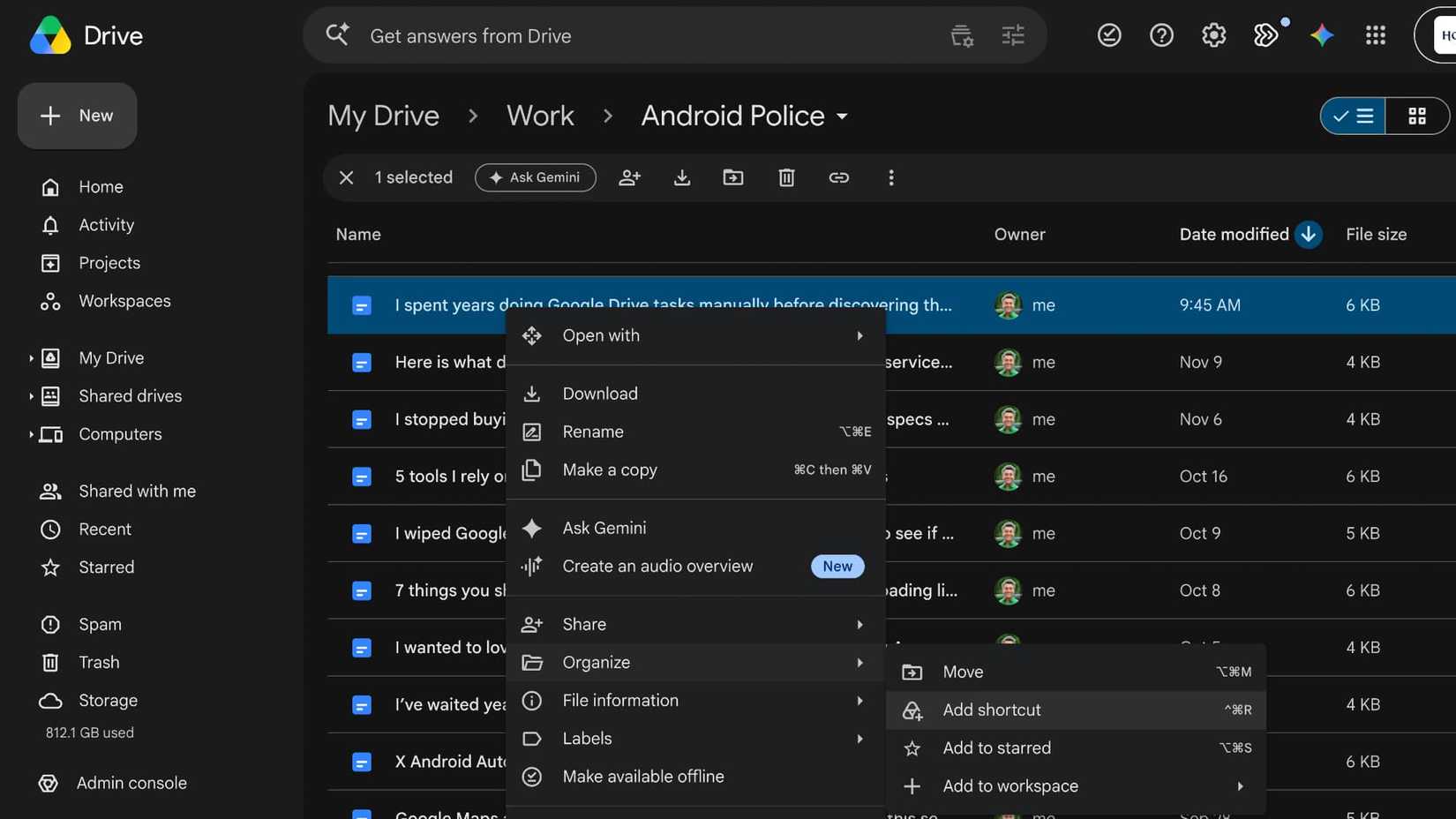
To create a shortcut, right-click on the file and choose , then select Add shortcut from the menus. You can also select the file with the keyboard and press (Mac) or (Windows). From there, choose the folder where you want to drop the shortcut.
You can identify shortcuts by a curved arrow on top of the icon. Double-clicking or tapping a shortcut opens the original, and a shortcut can be moved or deleted like any other file — but it only affects the shortcut.
One word of caution: placing a shortcut in a shared folder — or even a Shared Drive — won't automatically share the original file.
Everyone can see the shortcut, but you'll need to adjust permissions manually. I consider this a feature, as it makes it easier to share read-only reference material in a collaborative folder.
Search smarter, not harder
Avoid needless scrolling by using Search Operators
It's easy to type a simple keyword like "invoice" in the Google Drive search bar and let your eyeballs and scroll wheel find what you're looking for.
But if you have tens of thousands of files like me, that often means scrolling through a few hundred irrelevant PDFs, Sheets worksheets, and other decade-old files.
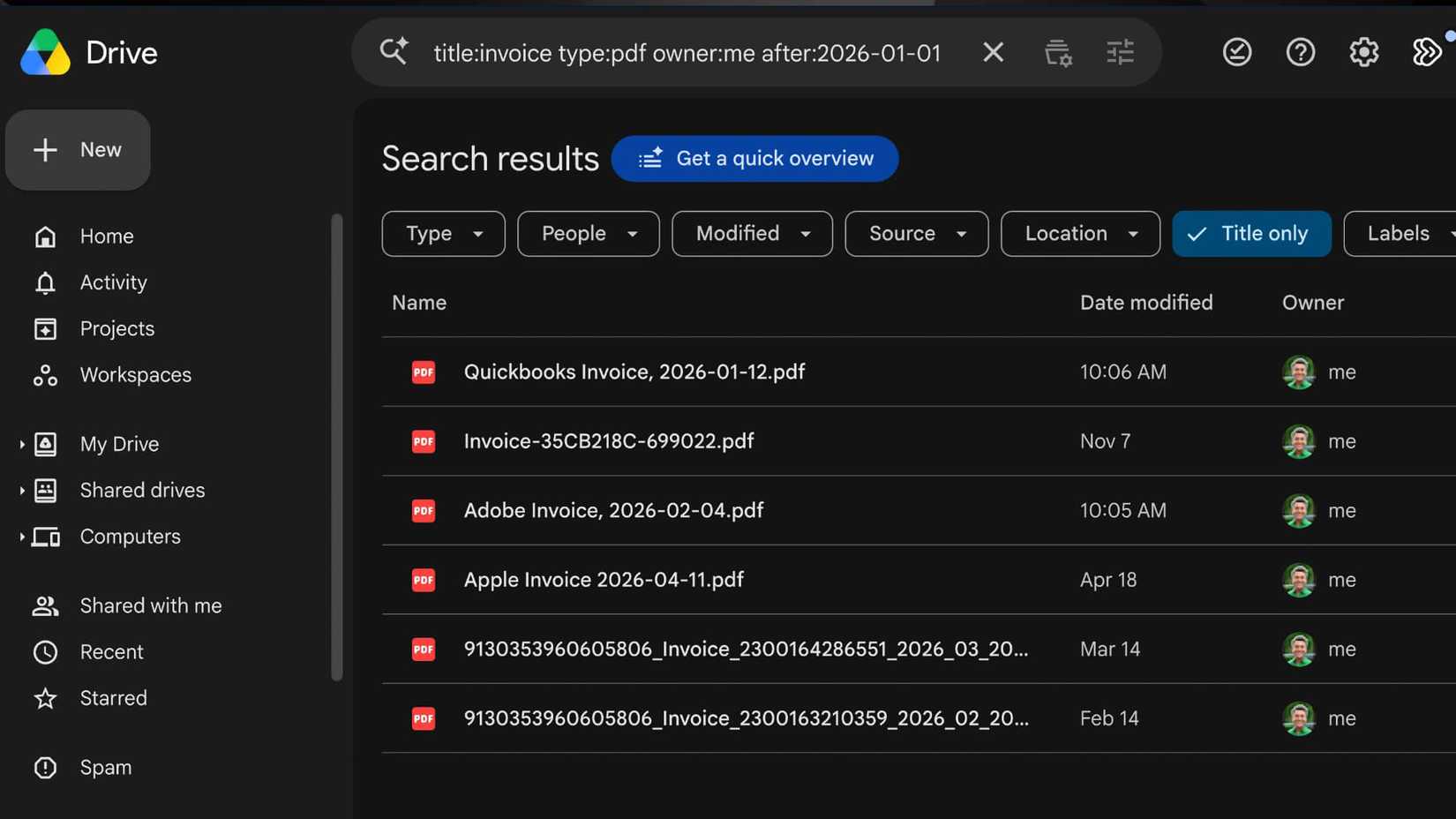
Instead, I rely on Google's Search Operators. If you're not familiar with the lingo, you can use the filter chips below the search field, but I find the fastest way is to use the prefixes.
For example, narrows my results to only files from this year. Tossing in is also useful for excluding files shared by others.
Specifying is also helpful if I want to ensure I'm searching for only file names, not their content.
That's much more than I want to type on a mobile keyboard, so I use the filter chips on Android and iOS.
Scan documents with a tap
Ditch the third-party scanning apps
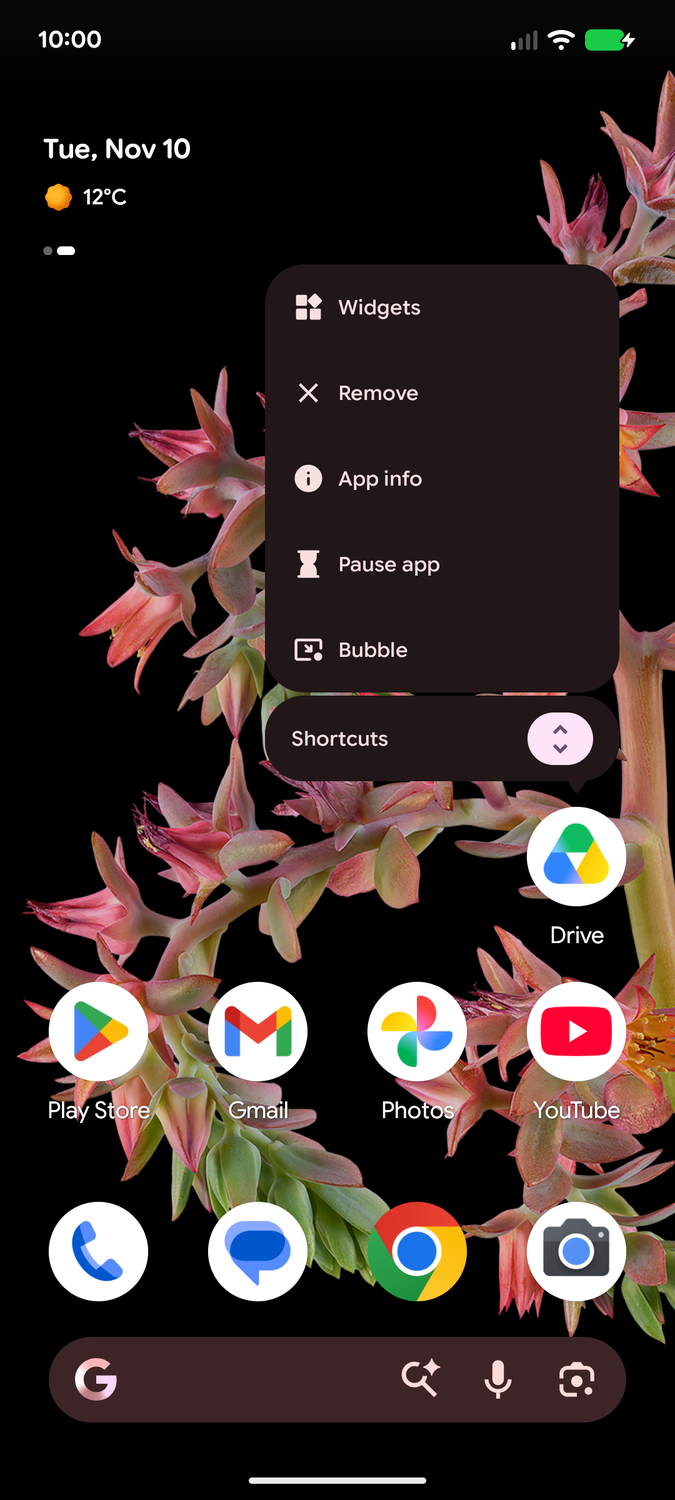
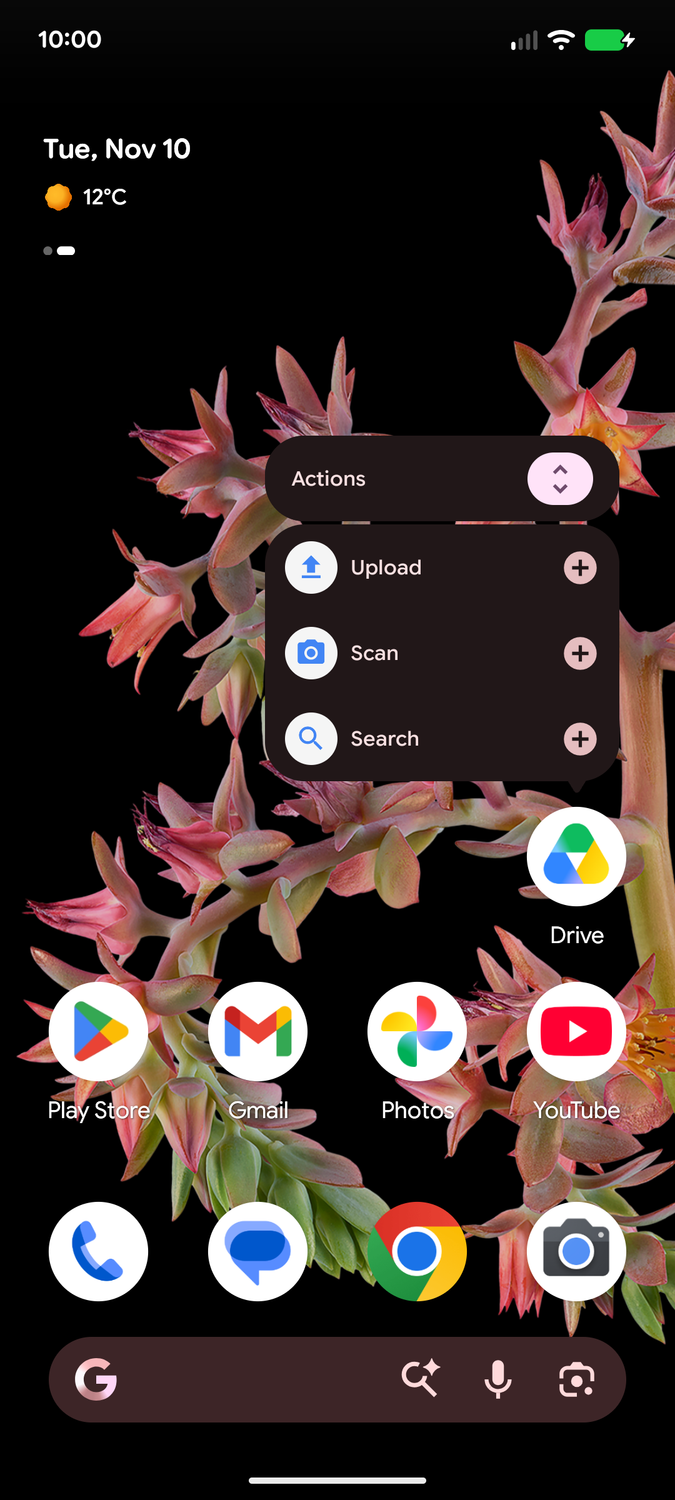
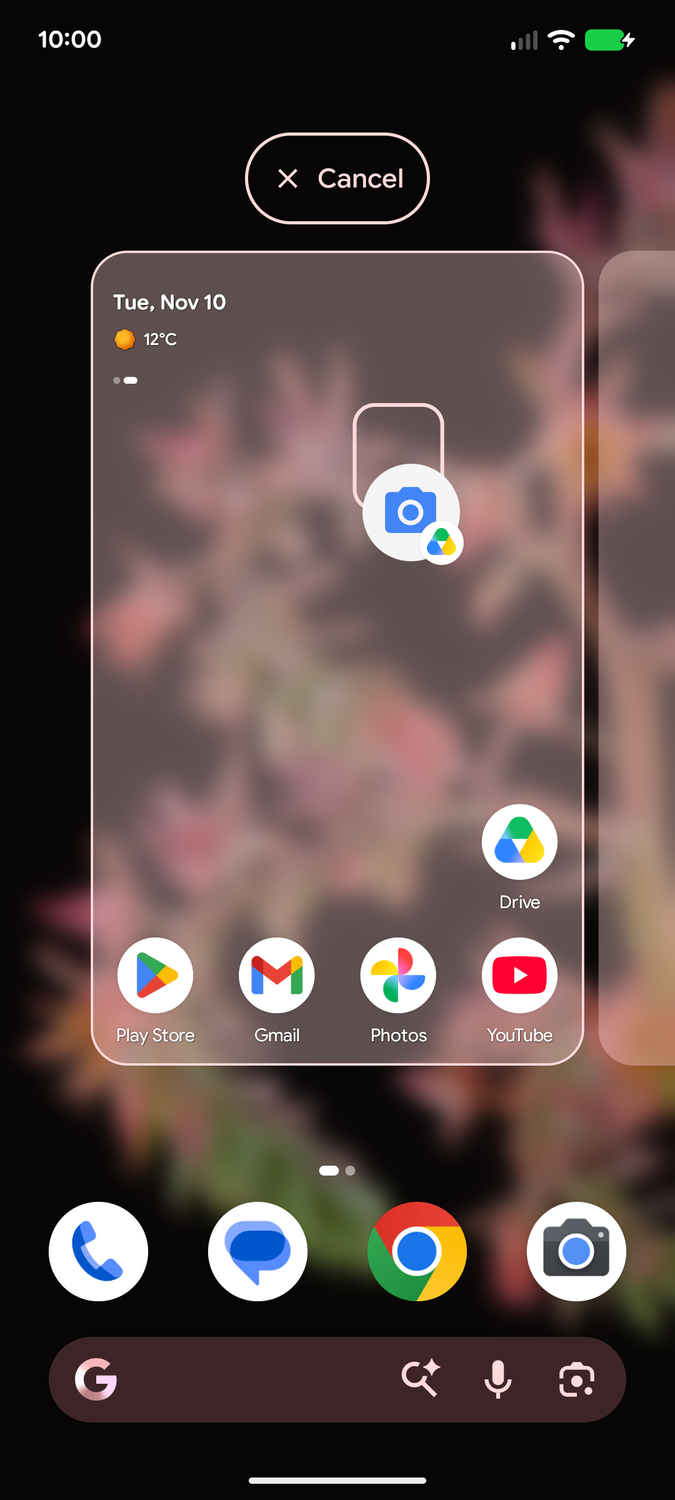
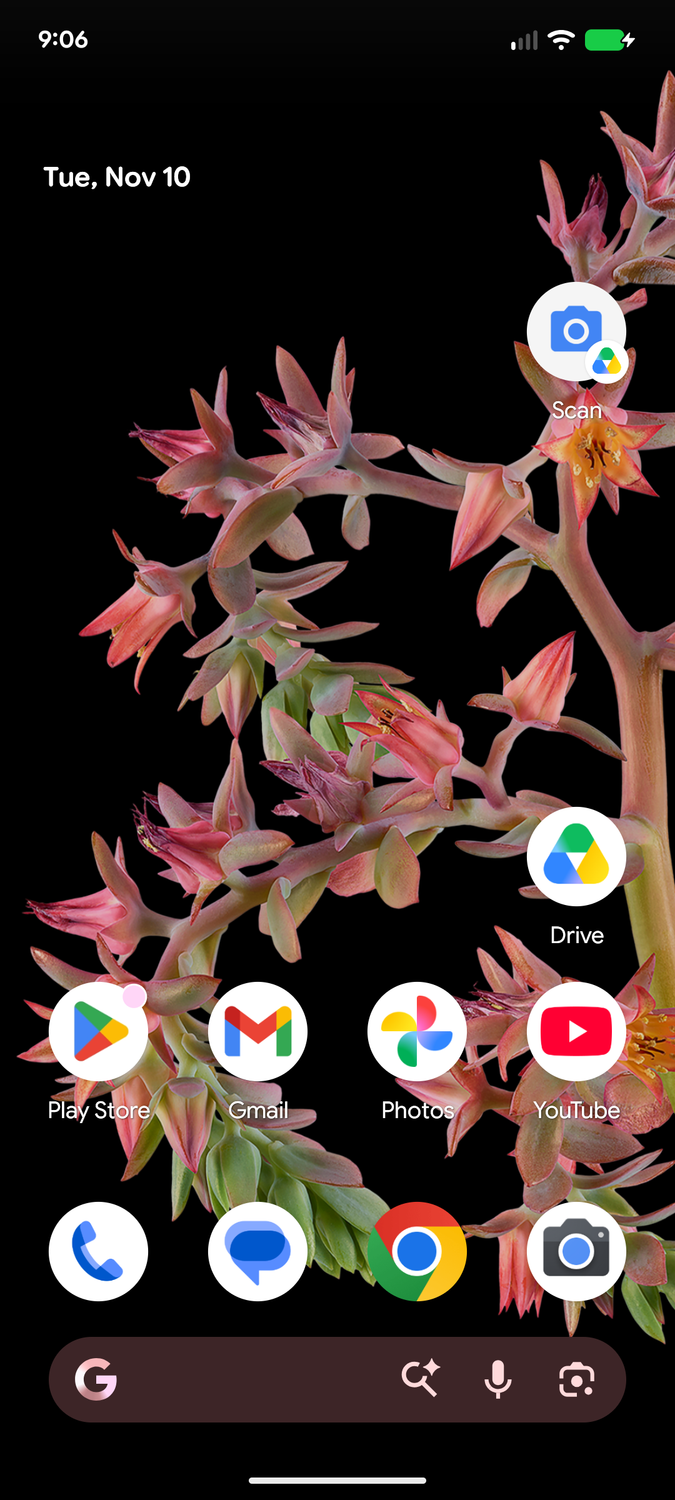
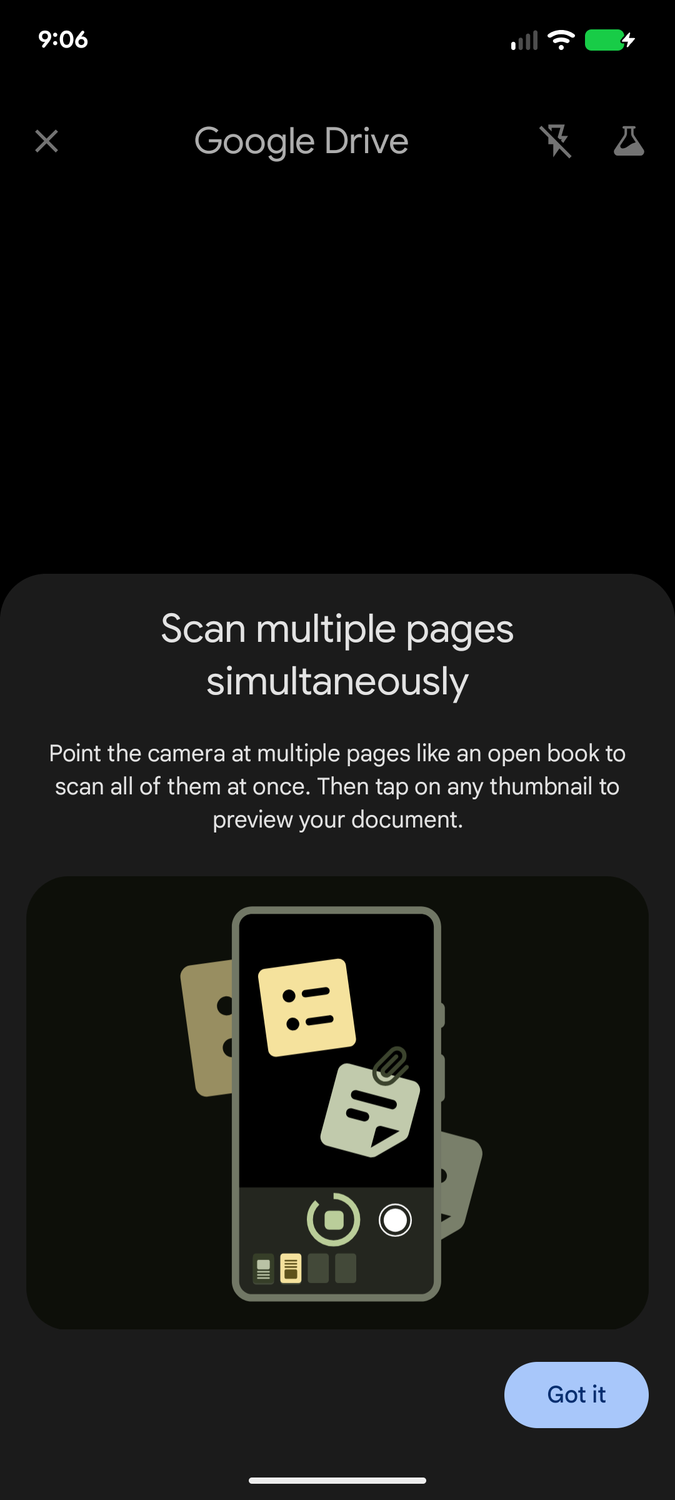
I spent years taking pictures with the camera and then uploading them to Google Drive before the built-in document scanner came to the app.
Still, even scanning into Google Drive can feel a bit cumbersome sometimes, and plenty of third-party apps promise a more seamless scanning experience.
But you can replicate that in Google Drive — at least on Android. That's because there's a widget for that.
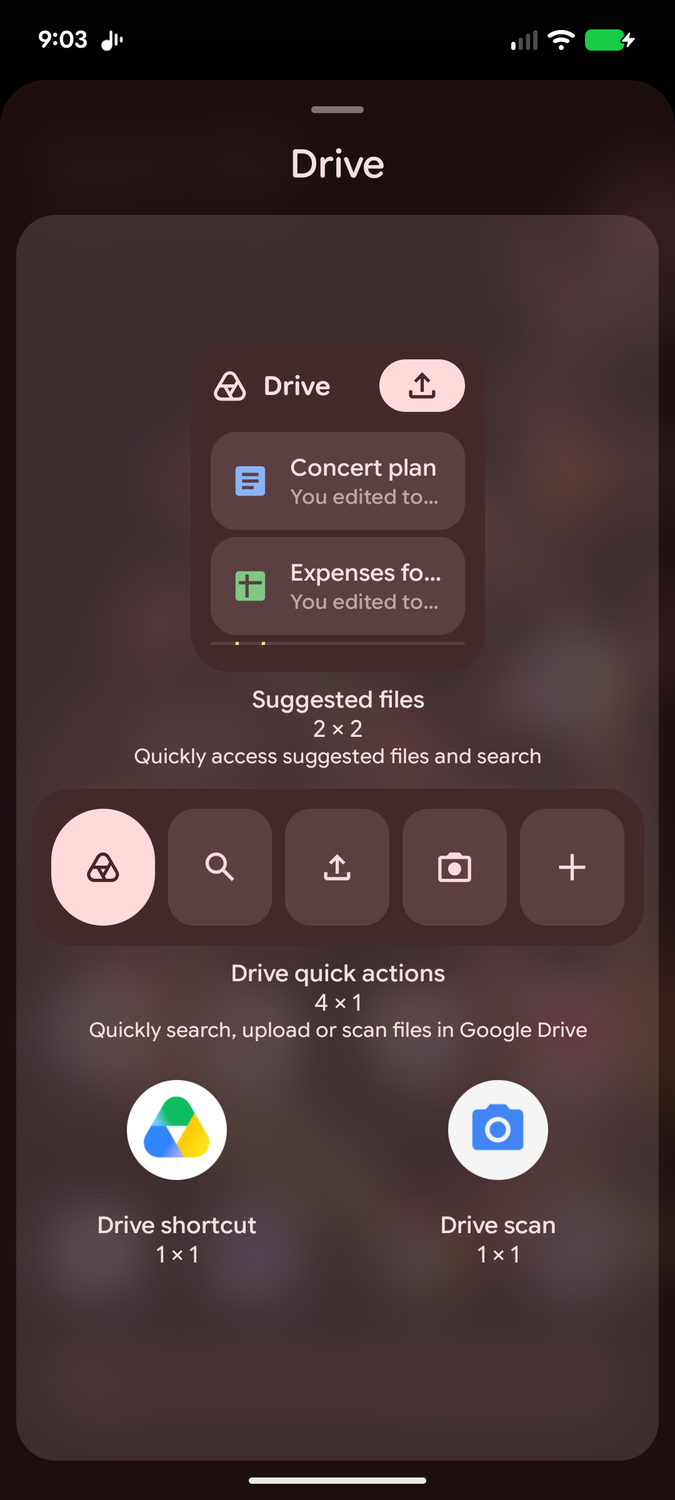
To add it, long press the icon on your home screen, tap , and either drag-and-drop the widget to where you want to place it, or tap the to drop it into the next available slot.
Save time hunting and pecking by using 1x1 Drive shortcuts
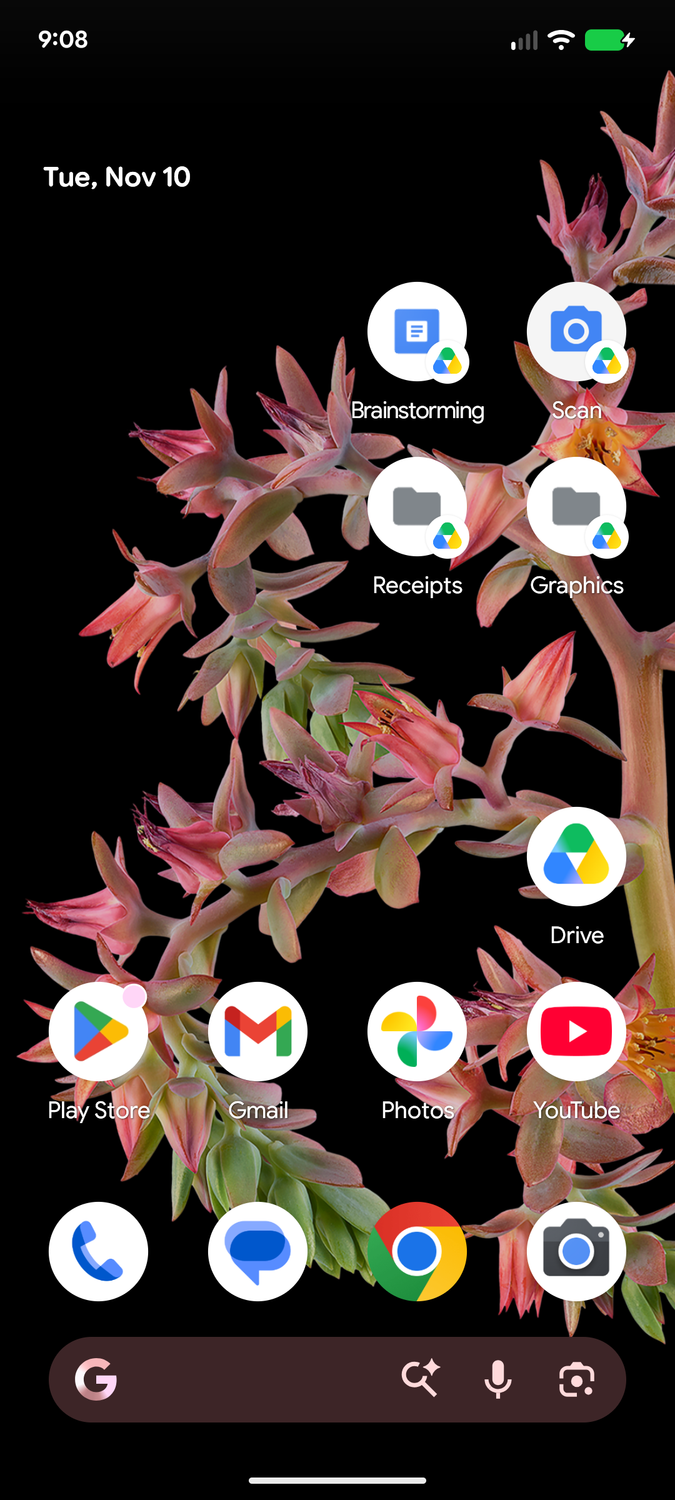
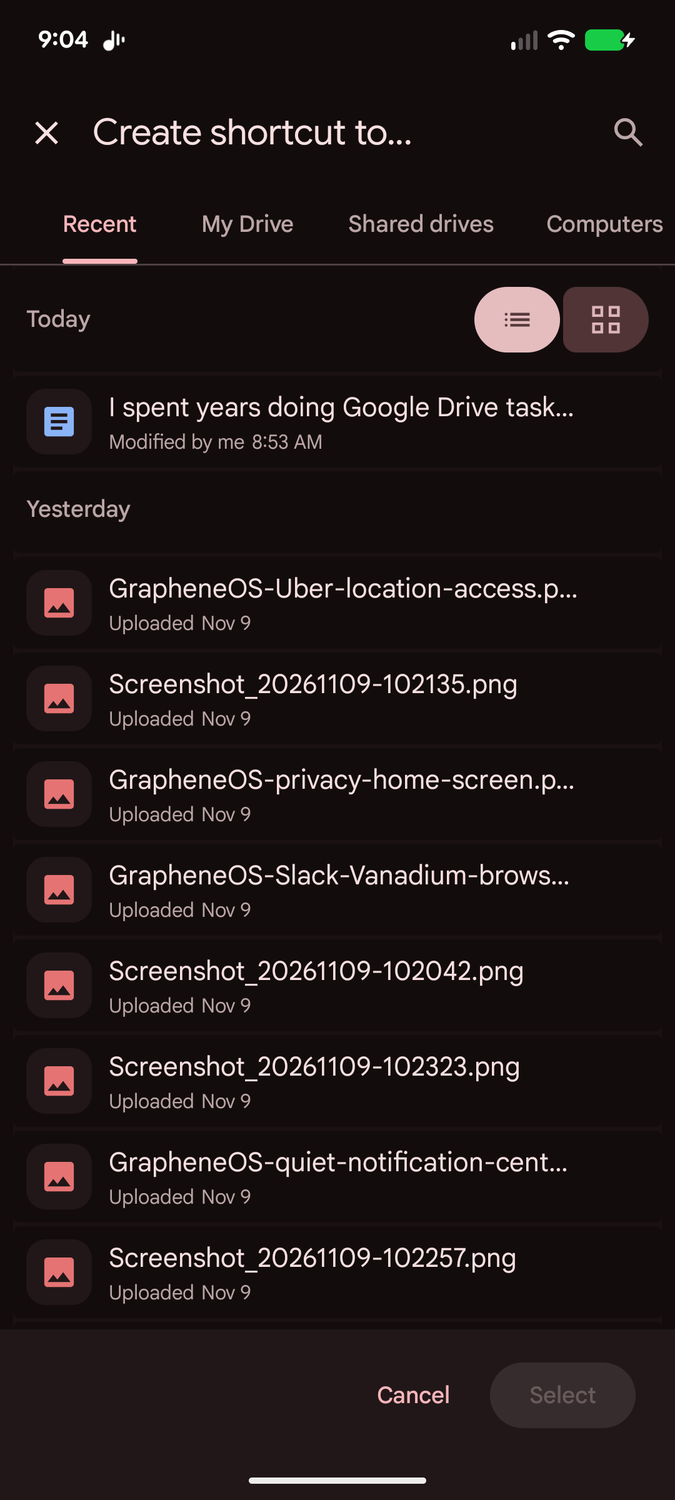
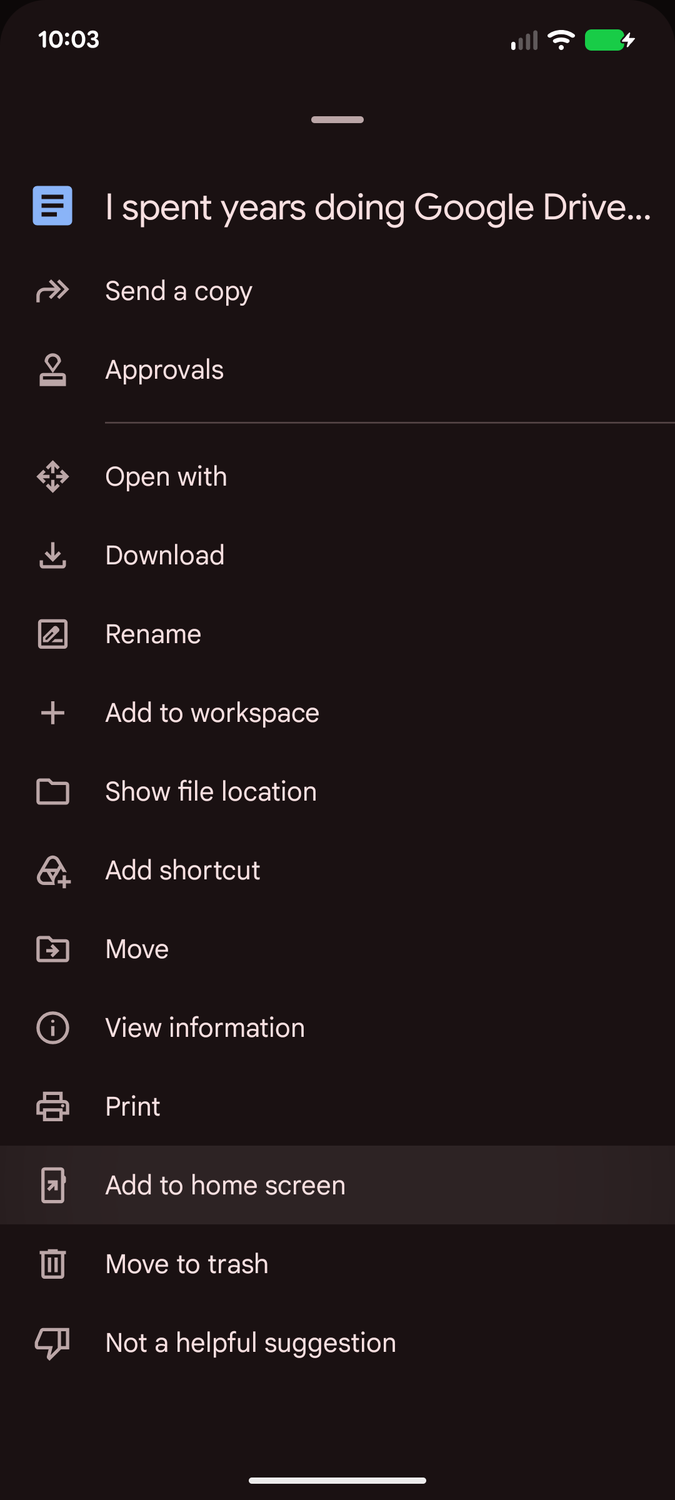
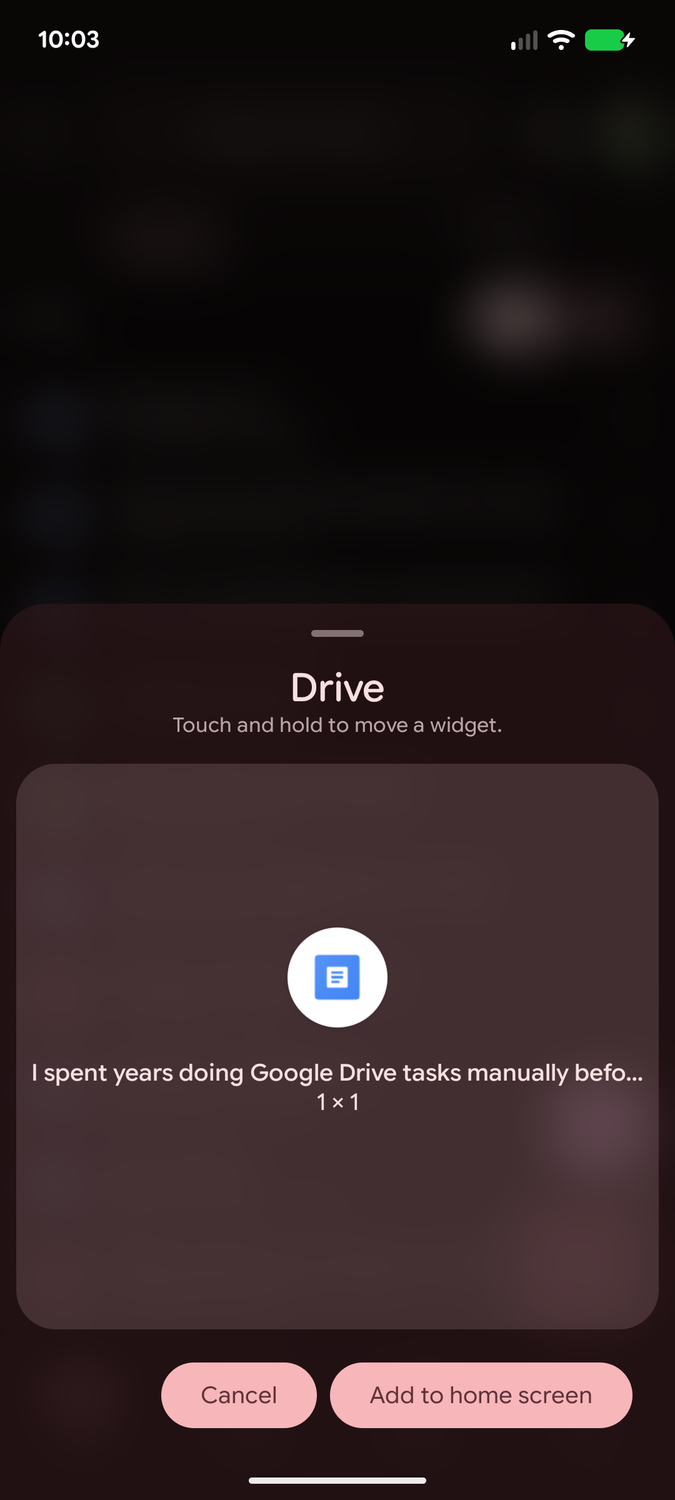
You can also drop icons for your most important files and folders onto your home screen so you can open them with a single tap.
These can be folders or files, and they're easy to add, so you can switch them out as you finish one project and start another.
To add a 1x1 Drive shortcut, long press the icon, tap , then Drive shortcut 1x1, then and select the file or folder you want to link the shortcut to.
Alternatively, you can create a shortcut from Drive by tapping the beside any file or folder and tapping Add to home screen.
On the desktop, you can also achieve something similar by bookmarking the page from the Drive web UI.
It didn't take me long to adjust to this faster way of working, to the point where it's now second nature.
The keyboard shortcuts are in my muscle memory, and if I navigate to a given file or folder in the Drive app more than twice a day, I turn it into a shortcut.
The great thing about these tips is that none of them require learning code or re-engineering your workflow. It's mostly about making a few small changes and building new habits.