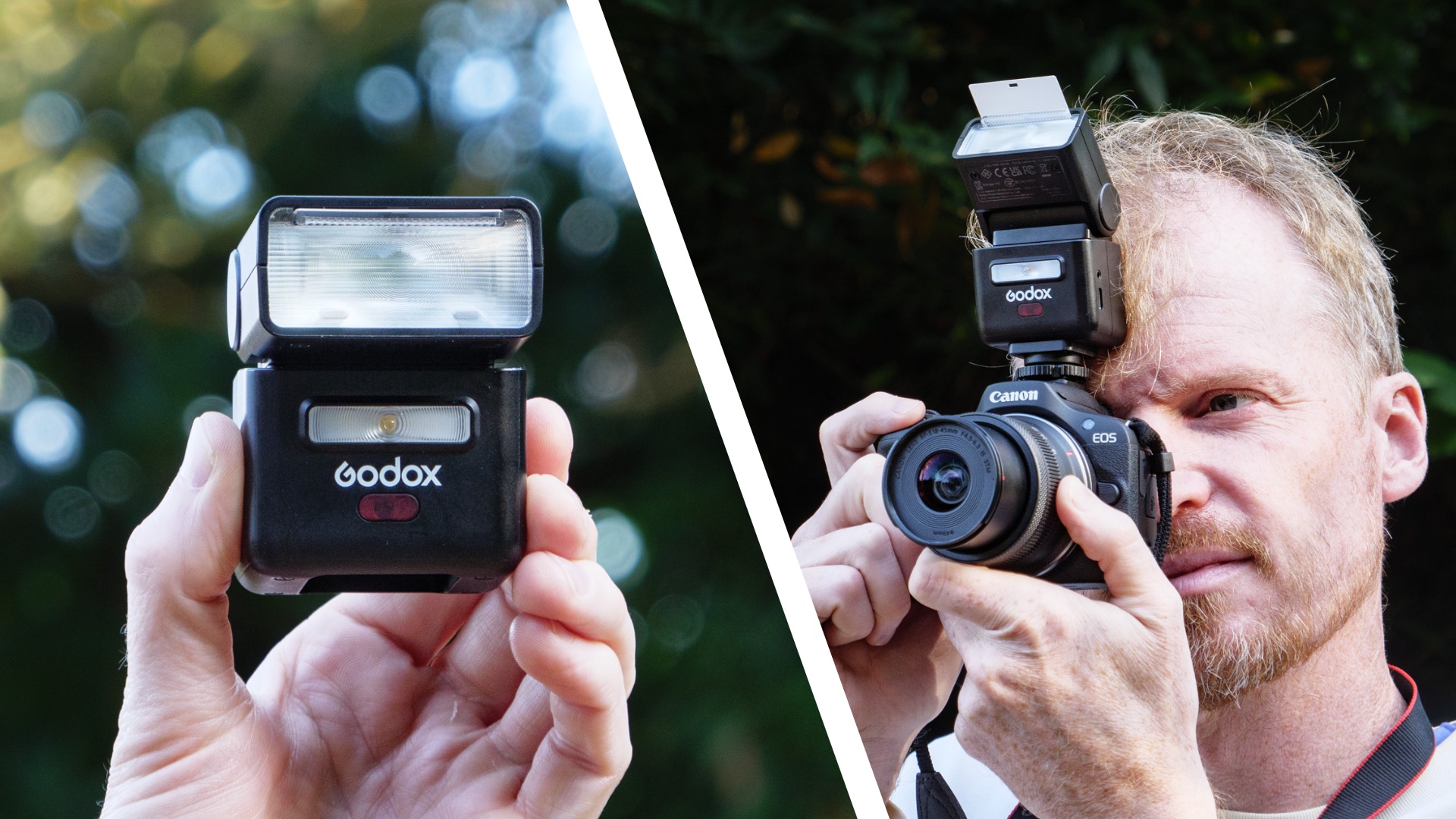
- The Godox iT32 simplifies off-camera flash with its modular remote trigger
- It's available from just $79 / £87 (about AU$140), plus as a kit with your choice of trigger
- Wireless triggers covering leading camera systems are also available separately
Price and technical complexity put most people off ever trying off-camera flash photography — and if you're in that camp, I implore you to consider the Godox iT32.
The Godox kit is the camera flash reimagined for today; it's simpler and cheaper than others I've tried, and I had a blast using it with my Nikon, Canon and Olympus (OM System) camera gear. I shot portraits that popped, and ones that I simply couldn't have created by relying on available light alone.
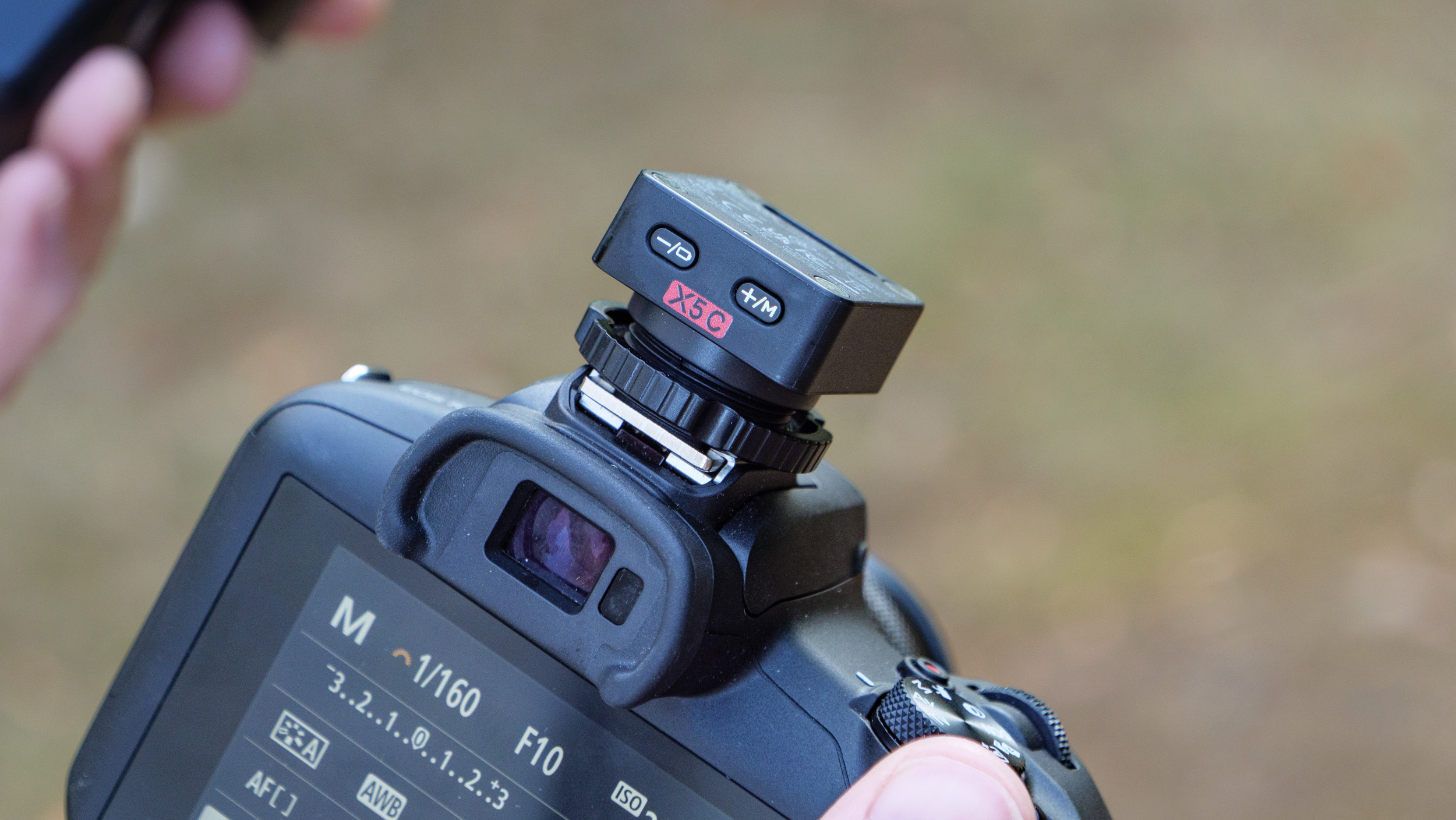
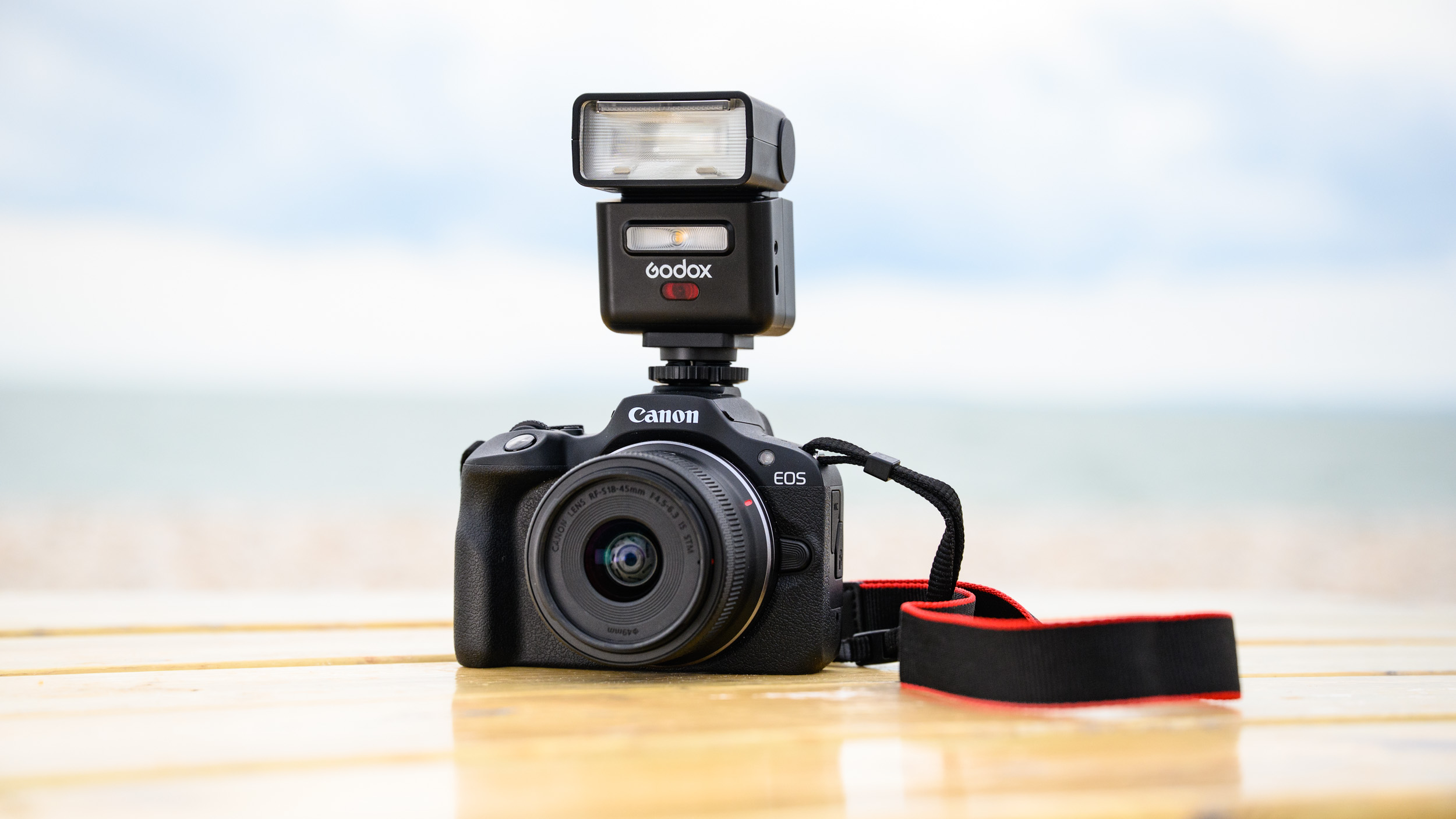
What's so different about the iT32? Well, it's built around a remote trigger, which snaps magnetically into the base of the flash itself, and secures to your camera's hotshoe. The trigger, called the X5, is available in five versions for leading camera systems: Canon, Sony, Nikon, Fujifilm and Olympus / Panasonic. I used three of them for my review.
This unique design simplifies off-camera flash. You can quickly switch from on-camera to off-camera flash, which you'll want to do for the best results, simply by pulling the flash off the remote trigger, which remains in the hotshoe. With some basic camera settings knowledge — which I'll share later in this article — off-camera flash really is a cinch. Heck, it's even fun.
For other camera flashes, you'll need separate remote triggers and receivers attached to the camera and the flash respectively for off-camera flash, all adding to the cost and complexity of the setup.
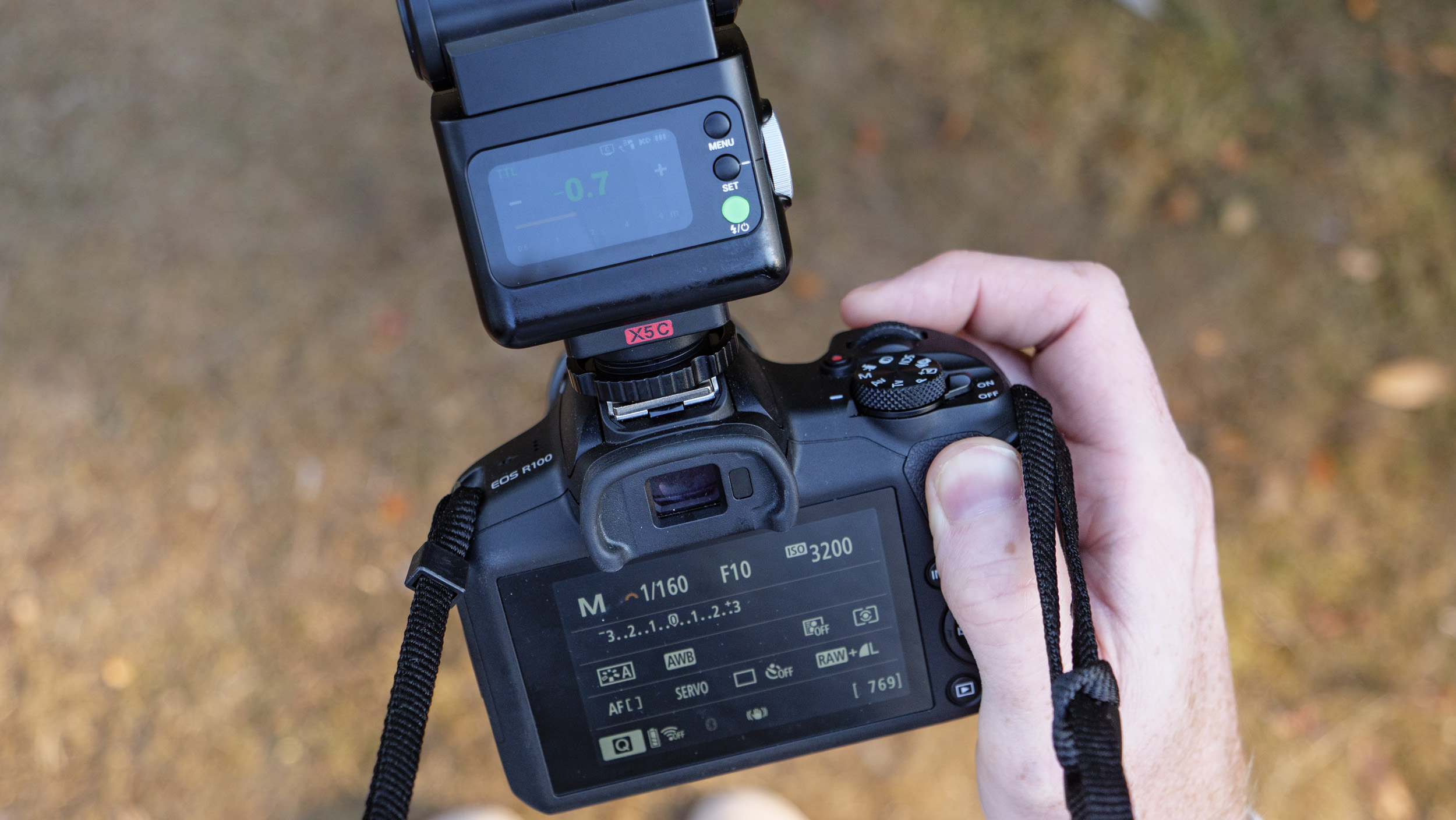
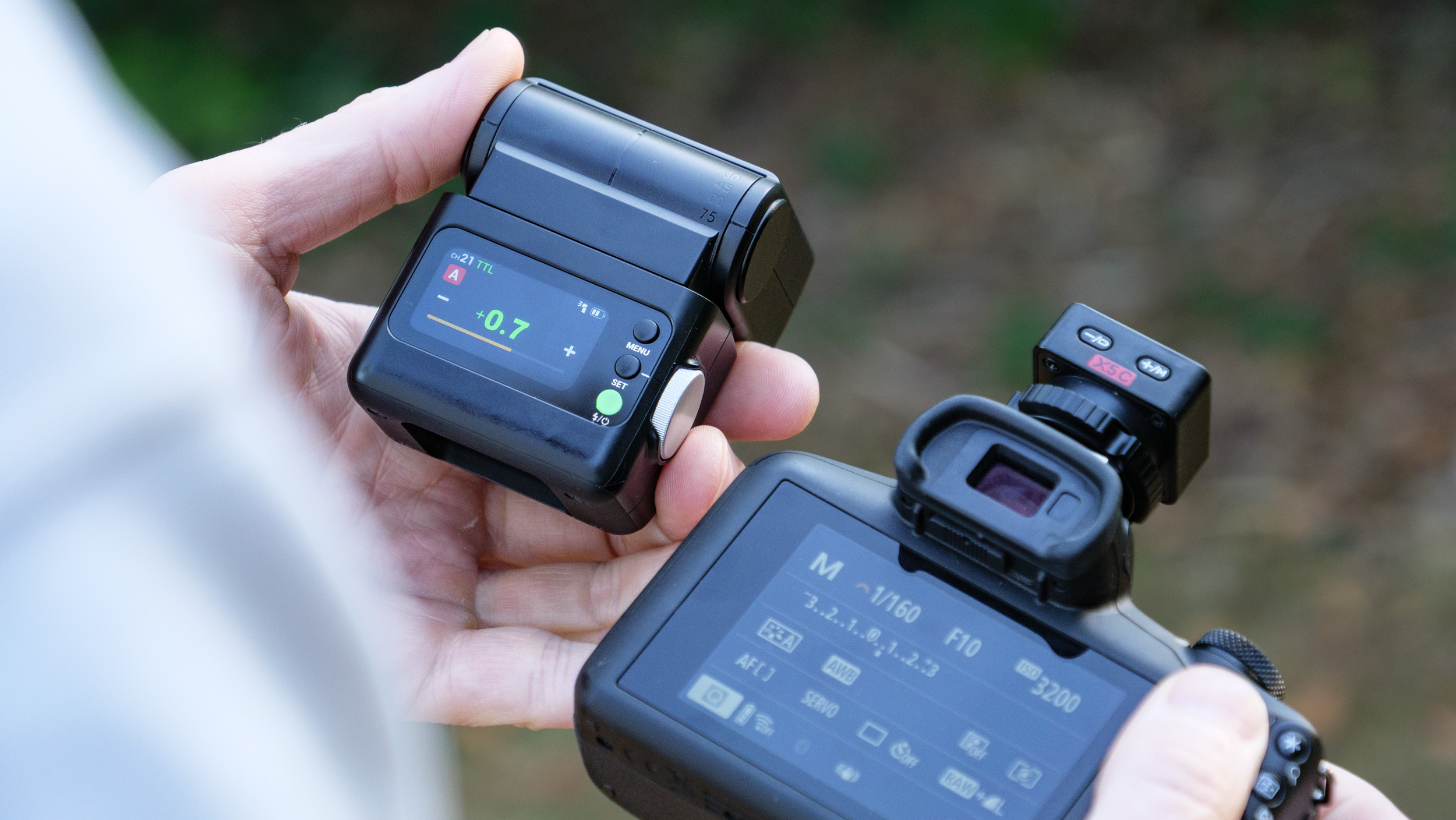
The iT32 also features a touchscreen to navigate settings, and it might surprise you just how innovative this feels, given that camera flash design has remained largely the same for decades, with most models featuring a basic LCD (or no screen at all).
Furthermore, the iT32's internal battery charges via USB-C. Again, a regular-sounding feature in 2026, but most others continue to be powered by AA batteries.
Perhaps the best part of all is that the Godox iT32 costs a fraction of the price of old-fashioned proprietary alternatives from Nikon, Canon, Sony and others. It's available for just $79 / £87 (about AU$140), with your choice of remote trigger costing an additional $19-20 / £17-18 (about AU$30).
Shoot with multiple camera systems? You can buy additional X5 triggers separately, again cutting the cost of having to fork out for multiple flashguns for different cameras. The Fujifilm trigger costs $19 / £17, while the Sony, Canon, Nikon and Olympus units cost $20 / £18).
Godox sent me the iT32 flash with X5 triggers for Canon, Nikon and Olympus cameras for review (each manufacturer's hotshoe is the same size, but with a unique pin design), and each version worked flawlessly for iTTL (through-the-lens metering) flash.
For the gains, the iT32 may well be the best money you spend on camera gear this year. Let's dig into my experience with the Godox iT32 a little more, and why you might want to use it.
The case for off-camera flash
I used to shoot with natural light at all costs. After all, flash photography can be a complicated business — the technique, the extra gear, not to mention the prohibitive cost — whereas available light felt simplest of all.
There's no getting around it, though: sometimes you just need off-camera flash to lift portraits and still-life photography. For me, flash has become an essential part of my setup for portraiture and weddings. And in this vein, the Godox iT32 quashes all of the hurdles for getting started.
I came across the Godox kit when I spotted a fellow tech journalist using it at an event for the Lumix L10. At first, it looked like a regular flashgun, the kind I've relied on for years. However, he then pulled it off the camera and carried on using it as per usual. I grilled him about it, saw it in action, and knew that I had to get one for myself.
You see, on-camera flash is one thing, of the type that's built into your phone or camera, but being able to direct light is another level, and that's what the iT32 allows you to do, the most accessible way imaginable.
The classic Rembrandt lighting, for example, is 45 degrees above and to the side of your subject. With the iT32, you can simply line up the shot, remove the flash from the receiver on the camera, and hold it manually to get that effect. You then just snap it back in place when you're done. For me, for the first time, off-camera flash felt completely simple, even enjoyable.
A two-second hold of the power/test button turns the flash on (the button illuminates green), followed by a swipe up of the screen. This two-step process confirms you didn't accidentally turn the flash on.
From here, exposure compensation can be dialled in (manually adjusting the brightness of the flash) by swiping the screen left or right, or scrolling the dial on the flash's side.
The menu is accessed through the menu button or by swiping down the touchscreen, where you'll find the option for a model (continuous) light, the flash modes and more.
There are iTTL, manual and multi-strobe flash modes, plus options for rear curtain, front curtain and high-speed flash.
I tend to rely on iTTL (through-the-lens auto-exposure metering), which is available with the flash physically or wirelessly attached to the X5 trigger, and experiment with exposure compensation for each scenario. Sometimes I just want a little fill light, so I'll dial in negative exposure compensation. Other times I'll want punchy lighting for which I might not make any changes at all. In any case, the maximum power of the flash is impressively bright.
For the manual flash mode, flash brightness is adjusted in the same way as exposure compensation for the iTTL mode.
You won't generally need to bother with the on-camera / sender / receiver menu options, as the flash automatically switches modes when you attach or detach the flash from the X5 trigger.
I only had a single iT32 flashgun for my testing, but it is possible to sync multiple flashguns and control the brightness as a group using the basic controls on the remote trigger.
If you want different brightness values for multiple flashes — say, the main front flash at full value and a side- or rear-positioned flash as a dimmer fill light — then those values need to be dialled in on the flashgun itself when it's off-camera. Something to bear in mind if the flashes aren't easily accessible in your setup.




With iTTL in play, I set camera exposure settings manually, mainly because I usually want background detail to come through, too, rather than it being mostly black or seriously under exposed.
The flash sync speed of most cameras maxes out at around 1/250sec, but 1/160sec is a safe bet. An aperture of around f/11 tends to make a correct exposure in daylight, while a brighter aperture with shallow depth of field, say f/2.8, can be possible in low light at night or indoors.


An ND lens filter will unleash a brighter aperture in daylight for shallow depth of field (or a camera like the Sony A9 III). I then use a high ISO setting that brings through some of the background detail.
For the portraits I took at golden hour, my camera settings were 1/160sec, f/11 and ISO 3200, with the flash set to iTTL and the power adjusted with -0.7EV exposure compensation. Those settings are a good starting point to experiment from — but, of course, they depend on how bright the ambient light is.
Having used two flashguns for years that each require 4 x AA batteries, I really appreciated the USB-C charging of the iT32. The port can also be used for firmware updates, say, adding compatibility with future cameras.
The X5 remote trigger also has a built-in battery, and this receives charge when docked in the iT32 flash. The LCD shows the battery life of both units, and if you run into any off-camera pairing issues, docking the flash back in the trigger will do the trick.
The perfect package?
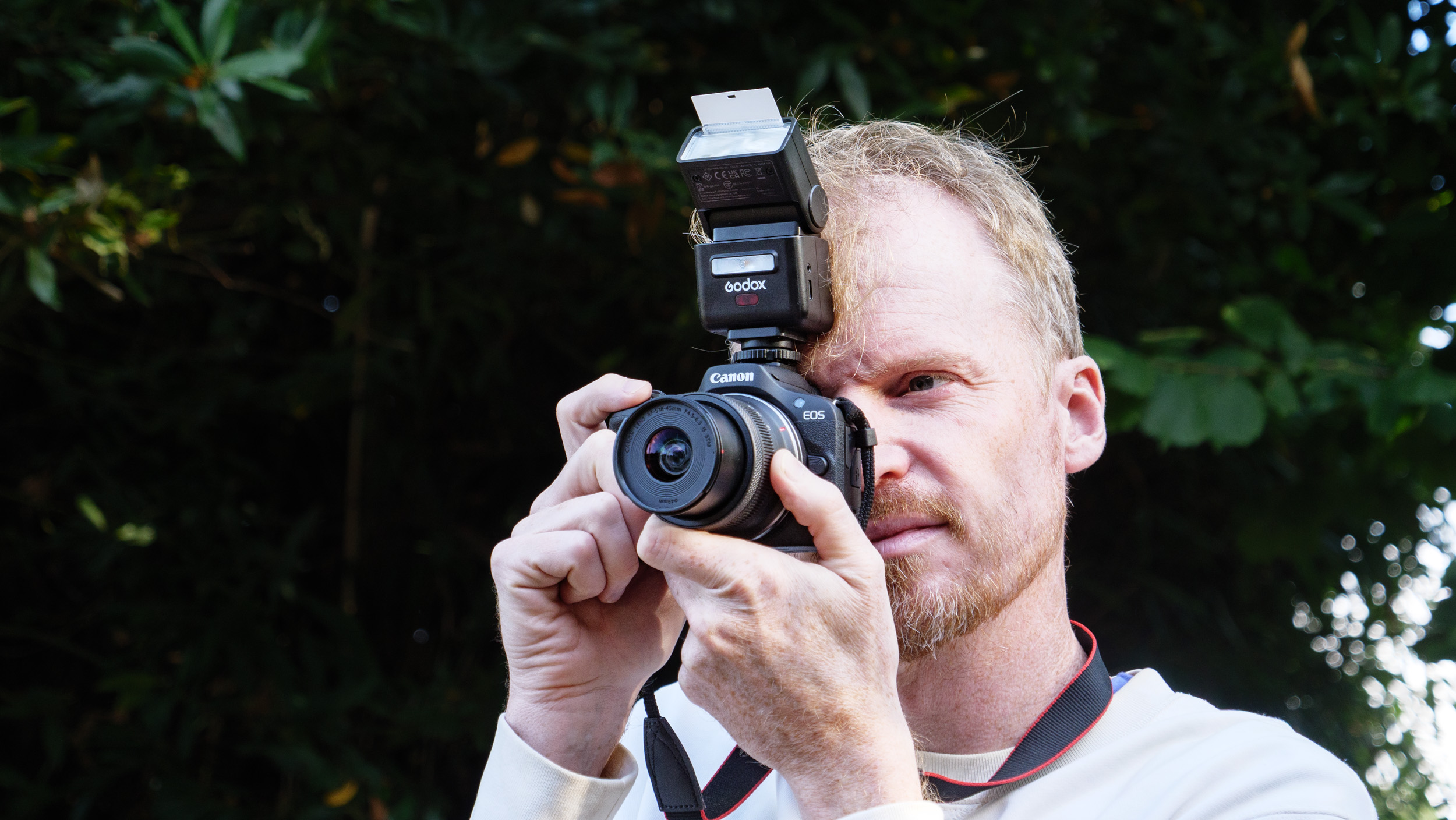
Is the Godox iT32 the perfect package? For pros, not quite — there's no multi-channel feature for individually controlling brightness values from the main transmitter of complex multi-camera flash setups. However, for beginners and simple 1-2 light setups, with the features on board and the low asking price, the iT32 is for me the perfect gateway to off-camera flash.

Tim joined the TechRadar team as Cameras Editor in 2023 and has enjoyed more than 15 years as a tech journalist specializing in camera gear. He's previously worked at Amateur Photographer, for a photo accessory manufacturer and as a freelance photographer and video producer, with clients including Studio 44 and Canon. He also started a media team in Nairobi, Kenya, where he lived for a few years volunteering for a faith-based organisation. Tim is married, father of three children, and loves being active, primarily running since hanging up his football boots.