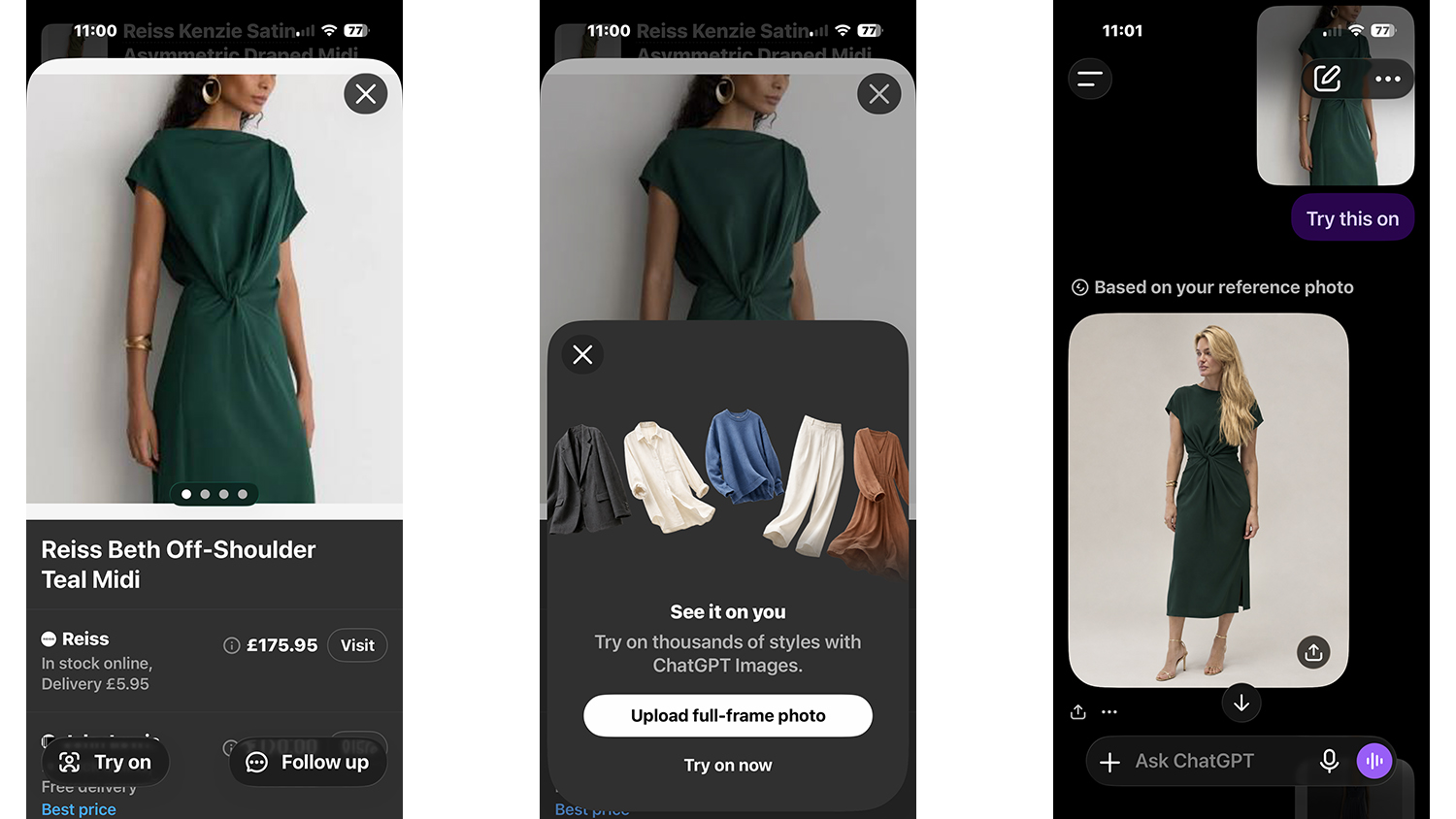
ChatGPT has been pushing further into becoming a shopping assistant for a while now. You can ask it for product recommendations and it’ll find specific items, show you images, prices and links to buy them. Sometimes it’ll even add contextual details from what it knows about you, like your color preferences or budget, to help personalize its recommendations even more.
I've been testing it over the past few months and I find it a strange way to shop. OpenAI has tried to make the experience as slick as possible, but I still like visiting a retailer’s website, seeing more photos, browsing the rest of the range and checking reviews and product details before I buy anything.
But its latest shopping feature is much more interesting. Because you can now virtually try on clothes within ChatGPT.
This makes a lot of sense. ChatGPT’s image generation capabilities have become much more realistic since its Images 2.5 update. With more natural lighting, convincing textures and a better understanding of how objects should look in the real world. Apply that to shopping and suddenly the idea of virtually trying on a jacket or dress becomes much more appealing.
To use the feature you’ll need to upload a photo of yourself and then look for something you want to buy, with a Try On button now appearing alongside supported shopping results. Alternatively, you can give ChatGPT an image of an item and ask it to show you what you’d look like wearing it.
Now, this sort of virtual try-on technology itself is nothing new. We’ve seen versions of it for clothes, glasses and makeup for years. But I wanted to know whether ChatGPT's newer and more realistic image generation could make the experience genuinely useful.
I find shopping in person pretty overwhelming sometimes. But online shopping comes with its own problems too. Colors can look different in person, textures aren't always what you expect and it's difficult to know whether something that looks great on a model will work on you.
So I decided to put ChatGPT's virtual fitting room to the test.
Trying it on for size
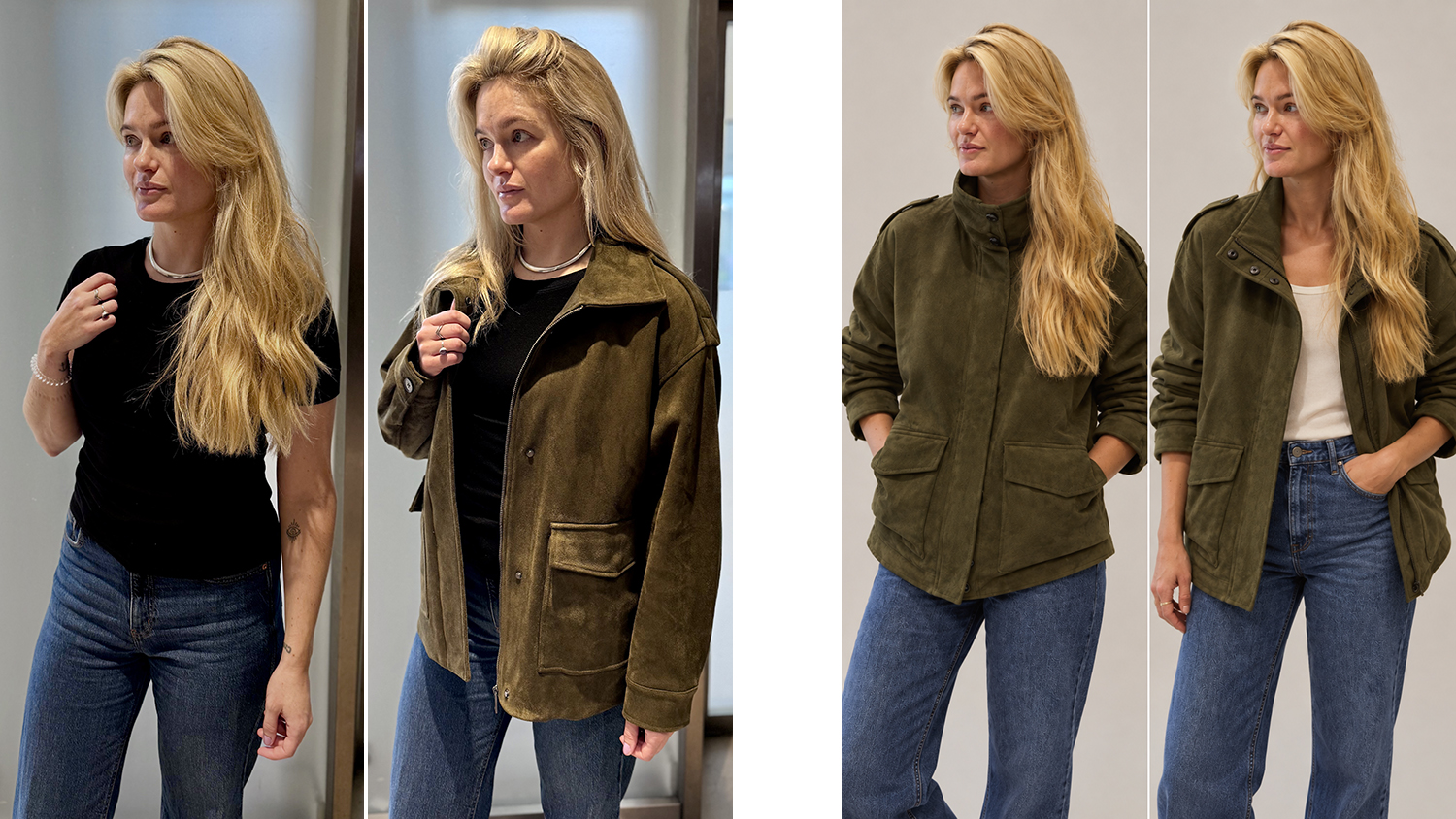
I started with a full body photo of myself taken while I was out shopping and used that as the photo I uploaded after I clicked the Try On button.
I’d seen examples of ChatGPT recreating the original surroundings in the photo when generating try-on images for other people but that wasn't my experience. Despite trying several different items, it consistently placed me against a fairly plain studio-style background.
But I actually preferred that because it meant there was less visual noise and it made it much easier to concentrate on the clothes.
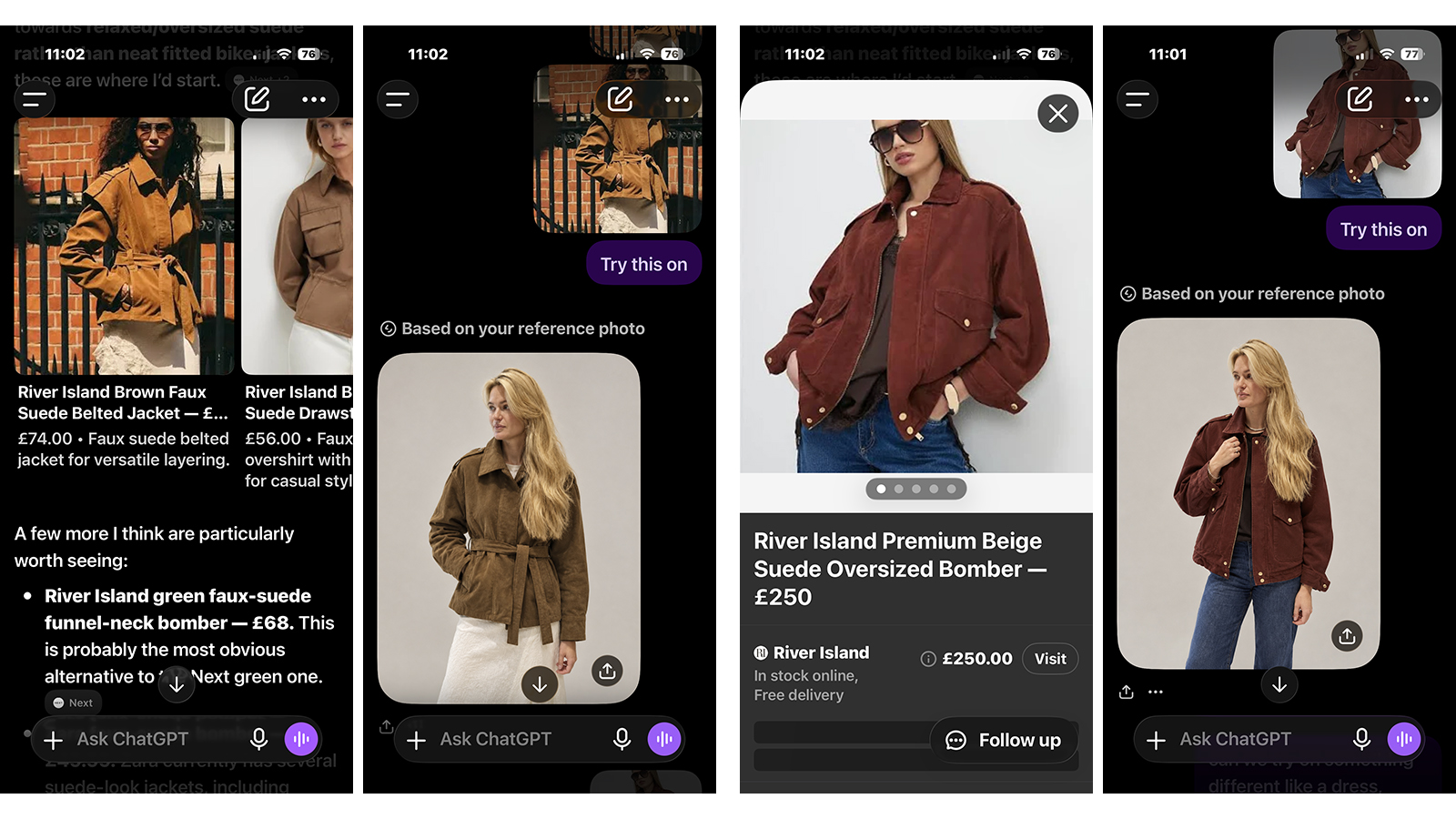
I started by asking ChatGPT to help me find suede jackets. It surfaced several options currently available to buy on the high street and I virtually tried on the ones I liked.
After it surfaced a jacket available in a shop near me, I decided to go and find out in the wild. That meant I could compare ChatGPT’s interpretation with what happened when I actually put the jacket on. And I was surprised by how close it was.
I deliberately picked an oversized jacket because I thought that would make a good test. It’s relatively easy to paste a fitted garment onto somebody. But understanding that something is supposed to hang loosely seemed like a bigger challenge.
I didn't recreate the exact pose or camera angle from the AI-generated image, so this wasn't a perfectly controlled comparison. But ChatGPT did a surprisingly good job of guessing where the jacket sat on my body, its oversized shape and the way the material fell.
It wasn't perfect, but as a way of answering the question “roughly what might this look like on me?”, I can imagine it being helpful. Even just as the first step in the buying process.
Changing things up
After trying a few more suede jackets, I wanted to see how well the feature worked when I moved away from the fairly straightforward jeans and jacket combination.
So I asked ChatGPT to find me dresses I could wear to a formal event and started virtually trying those on too.
Again, the results were convincing enough that I could imagine using them to narrow down a long list of potential purchases. One thing I found particularly useful was color. Seeing a garment against my own skin and hair gave me a much better sense of whether I actually liked a shade than seeing it on a retailer's model.
Then I decided to take things one step further. I told ChatGPT to find me something extravagant that I could wear to a 1920s-style ball and tried on one of the more dramatic options.
Even here, the result was remarkably convincing at first glance. The clothing looked like clothing rather than something crudely pasted onto my body, and ChatGPT handled the radically different silhouette surprisingly well.
But by this point I'd also noticed something else sort of awkward was going on. The woman in these pictures wasn't quite shaped like me.
ChatGPT gave me a makeover
The full-body photograph I uploaded was an accurate representation of my proportions. Yet across the generated images, ChatGPT seemed to subtly change them. I looked taller noticeably and more statuesque. My torso appeared slightly shorter and my legs were longer.
You might think that's hardly something to complain about. But that's a huge problem when the entire purpose of the feature is to show me what clothes will actually look like on my body.
We know that generative AI has a tendency to beautify people. I’m convinced this is one of the reasons people make AI images of themselves, because it makes everyone look a little more conventionally attractive. But in a virtual fitting room accuracy matters far more than flattery.
If a dress looks fantastic because the AI has subtly changed your proportions, that's potentially no more useful than looking at the dress on a model in the first place.
Should you use ChatGPT’s try-on feature?
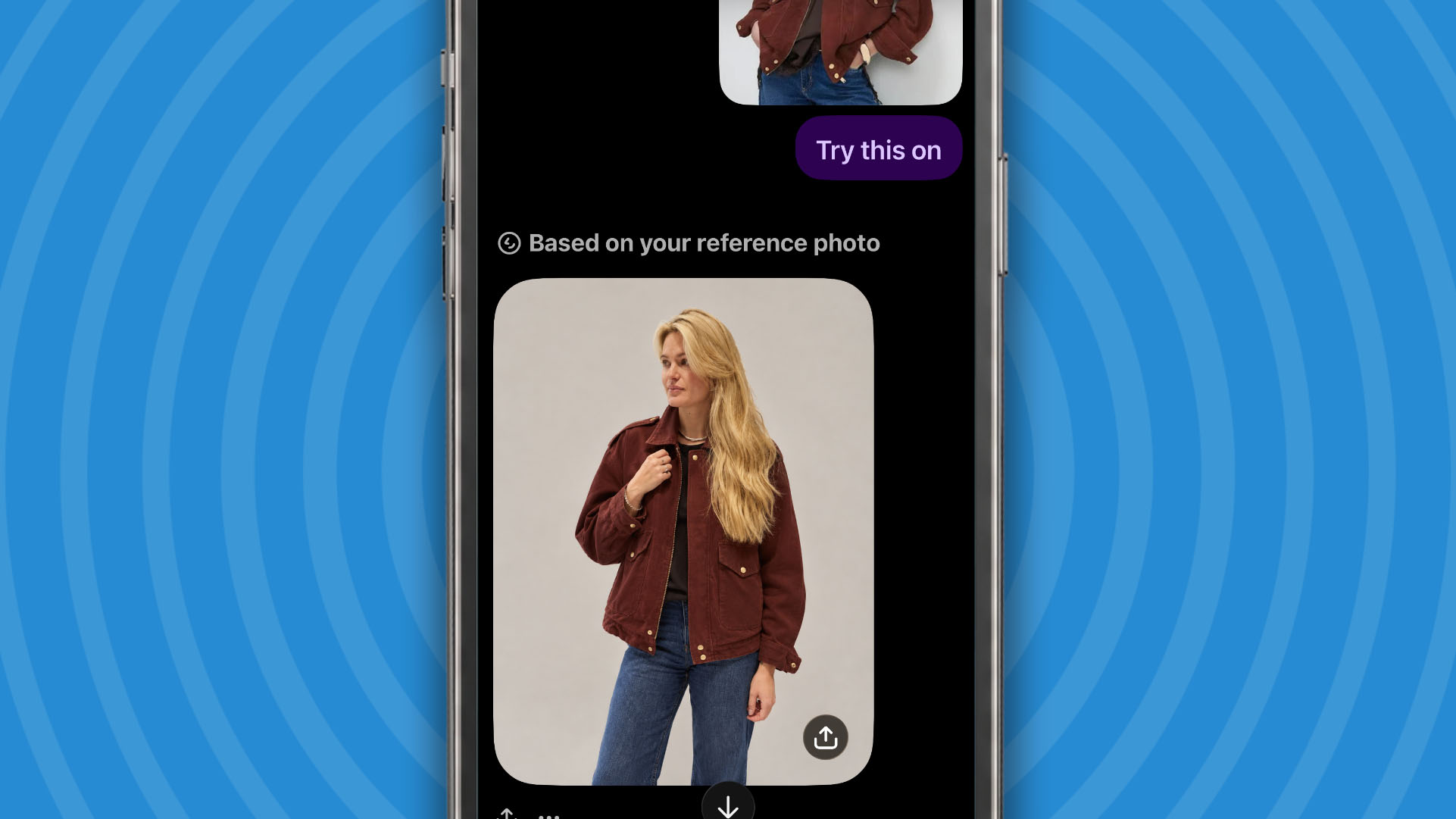
Maybe. I went into this experiment pretty skeptical. I've tried enough AI image tools to know that "realistic" can fall apart very quickly when you look closely, and virtual try-on technology has been around long enough that simply putting digital clothes onto a photograph isn't particularly impressive anymore.
But ChatGPT did do something useful. For me, its biggest strength was color. It might have changed my body, but it kept my skin tone and the color of my hair identical.
Which meant that being able to quickly see several different shades against something approximating my own appearance could genuinely help me decide between them. I was also impressed by its ability to communicate the overall silhouette and feel of an item, particularly with the oversized jacket I was able to compare with the real thing.
So sure, it could take some of the stress out of shopping. Rather than ordering five jackets and hoping one works, I can imagine using virtual try-on to narrow those five down to two.
But I'd still be cautious about treating the resulting images as anything like an accurate prediction of exactly how something will fit. Fabric weight, sizing, movement and all the strange little differences between our bodies are difficult to judge from a generated image. And, based on my experiment, ChatGPT may give you slightly more conventionally flattering proportions in the process.