
Even as public opinion turns against camera-equipped smart glasses, Meta is pushing forward with its generally well-received and quite popular Ray-Ban Meta line. Alongside the much-anticipated Meta Ray-Ban Audio glasses, which skip cameras entirely and come in two styles, Clubmaster and Burbank, there's also the next generation of the Ray-Ban Meta glasses.
Like the previous generation, the Ray-Ban Meta (Gen 3) still features onboard cameras with the all-important glowing LED ring that alerts you when a photo is being taken or a video is being recorded. It's an important safeguard, and Meta has added more protections against folks who try to disable or conceal it, but concerns remain.
Meta's pushing forward with the Gen 3, even if the audio-only models prove more popular. They're launching today in three styles: Ray-Ban Meta Aviator, Ray-Ban Meta Zena, and a new version of the Ray-Ban Meta Wayfarer. Pricing starts at $449 in the United States; we're working to confirm UK and Australia pricing.
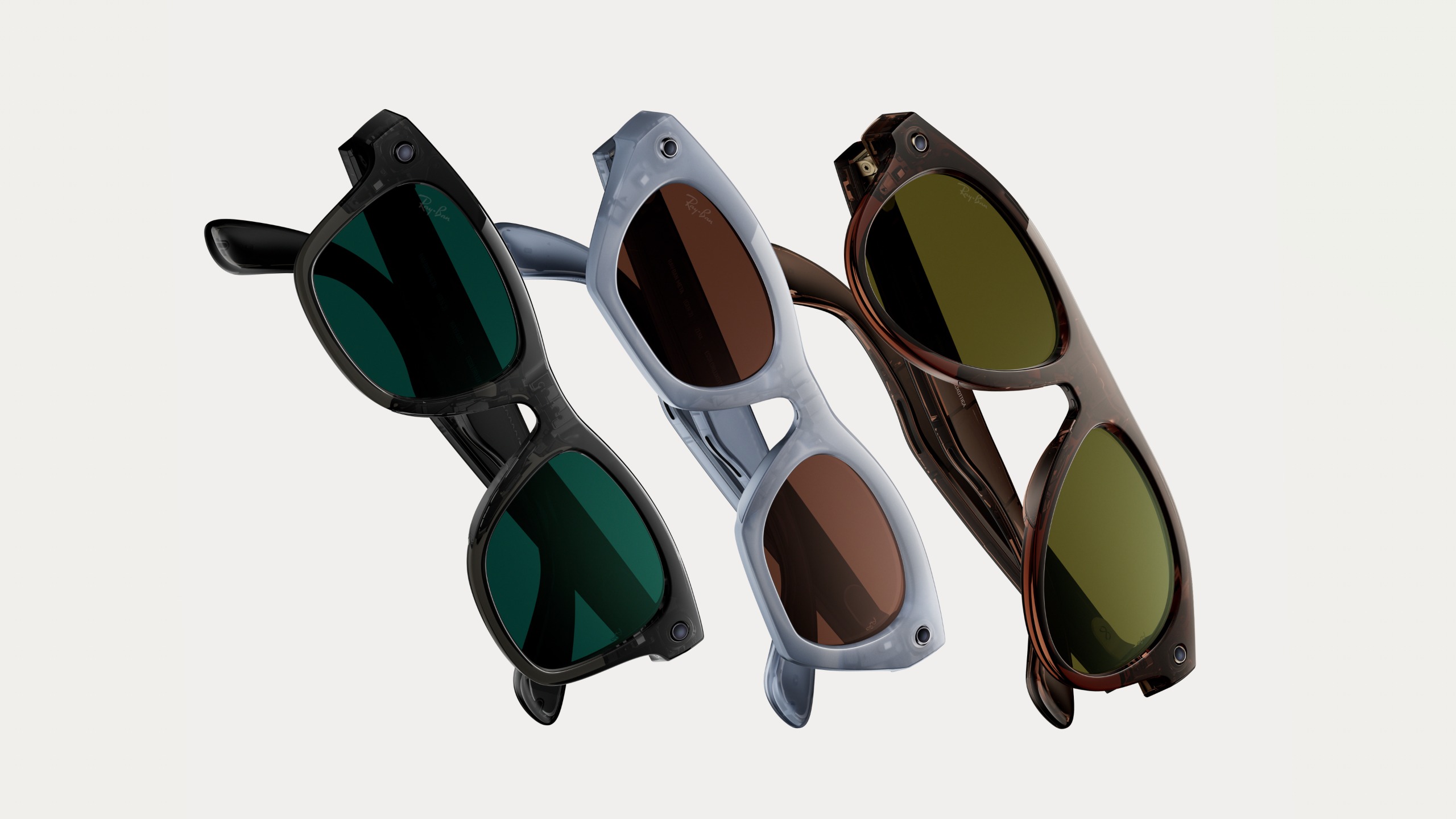
The story across the board is better hardware, all tucked into smart glasses that more closely resemble real glasses, with lighter and thinner builds where possible. The Aviators are particularly exciting to see adopted for the AI and smart era. The frames are thicker than the classic wire ones, but they still frame the face well. Zena is decidedly modern and sleek as a cat's eye, while Wayfarer is still the iconic, cool frame that Ray-Ban introduced years ago.
I'm testing the Ray-Ban Meta Aviator in a brown shade, and you can see my unboxing video embedded below. I like this color, especially compared with my speckled brown Gen 1 Ray-Ban Meta Wayfarers.
There are 27 total combinations when you account for colors and lens types, and if you're willing to pay for it, you can fit these with transition lenses and even prescription lenses.
Regardless of frame style or lens type, you benefit from improved tech onboard. For starters, the cameras — if you choose to use them, and as mentioned, the ring will glow when you do — can take 12-megapixel photos and record 3K Ultra HD video, with Dolby Atmos support for a more cinematic audio experience during playback. There's also a Dynamic Photo mode, similar to Live Photos on iOS, which snaps a few shots so you can pick the best one.
Battery life is also improved. It isn't quite at the 12 hours of the new Meta Ray-Ban Audio models, but the Gen 3s last up to nine hours on a full charge. That's an hour longer than the Gen 2s, and the included charging case lets you recharge on the go.
Finally, just like the Meta Glasses — including the Kylie edition — that launched earlier in 2026, the Gen 3s get more microphones. Six of them improve voice pickup, whether you're drafting a message, asking Meta AI a question, or on a call. Meta promises they cut over 90% of background noise, and we look forward to putting that to the test.

While it's not a night-and-day difference over the second generation, the Ray-Ban Meta (Gen 3) shows that Meta has settled on the core feature set it wants for its AI glasses. Now, in a move likely to broaden their appeal, it's focusing on offering more styles, and its partnership with Ray-Ban is clearly still evolving. The Gen 3s continue the quest for smart glasses that feel closer to the regular versions of these frames, while adding the latest tech for a compelling experience.

Just how compelling will be weighed against the added privacy concerns, but let's hope Meta keeps adding more privacy features and keeps cracking down on those who try to block out the LEDs.
We'll be back soon with our full thoughts — and if you ask us, the Aviators look pretty, pretty nice — but if you're already sold, the Ray-Ban Meta (Gen 3) are up for order right now, starting at $449 in the US, from Meta, Ray-Ban, and other authorized sellers.

Jacob Krol is the US Managing Editor, News for TechRadar. He’s been writing about technology since he was 14 when he started his own tech blog. Since then Jacob has worked for a plethora of publications including CNN Underscored, TheStreet, Parade, Men’s Journal, Mashable, CNET, and CNBC among others.
He specializes in covering companies like Apple, Samsung, and Google and going hands-on with mobile devices, smart home gadgets, TVs, and wearables. In his spare time, you can find Jacob listening to Bruce Springsteen, building a Lego set, or binge-watching the latest from Disney, Marvel, or Star Wars.