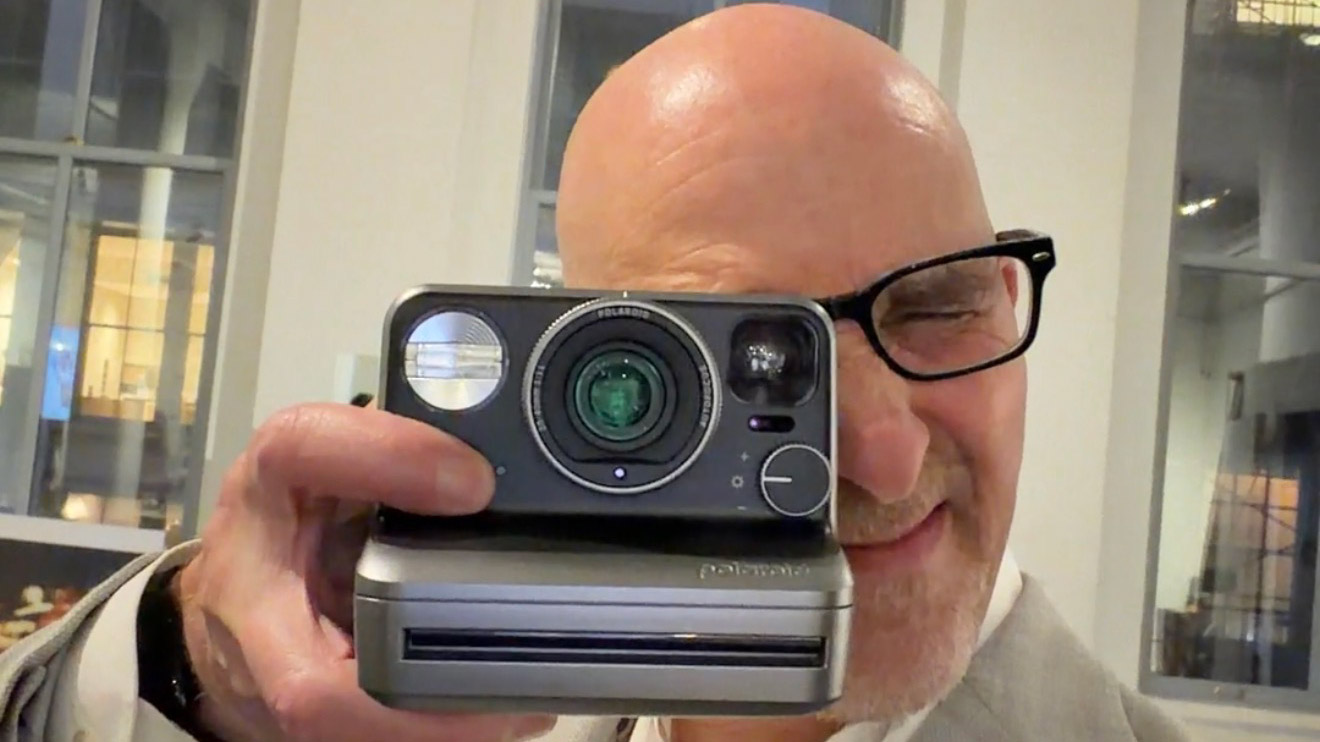
What if you could "spend the day making a shot that AI could make in a minute?" That's the somewhat facetious pitch for Polaroid's new all-analog Polaroid Mod Instant camera, and, in my experience, it's a challenge I accepted and thoroughly enjoyed.
No, it doesn't take all day to make some pretty wild instant Polaroid photos with the Mod, but it's also not as easy or unsatisfying as entering a prompt and waiting for a far-flung generative model to do the work.
Sitting somewhere between the Polaroid I-2 and the Polaroid Flip (in functionality if not price), the Polaroid Mod, which Polaroid unveiled today (September 29) and gave me some time with earlier this month, takes virtually every setting that might've been digital on a previous 21st-century Polaroid and made it analog, or more precisely, a series of dials.
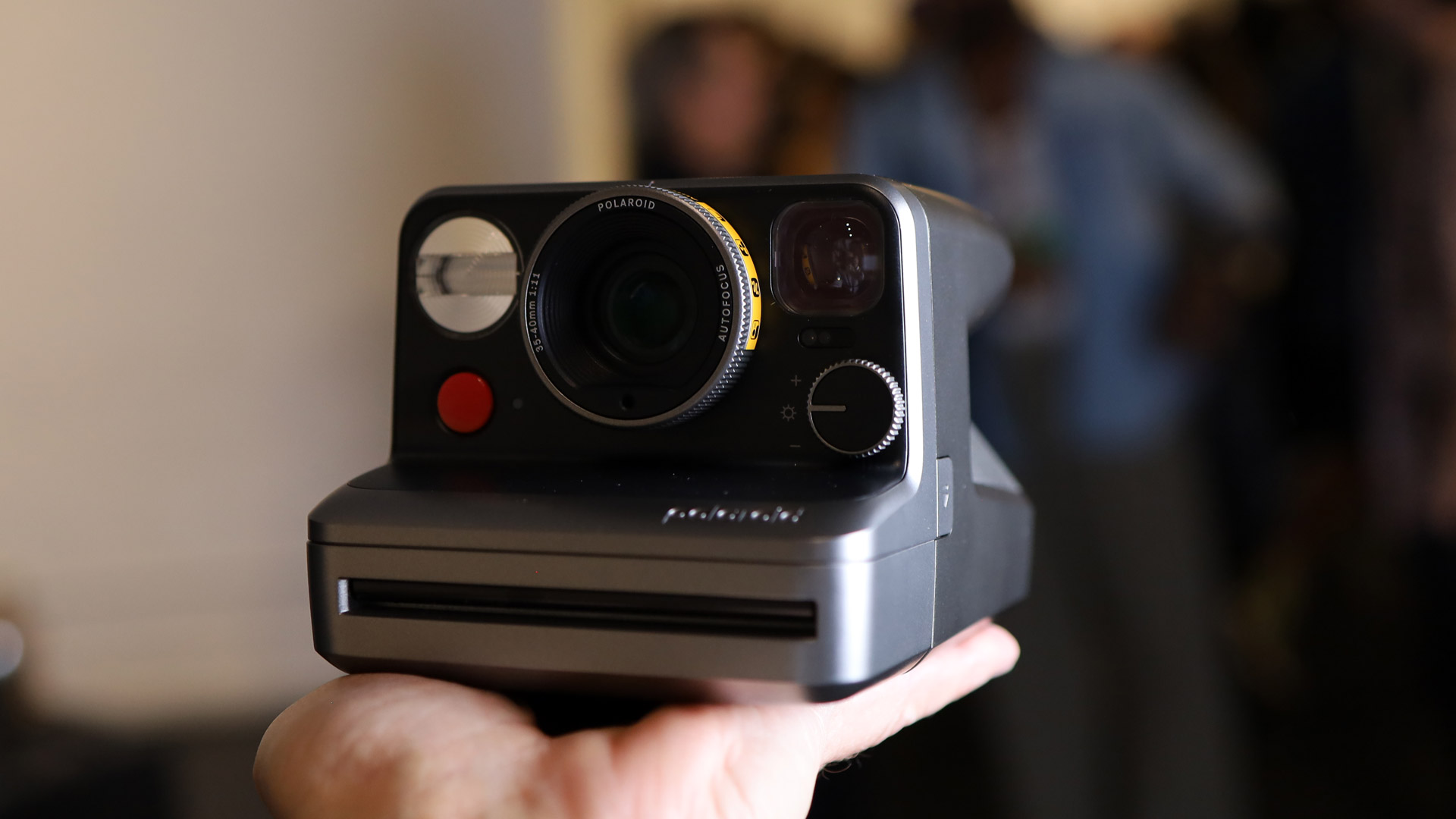
With its metallic finish and familiar curves and angles — right down to the flip-open front film pack loader —it's instantly recognizable as a member of the Polaroid family. The gray body features a two-lens system: a 103mm main lens and a 95mm portrait lens. It uses an infrared autofocus system (it has just two focus zones, to keep things simple). There's a small dial on the front for exposure control with just three settings: auto, one step lower, or one step higher.
There's a large embedded flash and a red shutter button. On the back is a touch control for the flash, an LED light readout for the number of photos left, and a self-timer. There's a USB-C port to juice up the 750mAh battery, which should last through shooting over a dozen film packs.
The most important feature, though, and one that leads to an almost endless array of creative possibilities, is the mode dial around the main lens. In addition to the auto setting, it offers a Double-Exposure setting, Split Shot, Motion Freeze, and Light Painting. Each is represented by a tiny but clear cryptogram. The camera even ships with a special half-lens cover to assist in the Split Shot.
Like most of Polaroid's other full-size instant cameras, the Mod is designed to work with 600 film and Polaroid's I-Type instant film packs.
Let's shoot
Polaroid walked us through some of the basics of shooting with this relatively retro camera, and I was so struck by the simplicity of each operation that I felt empowered to try a few of them.
At 520g, the camera feels lightweight but substantial in the hand. It's also pretty rugged: I accidentally dropped the camera from a height of almost four feet. The film pack door popped open, but the Polaroid Mod was otherwise unharmed and worked for all my future shots.
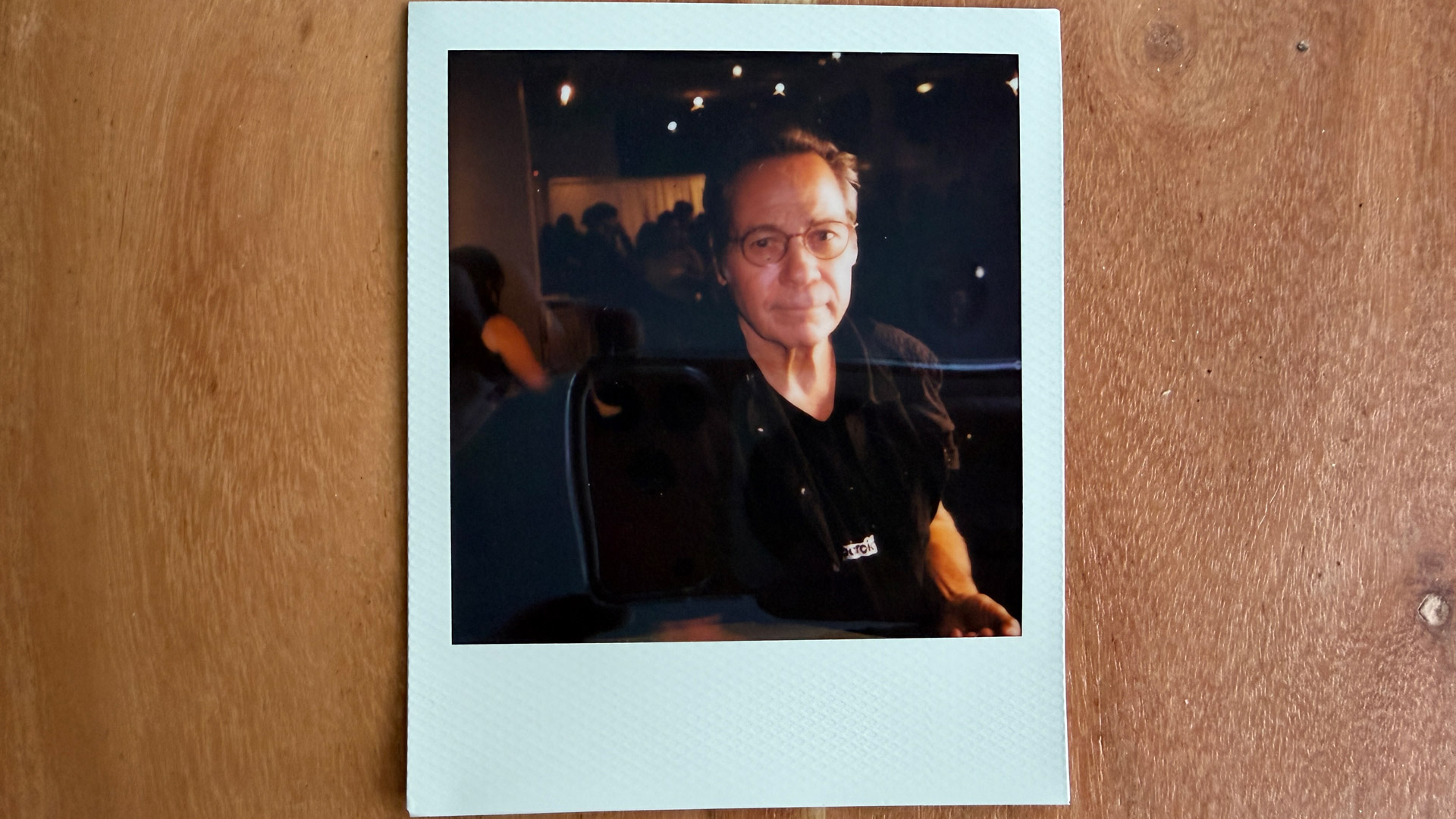
I held the camera at eye level, looked through the large viewfinder, and snapped a photo of photographer and current Director of Polaroid's 20x24 Studio John Reuter. A second after I pressed the well-placed shutter button, I heard that iconic motor whir to life as the Mod spit out my first, still blue, undeveloped image. Polaroid film still takes 10 to 15 minutes to fully develop. When I finally had the finished image, I was impressed with the quality despite the suboptimal lighting.
I was anxious, though, to try out the wilder flights of photographic fancy, and with a colleague, I set about making my first Split Image.
First, I selected the mode by twisting the dial until I could see that icon. I asked my friend to stand with a drink and imagine she was toasting herself. On the camera, I placed the half-lens cover, which, as the name implies, leaves only half the film exposed.
In this mode, the camera will show a 1 on the tiny readout when you take the first photo.
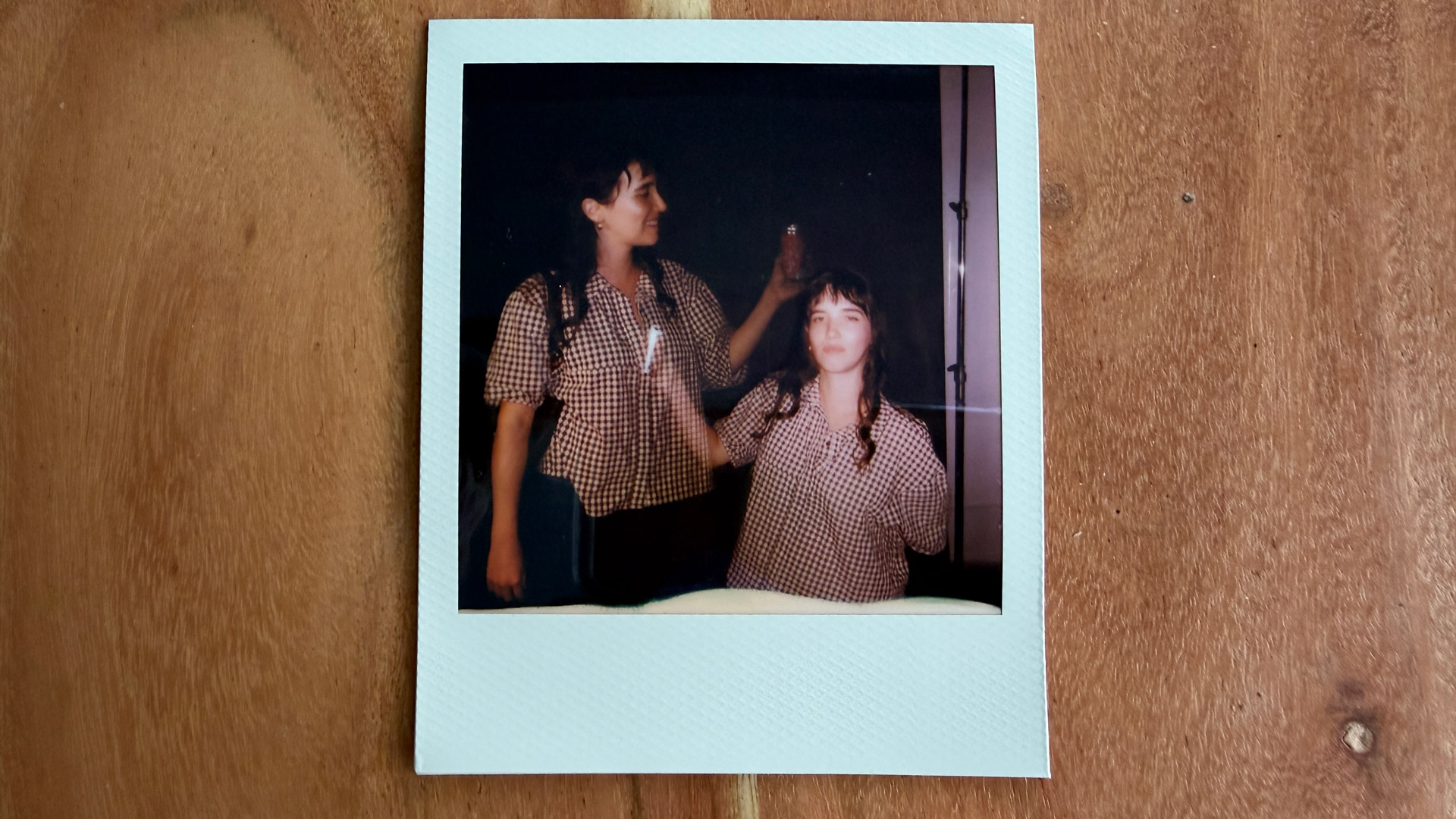
I then repositioned my friend so she was shifted to the right and facing the opposite direction. Meanwhile, I took off the lens cover and switched it so the other half of the film would be exposed. On the readout, it shows a "2" to let you know the camera is ready for the second image.
I took the second image, and then the photo spit out of the Mod. The finished image was pretty cool, though I realize more care in the camera position and my subject would be needed for the maximum effect.
The Double Exposure setting is somewhat similar, but instead of using the lens cover, you shoot the first image with the lower exposure setting and then find your second subject and shoot the next image (again, the digital readout shows a "2") for the next part of your double image. The example we saw was an oversized live cat next to his tiny owner.
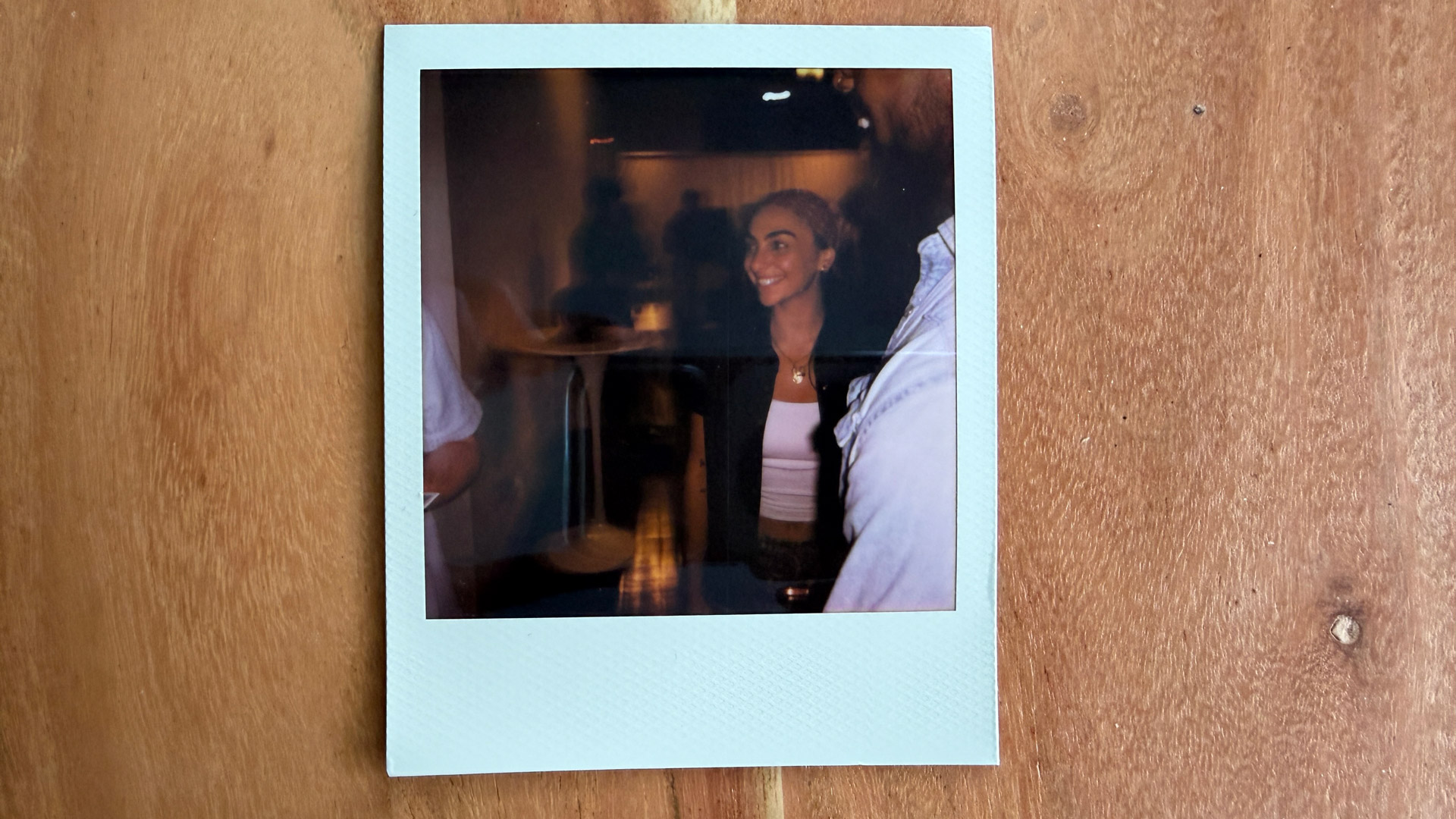
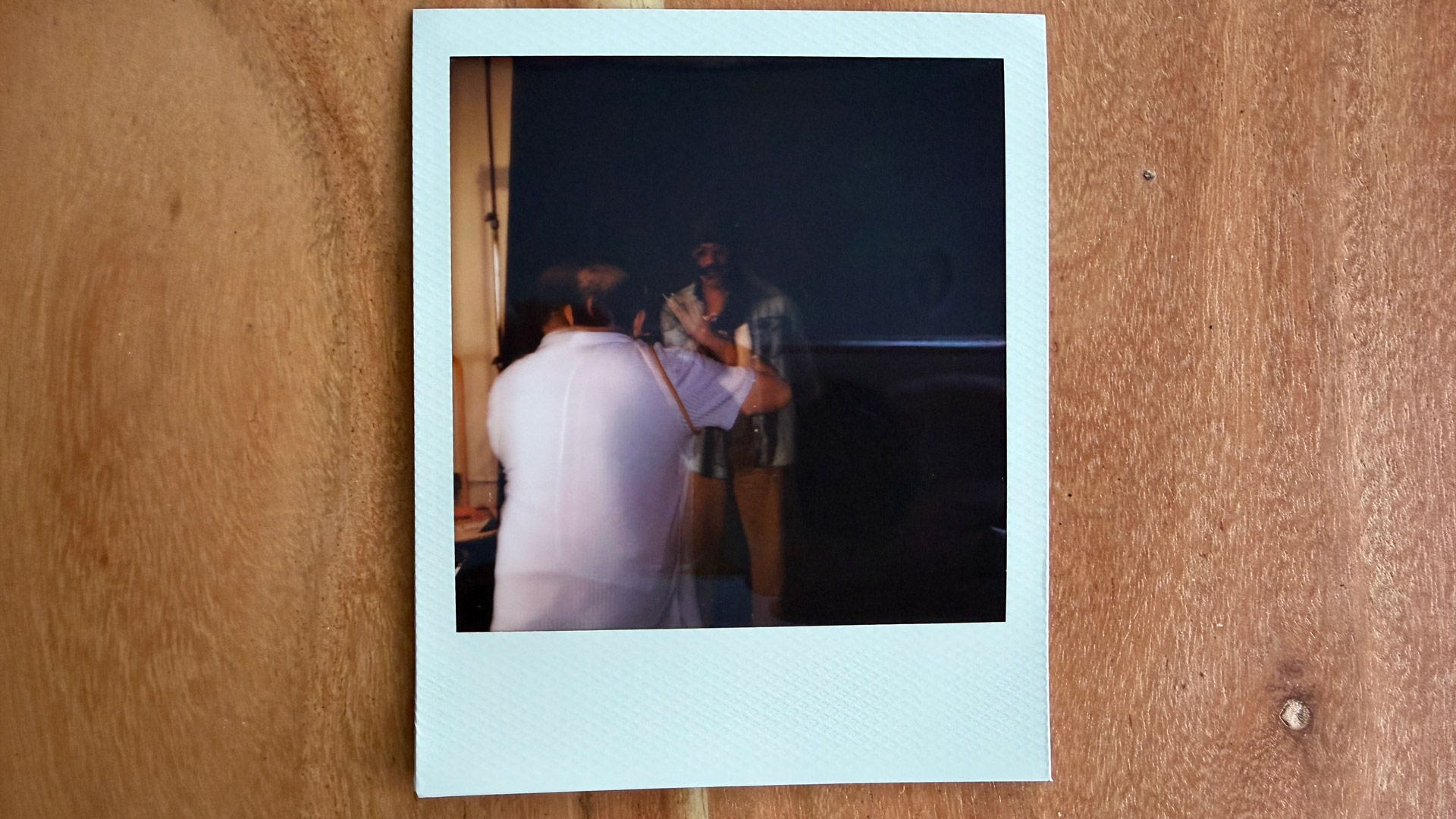
There's a motion freeze that opens a long exposure in which you can move the camera and then blast a flash at the end to capture a sharper image.
I was intrigued, though, by the Light Painting settings. After watching Polaroid try it with a variety of light sources, I asked Tom's Guide's Kate Kozuch to work with me on making my own Polaroid Mod light painting photos with an iPhone flashlight as a light source.
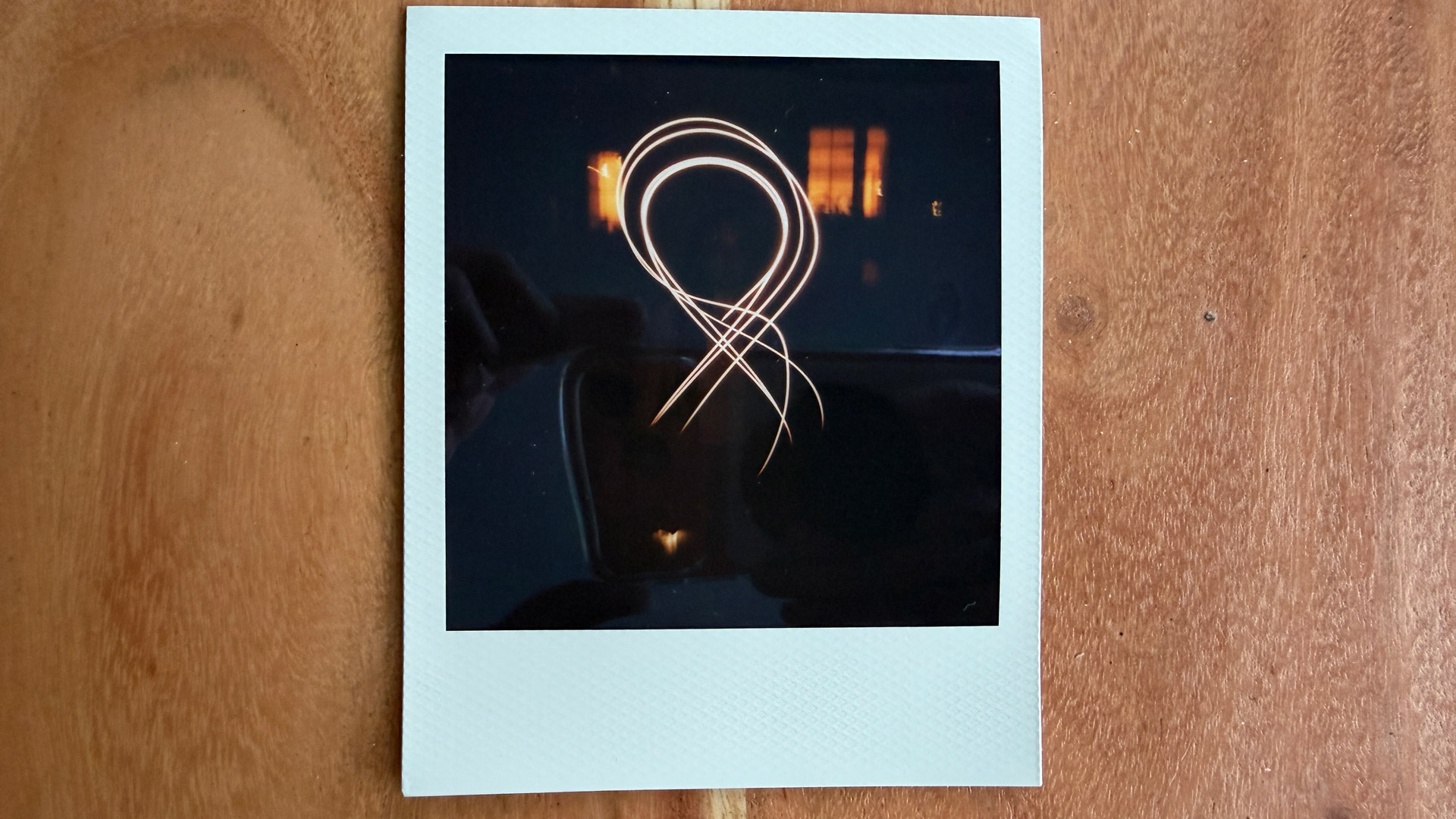
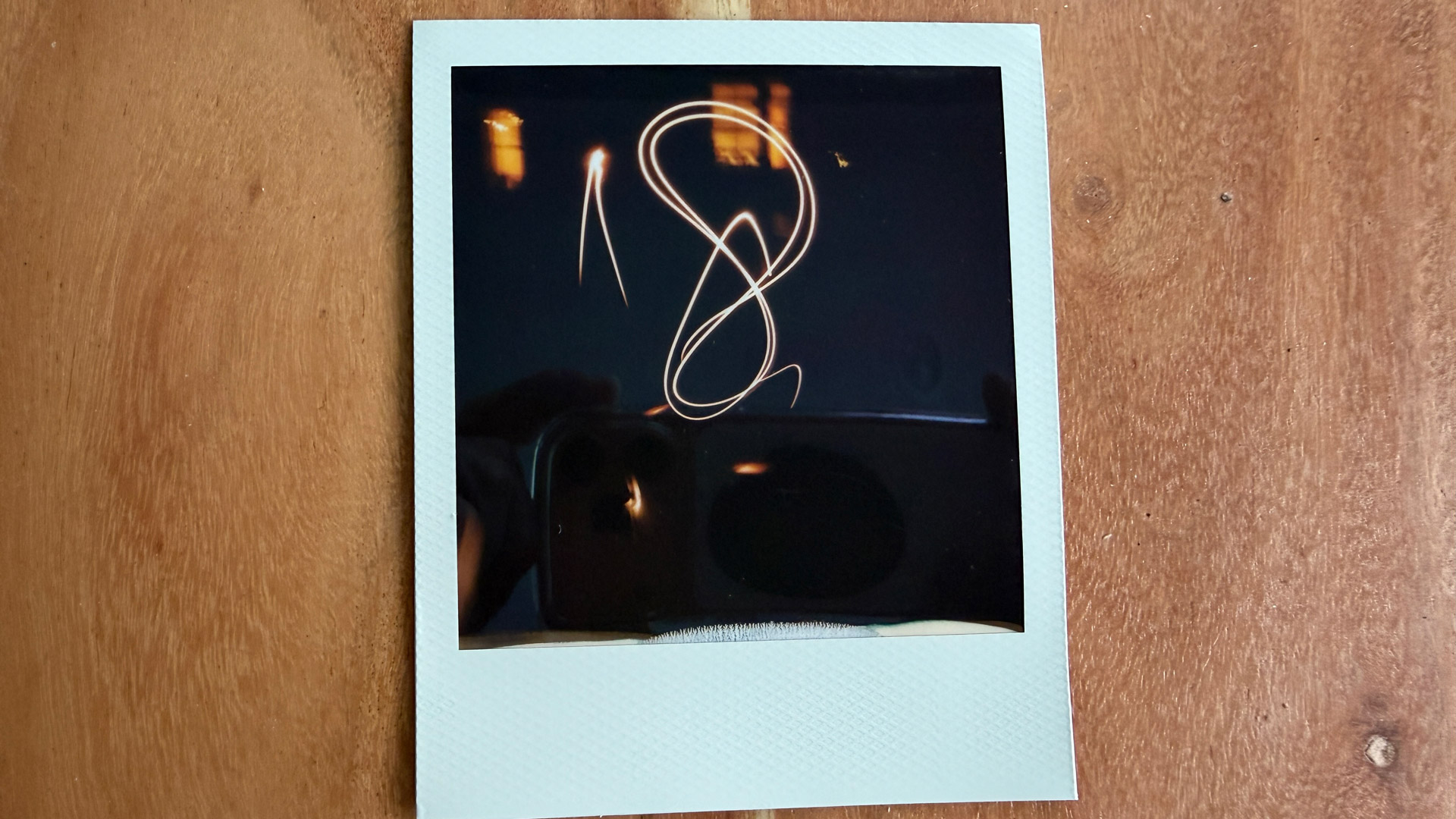
This Polaroid Mod mode gives you a full seven seconds of exposure to create some pretty wild images. Polaroid recommends a tripod, but I'm pretty good at holding still. For our shots, which we did in an almost fully darkened event space, I had Kate wave around the iPhone flashlight in a couple of different patterns. The results, which I saw 15 minutes later, were honestly far better than I expected.
I should be clear about something, though: most of these images, even in the best lighting, are arthouse quality. They can be grainy, moody, with sharp contrast between light and dark. I tend to love them, but if you're used to the clarity of an iPhone or Samsung Galaxy, you might be surprised, and not in a good way.
These images tend to tell a story with every bit of unpolished grain, so how you shoot it is as much a part of the tale as what you shot. With enough fiddling with the few available settings and true daylight, you might get some images approaching basic iPhone 13 quality but, again, that's not why you buy one of these cameras.
The camera, which goes on sale today, lists in the US for now (globally early next year) for $169.99 (a little cheaper than the Flip and roughly half the price of the more complex I-2), a comparatively affordable price, but keep in mind that Polaroid 600 and I-Type film can run you $20 for 8 pictures. At least you can get twice the imagery with the double exposure and split modes.

A 38-year industry veteran and award-winning journalist, Lance has covered technology since PCs were the size of suitcases and “on line” meant “waiting.” He’s a former Lifewire Editor-in-Chief, Mashable Editor-in-Chief, and, before that, Editor in Chief of PCMag.com and Senior Vice President of Content for Ziff Davis, Inc. He also wrote a popular, weekly tech column for Medium called The Upgrade.
Lance Ulanoff makes frequent appearances on national, international, and local news programs including Live with Kelly and Mark, the Today Show, Good Morning America, CNBC, CNN, and the BBC.