Most of us use Gmail every day without ever really setting it up. We install it, sign in, and adapt to the defaults.
The problem is that its most useful behavior-changing options aren't obvious, and if you miss them during setup, you may never look for them again.
I've used Gmail so long that I stopped questioning how it works. , tabs, swipes, and inbox behavior all felt like things I had to live with.
Many of those annoyances are optional, buried behind settings Google never draws attention to. After I changed them, Gmail felt like a different app.
Turn off email grouping that hides replies you actually need
Stop responses from being buried inside conversations
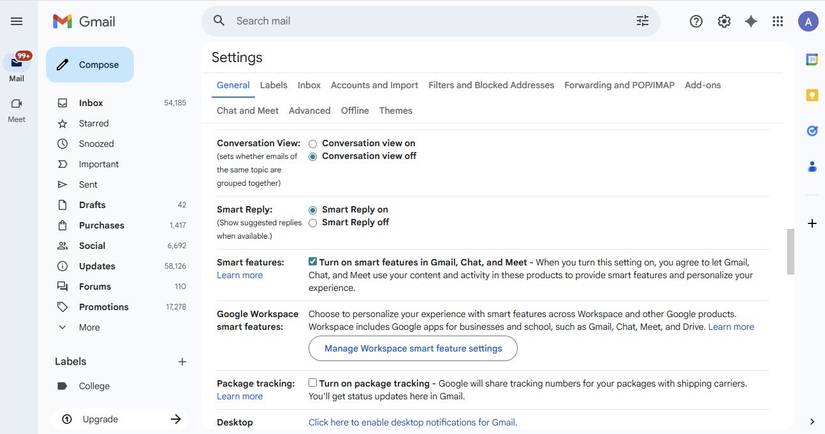
Gmail's conversation view is meant to simplify email by bundling replies into a single thread.
In practice, it often does the opposite. Responses are buried inside conversations you've skimmed, and because the subject line doesn't change, those replies don't always look new when they arrive.
I've missed crucial replies because they were buried inside a thread I thought I had read.
After I turned off conversation view, that problem disappeared. Instead of an expanding thread, each email shows up as its own message in the inbox.
To turn it off from the web browser, open , click the , and select See all settings. Under the tab, scroll to . Select Conversation view off. Scroll down and tap .
On the mobile app, tap the to the left and go to > General settings. Uncheck Conversation view.
The difference is immediate. You don't have to remember which thread to reopen or wonder whether someone responded.
Yes, the inbox looks busier without conversation view. You'll see more individual messages, but that extra noise comes with clarity.
You'll browse that long list of emails much quicker
Most people use Gmail the same way they did years ago: open the inbox, tap an email, read it, go back, and repeat.
It's slow, surprisingly tiring, and completely unnecessary.
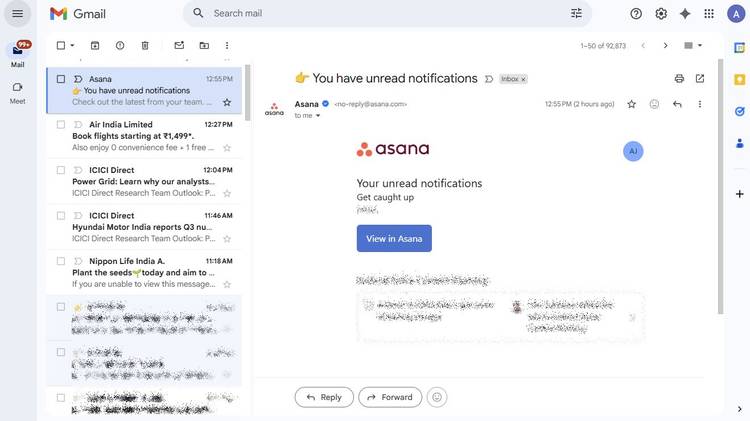
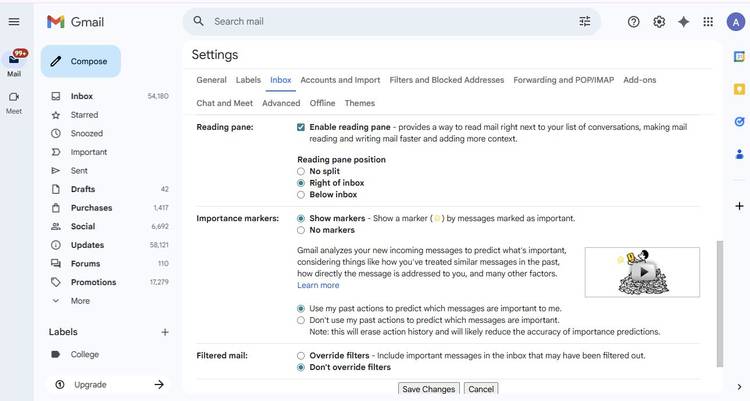
Gmail's reading pane lets you read emails without leaving your inbox. The inbox stays visible on one side, the message opens on the other, and suddenly email feels less like app-hopping and more like scanning a dashboard.
If you deal with newsletters, work threads, or long back-and-forth conversations, this one setting changes how Gmail feels almost instantly.
On the web, you can enable the reading pane by clicking the and navigating to See all settings > . Scroll down to the Reading pane section and select Enable reading pane. Then, choose either Right of inbox or Below inbox, and click Save changes.
From then on, clicking an email no longer pulls you away from your inbox; it opens alongside it.
You can skim multiple emails, compare messages, and decide what needs a reply without constantly losing your place.
Turn off category tabs if they hide important emails
You can't always rely on the category tabs to show the email you need
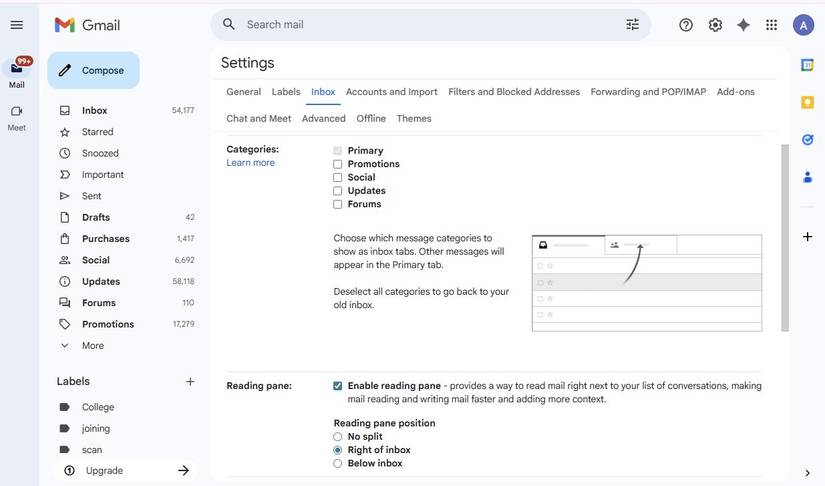
For a long time, I trusted Gmail's category tabs to organize my inbox. The Primary, Promotions, Updates, and Forums tabs looked neat, and I assumed important emails would always land where I'd see them.
However, I started noticing delivery updates sat unopened. Account alerts quietly slipped into Updates or Promotions, and I only found them days later. If you don't check every tab regularly, Gmail's organization becomes a liability.
You don't have to turn off tabs entirely. Even turning off Promotions can bring critical emails back into your main flow, where you're more likely to see them.
In Gmail's settings, under the tab, you can choose which categories to enable. I unchecked everything except . The tabs disappeared instantly, and all my emails flowed back into a single timeline.
On Android, go to , tap your email address, select Inbox categories, and choose which tabs should appear.
If you want automation, Gmail's labels and filters are far more predictable than category tabs. At least those follow the rules you set.
No more regrets or embarrassing emails
Undo Send in Gmail isn't a mythical email recall that pulls messages back after they're delivered.
Instead, it delays sending for a short window, so you can click before the message leaves Gmail's servers.
By default, that window is only five seconds, which means most of us still press Send and immediately regret it.
That tiny timer is the reason you might see Undo Send working but still feel like you never catch mistakes. I did too, until I realized I could extend it from the default 5 seconds to as much as 30 seconds.
On the desktop, you can access this setting by clicking the and selecting See all settings. Go to the tab and scroll to the section. There you can choose between 5, 10, 20, or 30 seconds.
I stopped using Gmail on autopilot
Most Gmail frustrations come from .
After I started pushing back on those defaults, my inbox felt more predictable. I wasn't hunting for emails, undoing mistakes, or wondering what I'd missed in another tab.
Revisiting these settings once a year can do more for your sanity than chasing inbox-zero systems or productivity hacks.