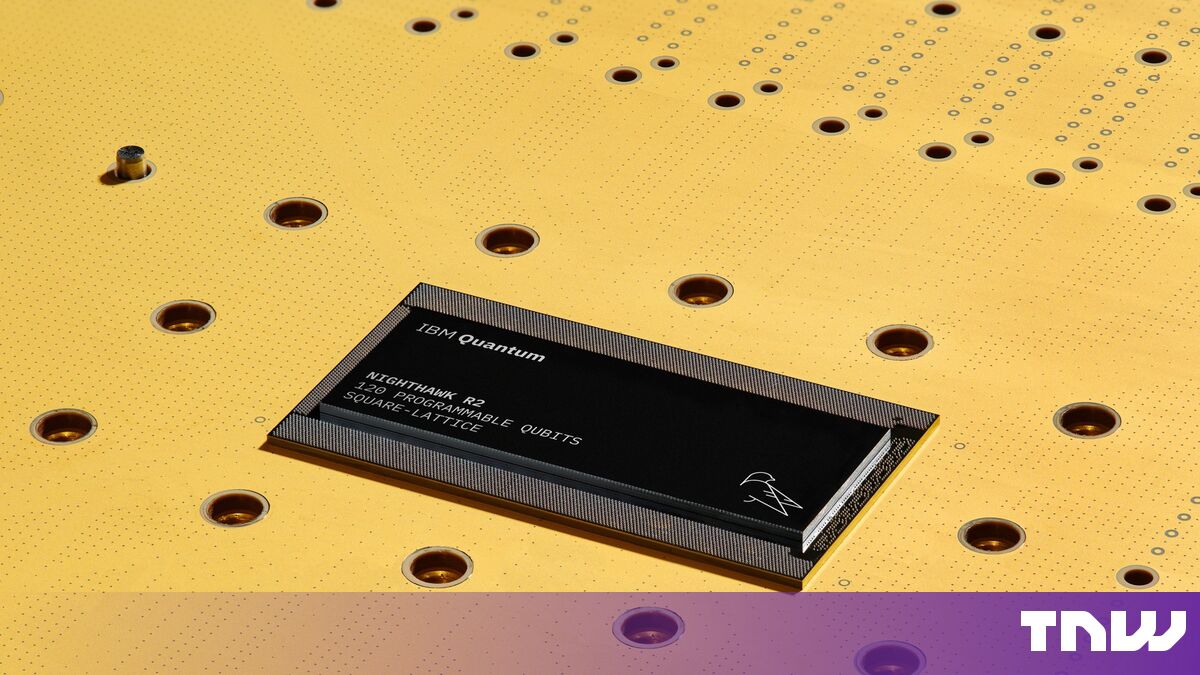
IBM’s next quantum chip, Nighthawk r3, is designed to run 10,000 operations on 520 qubits. IBM plans to link two of them into a 1,040-qubit system in 2027. Customers report speedups of up to 19x on the current Nighthawk chip.
IBM plans to build a quantum computer with more than 1,000 qubits in 2027 by linking two of its next-generation chips, the company announced on Wednesday.
The new chip, called Nighthawk r3, is designed to run 10,000 quantum operations on 520 usable qubits. It has 10 connectors for joining chips together. IBM says two of them will form a single 1,040-qubit system.
Qubits are the basic units of a quantum computer. Each run of a quantum program gives one result, so useful work can take millions or billions of runs. That makes speed as important as size.
“Useful quantum computing hinges on whether results can be delivered with accuracy and speed, both are fundamental,” said Jay Gambetta, director of IBM Research.
The current chip, Nighthawk r2, launched in September. It can produce up to 100,000 results per second on 120 qubits. IBM says customers and partners have run 34 billion programs on it, with speedups of up to 19x over its older Heron chips.
German energy firm E.ON reported a 15x speedup on work to optimise power grids. IBM also says it has linked earlier Nighthawk chips at 99.3% accuracy, short of its 99.9% goal. Linking chips is one of the hardest scaling problems in quantum computing.
All of the figures come from IBM and its partners. IBM still aims to deliver its first error-corrected quantum computer, Starling, by 2029, Live Science reported last year.
IBM is also hedging its bets. It agreed to buy HRL Laboratories, which builds silicon qubits, in July. In October, DARPA moved IBM to the final stage of its quantum testing programme, while rival Quantinuum raised $1.68B in its June IPO.