Where does enterprise technology go at the end of its lifecycle? The answer, as it turns out for some, is sleepy Erskine. Just a 20-minute drive outside of Glasgow, Scotland, HPE’s Technology Renewal Centre (TRC) is where end-of-life technology and components get cleaned, wiped, and reused in other hardware, or recycled.
It is the main operational hub for HPE Financial Services (HPFS), the company’s financing and lifecycle management arm, which provides closed-loop solutions for its enterprise customers.
The 240,000 sq ft facility is all that remains of Silicon Glen, a local technology innovation hub that operated from the 1940s to the 1990s when American defense and electronics firms first expanded into Europe post-war.
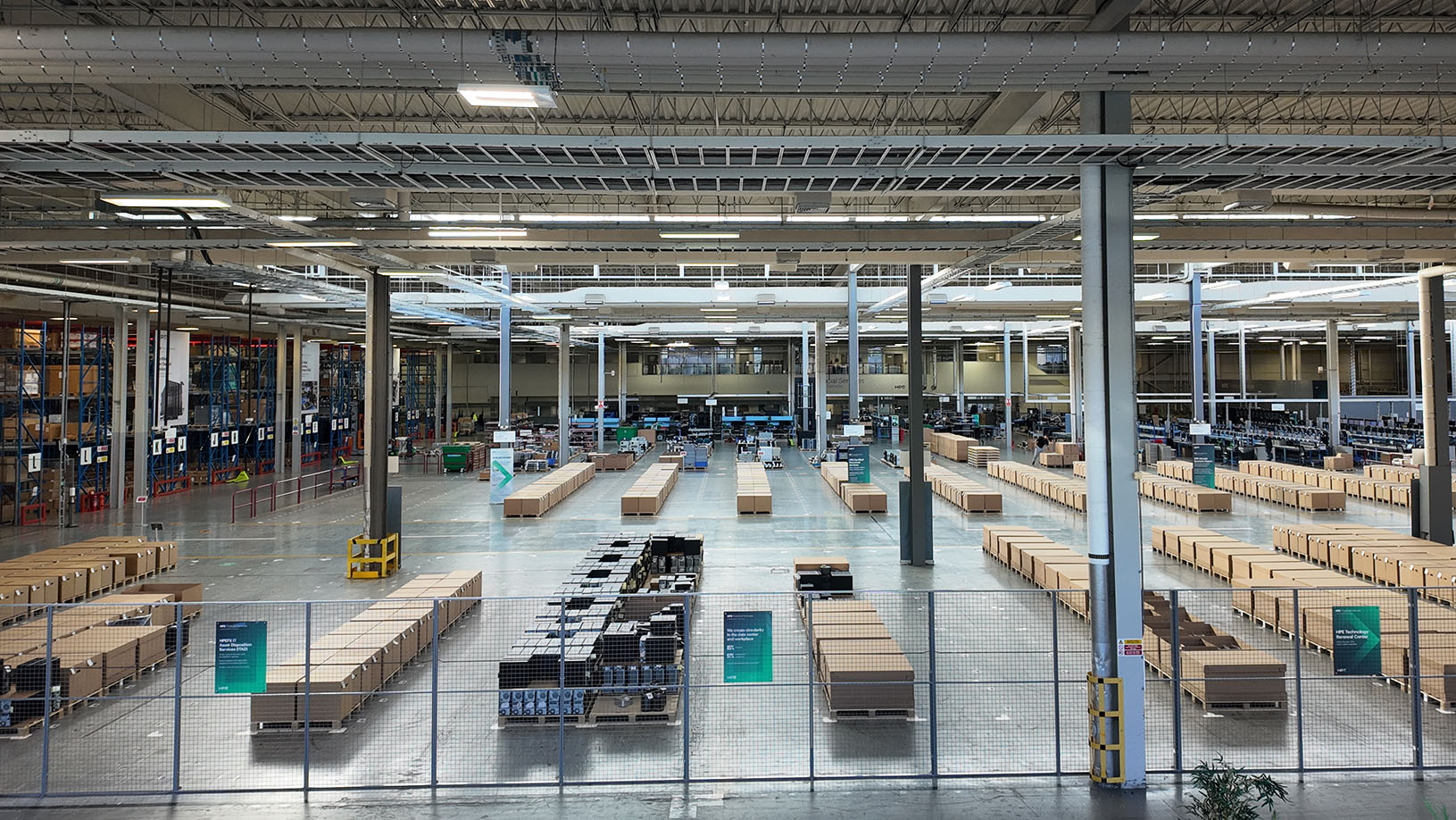
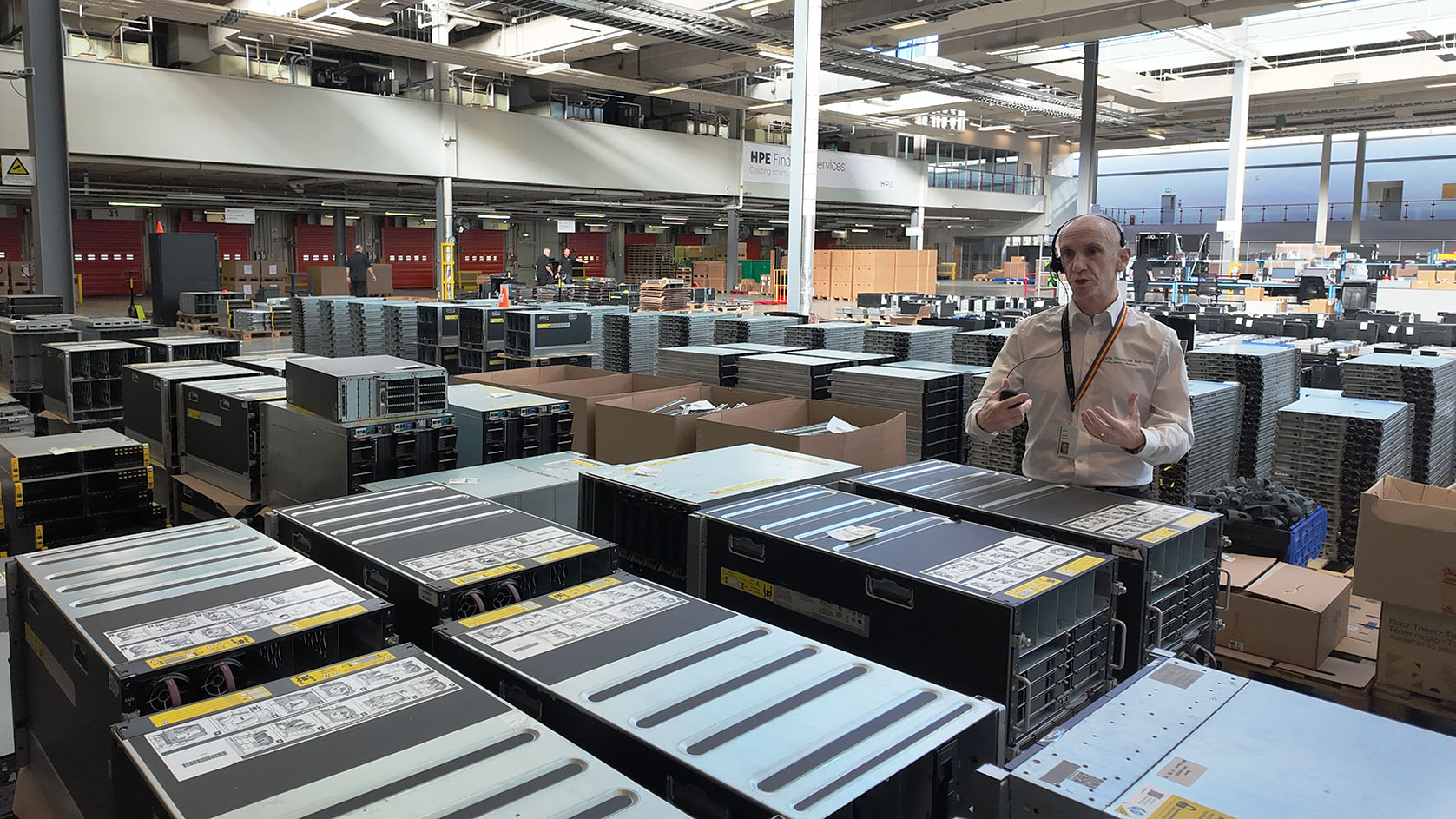
First acquired by HPE in 2011, the facility processes 150 pallets and around 8,000–9,000 individual assets daily, running on a 90% wholesale and 10% certified pre-owned remarketing model. Alongside its similarly-sized sister site in Andover, Massachusetts, the TRCs are global centers of excellence, supported by around 40 local regional intake sites worldwide. Assets are returned to the facility as part of HPE’s IT Asset Disposition Services or at a customer’s end of lease, the latter of which makes up 56% of the assets returned.
This year to date, the TRCs have processed 3.7 million assets, two-thirds of those being servers and PCs, according to HPE. The company says 4.3 million assets were processed globally in 2025, with a mammoth 84% going on to be reused in some way, or refurbished and resold.
Built on a site with a rich manufacturing history – a former Compaq and HP manufacturing facility – the facility’s roots can still be seen within its operations, with almost 70% of workplace assets that come through its doors being HP branded.
The site started with a mere 40,000 sq ft and a fleet of 50 highly skilled employees, eventually growing to a 200-strong workforce, says Jackie Rafferty, TRC operations manager at HPE Financial Services, who himself has been with the facility for 39 years, as he delivers one of many facility tours HPE offers prospective customers.
Sign up today and you will receive a free copy of our Future Focus 2026 report - the leading resource for IT decision-maker insight on priorities and investment areas in AI, security and more.
“The reinvention of this site has been really impressive for decades,” says Matt Harris, SVP and managing director for UKIMEA at HPE, who also started his career at this very site 23 years ago. “It aligns quite well to the conversations we're having now as a major technology renewal center [which] are all around reinvention and a new lease of life”.
The AI boom and a shifting economy
HPE has found a new burgeoning market over the last five years, thanks in part to the increasing global demand for components – largely driven by the rapid investment in AI infrastructure and development. At the same time, tightening macroeconomic conditions are changing how businesses procure this highly sought-after hardware.
“Customers who previously bought cash are looking to buy and use financing,” says Maeve Culloty, president and CEO at HPFS, in her opening presentation before the tour. “HPFS has been financing GPUs for almost 10 years, but the renew market wasn't in existence [back then] and the value of residual [tech] wasn't very clear.”
“About five years ago, we started making major investments and helping our customers acquire GPU technology. What was unclear and uncertain at the time was can we carry a residual value or risk on that technology, and can we see a secondary market for those GPUs? If I were here three years ago, I would have struggled to answer that question…”
“The concern was that the market would have been flooded by the initial investment into H100s and H200s, and that they would come to the secondary market. Now it's super clear: there is a secondary market for GPUs… Our customers do want access and are very happy to take second-life GPUs.”
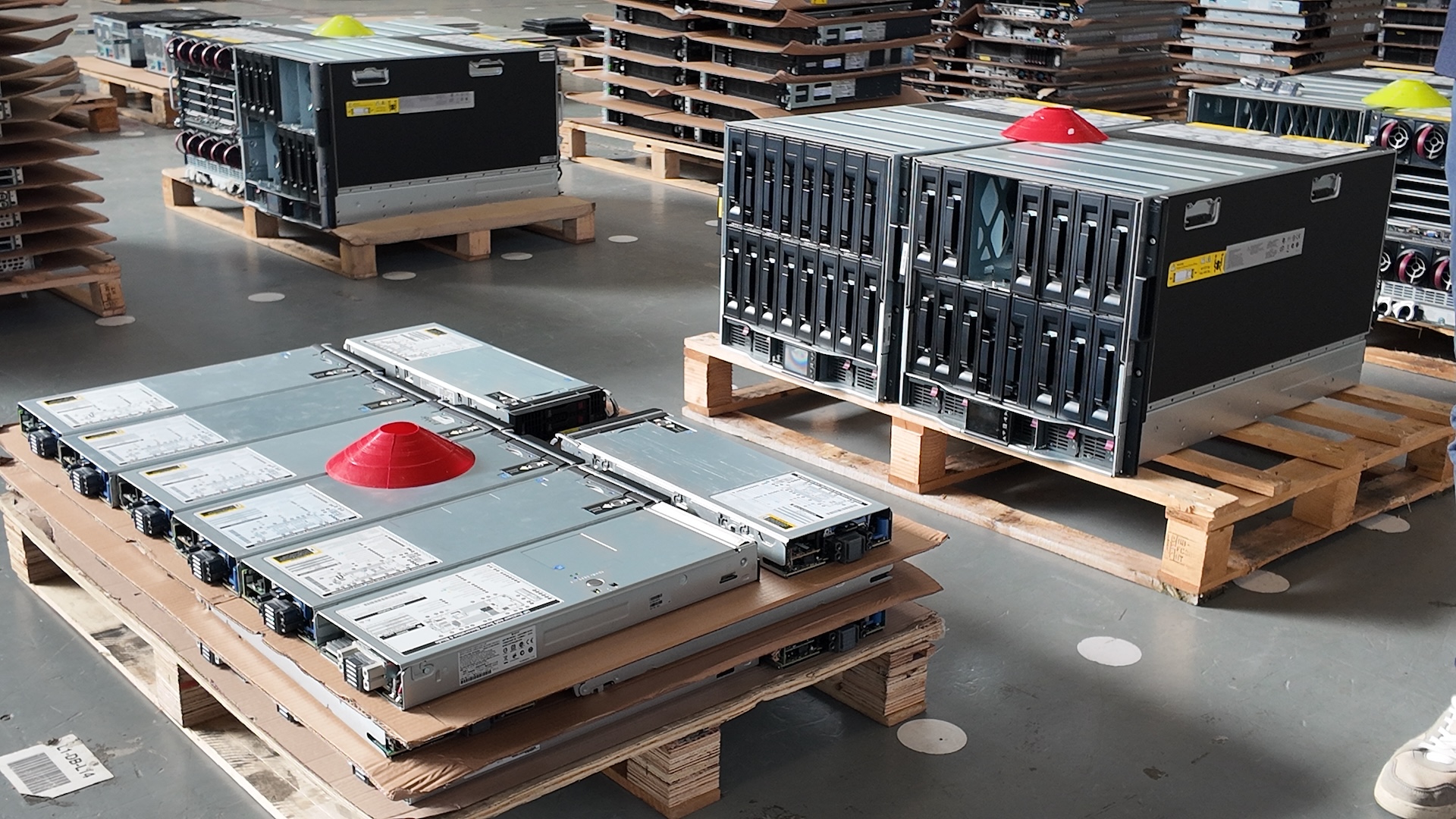
To meet this demand – and to answer EU and UK sovereign requirements – Culloty says HPE is currently building out its initial GPU capacity and testing infrastructure in Boston. In time, it hopes to bring those capabilities to Europe.
“As workloads move between GPUs and CPUs, we expect continued demand with regard to the performance of AI infrastructure and GPUs,” she notes.
Building trust in ‘Certified pre-owned’
Historically, the industry has had a complicated relationship with refurbished technology. While in theory it makes a great case in a circular economy and for cost-saving, operational stigmas persist, with many procurement teams hesitant to risk pre-owned tech for long-term investment, particularly when it comes to data hygiene.
Leading the tour through the facility’s 2.2m perimeter fence, Rafferty highlights that building trust is Erskine's true core product. “What we see today is data security gaining a bit of a competitive advantage,” he says.
Because of the confidential nature of the memory and storage components it works with, the facility takes every precaution to ensure safety and security. The TRC leverages its roots once again, testing all refurbished units using the exact same OEM-grade testing infrastructure used on Compaq’s original manufacturing lines and is ISO 27001 compliant.
This guarantees that pre-owned equipment meets factory performance standards. HPE notes that the facilities are fully licensed, consistent with HMG IA Standard No. 5 sanitization, and subject to regular audits.
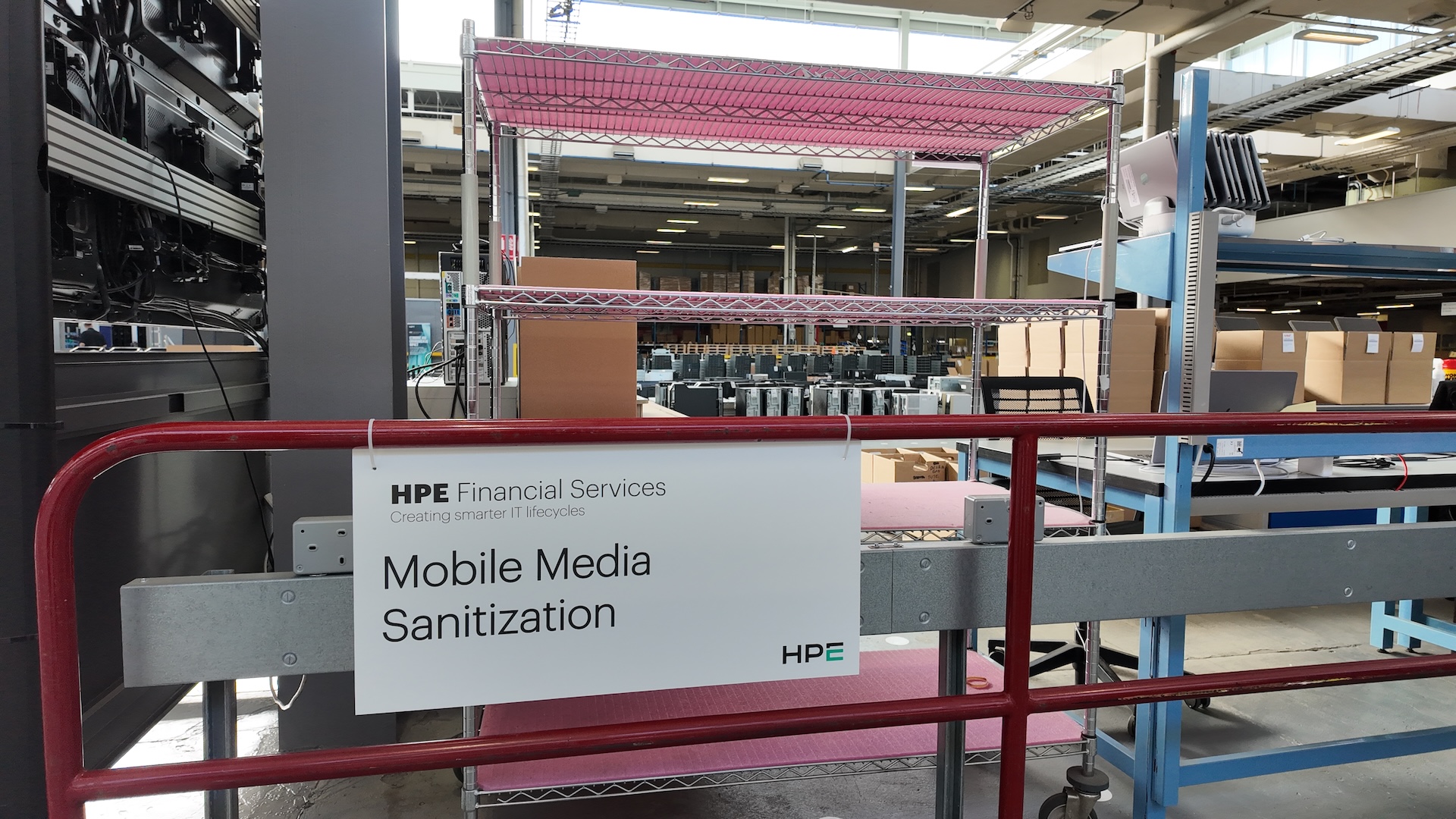
“Everything you see here is appropriately subdivided with extensive cybersecurity because of the money involved in that. Everyone in the operation has been security cleared by the Ministry of Defense. So, we've got high-caliber, vetted staff with huge amounts of experience,” says Rafferty, whose passion for the facility and its workforce is palpable. “This is probably the most flexible staff I've ever had in the last 15 years.”
“In the operations, we have 40 360-degree fisheye cameras in the area. There are infrared alarms and fire alarms across all the fence lines. There are vibration alarms – there's everything,” he explains.
“It's really a top-tier physical security install, really just to showcase to our customers that we are serious about data and willing to use professional equipment to maintain the standard.”
But beyond physical fences, the Erskine facility relies on a rigorous chain of custody to secure the customer's peace of mind. As David Connell, engineering manager at HPE, notes during the tour, the two most top-of-mind questions for customers are “data security, and the second one is data security”.
He explains that the moment a customer's equipment arrives at the dock door, it is registered using barcode scanners, instantly generating a receipt acknowledgment report so the customer has immediate visibility. These assets' serial numbers continue to trace chain of custody, repairs and modification, data sanitation records and the final disposition.
To date, HPE says it has securely sanitized 1.7 exabytes of data – that’s 1.6 million drives overwritten, equivalent to watching around 97 million years of HD movies.
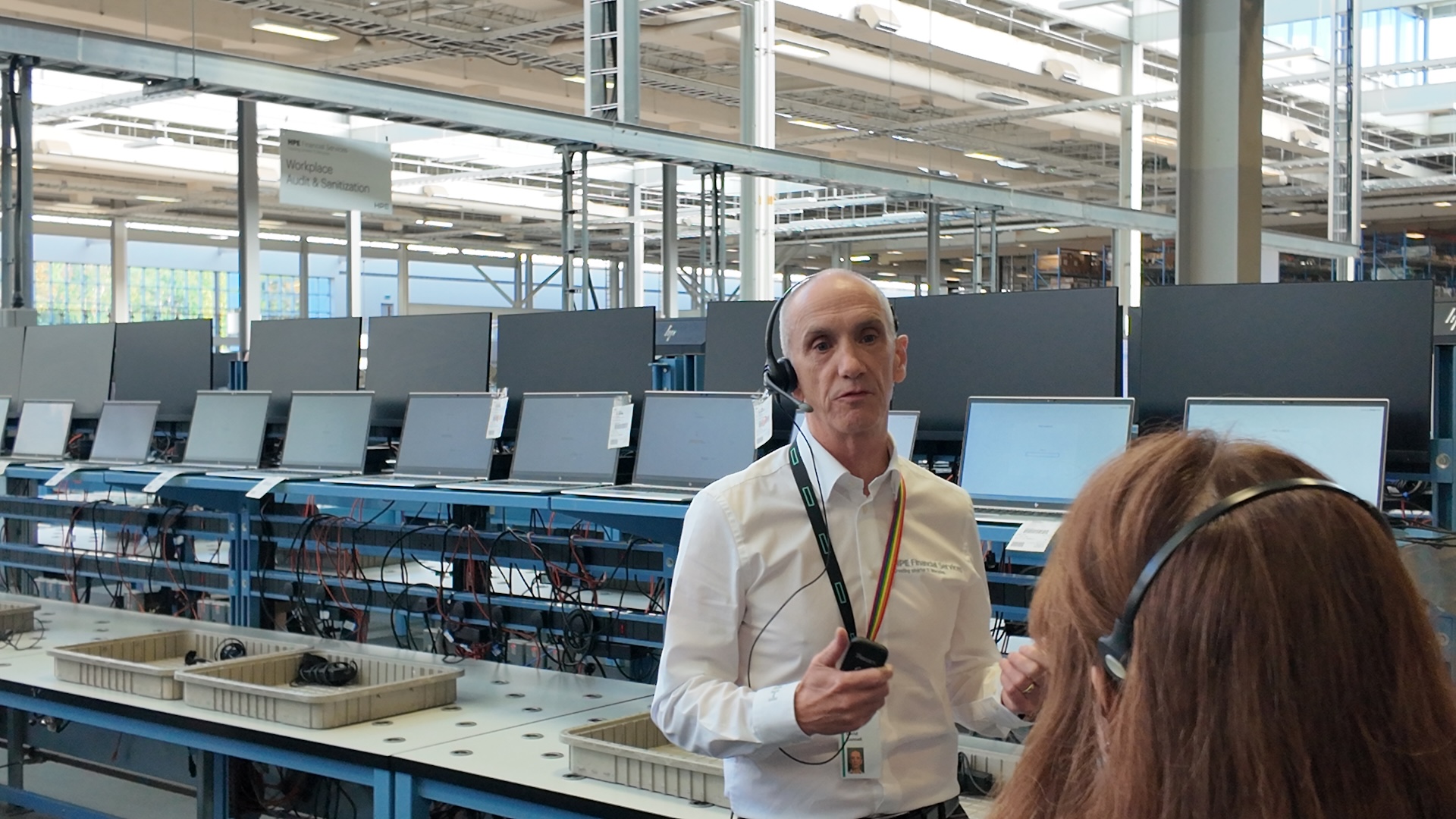
But not every customer is convinced on paper. That’s why Rafferty believes in the power of bringing customers into the operation to see things for themselves. Indeed, the center hosts around 50 customer tours per year.
“Seeing is believing,” he says, adding that every tour they’ve completed has led to a new customer signing a contract with them. “That's where trust comes in… we want to deliver that to customers.”
When customers do sign on, they quickly find that this refurbished technology and flexible financing play a vital role in meeting corporate sustainability targets.
During his presentation, Karim Abu-Dahab, principal technologist, sustainable transformation at HPE, pointed out that “green IT” is often misunderstood by the industry. “Any gain in efficiency that our customers may have almost automatically translates into a gain in sustainability,” he explains.
“A while ago, when it came to IT, after I'm done with a server we just throw it away, right? Now this is not the case anymore,” he says. In fact, HPE estimates that over 8.4 million kg of waste has been kept from landfill – equivalent to the annual e-waste of over 1 million people.
Not only are companies able to support their environmental goals by avoiding landfills, they are also able to recover value from their returned assets, “and then the cycle goes on and on,” Abu-Dahab adds.
“Every year, HPFS hands back about $1 million a day to our customers in order to fund the next innovation,” says Culloty. “We look at both their leased and non-leased environments, and if there's value in that current infrastructure, we return it back to the customer.”
HPE says that through this value return system, $1.25 billion has been infused back into customer budgets between 2020 and 2025. Harris offers the example of Liverpool John Moores University as one customer making the most of this cash injection. He explains the university recently retired old assets and used the resulting money to increase their student hardship loan facilities.
This isn’t the only way HPE is proving refurbished technology can have serious business value. According to Culloty, HPFS’s 90/9 financing model “allows customers to acquire the technology today and pay a very low rate of financing while they deploy that product over a period of time”. With this system, a customer pays nothing in the first 90 days, and then pays one percent for the following nine months.
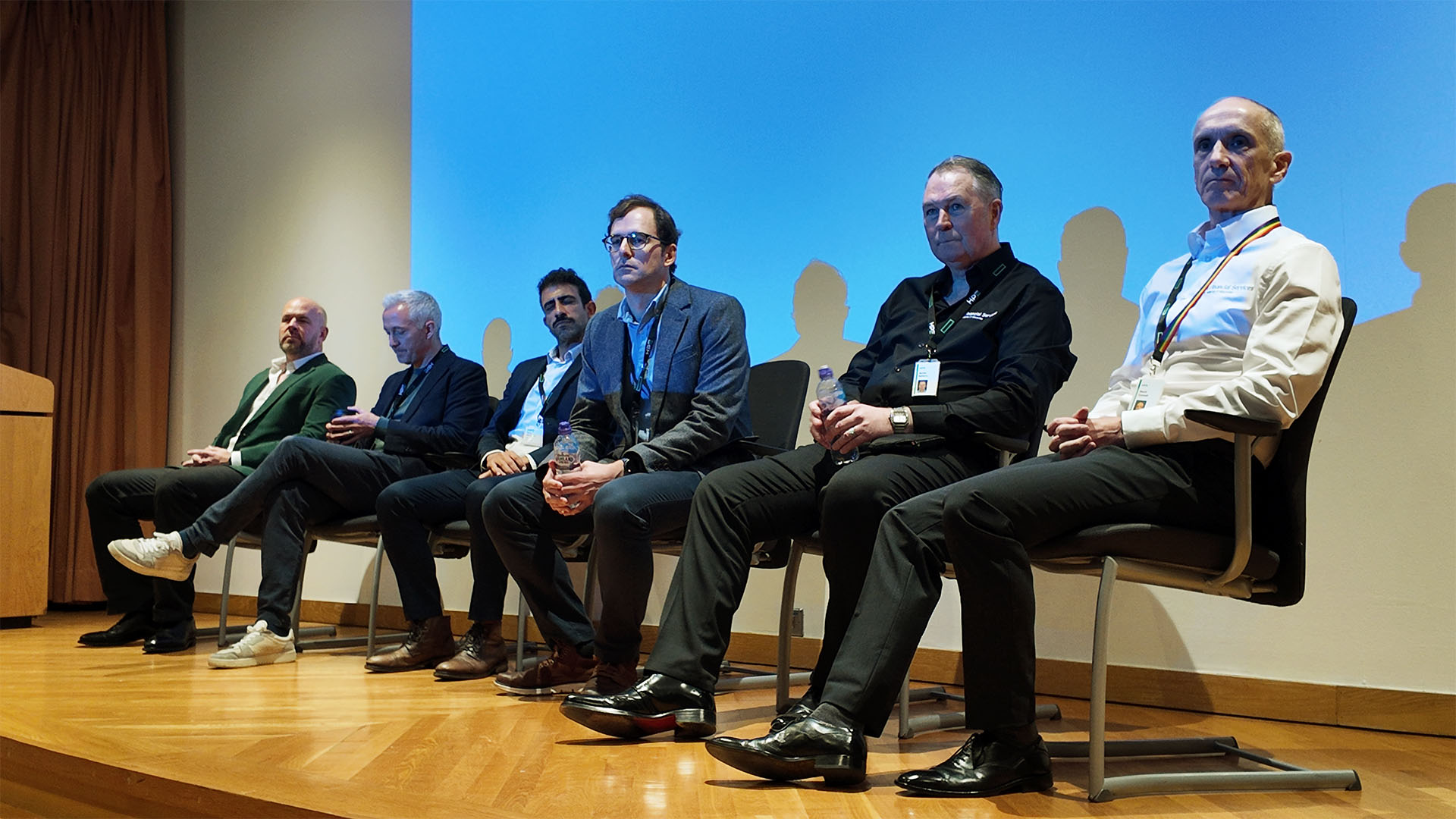
Rob Pickering, CTO at Tottenham Hotspur FC, is one of HPE’s customers who leveraged this flexibility to support the club's goal of reaching net-zero by 2040. Pickering says the club is currently two-thirds of the way through replacing 63 server rooms and eight data centers.
“From a footprint perspective, we're probably about 60% smaller... because the technologies have become more capable, so you get more cycles per rack effectively,” he says.
Rather than sending the old hardware to a landfill, the club is injecting it back into the secondary market to realize its remaining value and fund ongoing innovation. “Simply running equipment that's eight or nine years old is significantly more expensive than running the new equipment,” he adds.
Indeed, HPE estimates over the course of its operations that it has saved over 29M kWh of energy – enough to charge an EV 486,000 times.
“I think there's a world where we pay almost entirely for the new assets from the power savings… and then we can pay back some of that equipment that we're recycling.”
This is not only bringing down costs, but also directly contributing to the club’s sustainability goals. “It's a win-win-win,” he says.
“We want to be innovative, we want to be sustainable, we want to make sure we deliver the best experiences to our fans and HPE helps us do all of those in a way that's financially responsible and environmentally responsible.”