Artificial intelligence in professional services is reaching a turning point, with firms looking beyond using the technology simply to cut costs and save time, to implementing applications that could improve the quality of audit and advisory work.
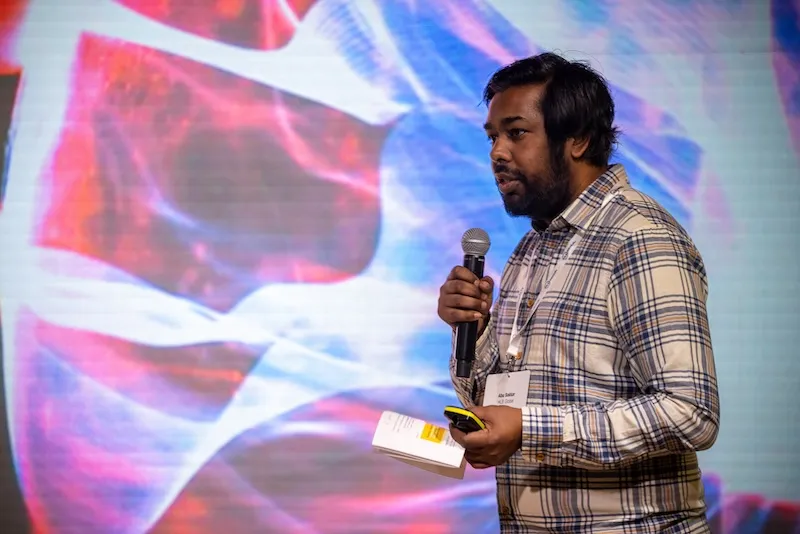
Speaking to UKTN at HLB’s Technology & Innovation Symposium in Barcelona, Abu Bakkar, HLB’s Chief Innovation Officer, responsible for leading and driving the technology and innovation strategy for the HLB network, said the international accounting and advisory network is encouraging its member firms to move from discussing AI to building and testing practical tools that can be deployed across their businesses.
The event brought together HLB member firms for a hands-on programme that included an AI hackathon using no-code platform Lovable and document intelligence technology from DataSnipper, with teams challenged to turn real-world professional services problems into working prototypes.
What made now the right moment for an event like this, and what did you want firms to walk away with?
This is actually our second Technology & Innovation Symposium. Last year we ran it in London, and what we’ve built this year in Barcelona is a real evolution from that first edition. This year’s event was built around a shift in emphasis, less about discussing AI in the abstract, and much more about practical application building. We opened with a keynote from Jordi Mompart, Director of Barça Vision at FC Barcelona, on how AI is reshaping decision making and performance at the club without compromising its footballing identity. It was a brilliant illustration that this isn’t just an accounting firm conversation, it’s happening everywhere. Lovable (our hackathon partner) then set up the afternoon’s hackathon, and from there delegates moved straight into building applications.
Using AI for efficiency is largely where the focus for many professional services firms is today, streamlining operations, cutting costs, saving people time on routine work. That matters.But the opportunity is starting to shift toward using AI to enhance quality, not just making processes faster but smarter, and finding genuinely new ways of doing things. What we wanted from this symposium was to give people the space to test that for themselves, applying these tools to challenges they face in their work, so we can see which ideas have real potential to be taken forward and implemented across the network. More than anything, we wanted firms to walk away feeling that they can innovate, and that they can use AI even though they’re not technologists by trade. They’re domain experts, and that’s exactly the starting point that matters.
What are HLB’s strategic objectives for AI and technology across the network, and how does today’s symposium fit into that bigger plan?
Our core objective is to use cutting-edge technology to support the delivery of high-quality service, and to shift the conversation from internal operations toward external growth opportunities. Alongside that, we’re deliberately cultivating a culture of technology leadership and thought leadership across the professional services sector, not just within individual firms, but as a network-wide identity.
A single day in Barcelona is one visible expression of that, but it’s really the tip of something much bigger. This event exists inside a broader push; content development, speaker curation and facilitation led centrally by HLB International, with member firms hosting and contributing in turn. It’s designed to build a genuine learning culture, enabling participants to get hands-on, share ideas with peers and build real confidence with cutting-edge technology rather than just hearing about it. The symposium brings together the future leaders of our firms, that’s arguably as important as anything built on the day itself.
The afternoon hackathon had firms building real tools aligned to real-world challenges professional service firms are facing, using Lovable’s no-code platform and DataSnipper’s document intelligence tools. What stood out to you in what teams actually built today?
What stood out most was the change in how people approached the problem. There’s real creativity coming out of domain experts when you hand them the right tools – people who know exactly where the friction is in their day-to-day work but wouldn’t normally call themselves ‘builders’. The hackathon was structured deliberately for that. Teams had time to get familiar with the challenge and the tool, then design a workflow before they even started building, so the thinking came first. Lovable lets you prototype rapidly and walk away with something that actually works.
It helped that teams had a concrete reference point before they built anything themselves because HLB Bové Montero (HLB Spain) walked through their own AI roadmap earlier in the afternoon. They talked through an audit tool, an automated tax workflow, and a firm-wide training programme, plus the discipline behind how they test new platforms. Their rule is simple: internal capability comes first, and client-facing work only follows once the firm has proven the idea on itself. That’s exactly the mindset we saw carried into the hackathon. Pairing domain experts with technology tools turns out to be a reliable recipe for tackling almost any challenge you put in front of it.
How representative is what we saw today of how AI experimentation is actually playing out across HLB’s member firms more broadly? Are there examples already ahead of the curve?
Yes. it’s genuinely representative of the shift we’ve seen across the network over the last few years. Firms are more open to change and innovation than they’ve ever been; they’re experimenting with AI more than ever, and our leaders are actively championing that change. This isn’t an isolated exercise in one city for one afternoon – it sits on top of a much wider pattern. We ran a research project with the University of Manchester looking specifically at how AI is being used across HLB member firms, and it gave us a genuinely valuable picture of where adoption is happening and at what scale.
Some of our leading firms are already going beyond automating processes and are building agents that act almost like copilots inside their audit and advisory work. Because it’s becoming easier to build solutions in-house, more firms are building first and buying off-the-shelf second. We’re also seeing more AI-specific job titles appear across the network, roles whose entire purpose is to sit with domain experts and help embed AI properly into how a firm works. Barcelona is one data point in a trend line that’s been climbing steadily across the whole network.
A 90-minute hackathon build is one thing — what’s the realistic path from a prototype like this to something a firm actually uses with clients?
This is genuinely about lowering the barrier to entry for people who aren’t technologists by background. A domain expert doesn’t need to become a developer to build something useful anymore. It’s not just a nice idea confined to a workshop setting, either. We have a commercial relationship with Lovable that gives HLB firms a practical route to take these prototypes into production, and HLB Bové Montero’s (HLB Spain) own roadmap is a useful template for the discipline that path requires – prove it internally, on real work, before you ever put it in front of a client. That’s what stops a hackathon build from staying a novelty and turns it into something a firm can actually stand behind.
Looking beyond Barcelona, what does success look like for HLB’s approach to AI and innovation a year from now?
A few things, really. First, keeping the culture of experimentation alive and making sure the ideas that come out of days like this turn into live applications running in the business. Second, AI being used responsibly across the network as adoption scales. Third, keeping the focus on AI augmenting our people, not replacing them.
And practically, I’d like to see this format keep evolving the way it already has between London and Barcelona; different host firms, different local flavour, but the same underlying ambition – bring the network together, build something real, and take it home. If next year’s symposium shows the same kind of jump we saw from last year to this one, that’s success in itself.
What do you see as the biggest challenges and opportunities for accountancy and advisory firms implementing AI? What are the most useful and widespread applications?
The challenges cluster around three areas for us. On the people side, it’s skillsets – finding people with the right knowledge, the lack of formal training inside firms, and some real fear around change and job displacement that needs to be addressed honestly rather than dismissed.
On the technology side, it’s integration with legacy systems, which isn’t always possible; the sheer pace of change in the underlying models, which makes it genuinely hard to keep up; and the growing complexity of choosing the right tool from an increasingly crowded market.
And then there’s governance. Making sure AI use lines up with internal compliance and regulatory expectations around data, being clear-eyed about which processes are actually ready to be automated, which use cases make sense, and how all of this sits alongside the realities of hourly billing.
The opportunities, though, more than match those challenges. The most widespread and immediately useful applications are still in the efficiency layer, document review, data extraction, drafting first versions of routine correspondence or reports, freeing up time that used to go into low-value manual work. That’s the entry point for most firms, and it’s where the return is fastest and easiest to prove.
Beyond that, we’re seeing real opportunity in AI as an analytical layer on top of audit and advisory work, helping teams spot patterns or anomalies across much larger datasets than a person could realistically review, which sharpens the quality of the advice rather than just the speed of producing it. There’s an opportunity in talent too: firms that can show they’re genuinely building with AI, not just talking about it, have an edge in attracting the next generation of professionals who expect to work this way.