Hollywood’s superhero industrial complex revolves around DC and Marvel, two huge studios that style themselves as “cinematic universes”. DC owns characters like Batman, Superman and Wonder Woman, while Marvel owns Spider-Man, Captain America and X-Men among others. Problems have been plaguing both studios in recent years, but DC more so.
In April 2026, I wrote that DC Studios president James Gunn was one of the key risk factors for the DC cinematic universe. Building an entire universe around his unique creative vision alone, I argued, could pose serious problems for DC.
The news that Gunn is out as the head of DC Studios after four years seems to have confirmed my hunch. While the director will continue working on the Superman sequel and other films and series slated for 2027, he is being replaced by one-time Marvel veteran Jeremy Latcham.
With such a seismic shift in leadership – and following the huge 2026 box-office flops of Supergirl and Clayface (the horror take on the superhero genre) – what can viewers expect from the DC Cinematic Universe in the coming months and years? Based on my ongoing research into superhero franchises, I see several possible scenarios that could shape the Hollywood studio.
1. Different management, same direction
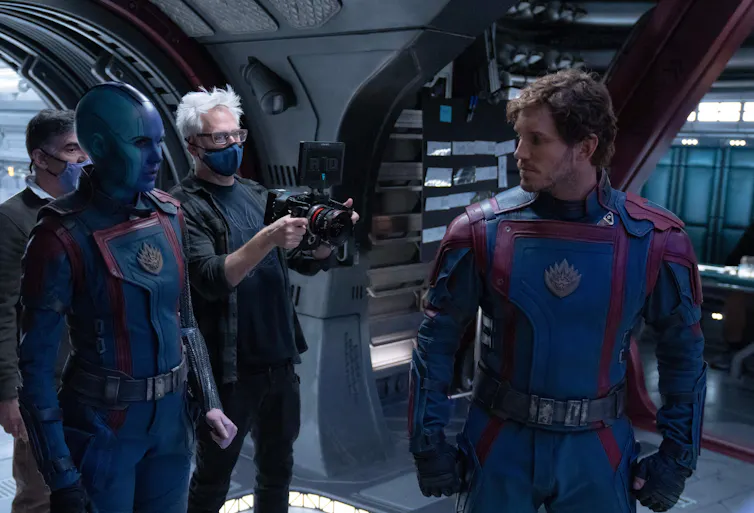
Gunn is chiefly a director, famous for his quirky action pieces littered with witty dialogue and a penchant for 1980s pop music. Marvel’s Guardians of the Galaxy trilogy (2014-2023) is undoubtedly the best entry into this body of work – films he made before taking on the DC job.
His replacement, Jeremy Latcham, is a producer. One of the earliest employees of Marvel Studios, Latcham helped propel the Marvel cinematic universe to global acclaim with production credits on Iron Man (2008) and The Avengers (2012).
To have a producer and not a director in charge brings in a different skill set to the job, including a certain level of operational excellence required to oversee a cinematic universe.
At the same time, a potential improvement in operational excellence does not address the underlying issues currently affecting the DC universe. For instance, no major villain or narrative direction has been introduced in the new DC Cinematic Universe. Operational excellence is no guarantee of creative and commercial success.
2. Tying up loose threads
As a complex narrative that would take years to reach a proper dramatic resolution, the DC cinematic universe is currently in disarray.
While 2025’s Superman took viewers into known territory, the other staples of DC comics like Batman, Wonder Woman, or Aquaman are nowhere to be seen. Indeed, no release dates for films about any of these heroes have been confirmed yet. This comes amid one DC project after another being cancelled.
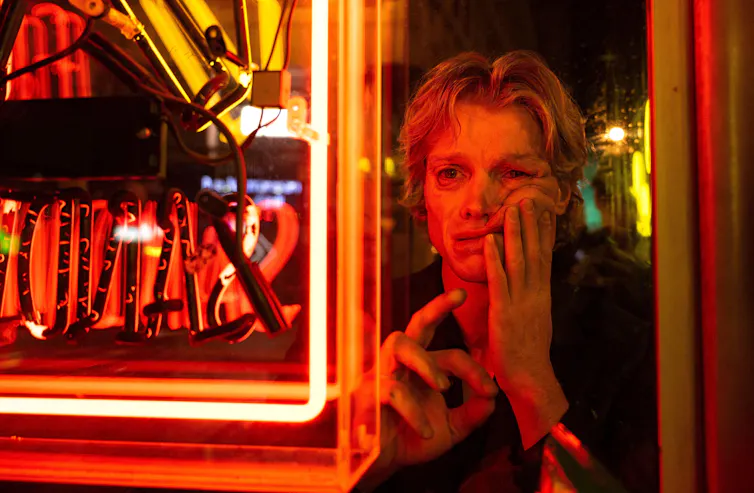
Crucially, the shows and films that have been released do not seem to speak well to one another or the broader DC world. For instance, Clayface, DC’s most recent film makes no direct references to Batman or Superman. It doesn’t even have a post-credits scene – a staple of a good superhero film that sets the scene for what comes next and allows fans to speculate.
In this challenging climate, Latcham’s role may be to clean house and ensure that incoming projects let fans see the DC cinematic universe as a holistic whole worthy of years-long commitment.
Read more: Are we getting tired of superheroes? The evidence might surprise you
It is unlikely that the cancelled projects will be revived. It’s also too late to fix the earlier problems. So Latcham will have to unite and interconnect the projects still on the slate. This seems the most likely scenario.
3. A hard reset
The “nuclear option” for any expansive narrative is a hard reset, where the existing continuity is brushed aside and a new story universe is created. This is not without precedent in comics, and DC’s recent pivot from their original cinematic universe (2013-2023) proves that the move itself is feasible.
This might also make sense because a new creative direction in an otherwise established continuity may cause more problems than it fixes. Famously, in the previous DC cinematic universe (2013-2023), director Joss Whedon replaced Zack Snyder at the helm of 2017’s Justice League in the middle of post-production.
The switch resulted in a tonally inconsistent film that split the fanbase, forcing DC to release a standalone “Snyder Cut” a few years later.
At the same time, a hard reset may cause a PR crisis given how close it is to the previous reset, which only took place last year when Gunn’s Superman was released.
A proper reset also requires careful thinking about what actually happens afterwards. Here, it appears that the decision to oust Gunn is a fresh one, leaving Latcham little time to figure out major reinventions.
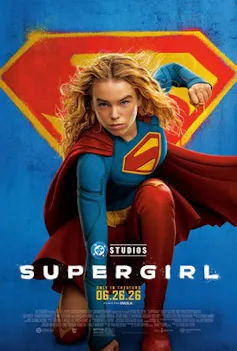
Less than 24 hours after Gunn’s departure, there were already reports that the new management was thinking of rebooting the DC universe again. So while this radical option is an increasing possibility, some serious thinking around long-term planning is required.
Whatever direction DC takes, one thing is clear: replacing Gunn with Latcham is not merely a change in leadership, but potentially a change in how DC thinks about its cinematic universe.