Trump’s EPA can’t unilaterally dismiss SpaceXAI pollution lawsuit, court rules.
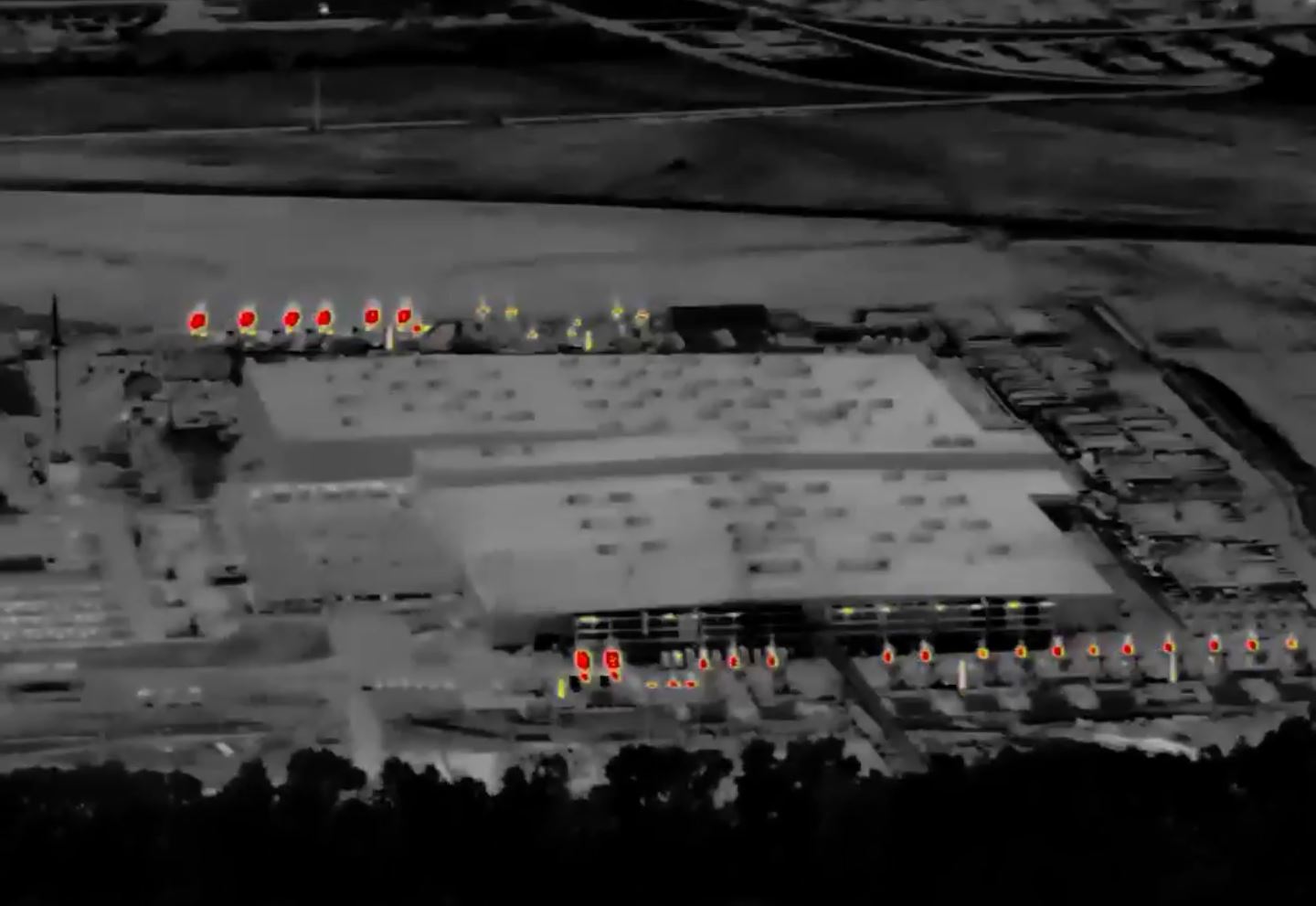
Elon Musk’s SpaceXAI is stuck facing a lawsuit over alleged data center pollution after Donald Trump failed to convince a judge that his Environmental Protection Agency (EPA) has complete control over all Clean Air Act lawsuits and can dismiss any suit at whim.
Soon after unpermitted gas turbines were discovered powering Musk’s giant Colossus data center in Memphis, Tennessee, the NAACP sued. Its lawsuit sought an injunction requiring xAI (which, following a merger, is known now as SpaceXAI) to use the best available pollution control technology when operating the turbines and ordering penalties up to $124,426 per day per violation. Without such remedies, the turbines risked drastically spiking pollution in already vulnerable neighborhoods housing predominantly Black communities nearby, the NAACP argued.
To block the lawsuit, Trump tried to intervene, arguing that the EPA had the power to unilaterally dismiss lawsuits any time the president decides against enforcing the Clean Air Act. According to Trump, it would supposedly “not serve the public interest” if citizens were allowed to seek massive civil penalties to punish polluting AI firms that were trying to get data centers operational as fast as possible to support Trump’s AI Action Plan.
But Trump’s efforts to spare Musk’s firm were halted by a federal judge Tuesday, who ruled that “nothing” in the Clean Air Act (CAA) allows the EPA Administrator to “unilaterally dismiss a citizen suit.”
Such a power grab would seemingly give Trump authority to block any lawsuits alleging data center pollution, US District Judge Debra Brown’s order suggested. Even further, she observed that Trump could have used the authority to defend any interests against CAA lawsuits, not just the AI industry’s.
The NAACP had argued that the CAA’s text is focused “on ensuring air pollution standards are met and people are protected.” It urged the court to recognize that there is “no way to read” a provision granting citizens a right to sue as Trump has. That would “suggest that Congress, having gone out of its way to preserve people’s ability to sue to stop unlawful pollution when the government has not, also implicitly authorized the government to dismiss those very suits at its whim because it would prefer that the unlawful pollution continue,” the NAACP successfully argued.
In a press release, Laura Thoms—an enforcement director for an environmental group called Earthjustice that has partnered with the NAACP to support the lawsuit—accused Trump of seeking “unilateral and unreviewable veto power over citizen suits.”
“The Trump Administration has gone out of its way to shield Elon Musk’s company, [SpaceXAI], from liability and to deny local communities their right to protect themselves against illegal pollution,” Thoms said.
Thoms’ group is monitoring data center fights nationwide, not just SpaceXAI’s Colossus fight. However, Musk’s company’s battle was the first to expose the AI industry’s increasingly common practice of using unpermitted gas turbines to keep data center goals on target. So, Brown’s ruling is likely viewed as a big win for Americans worried Trump might make it impossible to stop the AI industry from polluting communities at a critical moment when data center demand for gas turbines is exploding.
Praising the court for “denying the US’s unprecedented and alarming argument,” Thoms vowed to “continue the fight to hold xAI accountable for the illegal air pollution it has been pumping out around the clock.”
Trump’s deeply flawed argument
Brown slammed the Trump EPA’s reading of the CAA as an “extraordinary position” with no grounding in federal law.
Trump tried to warp a single exception that lets the EPA dismiss a CAA lawsuit when it is either suing to require CAA enforcement or otherwise acting to require compliance.
Neither situation applies in this case, where the Trump administration has made it clear that it has no intention to sue SpaceXAI over the alleged violations. The federal government’s decision to ignore the problem is partly why the citizen lawsuit is necessary, the NAACP argued.
In that scenario where Trump could have dismissed the NAACP’s lawsuit, courts recognize that a citizen lawsuit could clash with government efforts to enforce the CAA or reach agreements with violators. But in the SpaceXAI lawsuit, Trump argued that the government’s right to intervene, which is sometimes used to dismiss lawsuits, was enough to shut down this lawsuit, regardless of the other facts.
Brown pointed out that it made no sense to argue that citizens can’t raise CAA lawsuits that the EPA opposes when the CAA also grants a right to sue the EPA administrator for failing to enforce the CAA.
“Evidently, Congress contemplated that citizen suits may not always align with the EPA’s judgment,” Brown wrote.
Congress even contemplated granting powers close to the authority Trump’s EPA tried to assert in this case, Brown said in a footnote. In 1990, Congress considered amending the CAA so that the EPA could substitute itself and take control of citizen suits over alleged violations. Had that happened, Trump may have been able to step in and drop the lawsuit. However, Congress did not adopt that amendment back in 1990, and Brown suggested that the mere consideration of the amendment favored the NAACP’s reading of the CAA.
“At most, the proposed amendment is evidence that at least some members of the 1990 Congress believed that the citizen suit provision as written does not allow the Administrator to intervene and subsequently terminate a citizen plaintiff’s claim,” Brown wrote.
Judge denies EPA veto power
Brown also acknowledged that the NAACP’s argument that every case Trump tried to use to seize power to veto the lawsuit “arose in a context where a government acted to require abatement of unlawful pollution, not one where the government acted to shield the polluter from liability.”
Ultimately, she agreed that “because the Administrator has not taken any action to enforce the Clean Air Act here, these cases do not support the United States’ position.”
Trump seemed particularly upset that SpaceXAI may face large fines. He argued that “punishing unlawful conduct through civil penalties payable to the Treasury on behalf of the United States is ‘a quintessentially executive power.’” As Trump explained, because the CAA is too vague on this point, “the canon of constitutional avoidance” applies, and courts must err on the side of his administration. Simply dismissing the lawsuit would avoid a constitutional clash, Trump argued.
But once again, Brown disagreed.
The US “fails to identify any ambiguity in the statute’s text to which the Court could and should apply the canon of constitutional avoidance,” Brown wrote. Rejecting Trump’s constitutional “doubts,” she concluded that “constitutional avoidance does not allow the Court to invent a right that does not exist in the statute.”
“That the Clean Air Act’s citizen suit provision allows private parties to enforce the Clean Air Act through civil litigation, therefore, does not make citizen suits an impermissible exercise of the President’s executive power,” Brown wrote. And “it does not follow that all suits seeking civil penalties require the exercise of nondelegable executive power.”
Had Trump succeeded, Americans who are increasingly opposing data centers nationwide may have been widely blocked from seeking fines when pollution can be proven.
Brown said the CAA cannot be interpreted that way, though, since “it can scarcely be doubted that, for a plaintiff who is injured or faces the threat of future injury due to illegal conduct ongoing at the time of suit, a sanction that effectively abates that conduct and prevents its recurrence provides a form of redress. Civil penalties can fit that description.” Critically, “to the extent that they encourage defendants to discontinue current violations and deter them from committing future ones, they afford redress to citizen plaintiffs who are injured or threatened with injury as a consequence of ongoing unlawful conduct,” Brown wrote.
Trump never explained intervention
When Trump took his first stab at blocking the lawsuit this summer, he didn’t cite EPA authority, just his own. He later amended his motion to specify that he was intervening on behalf of the EPA after the NAACP, and the court immediately pointed out fatal flaws in his arguments.
Since then, Brown’s order suggests that Trump’s efforts to kill Musk’s lawsuit stayed messy.
As a prime example, Trump goofed up by prematurely filing his appeal after the district court merely acknowledged at a hearing that it intended to dismiss the government’s motion to intervene to drop the suit. Without waiting for the actual opinion to drop, the US quickly went to an appeals court to reverse an order that did not exist yet, Brown said.
On the day that Brown at last issued her order, it did not say what Trump expected it to say. Parsing the actual order, the appeals court agreed that Trump had filed his appeal prematurely and denied Trump’s request to stay the district court’s litigation.
The appeals court denial came largely because Trump’s appeal was premised on Brown denying the government’s motion to intervene, which she did not. Although Brown denied Trump’s request to dismiss the lawsuit, she is still allowing the government to intervene on other grounds to support SpaceXAI, if that’s its intent.
That point remains somewhat unclear, as Brown noted that the government, in its rush to intervene, never said why it’s intervening—apart from bluntly demanding the suit be dropped. She gave the government until October 23 to either explain its position or stay out of the litigation.