Kalshi can’t avoid gambling law by claiming it doesn’t offer gambling, state AG says.
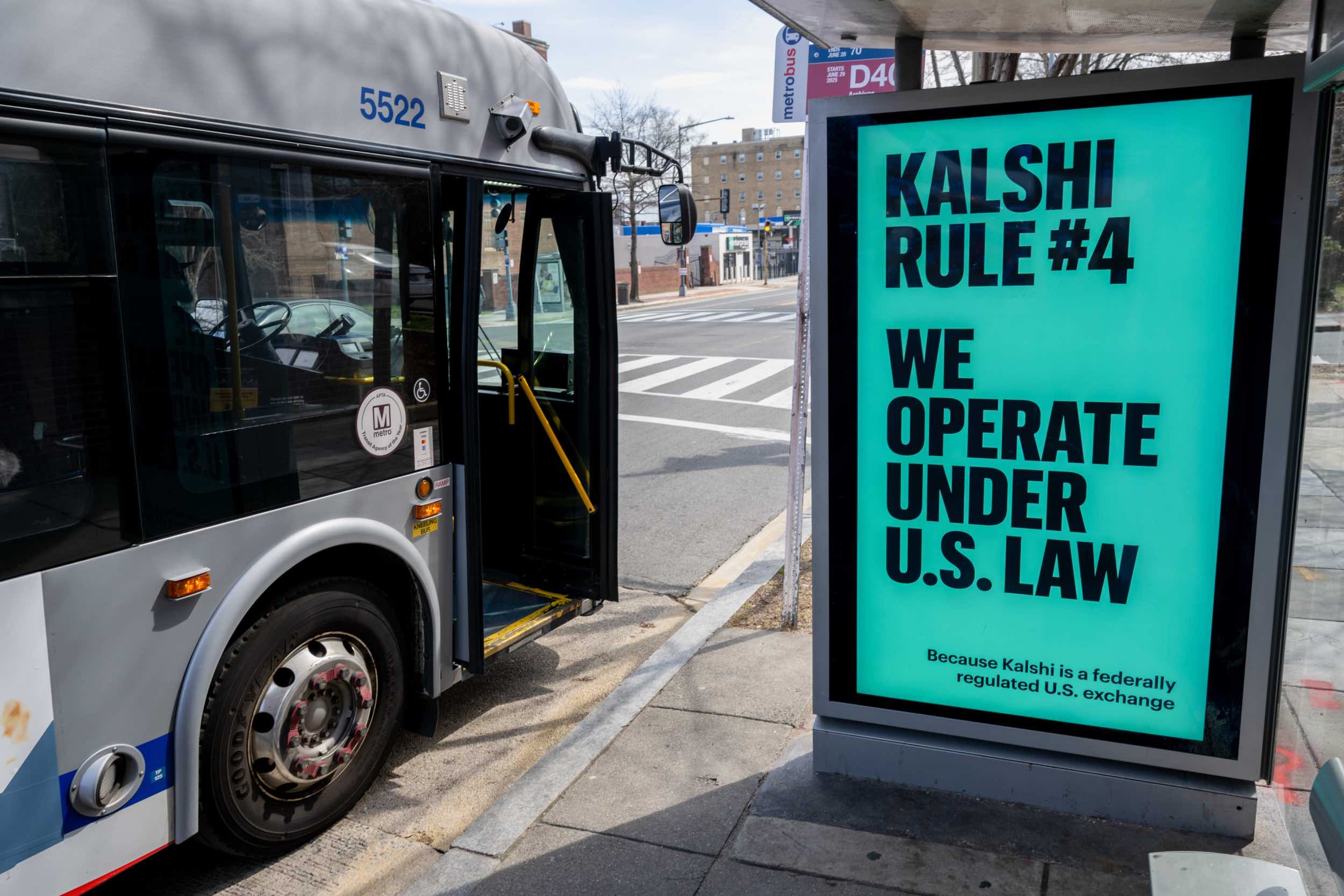
Kalshi is having a bad week in the federal court system. Two circuit appeals courts rejected the prediction market’s latest attempts to block state gambling laws in Connecticut, New York, and Nevada. Kalshi is separately facing a new lawsuit filed by the Arkansas attorney general.
In all cases involving Kalshi and state governments around the US, the main issue is whether state gambling laws apply to prediction markets despite Kalshi’s claim that its platform offers “swaps” that can only be regulated by the US Commodity Futures Exchange (CFTC). The Trump administration is on Kalshi’s side, with Donald Trump Jr. serving as an advisor to Kalshi in exchange for a generous equity deal.
“Kalshi insists that its products are not gambling,” but “Arkansas law is concerned with substance, not semantics,” Arkansas Attorney General Tim Griffin said yesterday when announcing his lawsuit against Kalshi. Kalshi’s prediction market lets customers “wager money on the outcome of just about anything” despite the fact that “gambling on an unregulated platform is squarely prohibited by Arkansas law,” he said.
Griffin’s lawsuit was filed in an Arkansas state court. Kalshi violated state law by offering gambling to people as young as 18 and by failing to pay taxes or comply with other restrictions, Griffin said. Arkansas law permits gambling within certain limits, such as an age minimum of 21 years old for electronic wagering accounts.
“Instead of obtaining the licenses, submitting to the oversight, complying with the restrictions, and paying the taxes required of lawful gambling operators in Arkansas, Kalshi opened its platforms to Arkansas consumers, including individuals as young as 18 years old, encouraged them to wager real money on sporting and entertainment events, and profited from those wagers,” Griffin said.
Kalshi can’t get orders blocking state gambling laws
Arkansas filed its lawsuit about a week after Utah Attorney General Derek Brown lodged criminal charges against Kalshi and its founders for violating Utah’s ban on gambling. A federal judge in Utah previously ruled that Utah can enforce its anti-gambling laws against Kalshi.
Many other states are trying to enforce their gambling laws against Kalshi, and the Supreme Court may ultimately decide whether they are able to do so. We contacted Kalshi today and will update this article if it provides a response.
Kalshi has won some rulings, but Griffin may feel emboldened by the company’s recent court losses. For example, the US Court of Appeals for the Ninth Circuit ruled in August that Nevada can stop the prediction market from allowing sports bets. A panel of three judges unanimously found that sports bets on Kalshi are not swaps and can be regulated under state gambling laws.
Kalshi sought to overturn the judges’ panel ruling by seeking a rehearing in front of the entire Ninth Circuit appeals court, which has 29 judges. None of the judges supported a rehearing.
“The full court has been advised of the petition for rehearing en banc and no judge has requested a vote on whether to rehear the matter en banc,” the court said in a ruling yesterday. “The petition for panel rehearing and the petition for rehearing en banc are denied.”
Lower-court rulings upheld
Kalshi also lost on Tuesday in the Second Circuit, where it was trying to overturn earlier losses to New York and Connecticut. Kalshi sought preliminary injunctions to prevent New York and Connecticut from enforcing their gambling laws, but both requests were rejected by US district court judges.
A plaintiff seeking a preliminary injunction must show that it is likely to succeed on the merits of its case, and judges decided that Kalshi had not done so. The Second Circuit appeals court considered Kalshi’s losses to New York and Connecticut in a single case and upheld the lower-court decisions.
“Appellants have failed to make the required showing that an injunction pending appeal is warranted,” a three-judge panel ruled on Tuesday. The judges also refused to overturn Coinbase’s loss against Connecticut in a case that presented the same legal issues.
Kalshi lost another significant case in September when an appeals court determined that Ohio and Tennessee can enforce their gambling laws against the prediction market. A three-judge panel in the US Court of Appeals for the Sixth Circuit ruled unanimously against Kalshi in that one.
Trump admin on Kalshi’s side
The Trump administration is simultaneously pursuing litigation against states trying to enforce gambling laws against prediction markets. The CFTC, claiming sole authority to regulate platforms like Kalshi and Polymarket, has sued Arizona, Connecticut, Illinois, Kentucky, Minnesota, New Mexico, New York, Rhode Island, Utah, and Wisconsin.
Kalshi’s biggest win came in April in the Third Circuit, where the appeals court ruled that New Jersey cannot regulate sports bets on prediction markets. Judges there decided that wagers on Kalshi meet the federal definition of swaps, defined under US law as contracts in which payment “is dependent on the occurrence, nonoccurrence, or the extent of the occurrence of an event or contingency associated with a potential financial, economic, or commercial consequence.”
“Kalshi’s sports-related event contracts are swaps traded on a CFTC-licensed DCM [designated contract market], so the CFTC has exclusive jurisdiction,” Third Circuit judges wrote.
But other courts that ruled against Kalshi found that at least some kinds of wagers on the prediction market are not swaps and that US law allows regulation of prediction markets by both state and federal governments. New Jersey asked the Supreme Court to reverse its loss in the Third Circuit, and 39 other states and the District of Columbia filed a brief supporting New Jersey’s petition.