Trump son advised Kalshi and got equity while Trump admin helped Kalshi in lawsuits.
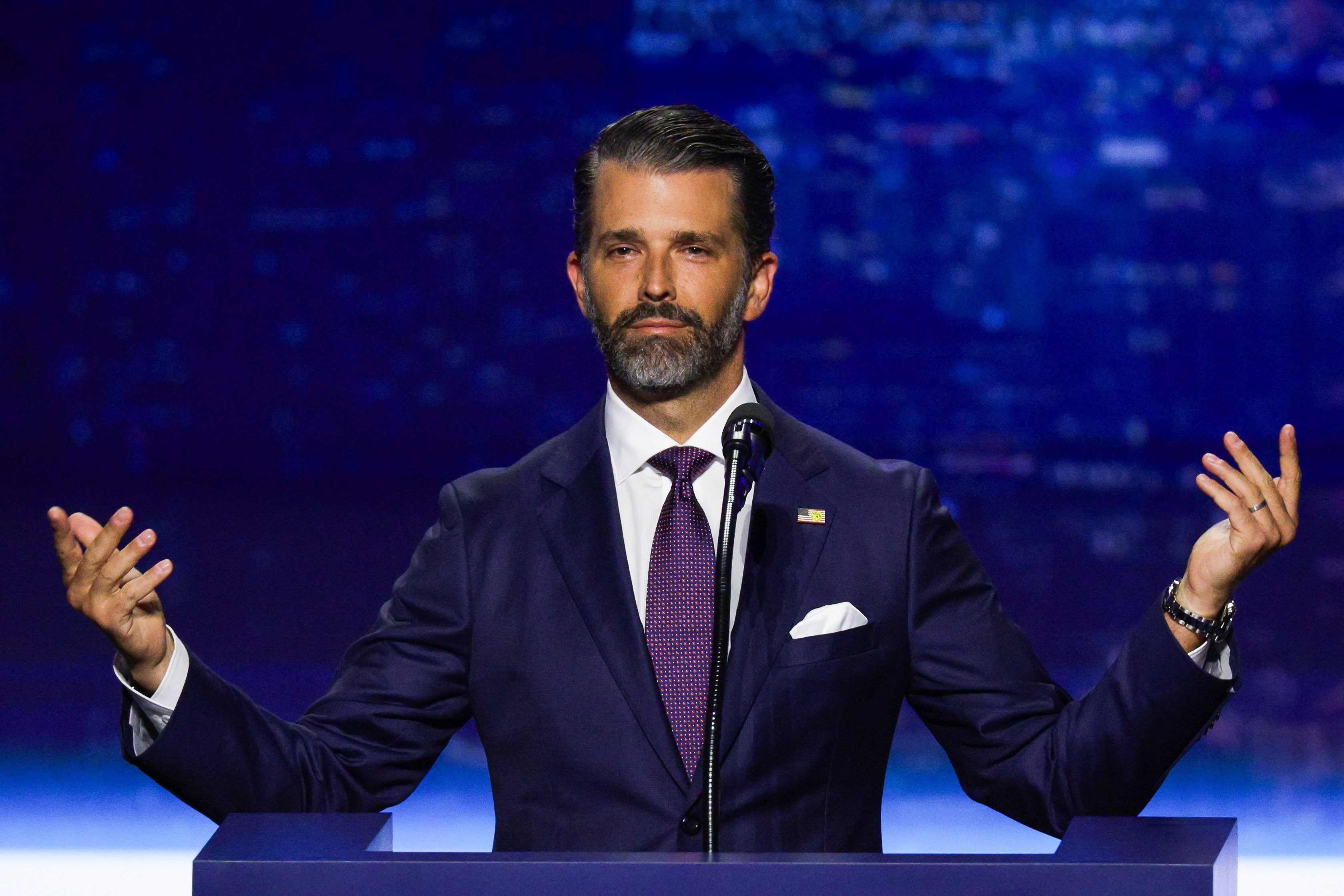
Donald Trump Jr. agreed to end his advisory role with the prediction market Kalshi shortly after Trump Jr.’s venture capital firm made a large investment in its competitor, Polymarket.
“We have mutually agreed to end Don’s advisory role after his firm’s significant investment in a competitor this past summer. We are grateful for his contributions in helping us market Kalshi to more customers,” Kalshi said in a statement provided to Ars and other news outlets this week.
Trump Jr. may still have a financial interest in Kalshi, which has benefited from the Trump administration’s legal and regulatory support for prediction markets. Trump Jr. “was handed about $300,000 worth of equity in Kalshi after joining the prediction market platform as a strategic adviser in early 2025,” the Financial Times reported in June.
“Kalshi’s donation of shares to the US president’s eldest son granted him a stake in the private company when it was valued at under $2 billion, less than a tenth of its $22 billion valuation in a funding round last month,” the Financial Times article said. Kalshi is reportedly in talks for a new funding round that would value it at $65 billion.
Trump Jr. simultaneously has an interest in Polymarket via his role as a partner at 1789 Capital and as an advisor for Polymarket. The venture firm’s investment of $300 million in Polymarket was reported in August 2026, building on a smaller investment it made in Polymarket in August 2025.
“We have been discussing this internally since August when news of 1789’s investment in Polymarket became public,” a Kalshi spokesperson said. “Kalshi reached out to Don Jr. this fall to discuss his firm’s increased investment in our top competitor and his role on its advisory board… both parties understood that advising two competitors in a growing sector was complicating things for both of us.”
Kalshi CEO admitted “optics” weren’t good
The Trump administration has helped prediction markets grow with a permissive regulatory approach taken by the Commodity Futures Exchange Commission (CFTC). The CFTC has also sued 11 states in attempts to block state regulation of prediction markets, and filed briefs supporting Kalshi in its own cases against individual states. Attorneys general in many states accuse Kalshi of running an illegal gambling operation.
Kalshi co-founder and CEO Tarek Mansour told MS Now in an interview last month, “I get asked a lot about Don. I mean, I think that is a fair question… We are facing sort of an optics issue, I think.”
Mansour claimed the relationship was not political, and it began as a way to market Kalshi at a time when it was much smaller and the public didn’t know much about prediction markets. “The key thing is we did it before the election. It is not a political decision, and it still isn’t. That’s the key thing,” Mansour said.
In fact, Kalshi named Trump Jr. as a strategic advisor over two months after the November 2024 presidential election. Mansour announced Trump Jr.’s appointment as strategic advisor in a post on January 13, 2025, a week before Donald Trump’s second inauguration.
Trump Jr. announced his position with Kalshi in an X post on the same day and indicated that he decided to help Kalshi on Election Day.
“On Election night at Mar-a-Lago, while biased outlets called the race a coin toss, my family and close friends used the prediction market Kalshi to know we won hours ahead of the fake news media,” Trump Jr. wrote at the time. “I immediately knew I had to contribute to their mission. Today, I am proud to announce that I am joining Kalshi as a strategic advisor.”
CEO claims no “regulatory involvement” for Trump Jr.
After Mansour’s claim that “we did it before the election,” MS Now Host Stephanie Ruhle said, “But you didn’t say after, you know what, maybe this is a conflict of interest.”
Mansour’s response suggested that Trump Jr. did not help Kalshi on regulatory matters. “We never had any policy regulatory involvement,” he said. “It was always about getting the word out about prediction markets, how they work, looking at the forecasts, making sure people understand that it’s not a poll; it’s actually probabilities. That was always our focus… we have advisors from both sides of the aisle. We have Democratic advisors; we have Republican advisors.”
Mansour said Kalshi sought to work with anyone “that can help us get the message out… anyone who likes prediction markets, and Don does like prediction markets, we wanted to work with, because we wanted to get the word out about what prediction markets are. Don has 10 million followers on Twitter… he has a huge following, and he likes the idea of going direct, tweeting.”
The Kalshi spokesperson said this week that “Don Jr. has been a great marketing consultant for us—he helped us ‘go direct’ early on, which was a big part of our growth online.”
Kalshi has also paid former US Senator Blanche Lincoln (D-Ark.) for lobbying services since 2024. As a Democratic senator in 2010, Lincoln helped write the law that now regulates prediction markets and said the US should not let event contracts be used for sports gambling. As a Kalshi lobbyist, she supports event contracts based on the results of sporting contests and opposes state regulation of prediction markets.
Trump Media and Technology Group last year announced plans for a “Truth Predict” prediction market for Truth Social, but appears to have scaled back the plan.
Trump family “entangled with the success of this industry”
US Senators Elizabeth Warren (D-Mass.) and Jeff Merkley (D-Ore.) raised concerns about Trump Jr.’s investments in Kalshi and Polymarket in a November 9 letter to White House Counsel Will Scharf. Warren and Merkley said a recent incident of insider trading, in which a Trump teleprompter aide made over $100,000 betting on what Trump would say in prepared remarks on Kalshi’s mention markets, “should have been a wake-up call to the entire administration to enforce stronger ethics policies.”
The CFTC settled charges against the teleprompter operator, Gabriel Perez, ordering him to disgorge profits of $107,539.02 and pay a civil monetary penalty of $65,000. Warren and Merkley said that despite the incident, “the White House continues to take no meaningful action to address these problems, all while the President and his family stand to personally profit from their participation in prediction markets.”
The senators’ letter continued:
For example, the President’s family has become even more entangled with the success of this industry. Earlier this year, Donald Trump Jr. became an advisor to Polymarket shortly before his venture capital firm made a $300 million investment in the company. Trump Jr. likewise received an equity stake in Kalshi worth $300,000 in January 2025 and also joined the company as an advisor. Just last year, Trump Media announced it was developing its own prediction market called “Truth Predict” in partnership with Crypto.com.
The CFTC reportedly is close to bringing charges against Kalshi alleging that it didn’t properly notify the agency about dozens of new event contracts, but the CFTC is also continuing its fight against states trying to regulate prediction markets more strictly. The federal agency yesterday filed a lawsuit attempting to stop Arkansas from regulating Kalshi, after suing 10 other states in similar cases.
Kalshi has lost a number of cases in which US appeals courts and district courts refused to block state gambling laws. Louisiana Attorney General Liz Murrill yesterday touted a state court victory in which a judge issued a “temporary restraining order prohibiting Kalshi, Polymarket, Coinbase, Robinhood, and other ‘prediction market’ operators from continuing their unlicensed and unregulated illegal gambling in Louisiana.”
“It’s not complicated: if you aren’t a licensed gaming operator, you aren’t legal,” Murrill wrote. “Illegal gambling is a crime and is subject to jail time and significant penalties. Judges all over the country have overwhelmingly called this activity what it is: gambling. Kalshi’s and the other operators’ attempts to make up new words to evade state gambling laws, regulators, and taxes are not fooling anyone.”
Kalshi argues that all its wagers—even ones that are functionally identical to sports bets—are event contracts, a type of swap that it says can only be regulated under federal law. Kalshi’s most significant win came against New Jersey in the US Court of Appeals for the Third Circuit, but the state is asking the Supreme Court to overturn the ruling. If the Supreme Court takes up the case, the Trump administration can be expected to weigh in on Kalshi’s behalf.