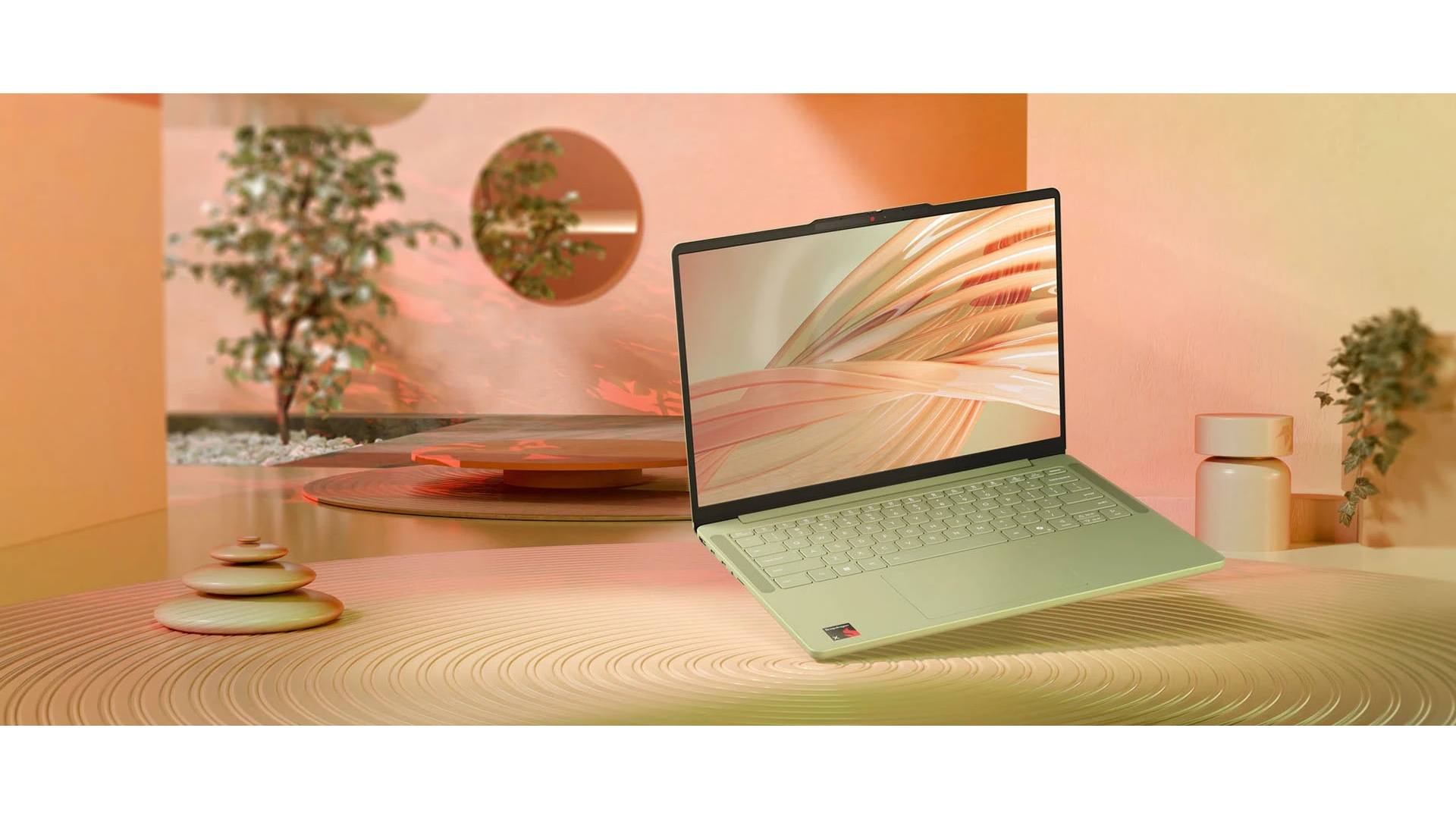
- Lenovo's Snapdragon-based IdeaPad Vibe 14Q8X12 is on sale a month before its promised date
- US pricing starts at $799.99 for 8GB and 256GB, $100 above both Lenovo's IFA promise and the base MacBook Neo
- It beats the Neo on ports, keyboard backlighting, colors, and RAM ceiling, but its memory is soldered, and its 400-nit, 45% NTSC screen trails Apple's device
Lenovo's IdeaPad Vibe 14Q8X12, the Snapdragon-powered version of the colorful laptop it pitched at IFA 2026 as an answer to Apple's MacBook Neo, is now on sale through Lenovo's own web stores in the US, UK, Canada, the Eurozone, Malaysia and Singapore.
That puts it just barely a month ahead of the November 2026 window Lenovo gave in Berlin in September, as Notebookcheck reports, with pre-orders due to start shipping on October 28.
The early arrival is the good news, but its price tag is the catch. Lenovo announced the Vibe range at $699.99, matching the MacBook Neo to the dollar. In the US, the Snapdragon model actually starts at $799.99 on Lenovo's product page, with 8GB of RAM and a 256GB SSD.
A month early, a hundred dollars late?
The timing of Lenovo's original price matters. Apple launched the MacBook Neo at $599 in March, then raised it to $699 on June 25 as the AI-driven memory shortage pushed up component costs. Apple said it had "never seen a component price increase this much, this quickly." Lenovo's $699.99 arrived in September as a deliberate match for the post-hike Neo.
At $799.99, the Vibe now costs about $100 more than the base Neo, and the same as Apple's 512GB model with Touch ID, which doubles the storage Lenovo gives US buyers. Lenovo has not directly addressed the increase. TechRadar saw this coming when the Vibe leaked in August, betting that even after Apple's price rise, "the Lenovo machine's going to be a fair bit more expensive." In the US, at least, our assessment has come full circle.
The math is kinder elsewhere, often helped along by Apple's pricing: Lenovo sells the laptop for £780 in the UK, and outside North America it ships with 512GB of storage by default. That is £81 more than the base Neo's post-hike £699, but with twice the storage. Canadian buyers pay CAD 1,099, Eurozone pricing runs from €849 to €999 depending on the country, and Malaysia and Singapore are priced at MYR 4,939 and SGD 1,379, respectively. Some Eurozone markets are limited to 8GB of RAM, and a few UK configurations currently quote four to five weeks for delivery.
For perspective, the AMD-powered 14-inch Vibe, which arrived on schedule this month, starts at $899 in the US with a Ryzen AI 7 445, the same 8GB of RAM, and 256 GB of storage. The Snapdragon model is the cheapest route into a 14-inch Vibe in the US; it's just not as cheap as was originally promised.
Upgradeability was a big part of Lenovo's pitch, and the AMD Vibe models deliver it with two SO-DIMM slots, while the Snapdragon model does not. This makes it a no-upgrades-possible offering right now, so the base 8GB is more of a commitment than it looks.
Stacking against the incumbent: Apple's MacBook Neo
The Vibe ekes out some impressive wins; it beats the Neo in connectivity: the Vibe has two USB-C ports, two USB-A ports, HDMI, a microSD reader, and a headphone jack.
The Neo makes do with two USB-C ports, one of them running at USB 2 speeds, plus a headphone jack, an allocation we have previously criticized as the bare minimum. Lenovo also offers an optional backlit keyboard, something the Neo lacks entirely, and a memory ceiling of 24GB against the Neo's fixed 8GB.
The Vibe comes in seven Pantone-developed shades, from Spicy Gold to Zen Green, with color-matched keycap sets sold separately.
"Color is the most personal design decision people make when choosing a device," Lenovo's Brian Leonard said at launch, that "versatility is certainly the big advantage of the IdeaPad Vibe" over Apple's machine.
Build quality is less clear-cut, however: metal configurations use aluminum for the lid and base, but the palm rest, keyboard deck and trackpad are plastic, and cheaper builds swap in a plastic bottom cover. , which handled it at IFA, judged that the Vibe out-specs the Neo but added, "I don't think it feels as premium, and that's unfortunate." The Vibe also uses a fan, whereas the Neo is silent, opting for a fanless design.
The Neo set a high bar; we previously called it "the best budget laptop you can buy right now" at launch, though the $100 increase has since made it harder to recommend to everyone, with a potential argument that can be made that multiple budget Windows 11 laptops are now often the better buy.
At $799.99 in the US, it is a tough sell as a MacBook Neo alternative. For the same money, you get a Neo with 512GB of storage and Touch ID, a sharper, brighter screen, and Apple's arguably more mature software running on its own silicon. The Vibe's case rests on ports, a backlit keyboard, a slightly larger screen, and the option of 16GB or 24GB of RAM, which the Neo cannot offer at any price. If those matter to you, it is a reasonable Windows laptop with a lot of personality. It is just not the $699 Neo-matcher Lenovo announced earlier.

Rahim Amir is a UAE-based tech writer who enjoys building PCs as much as he enjoys writing about them. He has been professionally writing about PC hardware since 2023, focusing on buyer’s guides, hardware reviews, and sponsored content and features related to tech.
Having built hundreds of gaming PCs and being an avid gamer in his spare time, Rahim tends to have stronger opinions about hardware than most. This is particularly on display when he gets his way with powerful, but minimalistic RGB builds even as Small Form Factor (SFF) PCs come a close second.