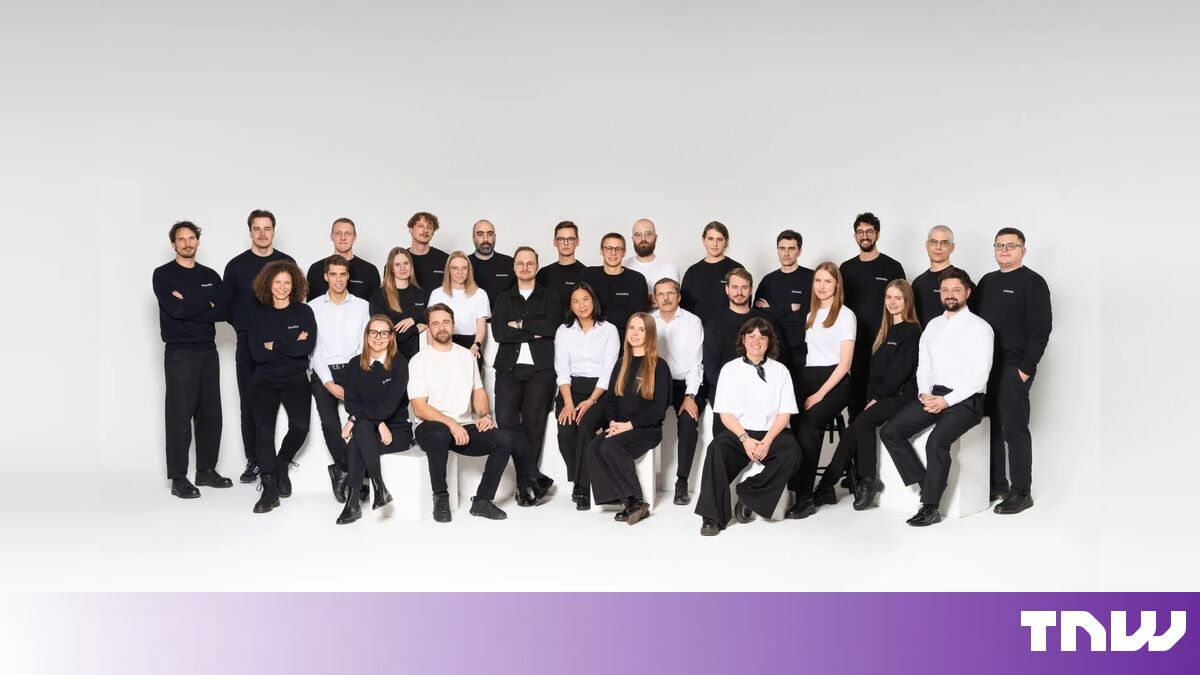
Vilnius-based Biomatter has raised $18M in a Series A round to scale its AI enzyme design platform. Astanor led the oversubscribed round. Existing investors UVC Partners, Inventure and Metaplanet also took part.
The company announced the round in a press release distributed by Business Wire on 12 November. It did not disclose a valuation. TNW has not independently verified the customer and product figures below, which come from Biomatter.
Enzymes built for one reaction
Enzymes are proteins that speed up chemical reactions. Industry uses them to make drugs, food ingredients and lab reagents. Most commercial enzymes start as natural ones that scientists then tweak, a process that can take a long time.
Biomatter says it designs enzymes from the chemistry of the target reaction instead. Its platform pairs computational models with lab testing. Each programme adds new experimental data to the dataset the models learn from.
“Our goal is to make a custom enzyme as easy to order as a catalog product, including for reactions that don’t have one today,” said Laurynas Karpus, CEO and co-founder of Biomatter, in the release.
Biomatter started in 2018. Its founders published their approach in Nature Machine Intelligence in 2021.
Customers and products
Biomatter says it has delivered more than 50 custom enzymes to more than 25 enterprise customers. It names AstraZeneca, BASF and Sanofi among them. About half of its customers are in the US.
One product is already on the market. Thermo Fisher Scientific sells the Invitrogen SuperScript V Reverse Transcriptase, an enzyme used in molecular biology. Biomatter worked with Thermo Fisher to improve its resistance to oxidation.
The company also says it designed a methylase for mRNA vaccine manufacturing that works without S-adenosylmethionine (SAM), a molecule such enzymes normally need.
A lab in Vilnius and a push into the US
Biomatter will use the money to open a 2,000 m² design and testing facility in Vilnius in 2027. The company says the site should cut its design cycles from weeks to days. It also plans to grow its commercial team and its presence in the US.
The round adds to a run of European bets on engineered biology. Generare raised money to map microbial chemistry in April, and Epoch Biodesign is testing nylon recycling enzymes at scale. AI labs are moving in too: Anthropic says Claude helped find a new enzyme system.
For Lithuania, it is another sizeable round after web data firm Oxylabs raised $130M in July. The test for Biomatter is whether the Vilnius lab can deliver days, not weeks, for a customer base that is half American.