“I do think there’s a lot of merit to combining the companies.”
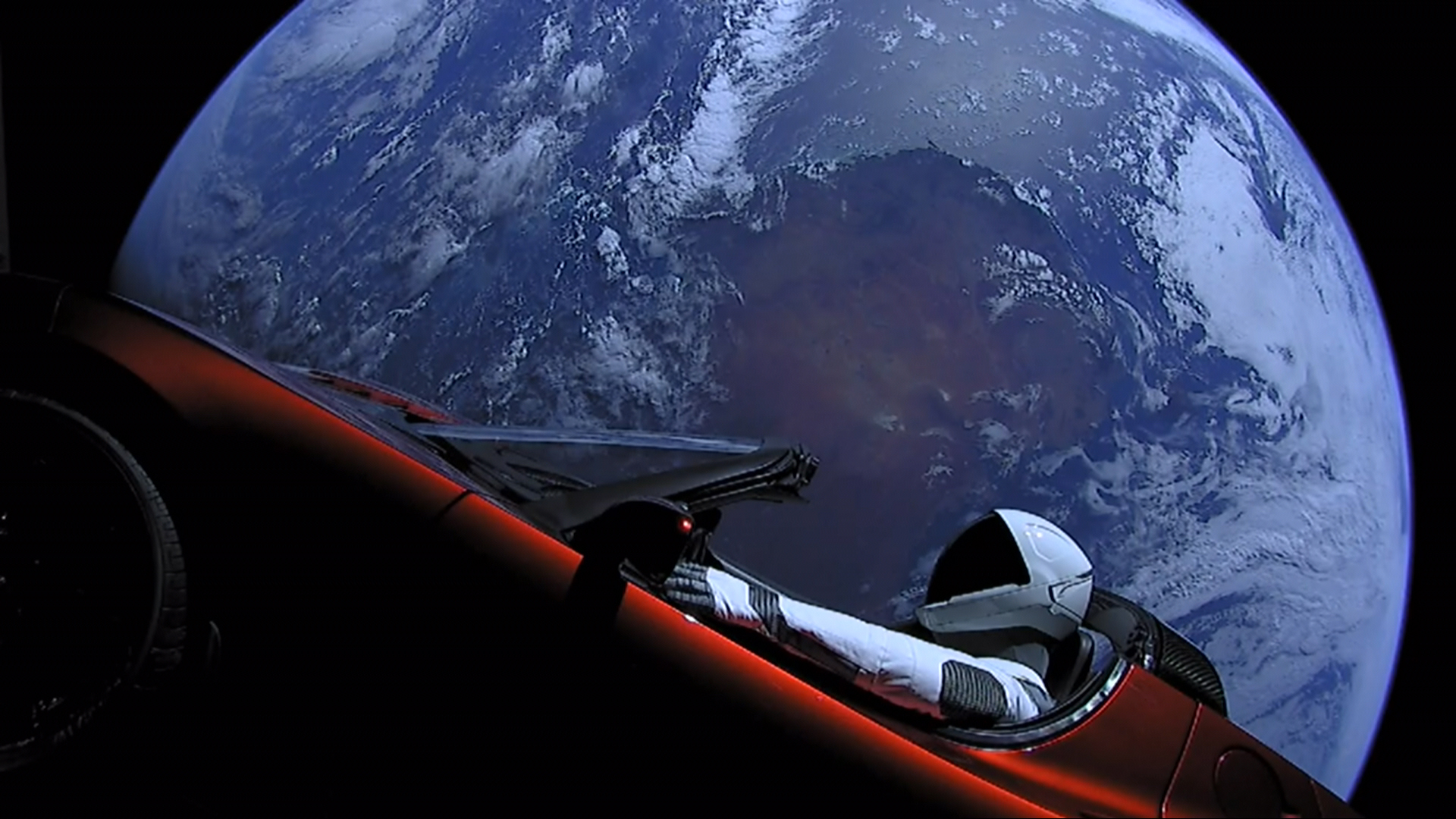
Elon Musk said Tuesday that he would like to see the consolidation of his business empire by formally merging his two largest companies, SpaceX and Tesla.
“Do I think it would be a good idea? Yes,” Musk said of a potential merger. He was speaking during a question-and-answer period as part of SpaceX’s third-quarter earnings call. Musk said, ultimately, it not his decision. “But at the end of the day the shareholders have to be supportive of this.”
Musk’s talk of a merger comes after a busy year in which SpaceX already acquired Musk’s artificial intelligence firm, xAI, in February. In June, SpaceX went public with the largest initial public offering on record.
At the request of shareholders of each company, Musk said both SpaceX and Tesla have formed special committees of “independent directors” to discuss the idea of a merger. “I’m a conflicted party; I can’t actually be in the discussions of the special committees,” Musk said. Those committees have not reached an agreement on the terms of a merger transaction, Musk said.
“Obviously there’s no guarantee that they will, but I do think there’s a lot of merit to combining the companies as we are pretty much in the superintelligence singularity,” Musk said. “There’s lots to be gained from cooperating on developing superintelligence software, chip design, the Terafab, obviously robotics, mass to orbit with the Starmind constellation, and connectivity. So I think it would be a good idea.”
What is even happening here?
It might seem like madness to merge a space business with an automotive business, but both SpaceX and Tesla are rapidly transitioning from their original markets into artificial intelligence.
In its public financial documents, SpaceX has indicated that the bulk of its future revenues are likely to come from orbital data centers that will provide the backbone of computing for artificial intelligence on Earth. Tesla sees its future in sophisticated self-driving cars, robots, and industrial hardware. Both enterprises would require advanced computer chips and energy. SpaceX could provide the connectivity for Tesla hardware.
Beyond these synergies, the merger would be attractive to Musk—already the world’s richest person and first trillionaire—because it would give him more control.
Based on SpaceX documents filed as part of its IPO, Musk holds more than 82 percent of voting power in SpaceX. In contrast, Musk holds about 20 percent of voting power at Tesla. By merging SpaceX with Tesla, where he has less direct control, Musk could acquire a majority of shares eligible for voting at the combined company. This would depend on the nature of valuations and negotiated agreements at the time of the merger. At the time of Musk’s announcement, SpaceX and Tesla had market valuations of about $2 trillion and $1.5 trillion, respectively.
Scrutiny ahead
The merger will face scrutiny by US regulators. Additionally, Morningstar reported earlier this year that valuation disagreements will likely be significant, especially among Tesla shareholders. Musk said Tuesday that 50 percent of all Tesla shareholders, not just those with voting shares, would have to approve of the merger. Such a vote would only come if the two special committees reached an agreement on merger terms.
Some political leaders, already wary of Musk’s outsized power and influence and willingness to use both freely, may also object to a single Musk mega-corporation.
It’s not definitive what the merger’s implications are for SpaceX’s traditional space business and its longtime goal of settling Mars, or for Tesla’s one-time aspirations to bring electric vehicles to the global market. Most probably, however, a combined Musk-universe would focus on artificial intelligence and the computing power needed to back those ambitions. Less Mars and cars—and more silicon.