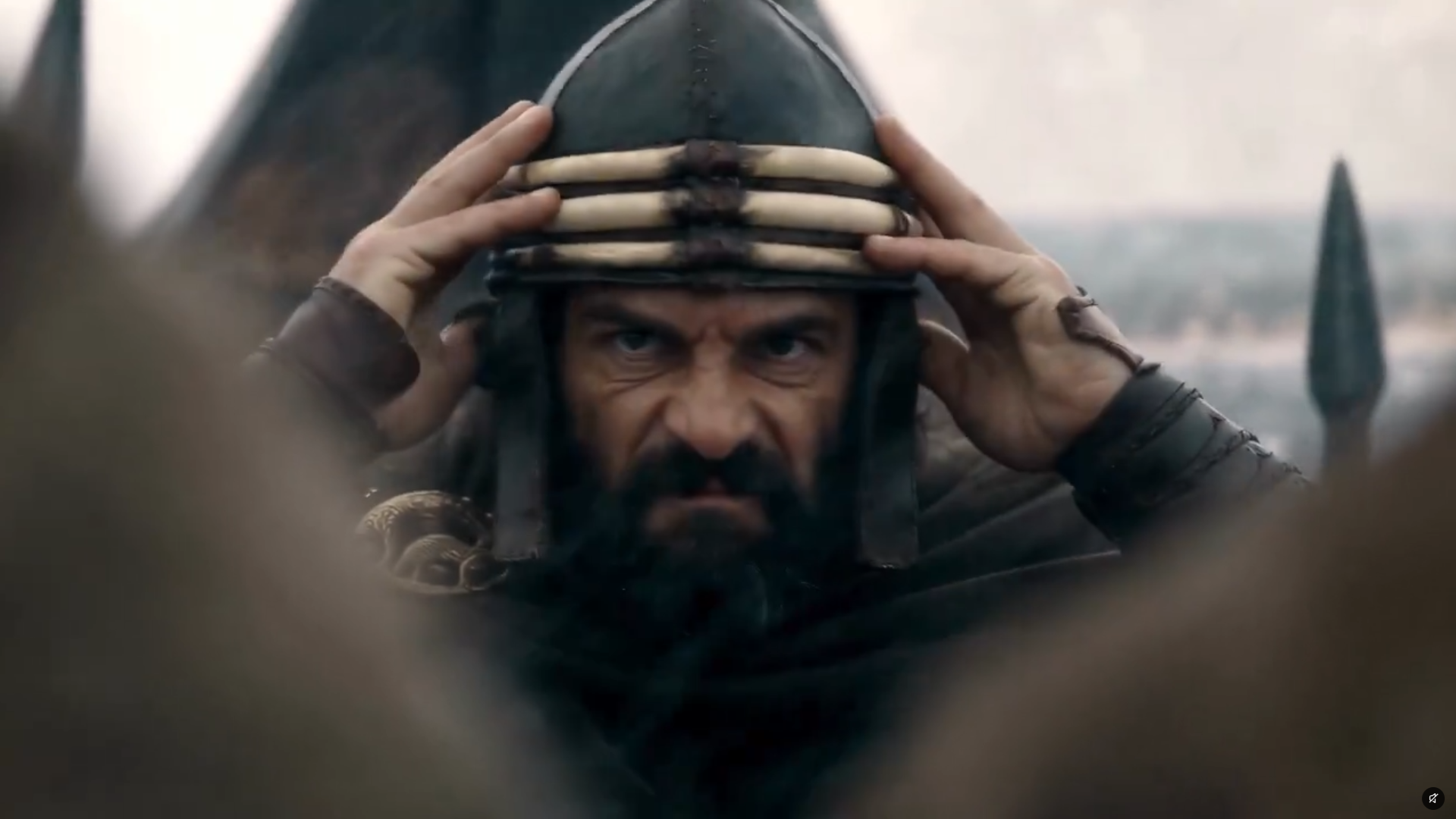
Elon Musk wanted to prove that AI could make a better adaptation of Homer's than Christopher Nolan. After months of complaining about Nolan's film, he promised that Grok Imagine would produce a more faithful version of the ancient Greek epic. The first seven minutes have debuted, effectively arguing for leaving filmmaking to people who actually care about telling stories, not pursuing petty bigotries.
The project also has an ugly origin that's worth remembering. Musk's objections to Nolan's adaptation centered heavily on its casting, particularly Black actress Lupita Nyong'o and transgender actor Elliot Page. He accused Nolan of sacrificing historical accuracy to satisfy Hollywood sensibilities, and described the director's casting choices in explicitly racist terms. Ignoring the historical and textual incoherence of his arguments, he promised a full-length AI-generated alternative.
The seven-minute opening episode, produced using Grok Imagine in collaboration with Wonder Studios and director Dev Walker, showcases an astonishing marriage of bad ideas and poor execution, backed by bottomless resources and prejudice.
7 minutes wandering the uncanny valley
The one positive comment that doesn't ring false is that some of the landscapes look nice and atmospheric, and some shots of ships sailing across the water could pass for outdated video game cutscenes that would have been impressive at the time. Otherwise, Grok's resembles a collection of trailer clips from someone who watched half-asleep 20 years ago and has looked at the covers of some Greek mythology books.
The dead-eyed Odysseus sounds like someone trying to pretend they are angry the whole time, even when he's talking to the family he supposedly loves. The events that should establish the story's emotional foundation have less emotional depth than a pop-up book.
A human filmmaker and actor could turn Odysseus's departure from his wife Penelope into a moment that haunts the whole film. Grok simply presents the event and moves along, apparently satisfied that the relevant plot point has been included.
That's what makes the comparison with Nolan so embarrassing. Whatever anyone thinks of his films, Nolan understands that cinema depends on controlling an audience's attention and emotions. His movies are constructed around deliberate creative decisions, with performances and editing working together to give individual moments significance. Grok can imitate the appearance of those moments, but the imitation has little weight.
Grok's not winning an Oscar
AI keeps getting better, and future models may eliminate many of the visual inconsistencies that currently make AI footage so recognizable. But technical improvement alone won't give a machine the personal experiences or creative intentions that shape meaningful art.
A great film reflects the choices of people who have something they want to communicate. Directors bring their own understanding of the world to a story, while actors draw on human experience to make fictional emotions believable. The best scenes work because somebody understands exactly what the audience should feel and has carefully shaped the experience to produce that response.
That said, a talented human director might use AI to enhance or augment a scene that would otherwise be impossible on a limited budget. But any artistic value would come from the filmmaker's decisions.
But regardless of the intent of Wonder Studios and its team, Grok's Odyssey looks terrible, and the blatant bigotry fueling Musk's comments would make for queasy viewing even if it were somehow comparable to Nolan's epic. Producing seven dull minutes for a fraction of a Hollywood budget doesn't automatically make those minutes an artistic achievement.
and all of its best interpretations have endured partly for what they impart about the very human experience of longing for our loved ones. Those emotions have kept audiences interested for thousands of years. Grok has managed to reproduce some of the costumes and scenery while making the characters feel almost entirely irrelevant.
The AI has become a seven-minute reminder of why human creativity matters. For all the technology involved, the most revealing thing about this experiment is how little artistic imagination it contains.


Eric Hal Schwartz is a freelance writer for TechRadar with more than 15 years of experience covering the intersection of the world and technology. For the last five years, he served as head writer for Voicebot.ai and was on the leading edge of reporting on generative AI and large language models. He's since become an expert on the products of generative AI models, such as OpenAI’s ChatGPT, Anthropic’s Claude, Google Gemini, and every other synthetic media tool. His experience runs the gamut of media, including print, digital, broadcast, and live events. Now, he's continuing to tell the stories people want and need to hear about the rapidly evolving AI space and its impact on their lives. Eric is based in New York City.