Wildfires, heatwaves and unprecedented weather events are no longer breaking news, they’re our permanent backdrop. Yet again this year, we are facing the grave effects of a climate system that we have destabilized. We are watching the world experience painful and deadly climate extremes, while our collective response remains ‘too little, too late’.
Although we’re in need of hope, hope is never a plan. As a global society and as citizens of Earth, we urgently need a tangible shift in how our legal systems treat the living world. Recognizing the universal rights of nature is the answer.
Why environmental treaties must also address mental health
With this in mind, at this year’s United Nations General Assembly in New York City in September, the president of Panama, José Raúl Mulino, proposed recognizing the universal rights of nature. Panama’s goal is to usher in a UN Universal Declaration of the Rights of Nature, to recognize nature as a direct ‘subject of rights’ with intrinsic value.
Towards that end, on 24 September, Panama, Tonga and Vanuatu launched the For Nature Coalition of States, with Palau and Dominica among the founding members. This is designed to build dialogue around and support for a proposed intergovernmental process to recognize the rights of nature.
The coalition is an informal, decentralized and voluntary platform on which interested member states can exchange experiences, share perspectives and contribute to ongoing discussion and diplomatic engagement on the proposed UN Universal Declaration of the Rights of Nature, as part of the UN’s Harmony with Nature process. It complements, not replaces, formal intergovernmental negotiations in the General Assembly.
Joining the coalition doesn’t imply endorsement of any specific legal framework, negotiated outcome, future instrument or text. Rather, it means taking a seat at the table to navigate our shared future on Earth.
A fresh legal approach
As catastrophic climate and ecological change continues to unfold around us, it is clear that existing legal frameworks are not built to stop it, nor to adequately protect nature. Most of the current environmental laws simply put a report, a timeline or a price in the way of the continued, long-term destruction of nature. It is unacceptable that even corporations have legal rights, but nature largely has none.
Why I made a river my co-author
The current system has recognized rights for corporations but not for the natural ecosystems that sustain lives and make this blue planet habitable. It’s time for a paradigm shift to give nature an equal standing in legal systems.
Recognizing the rights of nature would work in a different way from conventional environmental law. Such rights are indispensable because they directly change how society interacts with nature. In the future, the needs of healthy natural ecosystems must be considered in all decision-making processes. This will be one of the most effective ways to hold corporations, governments and people legally accountable to — and financially responsible for — their impact on nature.
The rights-of-nature framework that we are proposing includes many ecocentric principles that help with its implementation. These include in dubio pro natura, meaning when in doubt, side with nature; and the prevention principle, which states that in light of uncertainty, rather than inaction, preventive measures should be used. Uncertainty cannot be used as an excuse to do nothing.
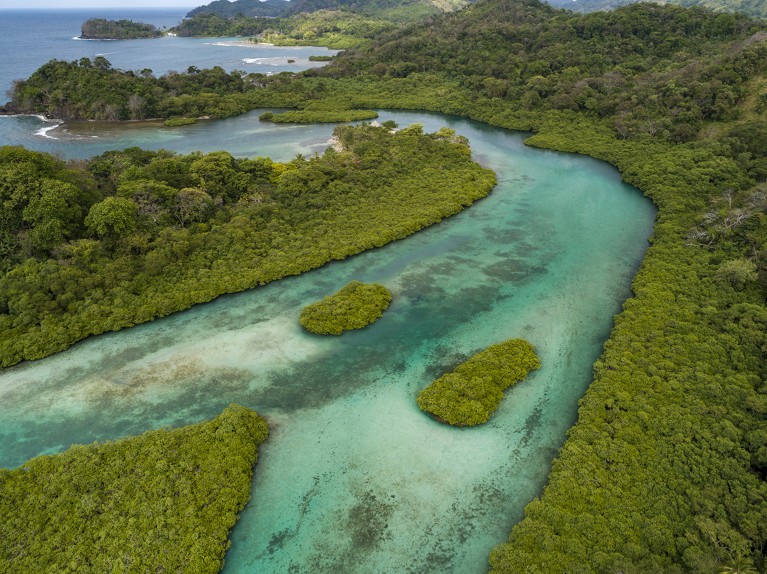
So far, 30 countries have already recognized the rights of nature in some capacity, with around 300 examples of rights-of-nature legislation, including for the state of Oaxaca, Mexico; Te Awa Tupua in New Zealand; and for the lagoon Mar Menor in Spain. Panama has become the fourth country in the world to recognize the rights of nature on a national level, after Ecuador (in 2008), Bolivia (in 2010) and Uganda (in 2019).
On 10 April, we (J.C.N. and C.V.) signed a joint Memorandum of Understanding to commit to launching an international collaborative process to negotiate a UN Universal Declaration of the Rights of Nature over the next few years.
We are an unlikely pair, one public-sector leader and one scientist, characterized by different first languages, home countries and generations. What unites us, however, is our belief in giving nature a voice in decision-making and protecting its most basic rights to exist.
Support life on Earth
Enjoying our latest content?
Log in or create an account to continue
- Access the most recent journalism from Nature's award-winning team
- Explore the latest features & opinion covering groundbreaking research