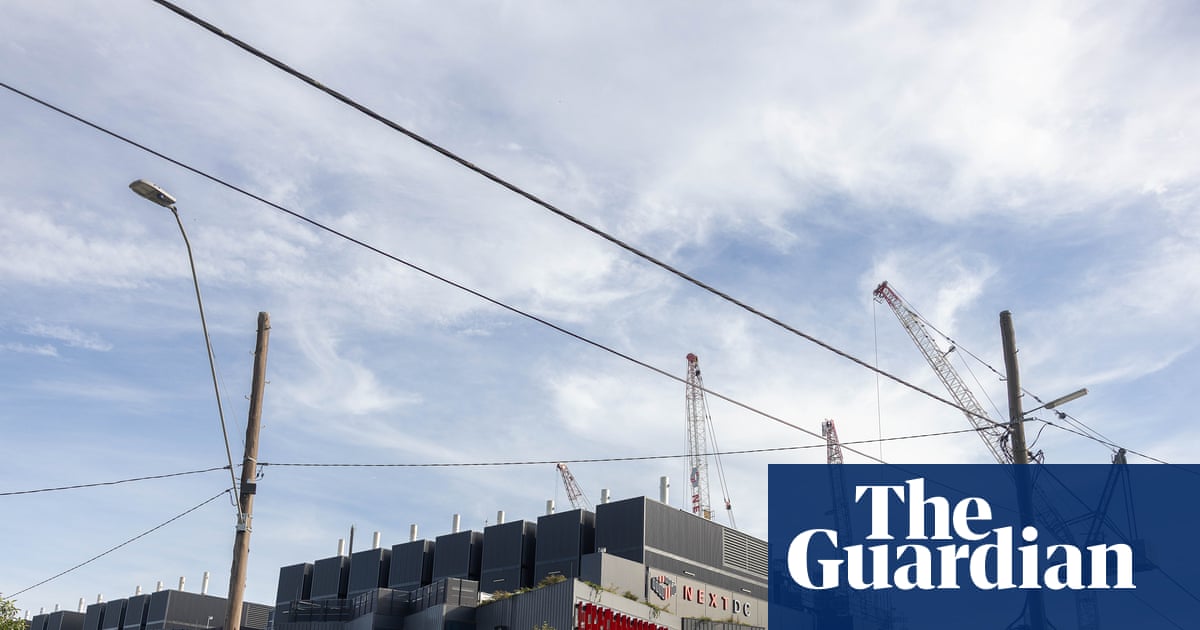
Community backlash to a datacentre expansion in inner Melbourne that resulted in NextDC's share price dropping 40% will change the way the company engages with communities – and it says it will no longer pursue new developments near homes.
The company held its first annual general meeting since it was forced to delay the controversial expansion of its M3 site in West Footscray after power provider Jemena paused construction of new 22-metre power poles amid community protest.
The share price has since recovered to over $9 a share, but not before rival Goodman Group bought a nearly 10% stake in the business.
Shareholders revolted against the company at the AGM, issuing a second strike against executive pay, but the resulting motion on whether to spill the board was resoundingly defeated on Friday.
The chief executive, Craig Scroggie, said it was his "hardest AGM" in 15 years, and that he ultimately took responsibility for "delivery, power, planning, approvals, construction and community support".
"At M3, we needed to work more closely with our power and construction partners, and with the community," he said. "We are now doing that."
Scroggie said the community deserved to be heard earlier than they had been during the Jemena construction works, and it was NextDC's job to do that.
"M3 has certainly changed how we plan, build and operate alongside our neighbours," he said.
"For more than 15 years we've built datacentres right across the country, and what earned trust then is not enough now. Community expectations have moved in the age of artificial intelligence and we must move with them."
In addition to a new community consultative committee, including a standing forum for residents and local stakeholders, NextDC has said it will have a dedicated project website and contact channels with defined response times for complaints and inquiries.
NextDC's chair, Doug Flynn, also revealed that the company would change where it builds in future.
"Given community sensitivities, we do not intend to pursue new development opportunities that are near residential properties," Flynn said.
"The pushback against datacentres is very different right now than it was … six or so years ago."
Flynn said that the M3 site in inner Melbourne had been an industrial site for 100 years, and had petrochemical works on it before NextDC built the datacentre.
After the blowback to taller power poles led to a delayed expansion, Flynn said the Jemena employee overseeing community engagement left the business.
"They recognise that they were just charging ahead regardless of community," he said. "And they got a bloody nose.
"Unfortunately, we did as well."
A spokesperson for Jemena declined to comment, but pointed to a September statement announcing its general manager for electricity networks had decided to step down.