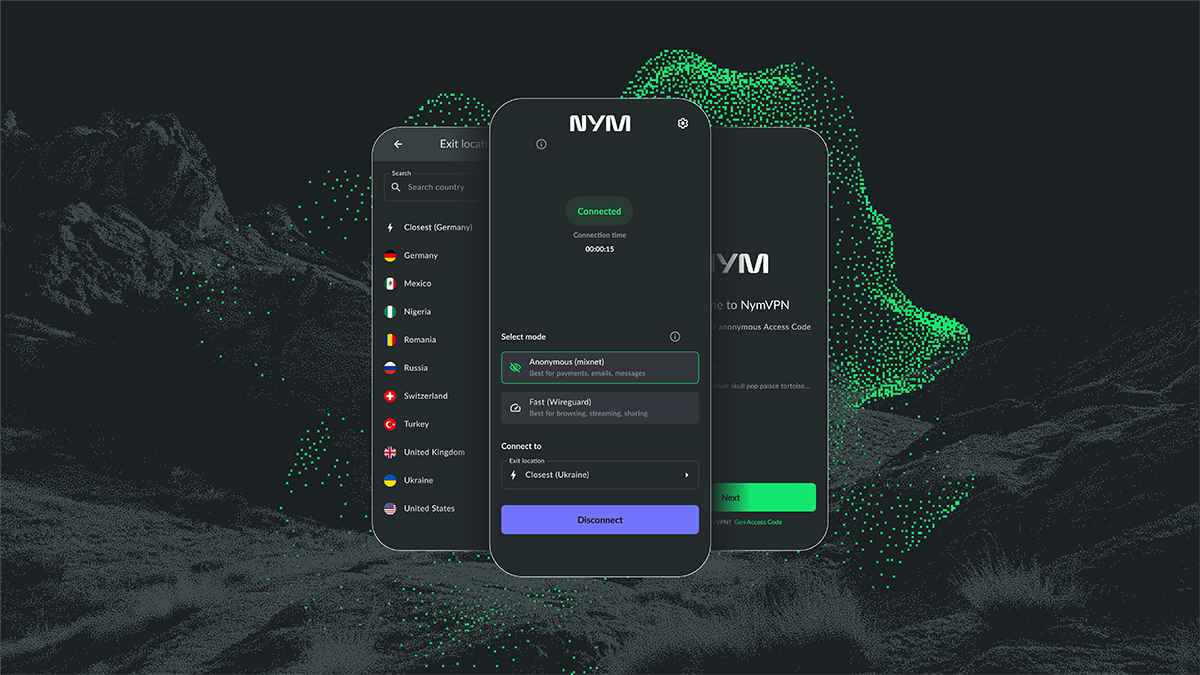
- Anti-censorship bridges auto-reroute connections on restrictive networks
- Battery life, connection reliability, account controls all see meaningful gains
- QR code support, auto-connect, lockdown mode are up for future releases
NymVPN has rolled out version 2026.15 of its apps, headlined by anti-censorship bridges designed to keep the service working on networks that try to block VPNs outright.
The update lands on every platform — Android/F-Droid (v2026.15.1), iOS, macOS, Windows and Linux —and is the decentralized VPN’s latest push to stay usable wherever VPNs are unwelcome.
From hotel and airport Wi-Fi to corporate networks, university campuses, and even national firewalls, VPN connections are routinely blocked at the ports and protocols they depend on.
This is the kind of problem the best VPN services are increasingly looking to solve. Version 2026.15 of NymVPN takes that problem head-on, arriving alongside longer battery life, tighter account controls, and a series of reliability fixes.
Getting past the block
Leading the latest update is the new feature.
Bridges are adaptive tools: when a network attempts to shut down VPN traffic, an ordinary connection simply fails, leaving users stranded on an unprotected network — or offline entirely. The new bridges detect the interference and re-establish the connection through whatever route is still open.
Users have three options:
- : the sensible default for most, starts every connection on standard WireGuard and switches to a bridge if the network interferes;
- : forces a bridged connection everywhere, useful for anyone traveling through heavily censored regions;
- : disables bridging entirely.
Nym pitches the feature for restrictive Wi-Fi and censored countries — anywhere a straightforward VPN connection stands little chance of surviving.

: — A weekly newsletter on digital privacy and online surveillance.
Leave No Trace investigates the companies and governments putting our digital freedom at risk — and the people fighting back.
📩 Subscribe now to get every edition delivered to your inbox every Friday, launching this September.
Practical improvements across the board
Away from censorship work, the update tackles the annoyance of . NymVPN previously checked a user’s remaining fair usage data over the network frequently enough to take a noticeable toll on battery life. That accounting now happens locally, and the app checks in with the network sparingly as a result.
Connection statuses have been made more trustworthy as well. Notifications now track the true state of the tunnel, putting an end to false "connected" flashes and ensuring error states persist only for as long as the underlying problem does.
On Android, the server list now opens instantly from cache and updates quietly in the background, while SOCKS5 connections shut down cleanly on disconnect.
Account control gets a boost as well.
Android users can now delete their account from inside the app. Across all platforms, the pre-expiry notice for plans and free passes has been upgraded from a passive heads-up to a full dialog with the option to renew directly.
The momentum continues
The pace of development is telling. Earlier this year, version 2026.12 brought one-click connections, reworked WireGuard handshakes for steadier mobile use, expanded split tunneling, and added a new six-month pricing tier — while retiring the two-year plan.
More is close behind. The next release promises for faster account setup, , and for finer control over where traffic travels. Further out, an will block every connection whenever the VPN isn’t active.
Nym is also letting users steer the NymVPN roadmap directly: feature proposals and votes on nym.com determine what rises to the top of the development queue. For a young, decentralized VPN finding its feet, that open-door approach may prove just as important as any single update.
Mark is a Tech Security Writer for TechRadar and has been published on Comparitech and IGN. He graduated with a degree in English and Journalism from the University of Lincoln and spent several years teaching English as a foreign language in Spain. The Facebook-Cambridge Analytica data scandal sparked Mark’s interest in online privacy, leading him to write hundreds of articles on VPNs, antivirus software, password managers, and other cybersecurity topics. He recently completed the Google Cybersecurity Certificate, and when he's not studying for the CompTIA Security+ exam, Mark can be found agonizing over his fantasy football team selections, watching the Detroit Lions, and battling bugs and bots in Helldivers 2.